

· By Dr. Wellnosh
The Fastest Gym Snacks That Hit 20 to 30 Grams of Protein
Greek yogurt, jerky, cottage cheese, and high-protein plant-based chips paired with nut butter are your fastest routes to a solid gym snack. The formula is simple: combine one dairy or plant protein source with one starchy or fatty add-on, until you land between 20 and 30 grams. That range matters because research suggests the body processes about 20 to 40 grams of protein at a time for muscle repair, so a snack in that window pulls its weight instead of just filling space.
You don’t need a kitchen scale or a nutrition degree to make this work. You need a short list of reliable combos and a rough sense of what’s in your pantry. Here are five you can grab in under two minutes:
- Three-quarters cup Greek yogurt plus two tablespoons peanut butter
- A bag of high-protein plant-based chips with a hard-boiled egg
- One cup edamame with a small handful of almonds
- Two ounces beef jerky with a string cheese
- Cottage cheese topped with a scoop of protein powder
The rest of this guide breaks down exactly how much protein you actually need, which snacks deliver the most bang for your effort, and when to eat what so you’re not cramping mid-set or crashing an hour after your workout.
Key Takeaways
Hitting 20 to 30 grams of protein per gym snack works best when you pair two protein-dense foods and prioritize portability over perfection.
| Point | Details |
|---|---|
| Use the pairing formula | Combine two protein sources, like yogurt and nut butter, to reliably hit 20–30 g without measuring. |
| Distribute protein daily | Spreading protein across meals and snacks supports muscle repair better than front-loading one big meal. |
| Time snacks by proximity | Favor carbs within an hour of training; save protein-heavy combos for the 30 to 60 minute post-workout window. |
| Check the label, not just the headline number | Watch sodium and added sugar on jerky and bars, and confirm real serving size before buying. |
| Keep a shelf-stable option ready | A bag of Wellnosh plant-based protein chips delivers 15 g of protein and needs no refrigeration for gym-bag storage. |
Table of Contents
- How Much Protein Do Gym-Goers Actually Need?
- What High-Protein Snacks Actually Do for Your Training
- Best High-Protein Gym Snacks by Category
- Building a 20 to 30 Gram Snack Combo
- When to Eat What: Pre-Workout vs. Post-Workout Timing
- A Quick Checklist for Choosing a Gym Snack
- Why a Plant-Based Protein Chip Earns a Spot in Your Gym Bag
- Sources
How Much Protein Do Gym-Goers Actually Need?
The baseline Recommended Dietary Allowance sits at 0.8 grams of protein per kilogram of body weight, or about 0.36 grams per pound. That number was set to prevent deficiency in a mostly sedentary population, not to support someone doing four strength sessions a week.
If you’re training regularly, most sports-nutrition guidance points to 1.2 to 2.0 grams per kilogram, depending on training intensity, whether you’re cutting or building, and your age. A 160-pound lifter (about 73 kilograms) training hard would land somewhere between 87 and 145 grams of protein daily. That’s a wide range, and where you fall in it depends on your goals more than your workout length.
Pro Tip: Older gym-goers often need more protein per meal, not just more per day. Research on aging and muscle protein synthesis suggests higher per-meal doses may help offset age-related muscle loss, so a 65-year-old lifter benefits from front-loading snacks with 25 to 30 grams rather than spreading thin, small doses across the day.
| Body Weight | Daily Protein Range (1.2–2.0 g/kg) | Suggested Per-Snack Target |
|---|---|---|
| 73 kilograms | 87 to 145 grams | 15–20 g |
| 160 lbs (73 kg) | 87–145 g | 20–25 g |
| 73 kilograms | 87 to 145 grams | 25–30 g |
| 73 kilograms | 87 to 145 grams | 25–30 g |
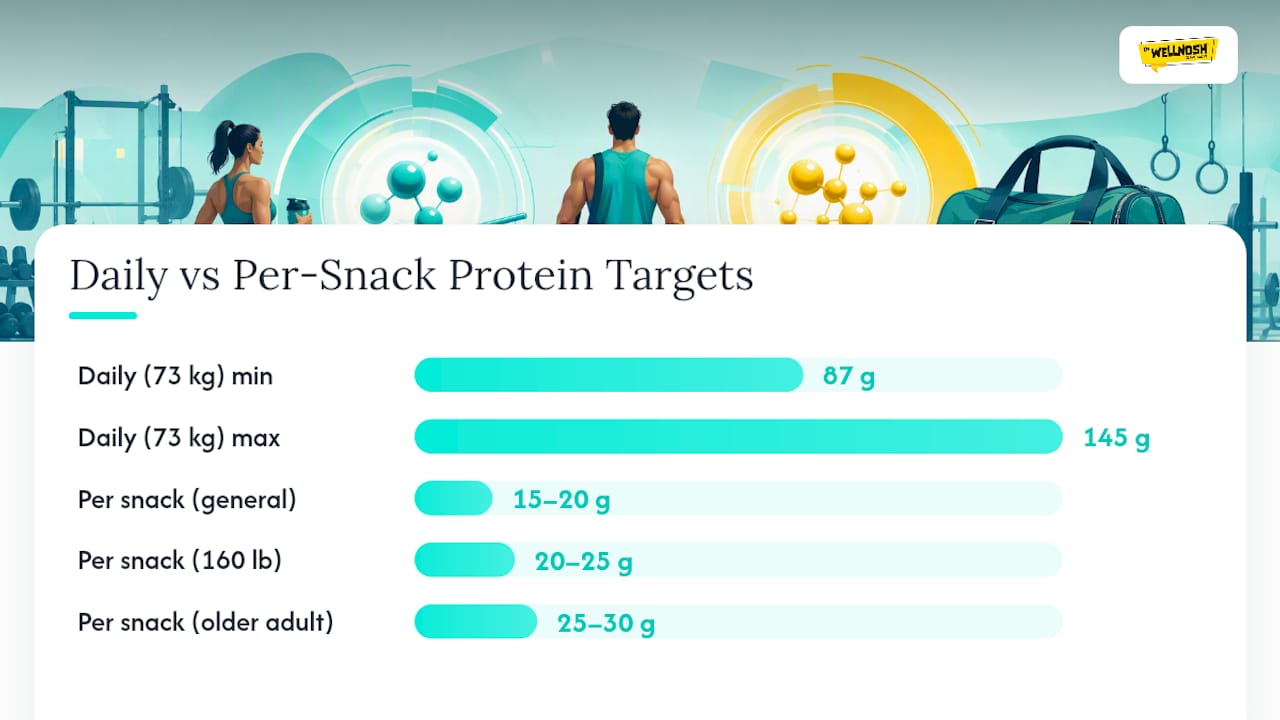
Once you know your daily number, dividing it across three meals and two snacks makes the math a lot less intimidating than trying to cram it all into dinner.
What High-Protein Snacks Actually Do for Your Training
A good gym snack does more than curb hunger. It gives your muscles the raw material to repair micro-tears from lifting, it keeps you full enough that you don’t overeat later, and over time it helps preserve lean mass even as you age.
- Muscle repair and growth: amino acids from protein rebuild muscle fibers stressed during resistance training.
- Satiety and weight control: protein digests slower than refined carbs, which blunts hunger spikes between meals.
- Recovery support: adequate protein around training reduces soreness duration for many lifters.
- Preventing age-related muscle loss: higher protein intake helps counter the natural decline in muscle mass that starts as early as your 30s.
Timing matters less than people think, but it’s not irrelevant. A systematic review on protein distribution found that spreading protein evenly across the day supports muscle protein synthesis better than dumping most of it into one or two meals. That’s the real argument for snacking strategically instead of just eating three big meals and calling it done.
One line worth remembering: carbs and fat in a snack aren’t filler, they change how the protein behaves. A snack heavy in fat digests slower, which can be useful for satiety but works against you if you’re eating close to a workout.
Best High-Protein Gym Snacks by Category
Not every high-protein food fits every situation. A cottage cheese bowl works at your desk; it doesn’t work stuffed in a gym bag for six hours. Here’s how the best options break down by type.
Savory picks
Savory snacks tend to have better staying power because they’re lower in sugar and often higher in fat, which slows digestion for longer-lasting fullness.
Sweet picks
Sweet, protein-forward snacks work well post-workout when your body is more tolerant of quick carbs alongside protein.
Portable, grab-and-go picks
These are built for gym bags, desk drawers, and glove compartments. Shelf stability is the deciding factor here.
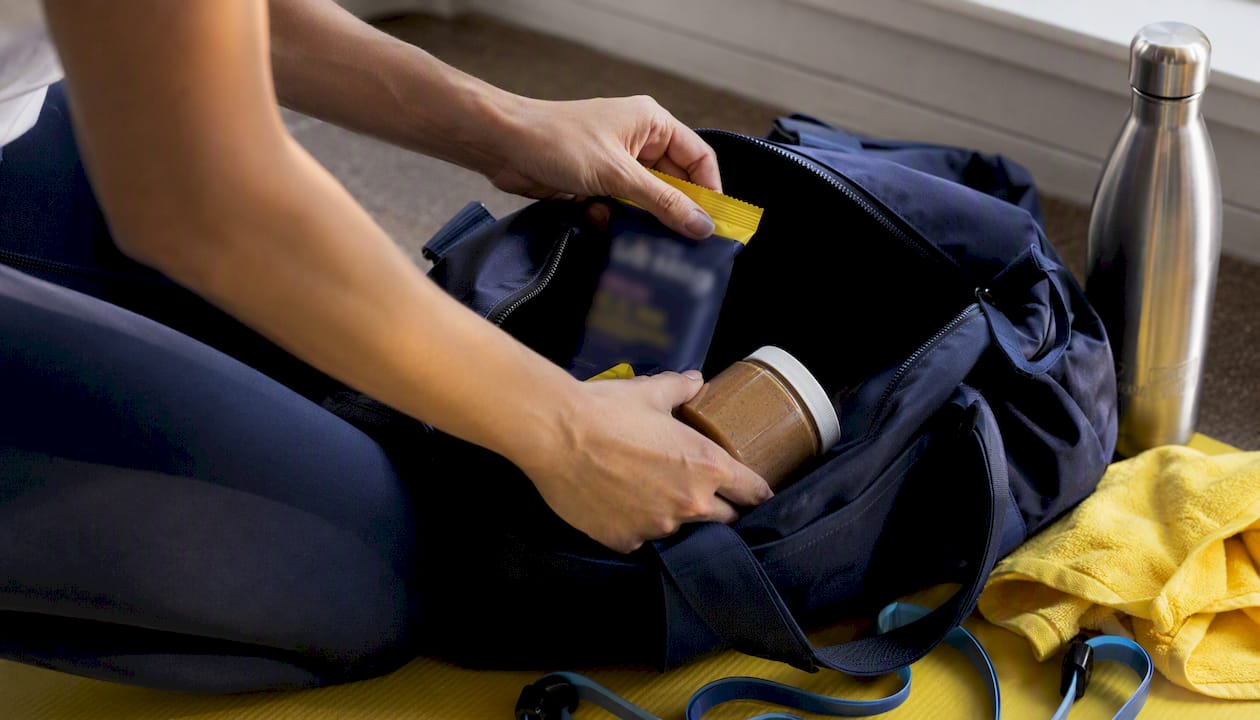
Values for whole foods reflect standard serving sizes tracked in USDA FoodData Central; packaged product numbers come from brand labels and may shift slightly by flavor.
Jerky and some protein bars pack in more sodium than people expect, sometimes over 500mg per serving, so if you’re watching blood pressure or just bloat easily before a workout, check the label rather than assuming “high protein” means “clean.” Reviews of packaged protein snacks consistently flag this as the trade-off with processed, shelf-stable options: convenience often comes with added sodium or sugar you don’t get from whole foods.
Building a 20 to 30 Gram Snack Combo
Hitting the target range isn’t complicated once you know your building blocks. Here are combos that work, with the math laid out so you’re not guessing.
- Greek yogurt (17g) + 2 Tbsp peanut butter (7g) = 24g. Swap peanut butter for almond butter if you want a slightly lighter fat profile.
- Cottage cheese (12g) + 1 scoop whey or plant protein powder (20g) = 32g. Dial back to half a scoop if that’s too much for one sitting.
- Canned tuna (20g) + 6 whole-grain crackers (3g) = 23g. A shelf-stable combo that survives a gym bag for hours.
- High-protein plant-based chips (15g) + hard-boiled egg (12g) = 27g. Fully portable, no refrigeration needed for the chips.
- Edamame (18g) + 1oz almonds (6g) = 24g. A vegan combo that also delivers fiber and healthy fats.
- Beef jerky (10g) + string cheese (7g) = 17g, add a second jerky stick to reach 27g if you need more.
- Protein shake (20g) + banana for carbs, no added protein grams but rounds out a pre-workout snack nicely.
- Two hard-boiled eggs (12g) + 1oz almonds (6g) + a plant-based protein chip bag (15g) = 33g for a bigger post-lift refuel.
The easiest strategy when you’re short on time: double the serving of whatever single-protein item you have, or add a scoop of protein powder to something that’s already protein-adjacent, like oatmeal or a smoothie. If you’re trying to keep calories controlled while hitting your protein number, favor the leaner combos (tuna and crackers, or chips and egg) over the nut-butter-heavy ones, which run 350 to 400 calories per serving.
Pro Tip: Keep a shelf-stable version of at least one combo in your gym bag at all times. Jerky, a protein chip bag, and a tub of almond butter don’t need refrigeration and survive a hot car far better than anything with yogurt in it.
When to Eat What: Pre-Workout vs. Post-Workout Timing
Digestion matters as much as protein content when you’re deciding what to eat before lifting. Eating the wrong thing 20 minutes before a heavy set can mean cramping or that heavy, sluggish feeling halfway through your workout.
- 3+ hours before training: a full meal with protein, carbs, and some fat, like chicken and rice with vegetables.
- 1 to 2 hours before: a smaller combo of carbs and moderate protein, such as toast with a thin layer of peanut butter and a banana.
- Under 1 hour before: quick-digesting carbs with minimal fat and fiber, like a rice cake or a small piece of fruit.
- 0 to 60 minutes after training: a protein-forward snack in the 20 to 30 gram range, since this is when a high-protein snack supports recovery most directly.
Carbohydrates are your primary fuel for short, intense training, not protein. Pairing carbs with a modest amount of protein before a workout can improve performance and ease recovery, but the ratio should shift as your workout gets closer: more carbs, less protein, less fat the tighter your window gets.
This is also where a lot of people get pre-workout nutrition wrong. Total daily protein intake actually matters more for muscle gains than nailing an exact post-workout window. You don’t need to sprint to the protein shaker the second you rack your weights. You do need to avoid loading up on fat and fiber right before you lift.
Pro Tip: Skip the almond butter and full-fat Greek yogurt in the 30 to 60 minutes before training. High-fat and high-fiber foods slow gastric emptying, which is exactly what causes that heavy, cramping feeling mid-workout.
A Quick Checklist for Choosing a Gym Snack
Standing in a grocery aisle or scrolling a product page, run through this list before you buy:
- Protein per serving: aim for at least 10 to 15 grams minimum, more if it’s your main post-workout snack.
- Protein-to-carb ratio: higher ratios support satiety and recovery; lower ratios (more carbs) suit pre-workout fueling.
- Ingredient quality: check for recognizable, pronounceable ingredients rather than a long list of stabilizers and fillers.
- Sodium and added sugar: jerky and flavored bars are common culprits for hidden sodium; sweetened yogurts often carry more sugar than the protein justifies.
- Portability and shelf life: shelf-stable snacks survive gym bags and travel; refrigerated options need a cooler bag.
- Cost per serving: compare price divided by grams of protein, not just sticker price, to judge real value.
- Allergy and diet fit: confirm dairy-free, gluten-free, or vegan status if that applies to you.
When you’re reading a label, two questions cut through most of the confusion: how many grams of protein are actually in one serving, and is that serving size realistic for how you’ll eat it? A product’s Nutrition Facts panel will answer both, and it’s worth the ten seconds before you toss something in your cart.
Why a Plant-Based Protein Chip Earns a Spot in Your Gym Bag
Most protein-forward snacks force a trade-off: you get the protein, but you also get dairy, animal products, or a mile-long ingredient list you can’t pronounce. Wellnosh built its chips around a different premise, using fava bean protein instead of whey or soy isolate, and cooking in avocado oil instead of seed oils.
Each bag delivers 15 grams of protein, and the line is non-GMO, gluten free, low carb, and made with no added sugar. That puts a single bag in the same protein range as three-quarters cup of Greek yogurt, but without needing a cooler bag or a spoon.
- Fits vegan, plant-based, and dairy-free eating patterns without substitution
- Shelf-stable, so it survives a gym locker or car console for weeks
- Cooked in avocado oil with no seed oils or artificial additives
Pairing one bag with a hard-boiled egg gets you to 27 grams of protein, right in the target zone for a post-workout refuel. Swap the egg for a scoop of protein powder stirred into water and you’re at 35 grams, useful if you trained heavy and want a bigger dose. For readers building out a full plant-based routine, Wellnosh’s guide on plant protein snacks for athletes goes deeper into pairing strategies, and the clean protein snacking guide breaks down what “clean label” actually means on a packaged product.
What actually matters when you’re choosing a snack
I’ve spent enough time looking at protein snack labels to know most people overweight the protein number and underweight everything else on the panel. A snack with 20 grams of protein and 600mg of sodium isn’t automatically better than one with 15 grams and clean ingredients you can pronounce. Distribution matters more than most gym-goers assume too. Hitting your daily protein target with two or three well-placed snacks does more for you than obsessing over the exact minute after your last set. What I care about most is portability without compromise: a snack that survives a gym bag, doesn’t need refrigeration, and doesn’t ask you to trade ingredient quality for convenience. That’s a smaller list than the protein aisle would have you believe.
Try a Wellnosh variety pack before your next gym run
Instead of stocking your gym bag with three different products to cover pre-workout, post-workout, and satiety needs, one bag of Wellnosh chips covers portability, protein, and clean ingredients in a single grab. Each bag brings 15 grams of fava bean protein, cooked in avocado oil, with no seed oils, no artificial additives, and no added sugar. If you’re not sure which flavor fits your routine, the Variety Pack lets you try Nacho Cheese, Celtic Salt, and more before committing to a favorite.
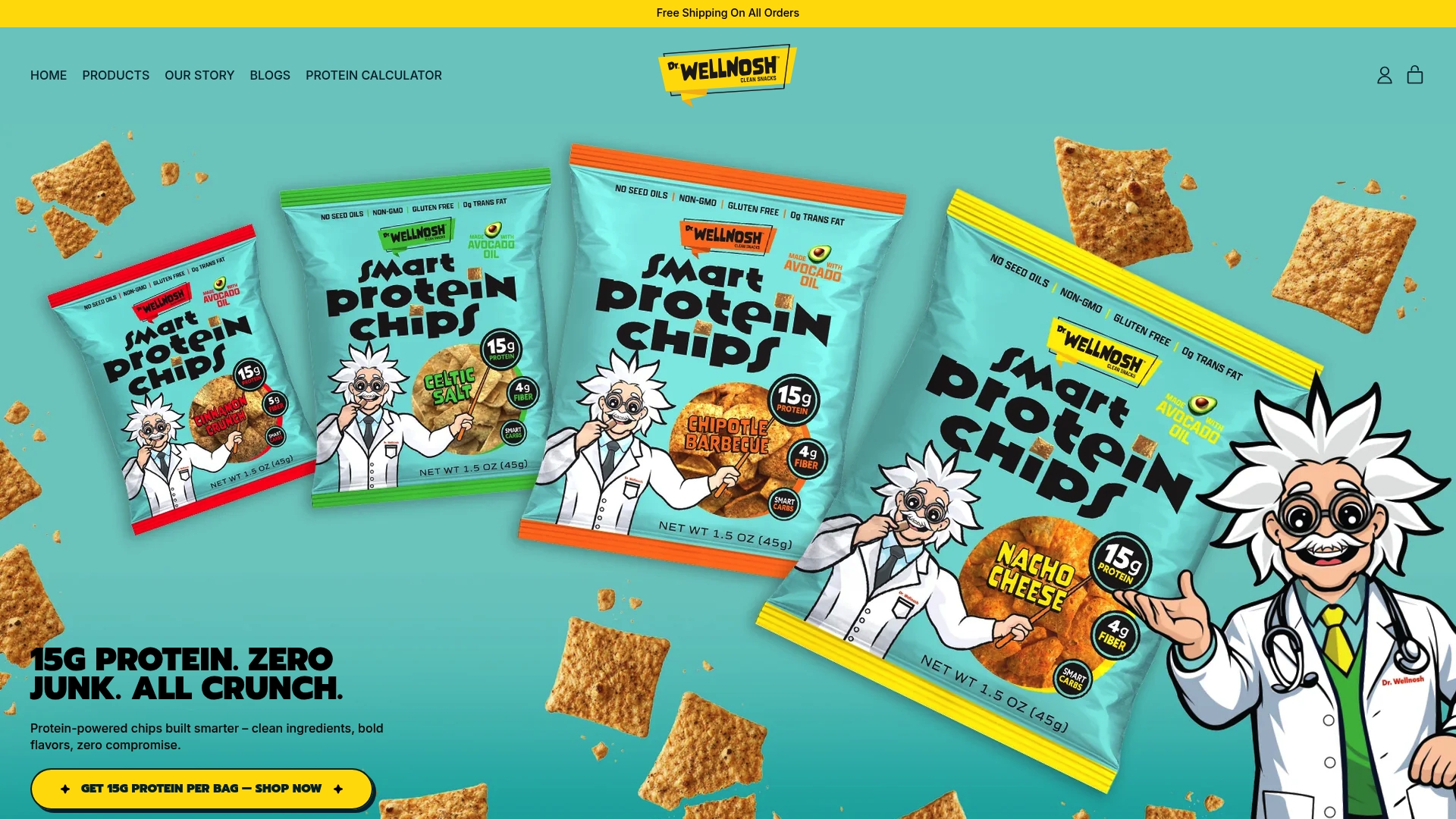
- 15 grams of plant-based protein per bag, verified on the product label
- Non-GMO, gluten free, low carb, with no seed oils or artificial additives
- Shelf-stable and gym-bag ready, no cooler or refrigeration required
If Chipotle Barbecue is what you’re after, grab a bag directly from the Chipotle Barbecue product page. Start with the Variety Pack this week and see which flavor earns a permanent spot in your gym bag.
Sources
- High-protein snacks to build muscle and keep hunger at bay - Harvard Health
- Pre-Workout Nutrition: What to Eat Before a Workout - Healthline
- Nal
This article is general information, not a substitute for advice from a qualified doctor. Consult a qualified healthcare professional about your own circumstances before acting on anything here.


