

· By Dr. Wellnosh
How to Build Snack Portions for Meal Prep Containers
The rule is simple: match your container size to one protein source, one fiber or produce component, and a small measured fat, then stop there. An 8-ounce cup holds Greek yogurt, berries, and a tablespoon of nut butter. A 16-ounce container fits veggie sticks, a measured portion of hummus, and a small amount of nuts. A divided bento box separates a protein like turkey or chips from a wet dip so nothing goes soggy by Wednesday.
Once you know the container, the build follows automatically:
- Pick your container first — its volume sets your portion ceiling.
- Choose one protein source — Greek yogurt, hard-boiled eggs, protein chips, or deli turkey.
- Add fiber or fat — fruit, raw vegetables, hummus, or a small handful of nuts.
Key Takeaways
Building balanced snack portions comes down to matching container volume to one protein, one fiber or produce item, and a small measured fat every time.
| Point | Details |
|---|---|
| Match container to portion | An 8-oz cup, 16-oz container, and bento box each call for different portion targets and builds. |
| Hit protein and fiber targets | Aim for 10–25 g protein and 3–5 g fiber per snack to stay full longer. |
| Use hand and cup shortcuts | A cupped hand (nuts), closed fist (fruit), and palm (protein) replace a scale once you’re calibrated. |
| Label and rotate weekly | Date containers, rotate flavors, and use frozen items as natural cooling packs on commute days. |
| Add a protein-led crunch option | Wellnosh Cinnamon chips or the Variety Pack deliver 15 g of fava bean protein per bag for easy rotation. |
Table of Contents
- Portioning Principles That Make Snack Prep Balanced
- Container Sizes and What They Should Hold
- Measuring Tools and Quick Portioning Shortcuts
- Snack Templates You Can Build This Week
- Why Protein and Fiber Pairing Actually Works
- Storing, Labeling, and Shelf Life
- How Many Containers to Prep Each Week
- Choosing Between Glass and Plastic Containers
- Frequently Asked Questions
- Sources
Portioning Principles That Make Snack Prep Balanced
Aim for 150 to 250 calories and 10 to 25 grams of protein per snack, according to portion-controlled snack guidance built for weight management and steady energy. Bump the higher end of that range if you’re training that day or have a long gap before your next meal.
The easiest method is a food-group mashup: pick one to three food groups (protein, dairy, produce, grain) and combine them in fixed amounts. Gundersen Health System’s snack templates do exactly this with cup and tablespoon measurements, like one cup of veggies with a quarter cup of hummus, or one small apple with a string cheese.
Pairing carbohydrate with protein or fat slows digestion and keeps you fuller longer than eating fruit or crackers alone. That’s why a protein-led snack beats a carb-only one when you need to make it to dinner without crashing.
Pro Tip: Rotate your protein and produce choices every week. Repeating the same yogurt-and-berry combo five days straight is how snack boredom kills a meal-prep habit by week three.
Container Sizes and What They Should Hold
Container volume dictates portion size more than any other variable, since a bigger vessel invites bigger scoops. Cornell research on food portioning confirms that larger serving sizes lead people to eat more, regardless of hunger. Picking the right container size before you fill it is half the battle.
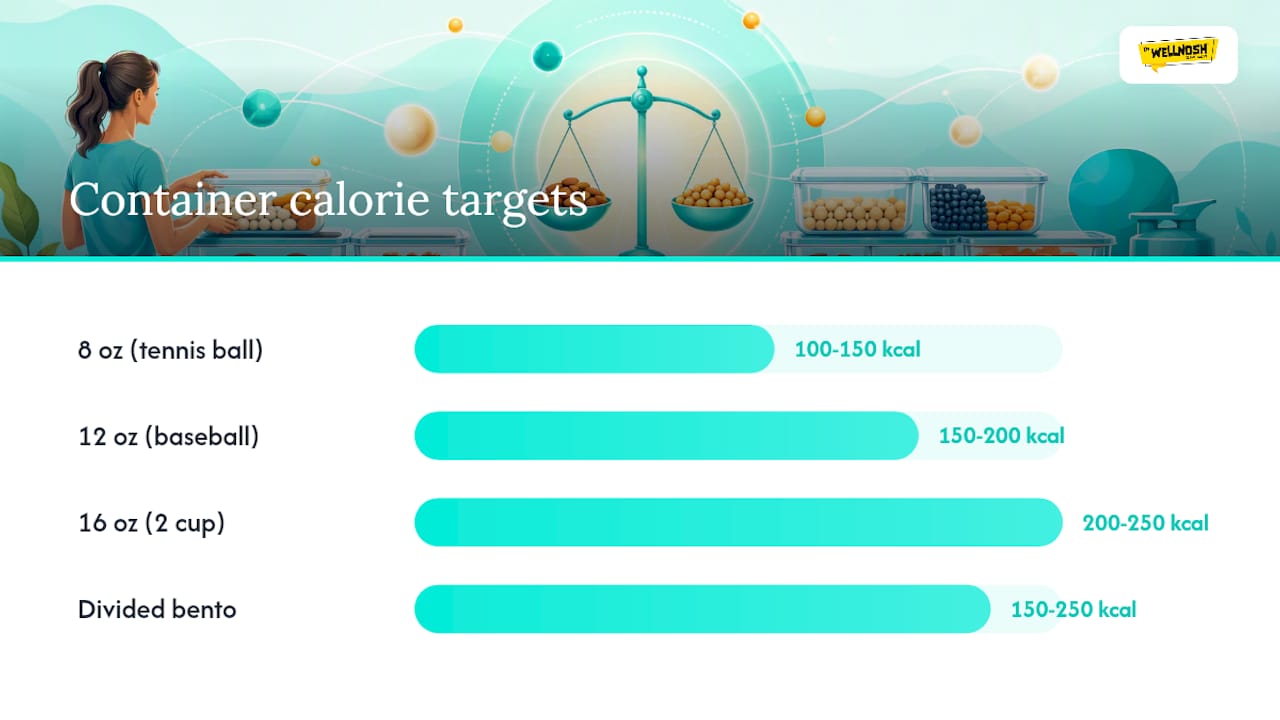
| Container Size | Visual Equivalent | Typical Target | Example Build |
|---|---|---|---|
| 8 oz | A tennis ball’s worth of food | 100–150 kcal, 8–12 g protein | Greek yogurt, berries, and a tablespoon of nut butter |
| 12 oz | A baseball plus a bit more | 150–200 kcal, 12–18 g protein | Hard-boiled eggs + carrot sticks + 1 oz cheese |
| 16 oz / 2 cup | Two cupped hands | 200–250 kcal, 15–25 g protein | Veggie sticks + 2 oz hummus + ¼ cup nuts |
| Divided bento (3–4 compartments) | Palm-sized sections | 150–250 kcal total | Protein chips + apple slices + small dip cup |
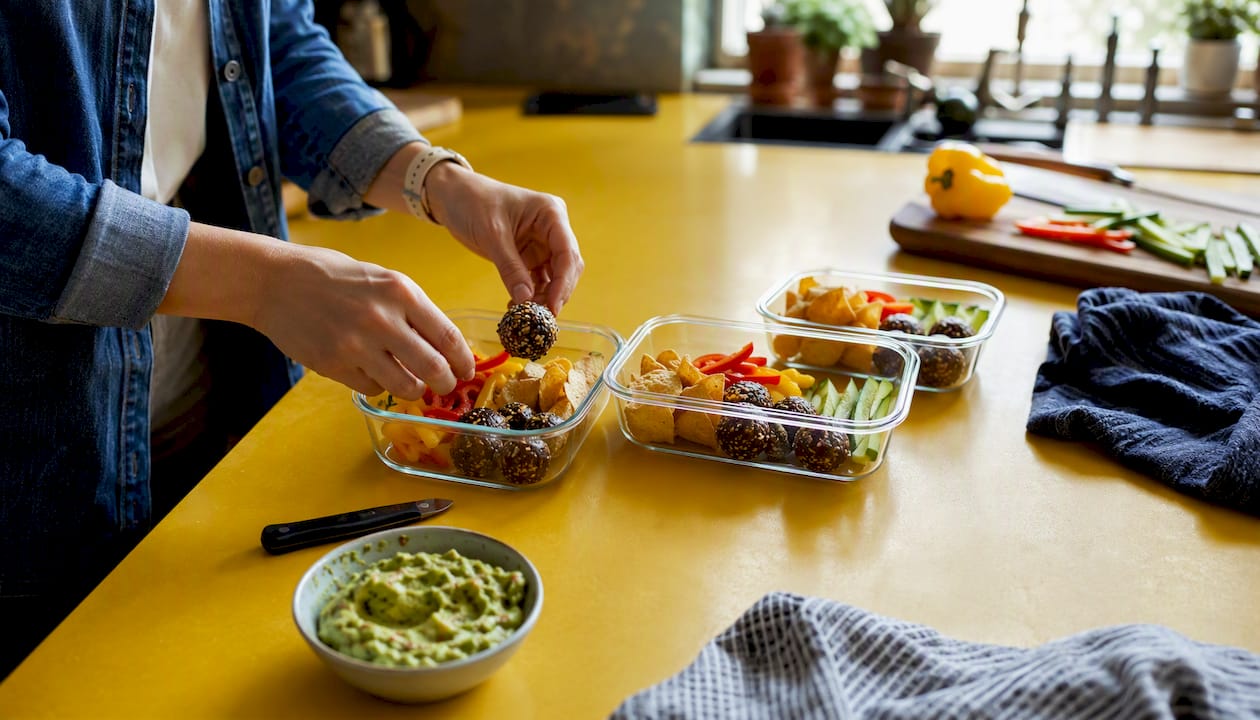
For divided containers, keep wet ingredients like hummus or dressing in their own compartment or a small silicone cup. Crunchy items like protein chips or crackers go in the driest section so they don’t lose their snap by lunchtime. Save the smallest compartment for anything sticky, like dried fruit or honey.
Measuring Tools and Quick Portioning Shortcuts
Use a kitchen scale for your first two or three prep sessions to calibrate your eye, then switch to hand and cup estimates once you know what 30 grams of almonds actually looks like in your container.
- A cupped hand holds roughly 25 to 30 grams of nuts or trail mix.
- A closed fist approximates one serving of fruit.
- A palm-sized portion equals about 3 to 4 ounces of protein, whether that’s turkey, chicken, or a scoop of cottage cheese.
- 2-ounce condiment pots work well for hummus, guacamole, or salad dressing without soaking neighboring items, a trick registered dietitians recommend for keeping snacks measured instead of eyeballed straight from the tub.
- Resealable single-serve bags are the fastest way to portion crackers, pretzels, or chips when you’re prepping in bulk.
Snack Templates You Can Build This Week
These templates map directly to the container chart above, so once you know your container size, just plug in a build.
8-ounce cup templates:
- Greek yogurt, sliced strawberries, chia seeds (swap: dairy-free yogurt for a vegan version).
- Cottage cheese with pineapple chunks.
- Hummus with a handful of baby carrots (skip the yogurt entirely for a dairy-free option).
12 to 16-ounce container templates:
- Turkey roll-ups with cheese cubes and grape tomatoes.
- Hard-boiled eggs, cucumber slices, and a small handful of almonds.
- Wellnosh Variety Pack chips with apple slices and a tablespoon of almond butter (a plant-based, gluten-free option that also covers your fat and fiber in one move). See more crunchy protein snack ideas if you want additional swaps.
- Edamame, cherry tomatoes, and a wedge of feta for a vegetarian build.
- Rotisserie chicken chunks with bell pepper strips and a small ranch cup.
Divided bento templates:
- Protein chips, orange segments, and a small dip cup of guacamole.
- Deli-free option: chickpeas roasted with paprika, cucumber rounds, and dairy-free tzatziki.
- Beef jerky, string cheese, and grapes for a low-carb, no-prep combo.
- Peanut butter packet, apple slices, and a small scoop of granola for a sweeter build.
To flip a savory template sweet, swap the protein for cottage cheese or yogurt and trade vegetables for fruit. For gluten-free needs, stick to rice cakes or protein chips instead of crackers. Vegan swaps mostly involve trading dairy protein for edamame, hummus, or a plant-based protein chip. Check snack-plant-based options without processed soy if soy is one of your restrictions.
Why Protein and Fiber Pairing Actually Works
Pairing protein with fiber or fat slows gastric emptying, which is the physiological reason a handful of almonds keeps you fuller longer than a handful of pretzels. This isn’t a fad claim. It’s backed by the same portion-size research showing that bigger, carb-heavy servings lead to overeating when nothing balances them out.
Use these numbers as your working targets:
- 10 to 25 grams of protein per snack, more on training days.
- 3 to 5 grams of fiber, which usually means at least one fruit, vegetable, or legume component.
- 150 to 250 calories total, adjusted for activity level and time until your next meal.
The Cornell portion-size findings and general portion-control guidance both point to the same conclusion: pre-measuring a snack before you eat it prevents the unconscious overeating that happens when you snack straight from a bag. Learn more about pairing protein snacks with prepped meals for full-day balance.
Storing, Labeling, and Shelf Life
Most prepped snacks hold safely in the fridge for 3 to 5 days, though cut fruit and anything with dairy dip trends toward the shorter end. Deli meats and dairy-based snacks belong on a middle shelf, not the door, where temperature swings are worse.
- Label each container with the day of the week, not just the date.
- Use a “Monday in front” rotation so older snacks get eaten first.
- Freeze extra portions of nuts, chips, or granola that don’t need refrigeration, and thaw them the night before.
- Cut vegetables hold better than cut fruit, so prep produce accordingly if you’re stretching toward day five.
How Many Containers to Prep Each Week
A practical baseline is 4 to 6 snack containers per workweek, covering one afternoon snack for each day you’re out of the house. Adjust up if you train twice a day or have long commutes with no food access.
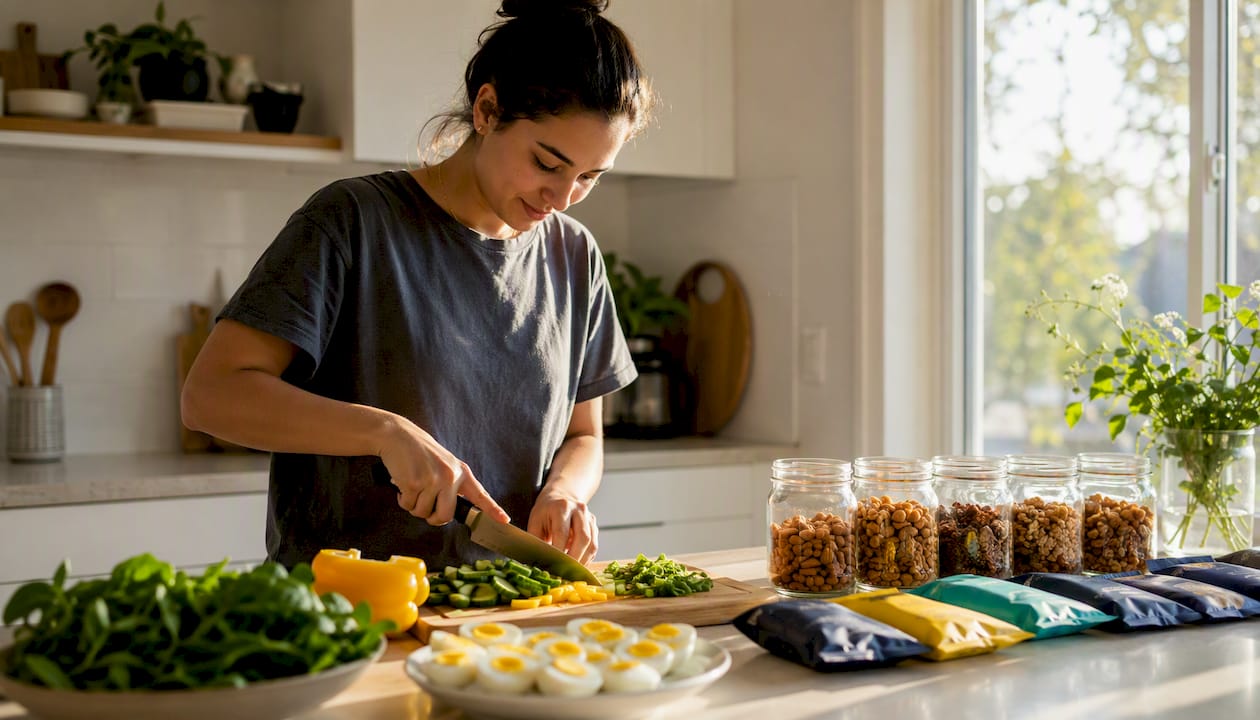
A simple Sunday routine: spend 30 to 45 minutes batch-cooking one protein (hard-boiled eggs or grilled chicken), chopping vegetables for the week, and portioning nuts or chips into single-serve bags. On heavy commuting days, pack an extra bag as backup, and freeze one dense item overnight to double as a cooling pack inside your bag.
Choosing Between Glass and Plastic Containers
Glass wins for reheating and odor resistance; plastic wins for weight and breakage risk on the go. If you’re packing lunches for a commute or a gym bag, lightweight plastic with a locking lid beats glass every time.
- Glass: microwave-safe, doesn’t stain or hold smells, but heavier and can shatter.
- Plastic: lightweight and cheap, but can warp in the microwave and absorb odors over time.
- Silicone cups inside either material keep dips separate and prevent leaks into your dry ingredients.
A practical note on repeatable snack planning
Protein-led snacks consistently outperform carb-only ones for keeping people satisfied between meals, which is why building your container around a protein first, then filling in fiber and fat, works better than starting with whatever’s easiest to grab. Rotating flavors and keeping single-serve portions visible in the fridge, rather than buried behind last week’s leftovers, makes the habit stick longer than any calorie count does.
A crunchy protein option worth adding to your rotation
If your container needs a protein-led crunch element that doesn’t require cooking or measuring, a single bag of Wellnosh Cinnamon protein chips delivers 15 grams of fava bean protein without the seed oils or added sugar found in most packaged snacks.
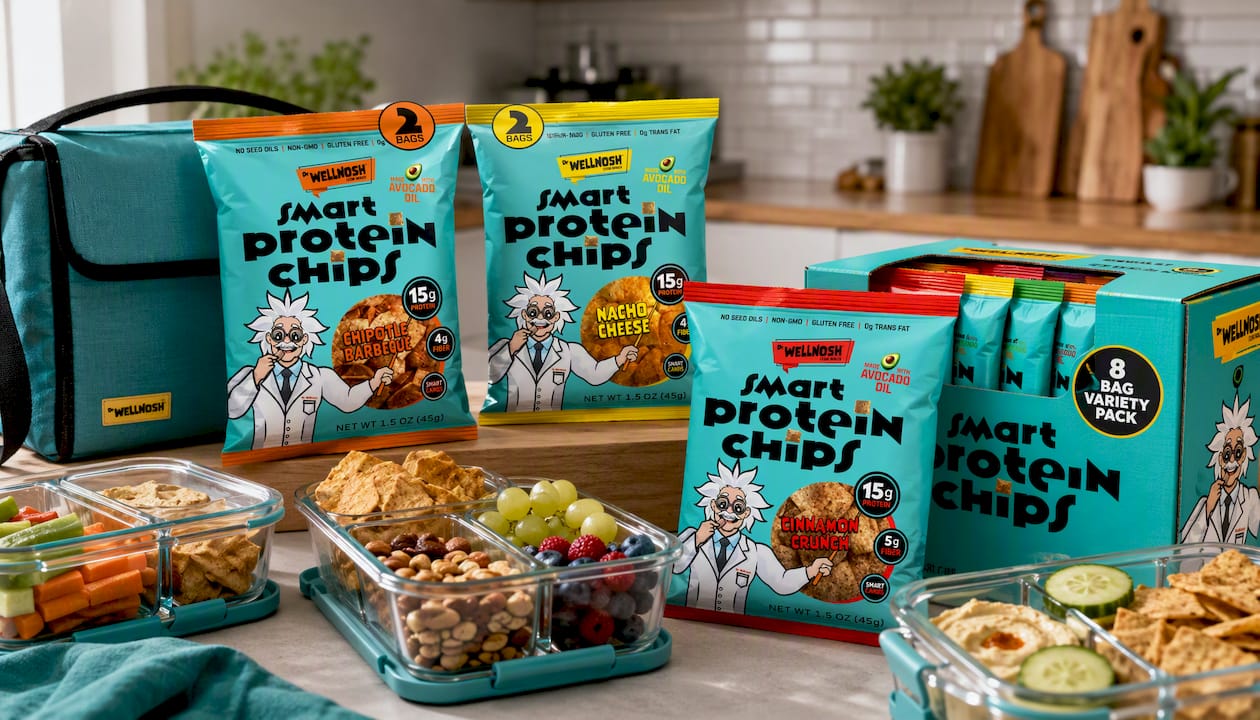
Drop one bag into an 8-ounce section alongside apple slices for a sweet-leaning build, or pair it with a small dip cup of almond butter in a divided container for extra staying power. Since flavor fatigue is one of the fastest ways a meal-prep habit falls apart, the Wellnosh Variety Pack makes weekly rotation easy. Grab Nacho Cheese one day, Chipotle Barbecue the next, without buying five separate bags. Check the Variety Pack page to see which flavor combination fits your week, and consider Subscribe & Save if snack prep is now a permanent Sunday ritual.
Frequently Asked Questions
How many snacks should I prep per week? Most people do well with 4 to 6 prepped containers covering weekday afternoons, adjusting upward for training days or long commutes.
What’s the best container size for a balanced snack? A 12 to 16-ounce container fits most balanced builds comfortably, giving you room for a protein, a produce item, and a small fat without overpacking.
Do I need a kitchen scale to portion snacks accurately? Not after your first few sessions. Use a scale briefly to calibrate your eye, then switch to hand portions and measuring cups for daily prep.
Can I build vegan or gluten-free snack containers with this method? Yes. Swap dairy protein for edamame, hummus, or a plant-based protein chip, and choose rice cakes or produce instead of gluten-containing crackers.
How long do prepped snacks last in the fridge? Most hold safely for 3 to 5 days, though cut fruit and dairy-based dips are better eaten within the first three days.
This article is general information, not a substitute for advice from a qualified doctor. Consult a qualified healthcare professional about your own circumstances before acting on anything here.
Sources
- How foods are sized affects how much we eat — Cornell Chronicle
- Portion-controlled snack ideas for weight management | Sibarita
- 25 quick and easy meal and snack ideas | Gundersen Health System
- Healthy Snacking Ideas from Registered Dietitians | Wellness Hub (iHerb blog)


