

· By Dr. Wellnosh
How to Time Protein Snacks Around Lifting Sessions
For most lifters, the rule is simple: aim for a moderate amount of protein within a couple of hours before or after your session, and prioritize hitting your total daily protein target appropriate for your body weight. Precise peri-workout timing is a secondary concern unless one of these exceptions applies to you:
- Fasted training: You skipped breakfast and trained on empty. Eat a sufficient amount of fast-digesting protein within 30–60 minutes post-session.
- Multiple daily sessions: When you lift twice in one day, the window between sessions tightens and faster recovery nutrition matters.
- Older adults (50+): Research consistently shows older adults need higher per-meal protein doses (closer to 40 g) to stimulate muscle protein synthesis at the same rate as younger lifters.
- Long sessions (90+ minutes): Extended training depletes glycogen and accelerates muscle breakdown, making intra- or post-workout nutrition more urgent.
The ISSN position stand on nutrient timing and a 2025 MDPI meta-analysis on protein timing both confirm that total daily intake drives results for most recreational strength athletes. Timing is the fine-tuning, not the foundation.
Table of Contents
- Does when you eat protein actually change your results?
- How much protein should a snack actually contain?
- What should you eat before lifting?
- What should you eat after lifting for recovery?
- Sample timing plans based on when you last ate
- How do you pick snacks you’ll actually stick with?
- Key Takeaways
- The timing obsession is costing you more than it’s giving you
- Wellnosh chips fit the peri-workout rules you just read
- Useful sources
Does when you eat protein actually change your results?
For most gym-goers, the answer is: not much, as long as daily totals are met. A 2025 meta-analysis comparing pre- vs. post-exercise protein found no significant effect on lean body mass from timing within a 15-minute to 2-hour window around training. Muscle protein synthesis stays elevated for several hours after a session, so the idea of a narrow 30-minute anabolic window is largely a myth.
What actually changes the calculus is your fed state going into the workout. If you ate a solid protein-rich meal 1–3 hours before training, amino acids are still circulating and your muscles are covered. If you trained fasted, that buffer is gone and timing becomes genuinely urgent.

A few other situations where timing shifts from “nice to have” to “actually matters”: twice-daily training (where the recovery window between sessions is short), sessions lasting over 90 minutes (glycogen depletion accelerates), and older adults (who need a higher per-meal dose to trigger the same MPS response). For everyone else, consistency with daily totals is the lever worth pulling.
Pro Tip: Write your training time on your meal-prep plan. If your last meal lands within 2 hours of your session, you likely don’t need a separate pre-workout snack. If the gap is 3+ hours, add one.
How much protein should a snack actually contain?
The target for a peri-workout snack is 20–40 g of protein, or roughly 0.25–0.40 g/kg of body weight per feeding. For an average lifter, that’s a moderate protein amount per snack. Spread across 3–5 meals and snacks per day, that math gets you to the 1.6–2.2 g/kg daily target that drives muscle growth.
To put those numbers into real food: one scoop of whey protein delivers roughly 25 g, 200 g of Greek yogurt provides about 17–20 g, and a bag of Wellnosh plant-based protein chips contributes 15 g of fava bean protein. That last option works well as a partial contribution — pair it with a hard-boiled egg or a small yogurt to clear the 20 g floor. You can find more protein tracking examples to help with daily planning.
The evidence is clear: total daily protein intake matters far more than precise peri-workout timing for most strength athletes. Get the daily total right first, then fine-tune the windows.
What should you eat before lifting?
The right pre-workout snack depends almost entirely on how much time you have before the session starts.
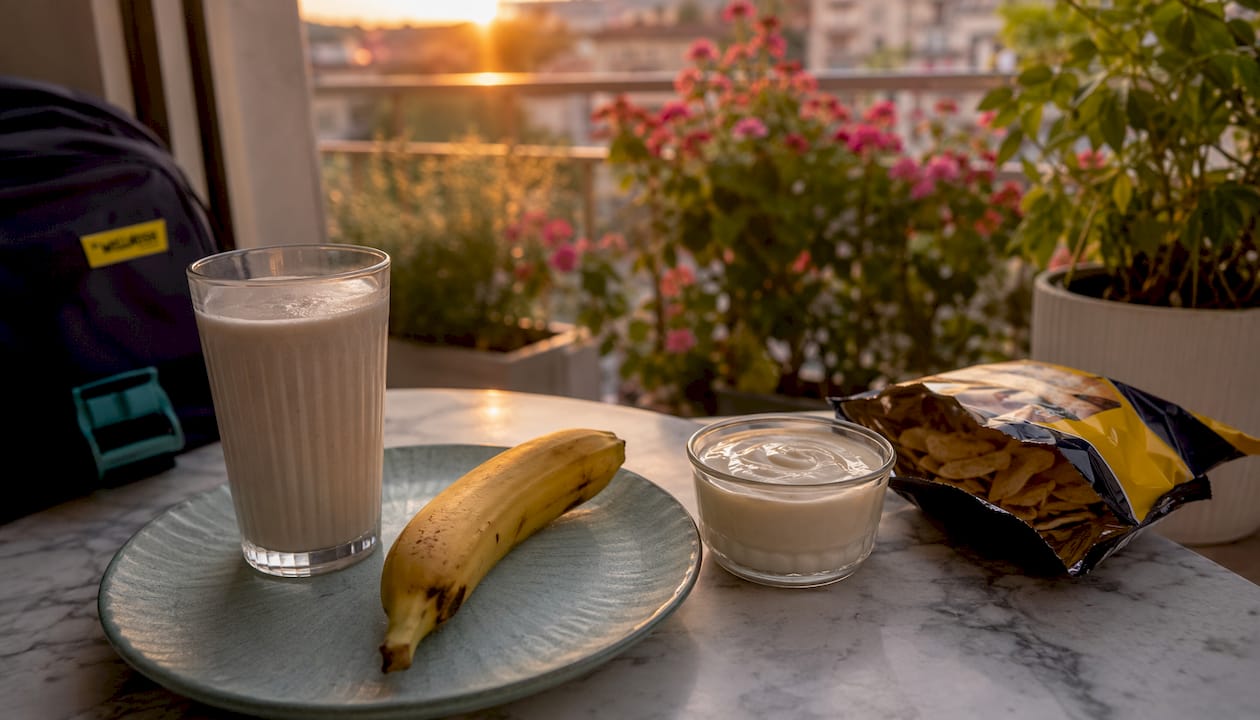
- 30–60 minutes out: Go fast-digesting. A whey or fast plant-protein shake with a banana, or rice cakes with a thin spread of nut butter, gives you quick amino acids and carbs without sitting heavy. Target a moderate protein and carbohydrate amount for muscle gain.
- 60–90+ minutes out: You have room for a mixed meal. Greek yogurt with fruit and granola, or a small chicken wrap, works well here. Casein-rich foods like cottage cheese are fine at this window since they digest more slowly.
- Portable options that actually travel: Jerky, hard-boiled eggs, and shelf-stable plant-based snacks like Wellnosh chips are coach-recommended for a reason — they require zero prep and fit a gym bag.
Two no-bake protein cookies made with protein powder, oats, and nut butter can hit roughly 18 g protein and 36 g carbs, which lands squarely in the pre-workout target range for a 60–90 minute window.
Pro Tip: Keep fat intake moderate if you’re eating shortly before a short, intense session. Fat slows gastric emptying, which can cause cramping mid-lift. For longer sessions (75+ minutes), a moderate amount of fat actually helps sustain energy.
What should you eat after lifting for recovery?
Post-workout nutrition follows a simple rule: if you trained fed, a normal meal within 1–2 hours is fine. If you trained fasted or you’re doubling up sessions, get fast protein and carbs within 30–60 minutes.
| Snack Option | Protein (g) | Carbs (g) | Calories (approx.) |
|---|---|---|---|
| Whey shake + banana | 25 | 30 | — |
| Greek yogurt + berries | 18 | 25 | 200 |
| Wellnosh chips + Greek yogurt | — | 20 | — |
| Hard-boiled eggs (3) + fruit | 18 | 20 | — |
For plant-based lifters, the Wellnosh chips plus yogurt combo above is a practical post-workout option that clears 30 g of protein without any cooking. Evening training is a common situation where people skip post-workout nutrition entirely — a light, fast-digesting snack still matters here, especially if dinner is more than an hour away. If you’re cutting calories, lean toward lower-carb post-workout options and protect protein at the expense of carbs.
Sample timing plans based on when you last ate
Lead with the rule: if you ate within 2 hours of training, skip the extra snack unless your session runs longer than 75 minutes. If the gap is 3+ hours, add a pre-workout snack. If you trained fasted, treat post-workout nutrition as urgent.
| Scenario | Pre-Workout | Post-Workout | Notes |
|---|---|---|---|
| Ate 1–2 hrs ago | None needed (light carb if >75 min) | Normal meal within 1–2 hrs | Amino acids still circulating |
| Ate 3+ hrs ago | 20–30 g protein + 30–60 g carbs, 30–90 min before | Normal meal or snack within 1–2 hrs | Prioritize fast-digesting protein |
| Fasted morning lift | Small snack if tolerated, or train fasted | 25–40 g fast protein + carbs within 30–60 min | Timing is urgent here |
| Twice-daily sessions | Carb-forward snack between sessions | Fast protein + carbs within 30 min of second session | Recovery window is compressed |
| Older adult (50+) | 30–40 g protein pre-session | 30 g post-workout target | An increased per-meal dose may be needed |
For a nutrition coaching approach that builds these timing strategies into a full program, working with a registered sports dietitian is worth considering.
How do you pick snacks you’ll actually stick with?
The best snack is the one you’ll actually eat consistently. Start with this filter: does it hit 20+ g protein, require minimal prep, and sit well in your stomach before training? If yes, it belongs in your rotation.
Digestion is where most people go wrong. Whey digests in 30–60 minutes, making it ideal close to training. Casein and high-fiber whole foods need 90–120 minutes. High-fat items right before a short, intense session can cause real GI distress mid-lift. Shelf-stable options like jerky, portable protein snacks, and protein chips solve the refrigeration problem for gym bags and travel days.
Pro Tip: Test a new snack on a low-stakes training day first — not before a max-effort session. Eat it 45 minutes before a moderate workout and note any cramping, bloating, or energy dips. Two or three test sessions tells you whether it works for your gut.
Sports dietitians consistently emphasize one thing above all: snack sustainability matters more than snack perfection. A simple, repeatable option you actually pack beats an optimal one you forget at home.
Key Takeaways
Hitting your total daily protein target of 1.6–2.2 g/kg matters more than any specific peri-workout timing window for most strength athletes.
| Point | Details |
|---|---|
| Peri-workout window | Aim for 20–40 g protein within 1–3 hours before or after your session. |
| Daily total first | Reach 1.6–2.2 g/kg daily; timing is secondary for most lifters. |
| Fasted and multi-session exceptions | Fasted training and twice-daily sessions require faster post-workout protein within 30–60 minutes. |
| Digestion matters | Match protein source to your time window: whey for 30–60 min; casein or whole foods for 90+ min. |
| Wellnosh chips | 15 g fava bean protein per bag; pair with yogurt or eggs to clear the 20 g pre- or post-workout floor. |
The timing obsession is costing you more than it’s giving you
Most lifters spend more mental energy on the 30-minute post-workout window than on whether they hit 140 g of protein that day. That’s backwards. The research is consistent: protein timing adds marginal benefit for recreational athletes who are already eating enough total protein. The window matters at the edges — fasted training, back-to-back sessions, older adults — not in the middle where most people actually live.
What I recommend for most clients is this: build a snack that travels, hits at least 20 g of protein, and doesn’t require a kitchen. That removes the friction that causes people to skip it entirely. A bag of Wellnosh chips paired with a hard-boiled egg or a small yogurt covers the protein floor, fits a gym bag, and takes zero prep. That’s the kind of repeatable habit that actually compounds over months.
The Harvard Health guidance on post-workout protein is sound: eat a high-protein snack within 30–60 minutes of strength training if you want to support muscle recovery. But the bigger win is making that snack something you’ll actually have with you.
Wellnosh chips fit the peri-workout rules you just read
If you need a portable, plant-based protein option that checks the boxes this guide laid out, Wellnosh protein chips are worth keeping in your gym bag. Each bag delivers 15 g of fava bean protein, cooked in avocado oil, with no seed oils, no added sugar, and no artificial additives. Non-GMO and gluten free.
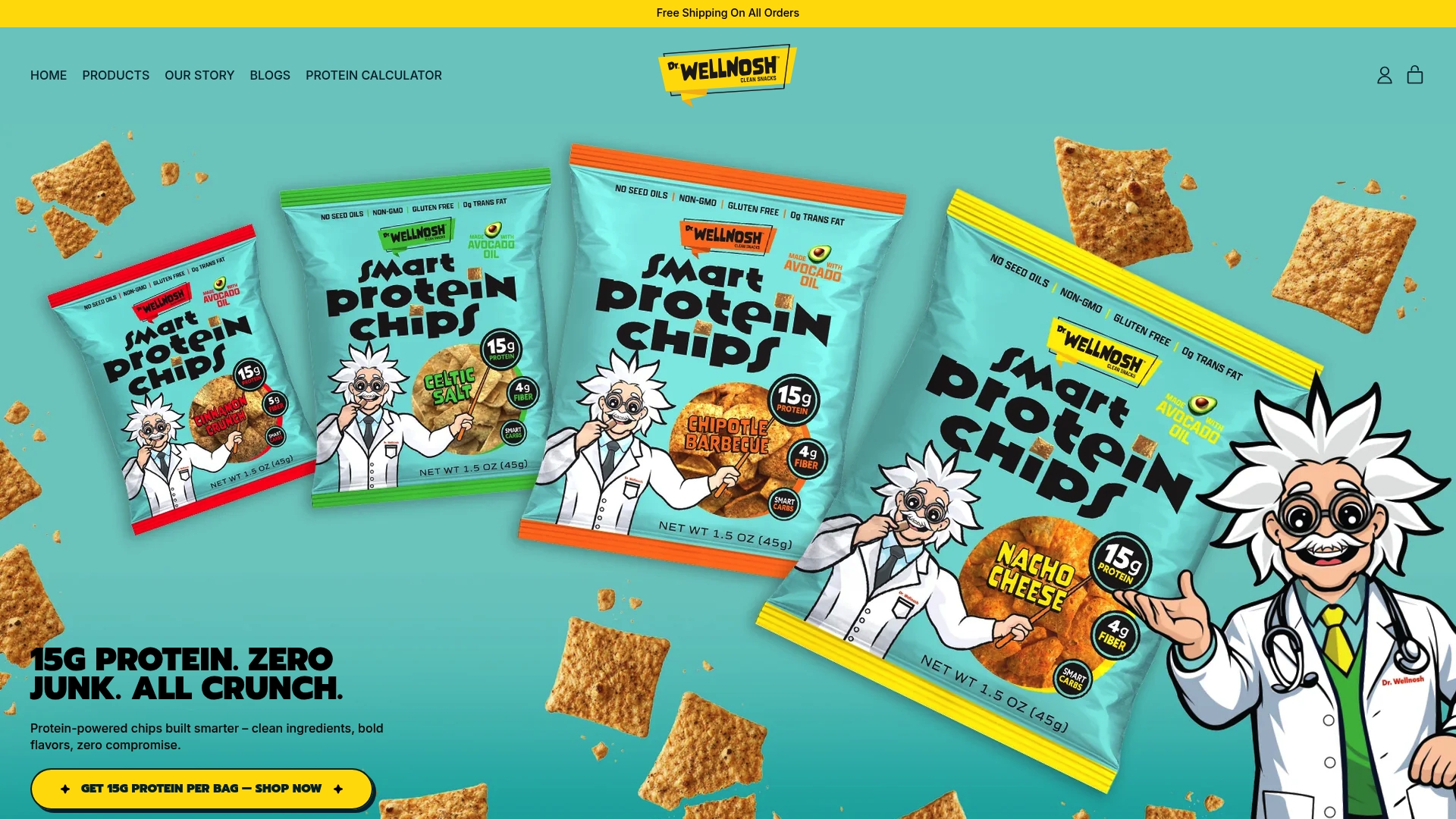
Pair a bag with Greek yogurt (adds 17–20 g protein) and you clear the 30 g post-workout target without any cooking. Pre-workout, grab a bag with a banana 30–45 minutes before your session for a fast carb-and-protein combination that won’t slow you down. The Chipotle Barbecue flavor is the most popular starting point. Order directly from Wellnosh and use the Subscribe & Save option to keep your gym-bag supply consistent.
Useful sources
- High-protein snacks to build muscle and keep hunger at bay — Harvard Health: practical guidance on post-workout protein timing and snack choices for muscle recovery.
- Does Protein Ingestion Timing Affect Exercise-Induced Adaptations? — MDPI meta-analysis: systematic review comparing pre- vs. post-exercise protein intake and lean mass outcomes.
- ISSN Position Stand on Nutrient Timing — International Society of Sports Nutrition: authoritative review of peri-workout nutrition recommendations.
- Protein Timing Myths Debunked — CHNut: evidence-based breakdown of the anabolic window and daily protein targets.
- Best Pre-Workout Snacks for Muscle Gain (With Macros) — ExerciseMenu: practical macro targets and snack examples organized by time-to-training.
- What to Eat Before and After a Workout — Hospital for Special Surgery: clinical guidance on pre- and post-workout nutrition.
- The best snacks for muscle building and recovery — bStrong: coach-recommended portable snack options and adherence strategies.
- No-Bake Protein Cookies (Pre-Workout Snack) — Cooking For Peanuts: recipe example hitting pre-workout macro targets with minimal prep.
- Peri-Workout Fueling: What the Research Actually Shows — LiftProof: review of peri-workout nutrition research for recreational strength athletes.
- Wellnosh Plant Protein Snacks for Athletes — Wellnosh: plant-based snack pairings and timing guidance for active lifters.
- Pair Protein Snacks with Prepped Meals — Wellnosh: practical advice on meeting daily protein totals through snack and meal planning.


