

· By Dr. Wellnosh
The Best Crunchy Protein Snacks: 40+ Ideas and Recipes
Roasted chickpeas, crunchy edamame, jerky, roasted lentils, nuts and seeds, and plant-based protein chips are among the fastest crunchy snacks that deliver a moderate to high amount of protein per serving. Most of them travel well, need no refrigeration, and take under five minutes to portion out. Here’s a shortlist of common crunchy snacks and their general protein content per serving, which varies depending on the specific product and serving size.
Most of those single-serve items do not reach 20 g protein on their own, with some legume-based protein chips at the higher end potentially approaching this target. For everything else, you need a pairing. A systematic review confirms that higher-protein snacks increase satiety and reduce how much you eat later, so hitting that 20 g target is worth the extra planning.
Key Takeaways
Legume-based protein chips, dry-roasted edamame, and jerky are the most practical crunchy protein snacks for hitting 20 g protein per snack, especially when paired strategically.
| Point | Details |
|---|---|
| Legume chips lead on protein | Fava and chickpea-based chips can deliver up to 15 g protein per bag from pulse flour as the base ingredient. |
| Pairing closes the 20 g gap | Combine a 12–15 g crunchy item with a 5–8 g pairing (egg, nut butter, hemp seeds) to reliably hit 20 g. |
| Label math matters | Always check whether protein is listed per serving or per bag, and multiply by servings if you eat the whole container. |
| Sodium and fat type are key label checks | Prioritize snacks with avocado or olive oil and under 400 mg sodium per serving for cleaner daily intake. |
| Wellnosh for zero-prep protein | Wellnosh chips deliver 15 g fava bean protein per bag, cooked in avocado oil, with no added sugar or seed oils. |
Table of Contents
- What are the best crunchy protein snacks by category?
- How to make crunchy protein snacks at home
- How do you get 20 g of protein in a crunchy snack?
- What should you check on the label before buying?
- Why are fava and legume-based protein chips worth taking seriously?
- The honest case for using crunchy protein snacks strategically
- Wellnosh protein chips: 15 g of fava protein, ready to grab
- Sources
What are the best crunchy protein snacks by category?
The snack world breaks cleanly into a few categories. Knowing which bucket a snack falls into tells you roughly what you’re getting before you even flip the bag over.
Plant-based legume crisps and roasted pulses
Roasted chickpeas are a common option, providing a moderate amount of protein per typical serving along with fiber that slows digestion. Dry-roasted edamame provides a comparatively higher protein content among plant-based snacks, contributing significantly toward a 20 g protein goal in a single serving. Roasted lentils offer moderate protein content and a satisfying crunch suitable for trail mixes. FoodData Central nutrient entries back these estimates for roasted legumes.
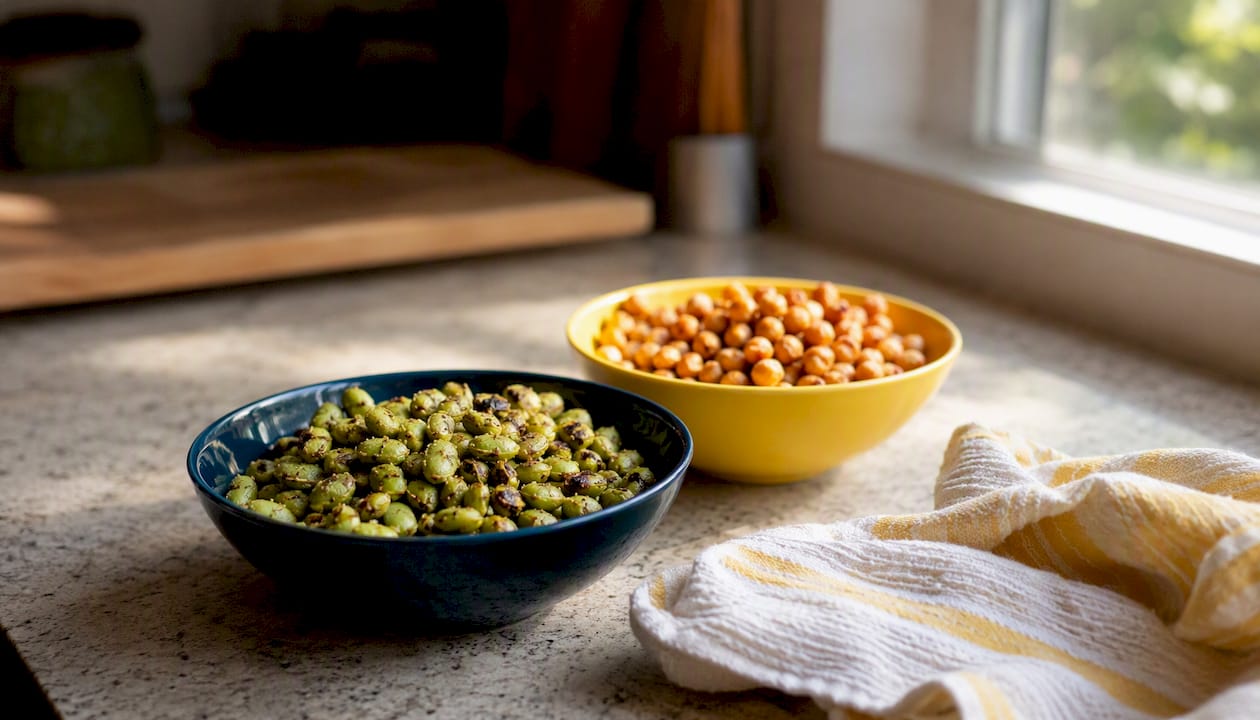
Fava-bean-based chips made from pulse flour can deliver a higher amount of protein per bag compared to many nut-based snacks.
Jerky and meat-based crisps
Beef, turkey, and salmon jerky generally provide moderate protein content per ounce and are shelf-stable and portable. However, sodium content may be relatively high, so it’s important to check nutrition labels. Biltong (air-dried beef) is lower in sugar than most jerky and worth seeking out if you want a cleaner label.
High-protein nuts and seed mixes
Pumpkin seeds, hemp seeds, almonds, and sunflower seeds provide moderate protein amounts per typical servings. While individually they do not reach 20 g protein, mixing these seeds and nuts in larger portions can increase total protein content.
Dairy-based crunchy options
Parmesan crisps and similar cheese-based snacks offer a moderate amount of protein per ounce and are generally shelf-stable and keto-friendly. FoodData Central dairy and soy snack entries confirm the protein density of cheese-based crisps.
Seed crackers and protein bars with crunch
Seed crackers made with flax, chia, and sunflower seeds provide smaller amounts of protein per serving and often complement higher-protein dips. Protein bars offer a variable protein range depending on ingredients and formulation.
Healthline’s roundup of high-protein snacks and Bon Appétit’s editor picks both confirm roasted chickpeas, edamame, and jerky as the most consistently recommended options across editorial sources.
How to make crunchy protein snacks at home
Five recipes, all under 45 minutes, all genuinely worth making. EatingWell’s most-saved high-protein snack recipes show that readers gravitate toward DIY options with clear crisping tips, so each recipe below includes one.
1. Crispy roasted chickpeas
The fastest legume snack you can make. One can of chickpeas yields roughly two servings at 8–9 g protein each.
Ingredients: 1 can (15 oz) chickpeas, 1 tbsp olive oil, 1 tsp smoked paprika, ½ tsp garlic powder, ¼ tsp salt.
- Preheat oven to 400°F.
- Drain and rinse chickpeas thoroughly.
- Spread on a clean kitchen towel and pat completely dry. This step is non-negotiable for crunch.
- Toss with oil and spices, then spread in a single layer on a baking sheet.
- Roast 30–35 minutes, shaking the pan halfway through.
- Turn the oven off and leave the pan inside for 10 more minutes.
Pro Tip: Leaving the chickpeas in the residual heat after you turn off the oven drives out the last of the moisture and gives you a snap that holds for days.
2. Dry-roasted edamame
Simpler than it sounds. Frozen shelled edamame roasts into a snack with roughly 12 g protein per cup serving.
Ingredients: 2 cups frozen shelled edamame (thawed), 1 tsp sesame oil, ½ tsp sea salt, optional: chili flakes.
- Preheat oven to 375°F.
- Thaw edamame and pat very dry with paper towels.
- Toss with sesame oil and salt.
- Spread in a single layer on a parchment-lined baking sheet.
- Roast 30–40 minutes until golden and slightly wrinkled.
- Cool completely before storing.
Pro Tip: Thawed edamame holds a lot of surface moisture. Spread it on a towel for 15 minutes before roasting, or the beans steam instead of crisp.
3. Baked tofu cubes
Extra-firm tofu pressed and baked becomes genuinely crunchy. One serving (about 3 oz) delivers roughly 10–12 g protein.
Ingredients: 14 oz block extra-firm tofu, 2 tbsp soy sauce or tamari, 1 tbsp nutritional yeast, 1 tsp garlic powder, 1 tsp cornstarch.
- Press tofu for at least 30 minutes using a tofu press or weighted plate.
- Preheat oven to 425°F.
- Cut tofu into ½-inch cubes.
- Toss with soy sauce, nutritional yeast, garlic powder, and cornstarch.
- Spread in a single layer on a lined baking sheet.
- Bake 25–30 minutes, flipping once at the 15-minute mark.
Pro Tip: The cornstarch coating is what creates the crust. Skip it and you get chewy tofu, not crunchy tofu.
4. Crunchy quinoa bites
Cooked quinoa toasted until it pops is one of the most underrated crunchy protein bases. Two tablespoons of dry quinoa yields roughly 4 g protein per serving; combine with nuts and seeds to reach 10–12 g.
Ingredients: 1 cup cooked quinoa, 2 tbsp almond butter, 1 tbsp honey, ¼ cup pumpkin seeds, ¼ cup chopped almonds, pinch of salt.
- Preheat oven to 350°F.
- Spread cooked quinoa on a lined baking sheet and bake 20 minutes until dry and slightly golden.
- Mix warm toasted quinoa with almond butter, honey, seeds, and almonds.
- Press firmly into a lined pan (about ½ inch thick).
- Refrigerate 30 minutes until set.
- Cut into small squares and store in an airtight container.
Pro Tip: Add a scoop of unflavored or vanilla protein powder to the mix before pressing. It adds 5–10 g protein per batch without changing the texture noticeably.
5. Protein granola clusters
Oat-based clusters with seeds and protein powder. One serving (about ¼ cup) can reach 10–14 g protein depending on the protein powder you use.
Ingredients: 2 cups rolled oats, ½ cup pumpkin seeds, ¼ cup hemp seeds, 1 scoop protein powder (vanilla or unflavored), 3 tbsp almond butter, 2 tbsp maple syrup, 1 tsp cinnamon.
- Preheat oven to 325°F.
- Mix dry ingredients in a large bowl.
- Warm almond butter and maple syrup together until pourable, then pour over dry mix.
- Stir until evenly coated.
- Spread on a lined baking sheet without breaking up the mixture too much.
- Bake 20–25 minutes until golden, then cool completely without touching.
Pro Tip: Don’t stir the granola while it’s cooling. Leaving it undisturbed is how clusters form instead of loose crumbles.
How do you get 20 g of protein in a crunchy snack?
The short answer: combine a crunchy base that delivers 12–15 g with a compact pairing that adds 5–8 g. That math gets you to 20 g without eating a full meal.
Two quick rules of thumb:
- Rule 1: Target 12–15 g from your primary crunchy item, then close the gap with a protein-dense pairing (a hard-boiled egg, a string cheese, a small Greek yogurt, or a nut butter packet).
- Rule 2: If your crunchy snack is under 10 g protein, double up on the pairing or increase the portion size before adding a second item.
| Combo | Protein total | Portability |
|---|---|---|
| Fava protein chips (15 g) + 1 hard-boiled egg (6 g) | ~21 g | Portable with a cooler pack |
| Dry-roasted edamame, 1 cup + 1 tbsp hemp seeds (3 g) | ~21 g | Fully shelf-stable |
| Beef jerky, 1 oz + 1 oz pumpkin seeds (9 g) | 20 g | Fully shelf-stable |
| Roasted chickpeas, 1 oz (8 g) + 2 tbsp almond butter (7 g) + 1 oz parmesan crisps (10 g) | ~25 g | Mostly shelf-stable |
| Protein granola clusters, ¼ cup (12 g) + ½ cup cottage cheese (14 g) | 20 g | Needs refrigeration |
The combos that travel best are the all-shelf-stable ones. Edamame plus hemp seeds and jerky plus pumpkin seeds both clear 20 g without needing a cooler, which makes them the most practical choices for commuters and travelers.
Pro Tip: Pre-portion your combos into small zip-lock bags or reusable containers on Sunday. Having five ready-to-grab bags in your bag or desk drawer removes the decision entirely on busy days.
What should you check on the label before buying?
Labels are where most people get tripped up. Here’s what to scan in order of importance:
- Protein grams per serving: Check both the serving size and the number of servings per container. A bag that says “7 g protein” but has 2.5 servings is delivering 17.5 g if you eat the whole thing.
- Calories per serving: High-protein snacks can still be calorie-dense. Nuts and nut-based bars especially.
- Sodium: Jerky, cheese crisps, and flavored roasted legumes can run 300–700 mg per serving. If you’re eating two servings, that adds up fast.
- Added sugars: Many flavored protein snacks add 5–10 g of sugar to improve taste. Check the “Added Sugars” line separately from total sugars.
- Ingredient list length: Shorter is generally better. If you can’t pronounce most of the ingredients, that’s a signal worth noticing.
- Type of fat: Avocado oil, olive oil, and coconut oil are preferable to partially hydrogenated oils or seed oil blends.
- Fiber: A crunchy snack with 3+ g fiber slows digestion and extends satiety alongside the protein.
The FDA’s interactive Nutrition Facts label tool explains exactly how protein is reported on packaged food labels and what the reference amounts mean. Use FoodData Central to cross-check protein claims for specific ingredients when a label seems off.
Research confirms that higher-protein snacks increase satiety and reduce subsequent calorie intake, so prioritizing protein grams on the label is evidence-backed, not just a fitness trend.
Pro Tip: When a crunchy snack is high in sodium, pair it with a large glass of water and a piece of fruit or raw vegetables. The fiber and water offset the sodium load and turn a snack into a balanced mini-meal.
Why are fava and legume-based protein chips worth taking seriously?
Most chip-style snacks are made from refined starches with protein added back in. Legume-based chips work differently: they start with pulse flour (fava bean, chickpea, lentil) as the primary ingredient, which means the protein is structural, not supplemental. That’s why a well-made fava chip can deliver double-digit protein grams without a long ingredient list.
The FDA’s protein labeling guidance and FoodData Central nutrient data for pulses both confirm that fava beans and chickpeas are naturally high in protein and fiber, making them a credible base for a snack that actually fuels you.
When evaluating any legume chip, look for these ingredient signals:
- Pulse or fava flour listed first — not potato starch or corn flour with a small amount of legume added
- Single-source fat — avocado oil or olive oil rather than a blend of seed oils
- No added sugar — flavoring should come from spices and seasonings, not sweeteners
- Non-GMO and gluten-free certifications — these indicate a more controlled supply chain and ingredient sourcing
The difference between a chip that’s 15 g protein per bag and one that’s 3 g often comes down entirely to whether the base ingredient is a pulse flour or a refined starch. Reading the ingredient list takes 10 seconds and tells you everything.
Pro Tip: Check whether the protein claim is per bag or per serving. Some snacks list a flattering per-serving number but the bag contains 2.5 servings. Wellnosh chips list 15 g fava bean protein per bag, which is the full amount you get when you eat the bag as a single snack, with no math required. For more on clean-label plant-based snack options, the Wellnosh blog covers what to avoid in processed soy-based alternatives.
The honest case for using crunchy protein snacks strategically
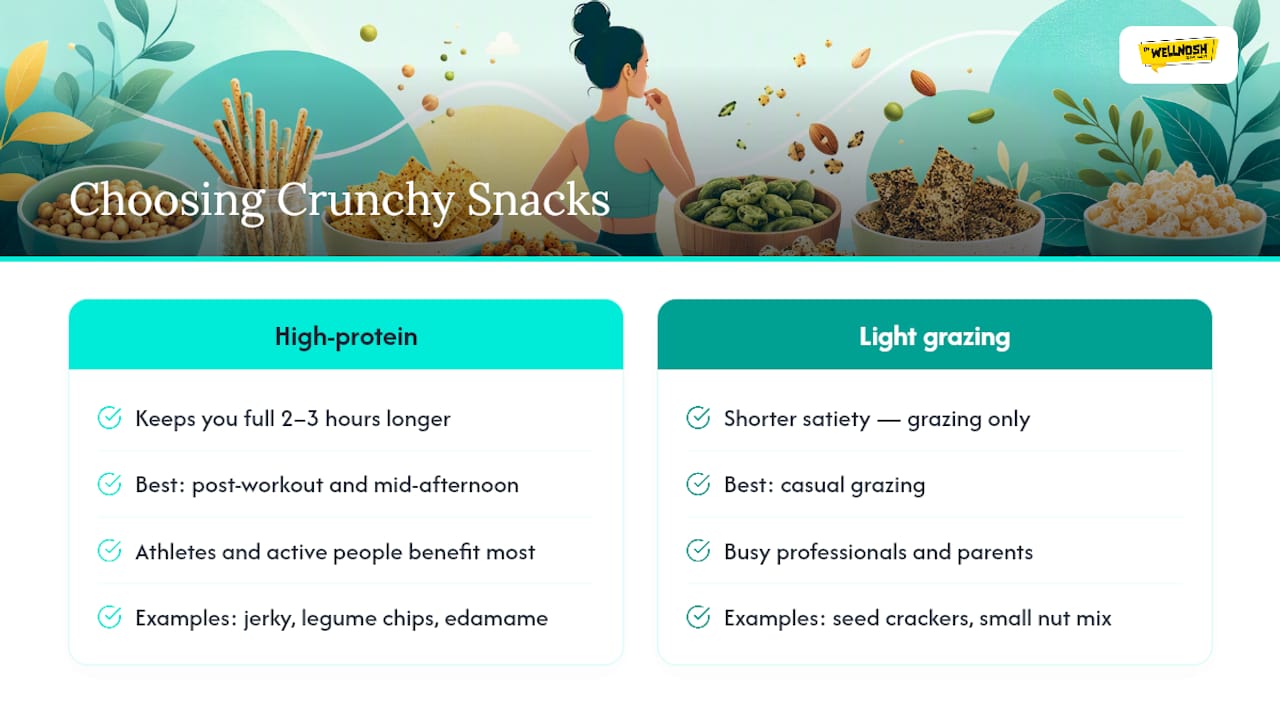
Most snacking advice treats all snacks as equal, which misses the point entirely. A 200-calorie bag of protein chips and a 200-calorie bag of pretzels are not the same snack. The protein version keeps you full for two to three hours longer, which means you eat less at your next meal. That’s not marketing copy; it’s what the satiety research consistently shows.
The practical implication: save your denser crunchy options (jerky, legume chips, edamame) for the moments when hunger is real and your next meal is more than two hours away. Post-workout and mid-afternoon are the two windows where a 15–20 g protein snack does the most work. Lighter options like seed crackers or a small nut mix are fine for grazing, but they won’t hold you through a long meeting or a hard training session.
Athletes and active people benefit most from the higher-protein end of this list. Plant-based protein snacks for athletes deserve particular attention for recovery, since fava and legume-based options provide protein alongside fiber and micronutrients that pure whey snacks don’t. Busy professionals and parents benefit from the shelf-stable, no-prep options. If you’re tracking sodium or calories closely, jerky and cheese crisps require more label scrutiny than roasted legumes or homemade recipes.
One caution worth naming: crunchy snacks are easy to overeat because the texture is satisfying in a way that keeps your hand moving. Pre-portioning is the single most effective habit for keeping snacks in their intended role.
Wellnosh protein chips: 15 g of fava protein, ready to grab
If you want a crunchy protein snack that requires zero prep and delivers a full 15 g of fava bean protein per bag, Wellnosh is the direct answer. The chips are cooked in avocado oil, non-GMO, gluten-free, low-carb, and contain no added sugar or seed oils. The ingredient list is short enough to read in one breath.
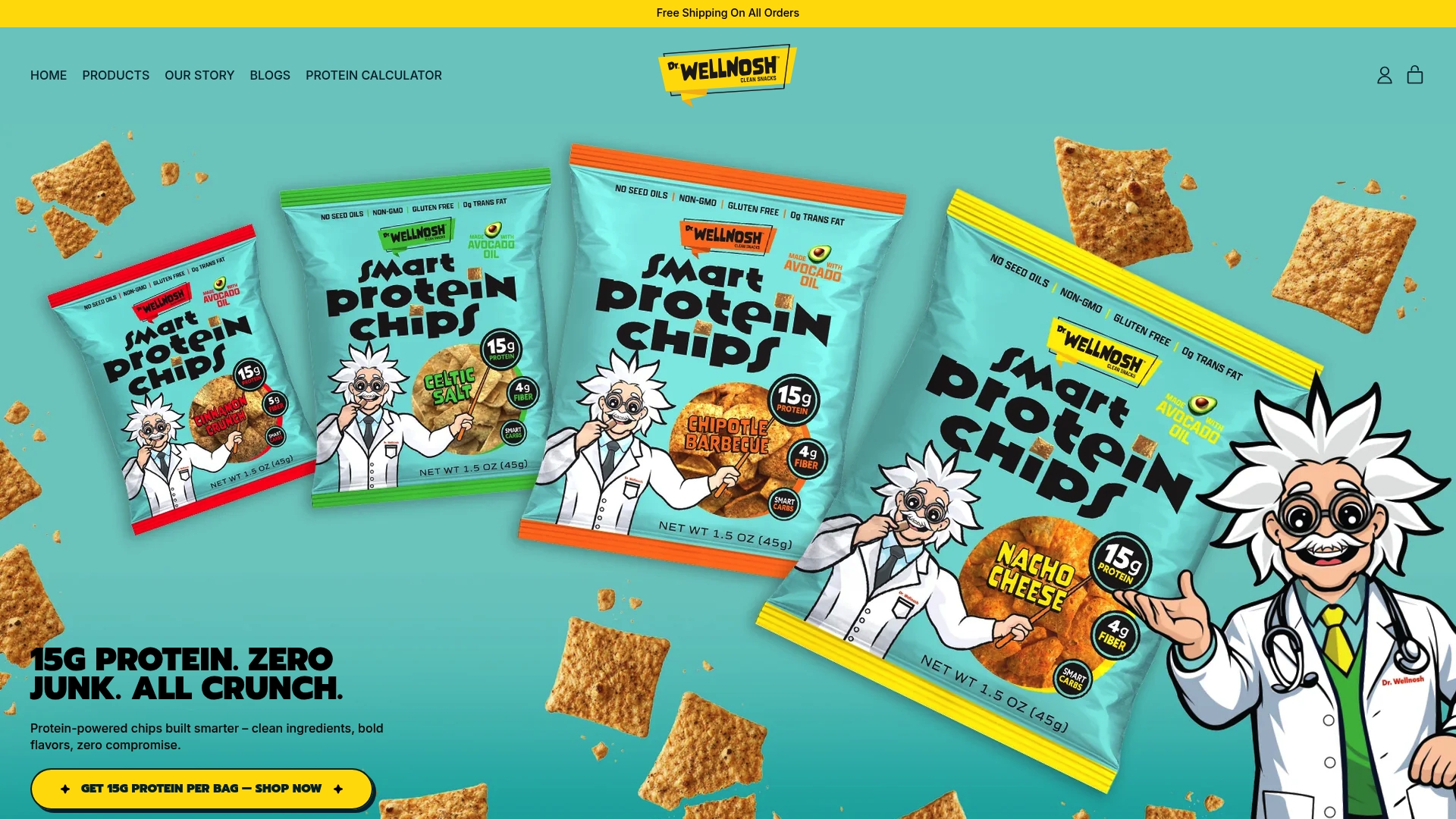
Product specs at a glance:
- 15 g fava bean protein per bag
- Cooked in avocado oil (no seed oils)
- Non-GMO, gluten-free, no added sugar
- Low-carb formulation
- Flavors: Nacho Cheese, Celtic Salt, Chipotle Barbecue, Cinnamon (check current availability), and Variety Pack
Pair a bag with a hard-boiled egg post-workout and you’re at 21 g protein with no cooking required. Toss a bag in your gym bag, carry-on, or desk drawer and it’s ready whenever hunger hits. Subscribe and save for regular delivery so you’re never caught without a solid snack option. Visit Wellnosh to see current flavors and subscription pricing.
Sources
- Pmc
- 30 High Protein Snacks That Are Healthy and Portable
- Our 18 Most-Saved High-Protein Snacks
- The Best High-Protein Snacks, According to BA Editors


