

· By Dr. Wellnosh
Macro-Balanced Snacking: What It Means and How to Do It
Macro-balanced snacking means choosing snacks that combine at least two macronutrients, typically protein plus a fiber-rich carbohydrate and/or a healthy fat, so your body gets steady energy and stays satisfied until the next meal. Registered dietitians describe balanced snacks as mini meals that fill nutritional gaps and prevent the hunger rebound that derails most people’s eating patterns. In practical terms, that looks like Greek yogurt with berries, a hard-boiled egg with whole-grain crackers, or a bag of high-protein chips alongside a piece of fruit.
The people who benefit most are anyone managing weight, building muscle, or trying to avoid the 3 PM energy crash. A snack combining a moderate amount of protein with carbohydrates that include fiber, plus a source of healthy fat, covers most goals without requiring a nutrition degree.
Three components go into every macro-balanced snack:
- Protein: Greek yogurt, cottage cheese, hard-boiled eggs, edamame, high-protein chips
- Fiber-rich carb: Fresh fruit, whole-grain crackers, oats, vegetables
- Healthy fat: Nut butter, avocado, almonds, seeds, avocado oil-cooked snacks
Table of Contents
- Why most snack foods leave you hungry an hour later
- What actually counts as a macro-balanced snack
- How to build a macro-balanced snack in under two minutes
- Macro-balanced snack ideas organized by what you actually have time for
- Portion guide and sample macros for common snack items
- Common mistakes that quietly undermine your macro goals
- Key Takeaways
- The part most macro guides get wrong
- Wellnosh fits macro-balanced snacking without the prep work
- Sources and further reading
Why most snack foods leave you hungry an hour later
Most packaged snacks fail on a simple test: they deliver calories without the protein or fiber your body needs to register fullness. A standard bag of pretzels or a granola bar typically runs 2–4 g of protein and less than 2 g of fiber, which means your blood sugar spikes and drops before the next meal even arrives.
The specific failure modes show up in a predictable pattern:
- Low protein: Under 5 g per serving, so hunger returns fast
- Low fiber: Refined carbs digest quickly, causing energy crashes
- High added sugar: Drives a rapid insulin response followed by fatigue
- Liquid calories: Sweetened coffees and juices add macros without triggering satiety signals
- Hidden fats and condiments: Dips, dressings, and sauces add calories that most people never log
The downstream effects matter more than the macros themselves. Faster hunger rebound leads to larger portions at the next meal. Unstable blood sugar makes afternoon focus difficult. Poor protein intake between workouts slows recovery. Replacing sugary snacks with protein-forward options breaks this cycle more reliably than willpower alone.
Pro Tip: Keep two or three pre-portioned snack duos at eye level in your fridge or on your counter. When hunger hits, you grab the ready option instead of defaulting to whatever is easiest.
What actually counts as a macro-balanced snack
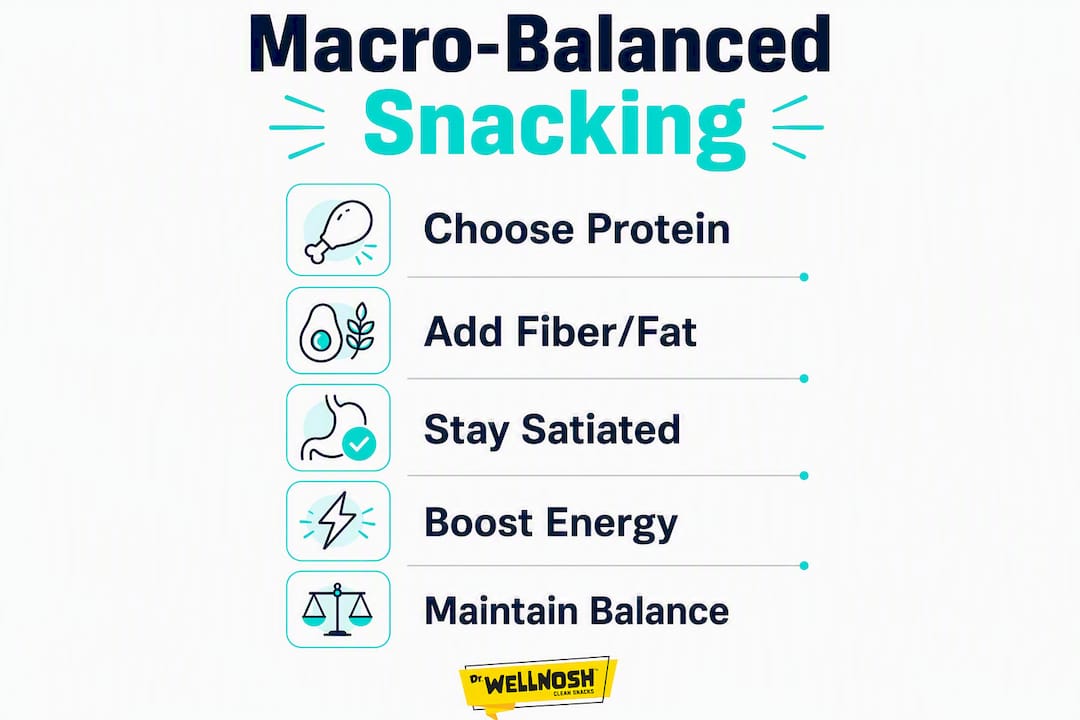
A balanced snack contains at least two macronutrients, with protein and fiber-rich carbs doing the heaviest lifting for satiety. Fat adds staying power and slows digestion further. The practical rule of thumb: if your snack has only one macronutrient, it is not balanced.
Common macro ratio targets for snacks:
- 40/30/30 (carbs/protein/fat): The most widely cited ratio for general health and weight management; works well for moderate-activity days
- 40/40/20 (carbs/protein/fat): Higher protein emphasis; suits muscle-building goals or post-workout windows
- Low-carb variation (20/40/40): Fits keto or low-carb preferences; leans on fat and protein for satiety
Per-snack gram targets that hit these ranges:
- Protein: 15–20 g
- Carbohydrates: 15–30 g, with at least 3–8 g of fiber
- Fat: 6–12 g
- Total calories: roughly 200–350 kcal for a true snack (not a meal replacement)
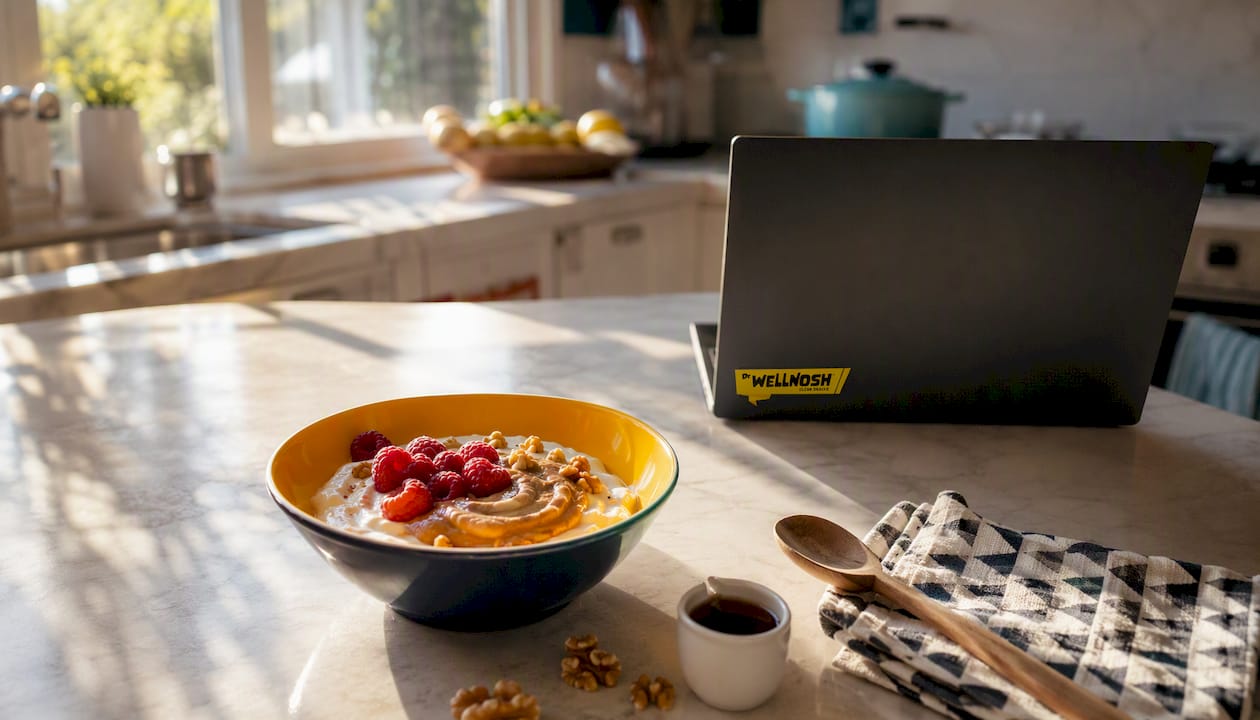
A concrete example: combining plain Greek yogurt, blueberries, and almond butter provides a balance of protein, carbohydrates (including fiber), and fat that fits a common macro ratio and can be prepared quickly.
Fiber slows digestion and extends the energy window of any snack, which is why whole grains, beans, and vegetables beat refined carbs every time. A rice cake has almost no fiber; a slice of whole-grain bread has 2–3 g. That difference compounds across three snacks a day.
Adjust targets based on your goal. Weight loss: stay toward the lower end of the calorie range and prioritize protein. Muscle gain: push protein to 20+ g and add a carb source. Endurance training: increase carbs to 35–40 g around workouts. Low-carb: swap the fiber carb for more fat and keep protein high.
One tracking note: match the food state when logging raw versus cooked. Chicken breast loses roughly 25% of its weight when cooked, so logging 4 oz raw versus 4 oz cooked produces very different numbers. The same applies to oats, rice, and most grains.
How to build a macro-balanced snack in under two minutes
The mix-and-match method, recommended by registered dietitian Kylie Sakaida, is the fastest way to assemble a balanced snack from whatever is already in your kitchen. No recipe needed.
- Pick a protein base. Greek yogurt, cottage cheese, a hard-boiled egg, canned tuna, edamame, or a high-protein chip bag.
- Add a fiber-rich carb. Fresh fruit, whole-grain crackers, a small sweet potato, raw vegetables, or oats.
- Include a healthy fat. Nut butter, a few almonds, avocado, seeds, or a product cooked in avocado oil.
- Portion it. Use the gram targets above as a guide; a palm-sized protein portion plus a cupped-hand carb portion is a reliable visual shortcut.
- Pack or store it. Pre-portion into containers the night before so the snack is grab-and-go the next day.
- Rotate weekly. Swap one component each week to avoid flavor fatigue while keeping the structure consistent.
Quick pairing examples:
- Canned tuna + whole-grain crackers + sliced avocado
- Cottage cheese + pineapple chunks + pumpkin seeds
- Hard-boiled egg + apple slices + almond butter
- Edamame + brown rice cakes + tahini drizzle
- Plain Greek yogurt + frozen berries (thawed) + walnuts
- High-protein plant-based chips + a piece of fruit + a string cheese
- Hummus + sliced bell peppers + a small whole-grain pita
- Smoked salmon + cucumber slices + whole-grain crackers
Pro Tip: Pick three to five go-to snack combos and rotate only those for the first month. Decision fatigue is the biggest reason people abandon macro tracking. Standardizing your snacks removes the daily calculation and makes consistency automatic. Practitioners recommend keeping a small set of pre-portioned staples to minimize decision fatigue and improve adherence over the long term.
Macro-balanced snack ideas organized by what you actually have time for
The goal here is variety without complexity. Some of these are grab-and-go; others take five minutes. All of them hit at least two macronutrients with meaningful fiber or fat.
Quick store-bought options (zero prep):
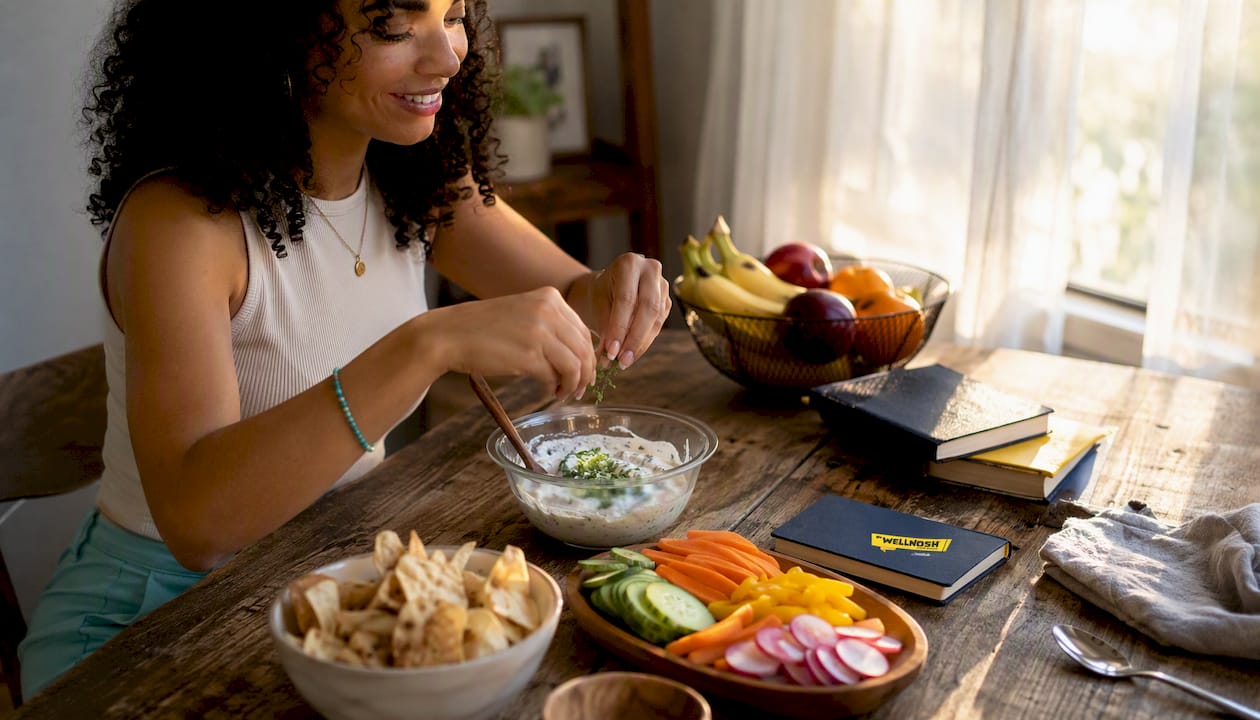
Examples of quick or meal-ish balanced snacks include combinations of protein sources such as plant-based chips, Greek yogurt, cheese, tuna, and cottage cheese with fiber-rich carbs like fruits, whole grains, and vegetables plus healthy fats from nuts, seeds, or avocado. These pairings provide a good balance to help maintain energy and satisfaction between meals.
For clean snack ideas you can build into a grocery list, having the right staples on hand is half the battle. Healthy alternatives to junk food that genuinely satisfy tend to share the same structure: protein, fiber, and a fat source working together.
Portion guide and sample macros for common snack items
Approximate values below are based on standard serving sizes. Brand and preparation method affect these numbers, so treat them as starting estimates rather than exact figures. Scale up or down by adjusting the protein source first, then the carb.
| Snack Item | Protein (g) | Carbs (g) | Fiber (g) | Fat (g) |
|---|---|---|---|---|
| Greek yogurt, plain (3/4 cup) | 15–17 | 8–10 | — | — |
| Wellnosh chips (1 bag) | 15 | low carb | varies | cooked in avocado oil |
| Hard-boiled egg (1 large) | 6 | — | — | 5 |
| Hummus (2 Tbsp) + whole-grain pita (1/2) | 5–6 | 18–20 | 3–4 | 5–6 |
| Cottage cheese (1/2 cup) + mixed berries (1/2 cup) | 15–20 | 12–15 | 2–3 | 2–3 |
| Almonds (1 oz) + small apple | 6 | 15–30 | 4–5 | 14 |
| Canned tuna (3 oz) + whole-grain crackers (6) | 20–22 | 18–20 | 2 | 2–4 |
| Peanut butter (2 Tbsp) + banana (1 medium) | 8 | 6–12 | 3–4 | 16 |
A single hard-boiled egg delivers 6 g of protein on its own, which is why it works better as a component than a standalone snack. Pair it with crackers and avocado and you cross into genuinely balanced territory. Invisible macros from dips and dressings are the most common reason a snack that looks balanced on paper ends up heavier than expected. Two tablespoons of ranch dressing adds roughly 14 g of fat and 140 calories. Log condiments separately.
Common mistakes that quietly undermine your macro goals
Most macro-snacking errors come from omission, not bad intentions. The fixes are straightforward once you see the pattern.
- Relying on single-macro snacks. A handful of almonds is a fat source, not a balanced snack. Add a protein to make it work.
- Ignoring portion sizes. “A handful” of nuts ranges from 10 g to 40 g depending on hand size. Weigh it once so you know what your handful actually is.
- Forgetting dressings and dips. A snack plate with hummus, crackers, and veggies looks balanced until you realize you used four tablespoons of hummus instead of two.
- Defaulting to low-fat packaged items. Low-fat yogurt often replaces fat with added sugar, which undermines satiety and blood sugar stability.
- Mis-weighing cooked versus raw. Matching the food state when logging prevents the most common source of tracking error.
- Skipping fiber. Protein without fiber digests faster than protein with fiber. A chicken breast and a rice cake is not the same as a chicken breast and a piece of fruit with skin.
Pro Tip: Use a kitchen scale for two weeks on your most frequent snacks. After that, you will have a calibrated mental model of your portions and can eyeball them accurately without weighing every time.
Key Takeaways
Every macro-balanced snack needs protein plus a fiber-rich carb and/or healthy fat; aim for 15–20 g protein, 15–30 g carbs with at least 3 g fiber, and 6–12 g fat per snack to support satiety, steady energy, and fitness goals.
| Point | Details |
|---|---|
| Core snack structure | Combine protein + fiber-rich carb and/or healthy fat in every snack. |
| Per-snack targets | Aim for 15–20 g protein, 15–30 g carbs (3+ g fiber), 6–12 g fat. |
| Behavioral habit | Standardize 3–5 go-to snack combos to eliminate daily decision fatigue. |
| Tracking accuracy | Match food state (raw vs. cooked) and log dips/dressings separately. |
| Ready-made option | Wellnosh chips deliver 15 g fava bean protein per bag, cooked in avocado oil, with no added sugar. |
The part most macro guides get wrong
Most macro snacking content focuses entirely on hitting numbers. Track your protein, hit your ratios, log everything. That advice is not wrong, but it misses the behavioral layer that actually determines whether someone sticks with it past week two.
The readers who succeed long-term are not the ones who track most precisely. They are the ones who standardize. They pick four snacks they genuinely like, pre-portion them, and eat the same combinations most days. Their tracking burden drops to near zero because the math is already done. Healthline’s practitioner guidance makes this point clearly: start with one macro, typically protein, and build repeatable habits around it before adding complexity.
There is also a quality dimension that pure macro math ignores. Two snacks can hit identical protein, carb, and fat numbers while being nutritionally miles apart. A protein bar with 22 ingredients and 15 g of added sugar technically “hits macros.” Whole-food combinations with fiber, micronutrients, and minimal processing do something the bar cannot: they support gut health, micronutrient density, and long-term metabolic function. Macro tracking gives you one useful lens, but food quality and variety remain the foundation.
The practical takeaway: use macro targets as a filter, not a formula. If a snack clears the protein and fiber threshold and comes from whole or minimally processed ingredients, it is doing its job. Obsessing over whether you hit 17 g or 19 g of protein is less valuable than building the habit of reaching for a balanced option in the first place.
Wellnosh fits macro-balanced snacking without the prep work
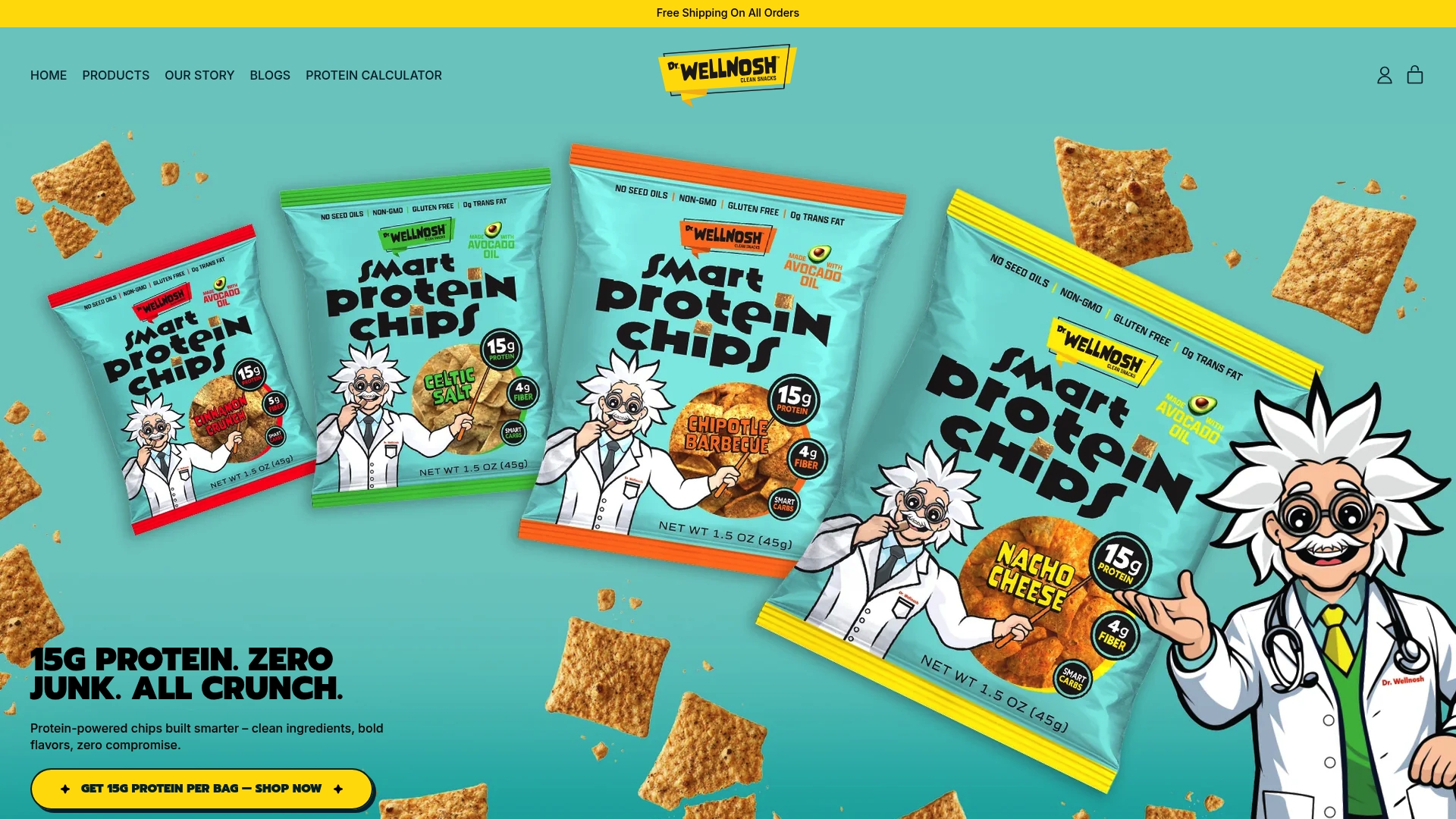
A plant-based chip that delivers 15 g of fava bean protein per bag is one of the few store-bought snacks that functions as a genuine protein anchor, not just a carb vehicle. Wellnosh Chipotle Barbecue chips are cooked in avocado oil, non-GMO, gluten-free, low carb, and contain no added sugar or seed oils. The ingredient list is short and readable, which matters when you are trying to avoid the hidden sugars and additives that quietly throw off your macros.
Two quick pairings that turn a bag into a complete macro-balanced snack:
- Chipotle Barbecue chips + a medium apple + a string cheese: roughly 22 g protein, 30 g carbs, 9 g fat. Savory, sweet, and filling enough to carry you three to four hours.
- Chipotle Barbecue chips + plain Greek yogurt dip (1/2 cup) + raw veggies: roughly 28 g protein, 18 g carbs, 6 g fat. A meal-ish snack that works as a post-workout option.
The Cinnamon flavor is currently out of stock, but the Chipotle Barbecue, Nacho Cheese, Celtic Salt, and Variety Pack are available for one-time purchase or through the Subscribe & Save option for consistent weekly delivery. For anyone building a repeatable snack rotation, the subscription removes the friction of reordering.
Sources and further reading
Consult a registered dietitian for personalized macro targets, especially if you have specific health conditions, athletic goals, or dietary restrictions.
- Your go-to guide to balanced snacking — Anna Jones, RD
- The mix-and-match snack strategy — Real Simple
- How to track your macros without it taking over your life — Healthline
- How to track macros — Macro & Meals
- How to build a balanced snack — Kelsey & Cooper’s Kitchen
- How to track macros: A doctor-reviewed guide — Acibadem
- How to track macros effectively — Verywell Health
- Crafting the perfect balanced snacks — The Michigan Dietitian
- Balanced Snacks to Fuel your Health Goals — The Balanced Nutritionist
- The role of snacks in daily macro targets — Wellnosh
- Plant protein snacks for athletes — Wellnosh


