

· By Dr. Wellnosh
Choose Low Carb Snacks at the Store: Quick Picks
The most reliable packaged snacks for low-carb shoppers are cheese crisps, jerky, pork rinds, single-serve nut packs, hard-boiled egg packs, seaweed sheets, single-serve olives, and plant-based protein chips. The single easiest rule: pick anything with 5 grams of carbohydrates or fewer per labeled serving. That threshold comes from Harvard Health and the Academy of Nutrition and Dietetics, and it holds up across nearly every store format you’ll walk into.
Grab-and-go shortlist for right now:
- String cheese (low carb per stick)
- Plain beef or turkey jerky (low carb per serving, check for added sugar)
- Pork rinds (0 g carbs)
- Single-serve almond or pecan packs (low net carbs per oz)
- Pre-boiled egg packs (0 g carbs)
- Wellnosh plant-based protein chips (low carb, high protein per bag)
Pro Tip: Grab single-serve formats whenever you can. A full-size bag of nuts or jerky often contains three or four servings, and the label math only works if you stop at one.
Table of Contents
- What packaged low-carb snacks can you actually find at the store?
- How to read labels and find low-carb picks aisle by aisle
- Three questions to ask before you put it in the cart
- Where to look in the store and how to spend less
- Why plant-based protein chips are worth a look
- Key Takeaways
- The case for snacking with intention, not restriction
- Wellnosh chips: a ready low-carb grab for when you want real crunch
- Useful sources and further reading
What packaged low-carb snacks can you actually find at the store?
The categories below cover the most store-friendly packaged options, with typical carb ranges so you can compare at the shelf without doing mental gymnastics.
- Cheese crisps and sticks: 0–1 g carbs per serving. Shelf-stable cheese crisps (baked cheese rounds) and refrigerated string cheese are among the lowest-carb packaged options you’ll find anywhere in the store.
- Beef, turkey, or biltong jerky: low carbs per serving for plain or lightly seasoned varieties. Flavored jerky (teriyaki, honey BBQ) can have higher carbs, so flip the bag.
- Pork rinds: 0 g carbs. Literally fried pork skin. Shelf-stable, cheap, and the crunchiest zero-carb option in the snack aisle.
- Single-serve olives or pickles: 0–1 g carbs. Usually found near the deli or in the olive/pickle aisle in small pouches.
- Nut and seed single-serve packs: 2–6 g carbs per oz depending on the nut. Pecans, macadamias, and walnuts sit at the lower end; cashews run higher.
- Pre-boiled egg packs: 0 g carbs. Available refrigerated at most major grocery chains and convenience stores.
- Seaweed snack sheets: 0–1 g carbs per pack. Light, salty, and genuinely satisfying if you like umami.
- Low-sugar dark chocolate squares: 3–6 g carbs per square at 85%+ cacao. One square is a real serving.
- Plant-based high-protein chips: Varies by brand. Look for options made with legume protein and cooked in a quality oil, with total carbs under 5 g per serving.
Shelf-stable picks (pork rinds, seaweed, nut packs, jerky, cheese crisps) live in the snack aisle or natural foods section. Refrigerated picks (string cheese, egg packs, olives) are in the dairy or deli area.
Pro Tip: Pairing protein with fat or fiber turns a snack into a mini-meal. A string cheese plus a small nut pack keeps you full far longer than either one alone.
How to read labels and find low-carb picks aisle by aisle
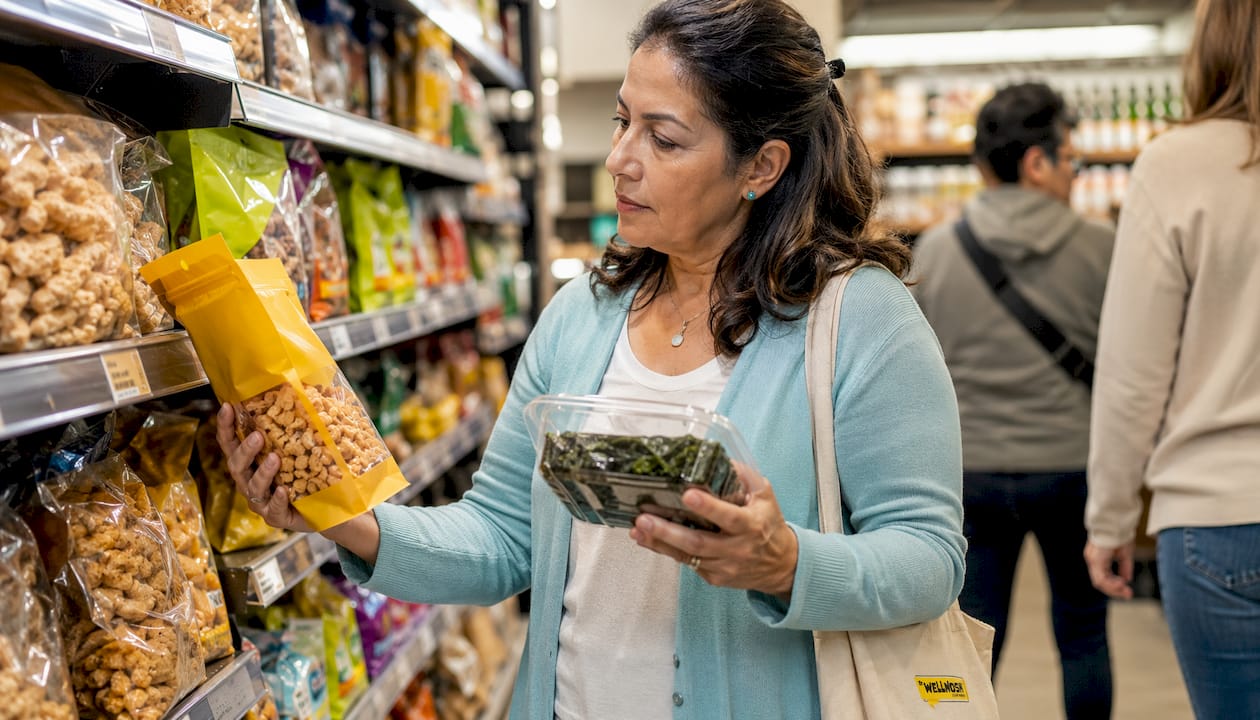
Knowing which aisle to hit is half the battle. The other half is reading the label correctly once you’re standing there.
The label sequence that actually works
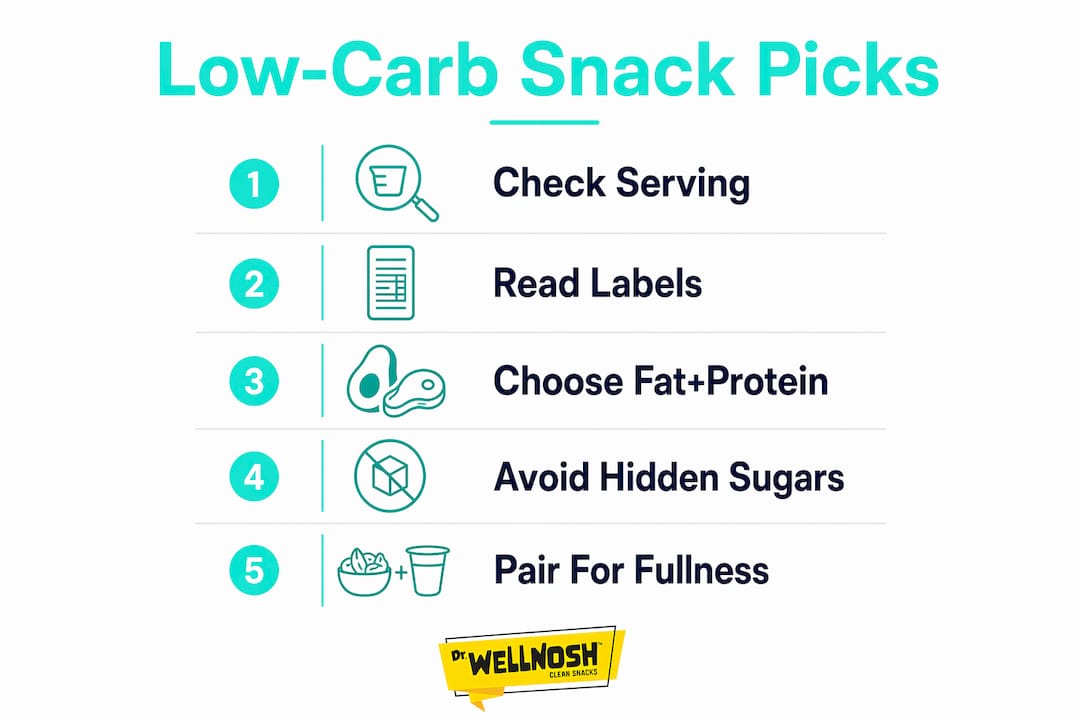
Front-of-pack claims can mislead you every time. Flip the package and read the Nutrition Facts in this order:
- Serving size — check it before anything else. If the bag says “7 chips” per serving and you’ll eat 21, multiply every number by three.
- Total carbohydrates — this is your baseline. Ignore net-carb marketing on the front until you’ve seen this number.
- Dietary fiber and sugar alcohols — you can subtract these from total carbs to estimate digestible carbs, but only after you’ve confirmed the serving math.
- Added sugars — even a “low-carb” jerky can pack 8 g of added sugar per serving from honey or corn syrup.
- Protein — higher protein means more satiety per gram of carb you’re spending.
- Sodium — not a carb concern, but worth a glance on heavily processed snacks.
Serving-size math example
A bag of trail mix lists 5 g total carbs per serving, and there are four servings in the bag. If you eat half the bag, you’ve had 10 g of carbs, not 5. That’s still workable for many plans, but it’s not the 5 g the label implies at first glance. When a serving size is unrealistically small, divide the whole container’s total carbs by the number of realistic portions you’d actually eat.
Aisle-by-aisle picks and warning items
| Category | Typical Carbs/Serving | Where to Find It | Watch Out For |
|---|---|---|---|
| String cheese | ~1 g | Dairy/deli | Flavored varieties with added starch |
| Beef or turkey jerky | 1–4 g (plain) | Snack aisle / deli | Teriyaki, honey, BBQ glazes (8–12 g) |
| Pork rinds | 0 g | Snack aisle | Flavored coatings with maltodextrin |
| Cheese crisps | 0–1 g | Snack/natural foods | Multi-serving bags with tiny serving sizes |
| Single-serve nut packs | 2–6 g | Snack aisle / checkout | Candied or yogurt-coated varieties |
| Pre-boiled egg packs | 0 g | Refrigerated prepared foods | Deviled egg packs with sugary fillings |
| Seaweed sheets | 0–1 g | Asian foods / natural foods | Sesame oil varieties (fine) vs. added sugar |
| Dark chocolate (85%+) | 3–6 g per square | Candy/baking aisle | Anything below 85% cacao |
| Plant-based protein chips | Varies | Natural foods / protein aisle | Seed oils, maltodextrin, artificial flavors |
Sugar alcohols deserve a specific warning. Maltitol, in particular, behaves more like sugar than most labels suggest and can spike blood sugar or cause digestive discomfort in some people. IMO fibers (isomalto-oligosaccharides), often marketed as “prebiotic fiber,” are similarly unreliable for carb math. If you see either on the ingredient list, treat the product’s net-carb claim with skepticism.
Three questions to ask before you put it in the cart
You don’t need a nutrition degree to shop low-carb. Three questions, run in under 30 seconds, cover almost every situation.
- Is the labeled serving size what I’ll actually eat? If not, do the quick multiply. A snack that looks like 4 g of carbs can easily become 12 g if the serving is unrealistically small.
- Are total carbs at or below 5 g per serving? This is the Harvard Health threshold for a low-carb snack. Use total carbs, not net carbs, as your starting point.
- Is the ingredient list short and readable? Pronounceable ingredients, no maltitol, no industrial seed oils (soybean, canola, sunflower), no added sugar hiding as “honey solids” or “brown rice syrup.”
Quick in-aisle checklist
- Serving size confirmed against realistic portion
- Total carbs ≤ 5 g per serving
- Added sugars ≤ 1–2 g
- No maltitol or IMO fibers if you’re strict
- Protein ≥ 5 g (for satiety)
- Fiber present (slows glucose response)
- Sodium reasonable (under 400 mg per serving is a decent benchmark)
Registered dietitians note that snacks with 10–15 g of carbs can still fit many low-carb plans when they’re paired with protein and fiber. The 5 g rule is a conservative floor, not a ceiling for everyone.
Pro Tip: If you’re eating more than the labeled serving, flip the package and find “Total Carbohydrate” for the whole container. Divide by the number of realistic portions. That number is your actual carb cost.
Where to look in the store and how to spend less
Most shoppers head straight for the “keto” or “diet” snack aisle and pay a premium for the privilege. The better move is usually the opposite direction.
Aisle-by-aisle map:
- Dairy/deli: String cheese, pepperoni slices, hard-boiled egg packs, sliced deli meats. These typically contain 0–1 g net carbs per serving and offer a better protein-to-price ratio than most specialty snack aisle items.
- Snack/jerky aisle: Pork rinds, plain jerky, seaweed, some cheese crisps. Read every label here.
- Refrigerated prepared foods: Pre-boiled egg packs, cheese snack trays, sometimes single-serve guacamole.
- Olive/pickle/canned aisle: Single-serve olive pouches, pickles. Zero to one gram of carbs, often under a dollar per pack.
- Baking/bulk nuts section: Almonds, pecans, walnuts in bulk or single-serve. Buying from the bulk bin is consistently cheaper than pre-packaged single-serve bags.
- Natural foods/protein aisle: Plant-based protein chips, keto bars, specialty crackers. Highest prices in the store, so compare labels carefully before paying the markup.
Value habits that actually work:
Store-brand pork rinds and deli-case string cheese are often far cheaper per serving than specialty keto chips and bars. A block of cheddar you slice yourself costs a fraction of pre-packaged cheese crisps. For specialty items like plant-based protein chips or keto bars, check the brand’s website directly. Online pricing, especially with a subscription, frequently beats the retail shelf price.

Pro Tip: Before buying a multi-pack at the store, check the brand’s website. Subscribe-and-save models on direct-to-consumer snack brands often cut 10–20% off the per-bag price compared to the grocery shelf.
Why plant-based protein chips are worth a look
Most low-carb “crunch” options at the store are either pork rinds (zero carbs, but not plant-based) or cheese crisps (great, but one-dimensional). Plant-based protein chips fill a gap: they deliver a chip-like eating experience with a protein profile that most snack foods can’t match.
The nutritional case is straightforward. Fava bean protein chips can provide around 15 g of protein per bag while keeping digestible carbs low. That protein-to-carb ratio is competitive with jerky and significantly better than any grain-based chip. Cooking in avocado oil rather than soybean or canola oil is a meaningful quality signal: avocado oil is stable at high heat and free of the inflammatory concerns associated with industrial seed oils.
What to look for in a plant-based protein chip: 15 g of protein per bag, cooked in avocado oil, non-GMO, gluten free, low carb, no seed oils, no artificial additives, and no added sugar. That’s the full checklist Wellnosh chips meet across every flavor, including Nacho Cheese, Celtic Salt, Chipotle Barbecue, and Cinnamon.
Wellnosh chips are a direct answer to the most common complaint about low-carb snacking: that the options are either boring (plain nuts, plain cheese) or loaded with questionable ingredients. The fava bean base delivers complete-feeling satiety, and the avocado oil cook gives a clean crunch without the greasy aftertaste of conventional chips.
One honest caveat: if you’re choosing between Wellnosh chips and a hard-boiled egg pack for pure cost-per-gram-of-protein, the egg wins on price. Where plant-based protein chips earn their place is when you want something that actually feels like a snack, not a diet food, and when ingredient quality matters as much as the carb count.
Pro Tip: Check the hidden carbs guide on the Wellnosh blog before your next grocery run. It walks through the specific label tricks that inflate carb counts on otherwise clean snacks.
Key Takeaways
Picking low-carb snacks at the store comes down to one rule and three questions: confirm the serving size, check that total carbs are at or below 5 g, and verify the ingredient list is short and free of problem sweeteners or seed oils.
| Point | Details |
|---|---|
| Use the 5 g rule | Harvard Health defines a low-carb snack as 5 g of total carbohydrates or fewer per labeled serving. |
| Start with serving size | Always multiply the label’s carb count by how many servings you’ll realistically eat before comparing products. |
| Dairy and deli win on value | String cheese, pepperoni, and egg packs typically offer 0–1 g net carbs per serving at a lower cost than specialty keto aisle items. |
| Pair protein with fiber or fat | Combining protein with fiber or fat slows glucose response and makes the snack feel like a mini-meal, reducing the urge to keep eating. |
| Wellnosh for clean crunch | Wellnosh plant-based protein chips deliver 15 g of fava bean protein per bag, cooked in avocado oil, with no seed oils or added sugar. |
The case for snacking with intention, not restriction
There’s a version of low-carb snacking that turns into a joyless audit of every label, and a version that’s actually sustainable. The difference is usually whether you’ve built a short mental list of things you trust before you walk into the store.
The conventional advice is to “just eat whole foods.” That’s true, and also not always practical at 3 PM when you’re between meetings and the vending machine is the only option in sight. What actually works is having two or three packaged options you’ve already vetted, so the decision is already made.
What I find underappreciated is the ingredient-quality gap between snacks that look similar on paper. Two products can both show 4 g of total carbs per serving, but one is cooked in avocado oil with a five-ingredient list, and the other is a seed-oil-fried product with maltodextrin and three artificial flavors. The carb count is the same. The effect on how you feel an hour later is not.
The plant-based protein chip category is genuinely newer and better than it was even a few years ago. Fava bean protein, in particular, delivers a complete amino acid profile that most plant proteins don’t. Pair that with avocado oil cooking and a clean label, and you have something that holds up to scrutiny. That’s the standard Wellnosh was built around, and it’s the standard worth applying to anything else you pick up at the store.
Wellnosh chips: a ready low-carb grab for when you want real crunch
If you’ve read this far, you already know what a clean low-carb snack looks like on a label. Wellnosh chips are the packaged option that checks every box: 15 g of fava bean protein per bag, cooked in avocado oil, non-GMO, gluten free, low carb, no seed oils, no artificial additives, no added sugar.
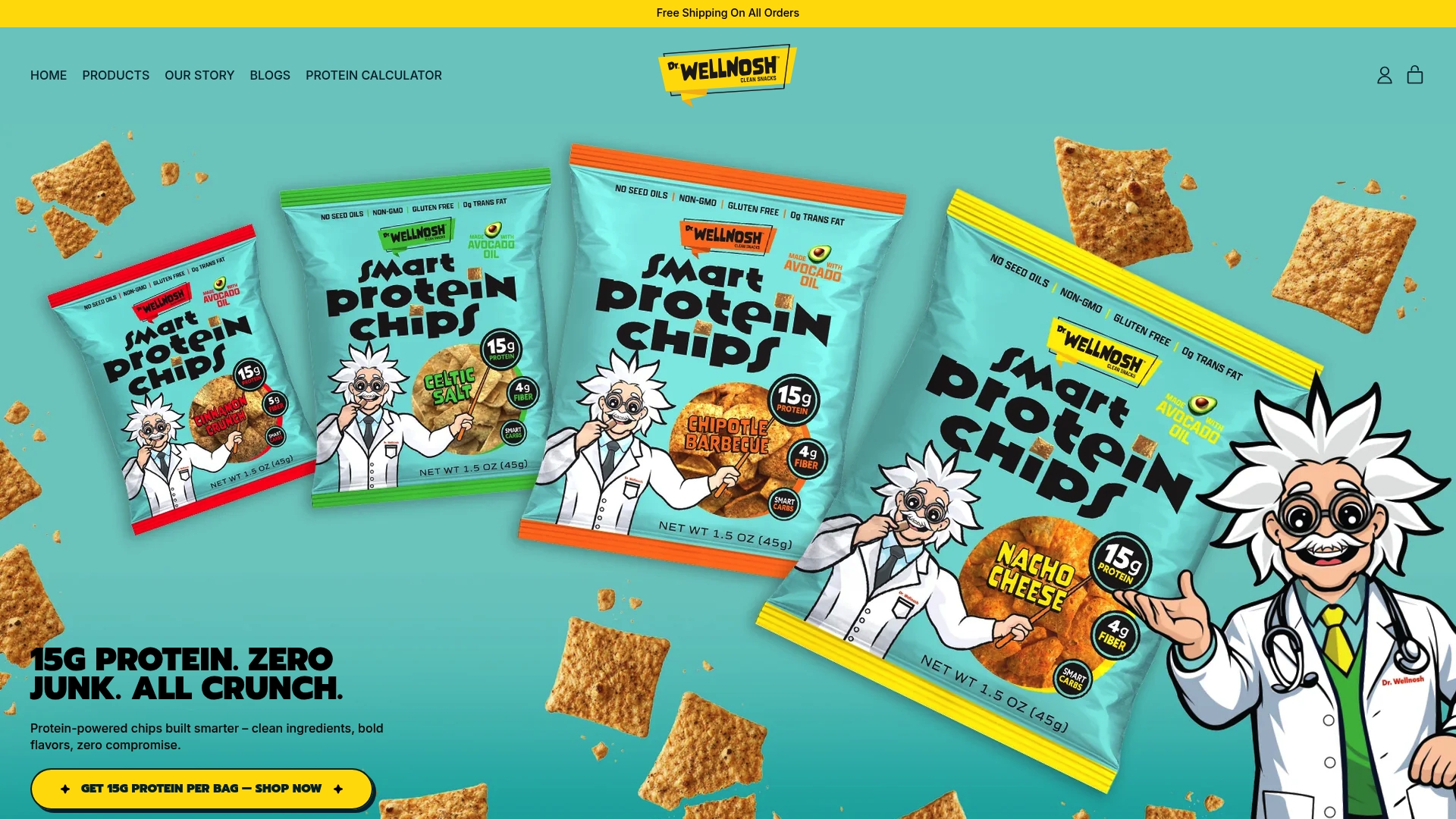
They work as a gym bag snack, a desk snack, a travel snack, or a post-workout pairing with Greek yogurt or cottage cheese. For plant-based snackers and athletes who want protein without the meat, they’re one of the few packaged options that actually delivers on the label. The Chipotle Barbecue flavor is the current in-stock pick. Cinnamon and an additional Chipotle Barbecue listing are currently out of stock, so check the site for the latest availability and to explore the full flavor lineup. Order directly at wellnosh.com for the best per-bag price, especially with the Subscribe & Save option.
Useful sources and further reading
Authoritative references used in this article, plus Wellnosh resources for deeper label-scanning guidance:
- Harvard Health: Low-carb snacks — The primary source for the 5 g carb threshold and the Academy of Nutrition and Dietetics guidance on balanced, protein-forward snacking.
- Prevention: Best Low-Carb Snacks — Representative carb examples per snack category and registered dietitian guidance on pairing and satiety.
- Eatibo: Low-Carb Snack Label Scan Guide — Detailed label-reading sequence, serving-size math, and sugar alcohol/IMO cautions.
- SugarFreeChic: Keto Shopping at Walmart — Value comparisons between deli/dairy staples and specialty keto snack aisle items; sugar alcohol warnings.
- KetoDietCorner: Best Keto Snacks — Category discussion supporting plant-based protein chips as a high-protein, low-carb packaged option.
- Wellnosh: Hidden Carbs in Snacks — Brand-produced guide to net-carb math, hidden carbohydrate sources, and label examples for low-carb shoppers.
- Wellnosh: Healthiest Chip Alternatives — Curated comparison of grain-based chip alternatives, with ingredient-quality criteria.
- Low-Carb Lunch Ideas: Homecooked — Practical low-carb meal and snack ideas for portable, on-the-go eating.


