

· By Dr. Wellnosh
Plant-Based Snack Ingredients Explained for Smarter Snacking
Plant-based snack ingredients come from fruits, vegetables, nuts, seeds, whole grains, legumes, plant oils, plant proteins, fibers, and sweeteners. The single most useful rule when choosing them: look for snacks that deliver protein plus fiber with low added sugar and reasonable sodium. That combination is what separates a genuinely satisfying snack from one that looks healthy on the front of the bag and falls apart on the back.
Practical thresholds to keep in your head at the store:
- Protein: aim for 5–10 g per serving
- Fiber: aim for a sufficient amount to support fullness per serving
- Added sugar: keep it as low as possible per serving
- Sodium: a moderate amount per serving is advisable to avoid excessive intake
- Ingredient list: if you can’t pronounce most of what’s listed, or sugar appears in the first three ingredients, that’s a signal worth heeding
Pro Tip: Use the “Protein + Produce” shortcut. Pair a plant-protein packaged snack with a fresh fruit or vegetable. You get the convenience of a packaged product and the fiber, water, and micronutrients of whole food. Satiety lasts longer.
Key Takeaways
The most effective approach to plant-based snacking is to prioritize protein and fiber per serving, minimize added sugar and sodium, and choose snacks whose first ingredients are recognizable whole-food plant sources.
| Point | Details |
|---|---|
| Protein + fiber benchmark | Aim for 5–10 g protein and ≥3 g fiber per serving for a snack that genuinely satisfies. |
| First three ingredients rule | The first three ingredients make up most of the product; whole-food plant sources should lead. |
| Red flags to skip | Avoid sugar in the top three ingredients, hydrogenated oils, and very long synthetic additive lists. |
| Protein + Produce pairing | Pair a packaged plant-protein snack with fresh fruit or vegetables for better satiety and micronutrients. |
| Wellnosh as a benchmark | Wellnosh protein chips deliver 15 g fava bean protein, zero added sugar, and avocado oil — a practical example of the checklist in action. |
Table of Contents
- What plant-based snack ingredients are you actually looking at?
- What does each ingredient group actually do for your nutrition?
- Which processed plant-based ingredients should you watch out for?
- How to read a plant-based snack label in under two minutes
- A dietitian-backed checklist for picking nutrient-dense plant-based snacks
- Concrete snack examples and smarter swaps
- Why ingredient literacy is the real skill for plant-based snackers
- Wellnosh puts these ingredient principles into practice
- Sources
What plant-based snack ingredients are you actually looking at?
Understanding the ingredient groups on a label is the first step to reading one confidently. Here’s what each category is and where you’ll find it.
Fruits and vegetables show up as whole dried fruit, vegetable chips, purees, or powders. They contribute vitamin C, potassium, and natural fiber, but dried fruit concentrates sugars significantly, so portion size matters.
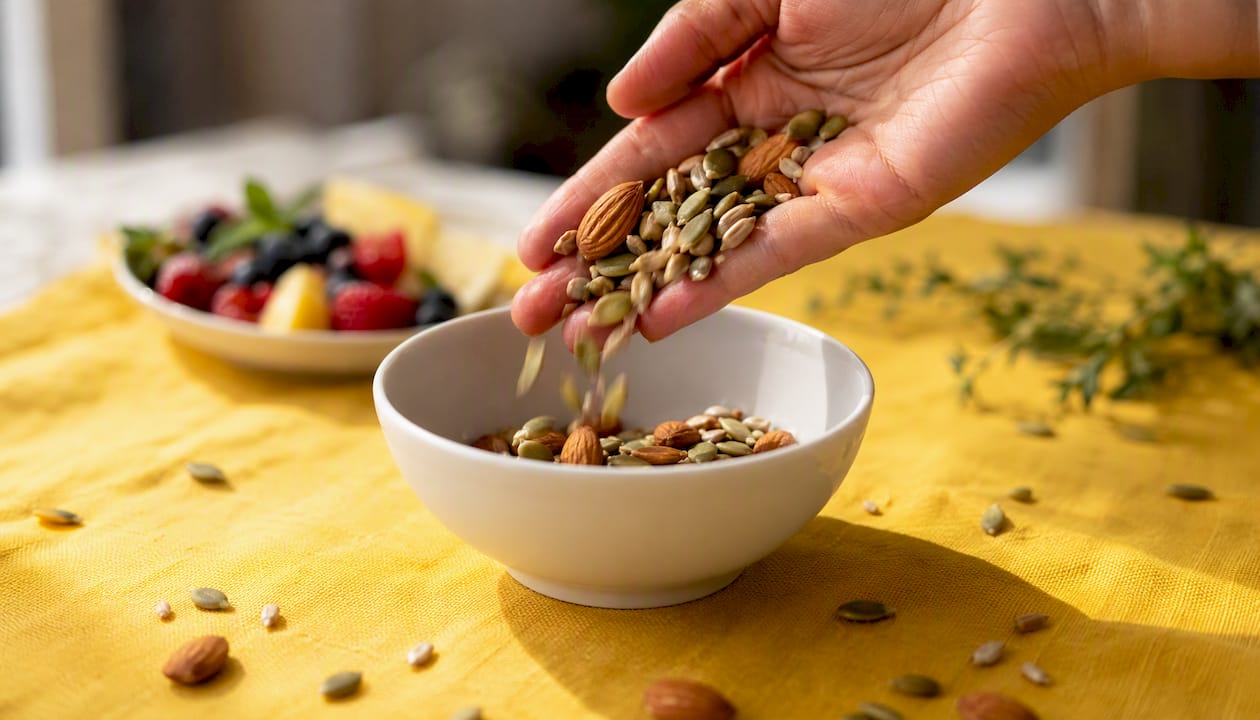
Nuts and seeds (almonds, peanuts, pumpkin seeds, sunflower seeds) are among the most nutrient-dense ingredients in packaged snacks. They supply plant protein, unsaturated fats, vitamin E, and magnesium. The trade-off is calorie density: a small handful goes further than it looks. Trail-mix-style combinations of nuts, seeds, whole-grain cereal, and dried fruit deliver all of these benefits when portions stay controlled.
Whole grains and flours (oats, brown rice, whole-wheat, sorghum) form the base or binder in crackers, bars, and puffed snacks. They provide complex carbohydrates and fiber. The key word is whole: “wheat flour” without the word “whole” means the bran and germ have been stripped out.
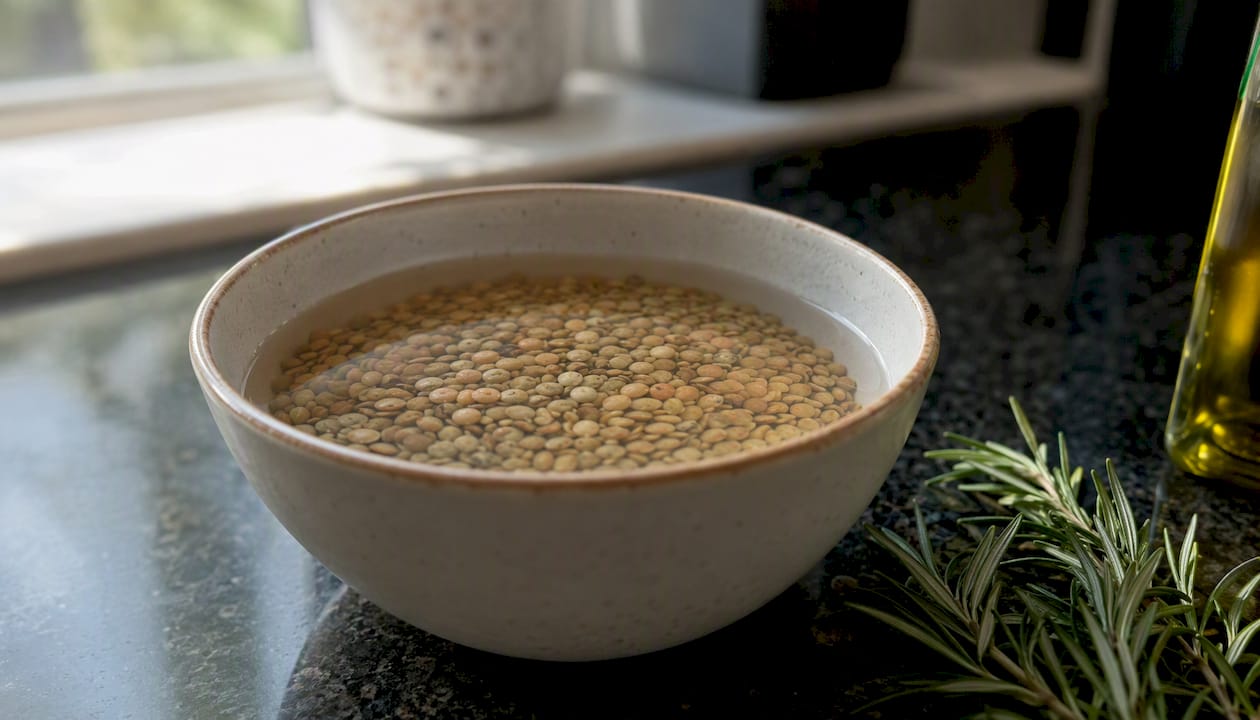
Legumes and pulse ingredients (chickpeas, lentils, fava beans, pea flour) are the high-protein, high-fiber workhorses of plant-based snacking. Fava beans, for example, deliver a complete amino-acid profile alongside substantial fiber. Processing steps like soaking, dehulling, and extrusion are often needed to improve digestibility and flavor, which is why you’ll see “pea flour” or “chickpea flour” rather than raw legumes on most labels.
Plant protein ingredients and isolates (pea protein isolate, soy protein concentrate, rice protein) are concentrated extracts used to push protein content higher without adding bulk. They’re functional and effective, but they involve more processing than whole legume flours. Formulators often blend pea and rice proteins to improve amino-acid balance and reduce the chalky off-flavors that single-source isolates can produce.
Starches and texturizers (tapioca, cassava, corn starch, potato starch) create crispness and structure. They’re largely neutral nutritionally but affect how a snack expands and holds together during baking or extrusion.
Plant oils and fats (avocado oil, olive oil, sunflower oil) contribute mouthfeel and shelf life. Avocado and olive oil are high in monounsaturated fats; sunflower and other seed oils vary widely in their fatty-acid profiles depending on processing.
Sweeteners and sugar substitutes (cane sugar, concentrated fruit juice, maltodextrin, erythritol) appear across both savory and sweet snacks. Maltodextrin, despite its starchy name, has a high glycemic index and functions more like sugar than fiber.
Fibers and functional ingredients (inulin, resistant starch, chicory root fiber) are added to boost the fiber count, sometimes replacing fat or sugar in formulation. They’re generally beneficial but can cause digestive discomfort in large amounts for some people.
What does each ingredient group actually do for your nutrition?
Knowing an ingredient’s name is useful. Knowing what it does in your body is what lets you make a real choice.
Protein sources (legumes, protein isolates, nuts) support satiety and muscle repair. No single plant protein contains all essential amino acids in ideal ratios, which is why blended protein systems are common in well-formulated snacks. Registered dietitians recommend targeting 5–10 g protein per serving as a practical benchmark for a snack that actually holds you over.
Fiber sources (whole grains, pulses, added fibers) slow digestion, blunt blood-sugar spikes, and feed beneficial gut bacteria. The ≥3 g per serving target is the threshold where fiber starts to make a measurable difference in fullness. A snack with 1 g of fiber is technically plant-based but functionally closer to a refined carbohydrate.
Fat sources (nuts, seeds, plant oils) are energy-dense, so a small amount goes a long way. Unsaturated fats from avocado oil or almonds support cardiovascular health; saturated fats from coconut or palm oil are worth moderating. Neither is inherently dangerous in a snack, but the ratio matters over a full day of eating.
Carbohydrate sources split into two very different categories. Whole-food carbs from fruit or whole grains come packaged with fiber, vitamins, and water, which slows their absorption. Refined flours and starches strip that context away, producing a faster glycemic response. A snack built on “rice flour” as its first ingredient with no protein or fiber to slow things down will spike and crash blood sugar faster than one built on chickpea flour.
Nutrient density varies dramatically within the same snack category. A nutrient-density analysis using the NRF Index found that category labels like “chips” or “crackers” can hide enormous differences in nutritional value. What’s in the bag matters far more than what the bag is called.
Micronutrients are where plant-based ingredients quietly shine. Potassium from dried fruit and vegetable ingredients, magnesium from pumpkin seeds and almonds, iron from lentils and chickpeas, vitamin E from sunflower seeds: these add up across a day of snacking. They’re rarely the reason someone picks up a bag, but they’re a real benefit of choosing whole-food plant ingredients over refined ones.
Functional roles in processing are worth understanding too. Starches gelatinize during baking or extrusion to create crispness. Proteins affect how a snack holds its shape. Fibers can replace fat in lower-calorie formulations. When you see cassava starch or tapioca on a label alongside a legume flour, that combination is usually doing the structural work that lets the snack be both crispy and protein-rich.
Pro Tip: When scanning a Nutrition Facts panel, check protein and fiber before calories. A snack with 8 g protein and 4 g fiber at 160 calories is a fundamentally different food than one with 0 g protein and 1 g fiber at the same calorie count.
Which processed plant-based ingredients should you watch out for?
“Plant-based” on the front of a package doesn’t guarantee a clean ingredient list on the back. Some ingredients are worth a second look.
Added sugars and syrups (cane sugar, brown rice syrup, agave nectar, fruit concentrate) add calories without protein or fiber. They raise the glycemic response of a snack and can appear under a dozen different names. If any form of sugar lands in the first three ingredients, the snack is likely sweeter than it is nutritious.
Refined flours as the primary base are a common issue. “Wheat flour,” “rice flour,” or “tapioca starch” as the first ingredient, with no whole-grain or legume flour following closely, means the snack’s carbohydrate base is largely stripped of fiber. Check what comes after: if protein and fiber are both under 2 g per serving, the base is doing most of the work nutritionally, and it’s not doing much.
Protein isolates and concentrates are not inherently bad. They’re how many snacks reach meaningful protein targets. But they involve significant processing, and pulse-based ingredients contain antinutritional factors (phytates, trypsin inhibitors) that manufacturers reduce through soaking, dehulling, fermentation, or extrusion. A well-processed pulse ingredient is nutritionally sound; a poorly processed one may have lower amino-acid availability than the label implies.
Sodium accumulates fast in savory snacks. A single serving at 400–500 mg sodium is a significant chunk of the 2,300 mg daily limit. Watch for flavor enhancers like yeast extract or “natural flavors” that can mask high sodium content.
Emulsifiers, texturizers, and long additive lists (sunflower lecithin, carrageenan, xanthan gum, mono- and diglycerides) serve real functions in shelf stability and texture. A few are unremarkable. A list of ten or more synthetic-sounding additives is a reliable signal of ultra-processing, which public-health guidance consistently links to lower overall diet quality.
Hydrogenated and partially hydrogenated oils are the fat type to avoid outright. Highly refined seed oils (soybean, cottonseed, corn oil) are less clear-cut but worth limiting when better options like avocado or olive oil are available.
Red flags at a glance:
- Sugar, syrup, or fruit concentrate in the first three ingredients
- Protein under 3 g and fiber under 2 g per serving
- More than 300 mg sodium per serving in a small snack
- Hydrogenated or partially hydrogenated oil anywhere on the list
- Ten or more additives with no recognizable whole-food ingredients near the top
- No whole grain, legume, nut, or seed in the first five ingredients
For a deeper look at which specific additives to skip, the diet snack ingredients to avoid guide covers the most common offenders with practical context.
How to read a plant-based snack label in under two minutes
The Nutrition Facts panel is designed to be scannable. Here’s the sequence that gets you the most useful information fastest.
- Check the serving size first. Everything else on the panel is relative to this number. A bag that looks reasonable at 140 calories might list a serving as half the bag.
- Find protein. Is it at least 5 g? Under 3 g means the snack won’t hold you for long.
- Find dietary fiber. At least 3 g is the threshold where fiber meaningfully supports fullness and blood-sugar stability.
- Check added sugars. This line (separate from total sugars) tells you how much sugar was added during manufacturing. Under 6 g is a reasonable ceiling for most snacks.
- Check sodium. Under 200–300 mg per serving keeps a snack from contributing disproportionately to daily sodium intake.
- Read the ingredient list top to bottom. The first three ingredients make up the majority of the product by weight. If those are whole-food plant ingredients (a legume flour, a nut, a whole grain), you’re in good shape. If they’re refined starches or sugars, the rest of the list rarely saves the snack.
- Spot hidden sugars. Maltodextrin, dextrose, evaporated cane juice, fruit juice concentrate, and brown rice syrup are all sugar by another name.
Benchmark reference per serving:
| Nutrient | Target |
|---|---|
| Protein | ≥5 g |
| Dietary fiber | ≥3 g |
| Added sugars | ≤6–8 g |
| Sodium | ≤200–300 mg |
Mini label walkthrough: Imagine a bag of legume-based chips. Serving size: 1 oz (about 28 g). Protein and fiber levels indicative of a satisfying snack, with low added sugar and moderate sodium level. First three ingredients: fava bean flour, avocado oil, sea salt. That passes every benchmark. Now imagine a different bag: serving size 1 oz, protein 1 g, fiber 0 g, added sugar 5 g, sodium 280 mg, first ingredients: rice flour, sugar, sunflower oil. That’s a snack built almost entirely on refined carbs and fat with no meaningful protein or fiber. The protein per serving guide breaks down how to interpret these numbers across different snack formats.
A dietitian-backed checklist for picking nutrient-dense plant-based snacks
The American Heart Association’s healthy snacking guidance and registered dietitian recommendations align on a consistent set of priorities: focus on composition over calories, choose whole-food ingredients where possible, and pair protein with produce.
Use this checklist at the store:
- Protein at a level considered sufficient per serving (higher if replacing a small meal)
- Fiber at a level sufficient to support fullness per serving
- Added sugar kept reasonably low per serving
- Sodium kept within a moderate range per serving
- Whole-food plant ingredients (legume flour, nut, seed, whole grain) in the first three
- Ingredient list you can mostly read aloud without stumbling
- No hydrogenated oils
Pairing examples that work:
- Legume-based protein chips + sliced apple (the “Protein + Produce” strategy that dietitians recommend for sustained satiety)
- Hummus + carrot sticks
- Nut-and-seed mix + a small orange
- Whole-grain crackers with seed butter + cucumber slices
Pairing a packaged plant-protein snack with fresh produce adds fiber, water, and micronutrients that most packaged snacks can’t replicate on their own. The protein snack pairing guide has more practical combinations for meal-prep contexts.
Concrete snack examples and smarter swaps
Ingredient literacy is most useful when it changes what you actually reach for. Here are practical examples across craving types.
Crunchy cravings:
- High-protein legume chips (chickpea, fava bean, or lentil-based) generally contain protein and fiber levels that support satiety and are often cooked in avocado or olive oil
- Roasted edamame (1/4 cup): roughly 9 g protein, 4 g fiber, minimal ingredients
- Swap: trade refined potato chips for a legume-based chip with a clean oil and no added sugar
Creamy cravings:
- Hummus with raw vegetables: chickpeas deliver protein and fiber; the vegetables add volume and micronutrients
- Seed butter (sunflower or almond) on a whole-grain rice cake: unsaturated fats, some protein, and a manageable carb load
- Swap: trade sugary flavored dips for plain hummus or tahini with a squeeze of lemon
Sweet cravings:
- Fruit + a handful of almonds: the fat and protein from almonds slow the sugar absorption from fruit, extending satiety
- A small date stuffed with almond butter: natural sweetness, fiber, and fat in one bite
- Swap: trade dried fruit alone (concentrated sugar, no protein) for fruit paired with 1 oz of mixed nuts
Savory cravings:
- Trail-mix-style combinations of unsalted nuts, pumpkin seeds, and whole-grain cereal: magnesium, vitamin E, plant protein, and fiber in a portable format
- Roasted chickpeas with cumin and paprika: high fiber, decent protein, satisfying crunch
- Swap: trade flavored crackers with a sugary dip for roasted chickpeas with salsa
What 5–10 g protein and ≥3 g fiber looks like in real portions:
- A typical portion of almonds provides notable protein and fiber levels to support fullness
- A small serving of roasted edamame delivers generous protein and fiber amounts
- A peanut butter spread on a whole-grain rice cake offers a balance of protein and fiber to enhance satiety
Why ingredient literacy is the real skill for plant-based snackers
The “healthy-looking but nutrient-poor” trap is real, and it catches experienced shoppers as often as beginners. A bag can be certified organic, non-GMO, vegan, and gluten-free while still being built on refined rice starch with 1 g of protein and 8 g of added sugar per serving. None of those certifications say anything about protein, fiber, or glycemic impact.
The dietitian checklist in this guide exists precisely because front-of-pack claims are marketing, and the Nutrition Facts panel is data. Once you know what to look for on the back of a bag, the front stops mattering as much. You stop buying snacks because they look virtuous and start buying them because they actually deliver.
Wellnosh was built around this exact idea: that a snack should earn its place in your diet on the merits of its ingredient list, not its packaging. That’s the standard worth applying to every snack you pick up, regardless of brand.
Wellnosh puts these ingredient principles into practice
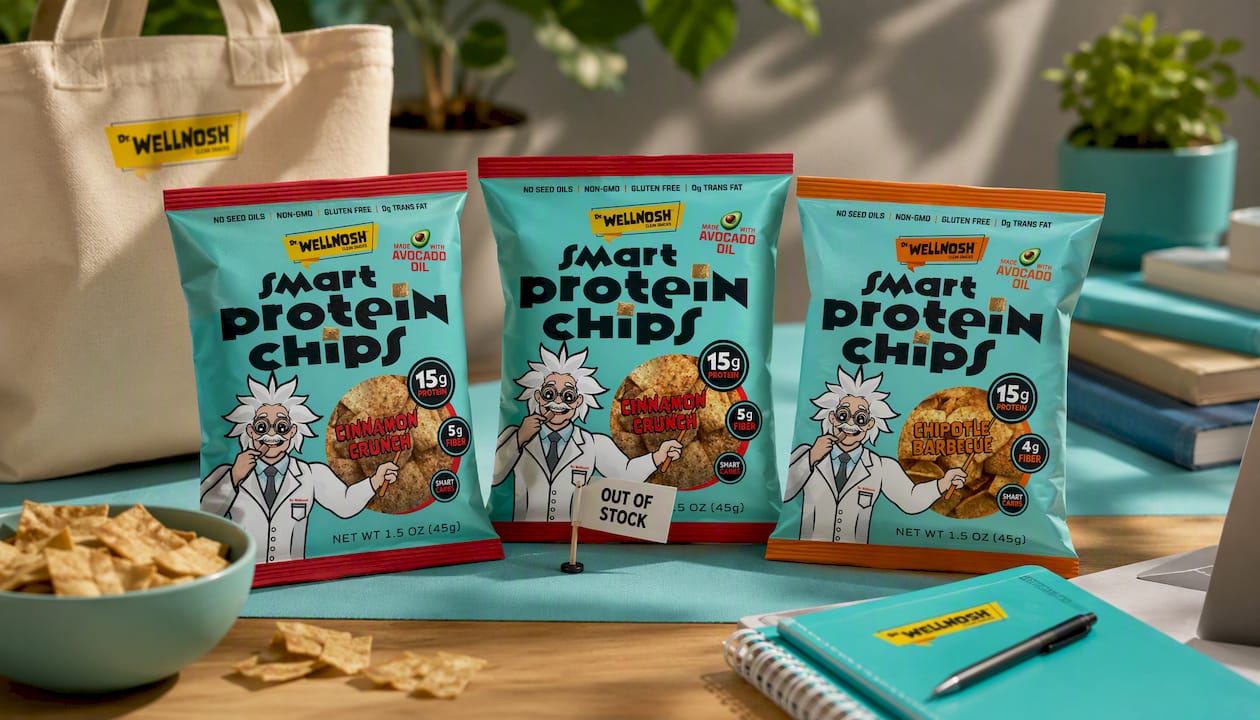
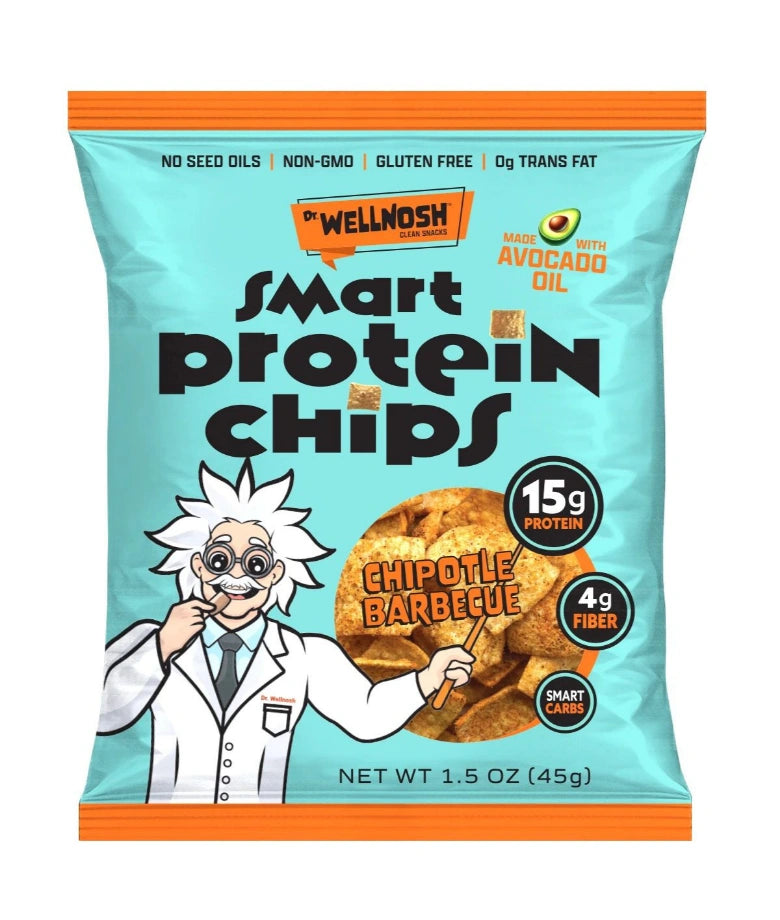
If you want a packaged snack that checks every box on the dietitian checklist without any label-reading gymnastics, Wellnosh protein chips are a straightforward example of what that looks like in practice. Each bag delivers 15 g of fava bean protein, zero added sugar, and is cooked in avocado oil with no seed oils or artificial additives. The ingredient list is short and pronounceable. Non-GMO, gluten-free, and low-carb.
The Chipotle Barbecue chips bring savory depth without the sodium overload common in flavored chips, and the Cinnamon chips satisfy a sweet craving with no added sugar. Apply the same checklist from this guide to any snack you consider, Wellnosh included. The numbers will do the talking. Browse the full lineup and order directly at Wellnosh.
Sources
- How dietitians shop for packaged snacks
- The Science of Snacking • The Nutrition Source
- Nutrient density of commonly consumed snacks using the NRF Index
- Healthy snacking | American Heart Association
- Healthy almond and coconut trail mix (Cleveland Clinic)


