

· By Dr. Wellnosh
Diet Snack Ingredients to Avoid for Better Health
The most common diet snack ingredients to avoid are ultra-processed additives, artificial sweeteners, and hydrogenated oils that quietly undermine weight loss and long-term health. Snack labels use terms like “natural,” “low-fat,” and “high-fiber” to mask ingredient lists full of synthetic compounds. Research confirms that ultra-processed snacks cause measurable weight gain even when portions appear controlled. Knowing which harmful snack additives to watch for gives you a real advantage at the grocery store.
1. What are common diet snack ingredients to avoid?
Ultra-processed food (UPF) is the industry term for products made with ingredients rarely found in a home kitchen: emulsifiers, synthetic flavor compounds, modified starches, and chemical preservatives. The NOVA classification system, developed by researchers at the University of São Paulo, groups foods into four categories based on processing level. Ultra-processed snacks fall into NOVA Group 4, the most heavily altered category.
A 2019 inpatient RCT led by Kevin Hall at the National Institutes of Health found that adults eating ultra-processed diets consumed 508 extra calories per day and gained 0.9 kg in just 14 days. That result came from a controlled setting where participants ate as much as they wanted. The calorie surplus was not from overeating intentionally. It was driven by the food itself.
Common ultra-processed ingredients found in diet snacks include:
- Maltodextrin — a fast-digesting starch that spikes blood sugar faster than table sugar
- Carrageenan — a seaweed-derived emulsifier linked to gut inflammation in animal studies
- Artificial colors (Red 40, Yellow 5) — synthetic dyes with no nutritional value
- Modified food starch — a catch-all term for chemically altered starches used to improve texture
- Soy protein isolate — a heavily processed protein stripped of fiber and micronutrients
These ingredients improve shelf life and palatability. They do not improve nutrition.
Pro Tip: If a snack’s ingredient list contains more than five items you cannot pronounce, treat it as a red flag regardless of what the front label claims.
2. Which artificial sweeteners and sugars harm diet snack quality?
Artificial sweeteners are the most misunderstood category of unhealthy snack ingredients. Sucralose, aspartame, and acesulfame potassium deliver intense sweetness with zero calories. That sounds like a win for dieting. The problem is that artificial sweeteners maintain high cravings without triggering the satisfaction response that real sugar provides, making appetite regulation harder over time.
Manufacturers also use a tactic dietitian Leanne Elliston describes as “gaming” nutrition ratings: adding isolated synthetic fibers and non-nutritive sweeteners to boost star ratings while the core product remains nutritionally poor. The label looks better. The food does not.
Added sugars appear under many names on ingredient lists. Watch for:
- High-fructose corn syrup — the most common added sugar in packaged snacks
- Dextrose, maltose, and glucose syrup — all forms of added sugar with different names
- Fruit juice concentrate — marketed as natural but functionally identical to added sugar
- Agave nectar — high in fructose, which the liver processes differently from glucose
- Cane juice crystals — a rebranded term for sugar used to appear cleaner on labels
A study of packaged lunch box snacks found that some fruit snacks contain 33.5g of sugar per 100g. That is more than three times the sugar in Coca-Cola at 10.6g per 100g. Products marketed directly at health-conscious shoppers carry that load.
Swapping sugary snacks for protein-forward options is one of the most effective ways to reduce added sugar intake without feeling deprived.
3. What harmful fats and oils should you watch for in diet snacks?
Hydrogenated and partially hydrogenated oils are the primary source of artificial trans fats in packaged snacks. The FDA banned partially hydrogenated oils in 2018, but fully hydrogenated oils remain legal and still appear in many products. Fully hydrogenated oils raise LDL cholesterol without the trans fat designation on the label.
Highly refined seed oils, including soybean oil, canola oil, corn oil, and sunflower oil, are the most common cooking fats in conventional snack chips. These oils are high in omega-6 fatty acids. When consumed in excess relative to omega-3 fatty acids, they promote a pro-inflammatory state in the body.
Fats to avoid in diet snacks include:
- Partially hydrogenated oils — still found in some imported or older-formula products
- Palm oil — high in saturated fat and linked to cardiovascular risk at high intake levels
- Soybean oil and corn oil — heavily refined, high in omega-6, and often extracted with chemical solvents
- Interesterified fats — a newer replacement for trans fats with limited long-term safety data
Pro Tip: Look for snacks cooked in avocado oil or olive oil. Both are minimally processed and have favorable fatty acid profiles. Wellnosh chips, for example, are cooked in avocado oil rather than refined seed oils.
Choosing snacks with clean energy ingredients means checking the oil source, not just the fat grams on the nutrition panel.
4. What additives and contaminants in snacks pose hidden health risks?
Processing contaminants are the category most people never think to check. These are not ingredients added intentionally. They form during industrial heating of oils and fats. Glycidyl esters are one example. They form when oils are heated at high temperatures during manufacturing, and they fully convert in the body into glycidol, a probable human carcinogen according to the International Agency for Research on Cancer.
Consumer Reports testing found that eleven snack products exceeded adult safety thresholds for additives and contaminants. Some exceeded allowable levels by over 760 times per serving. These products were not obscure imports. They were widely available American snacks.
| Additive or Contaminant | Source in Snacks | Primary Health Concern |
|---|---|---|
| Glycidyl esters | High-heat oil processing | Probable carcinogen (glycidol conversion) |
| Titanium dioxide | Whitening agent in coatings | Potential genotoxicity; banned in EU |
| Carrageenan | Emulsifier in low-fat snacks | Gut inflammation in sensitive individuals |
| Guar gum | Thickener and emulsifier | Bloating and IBS aggravation |
| Mono- and diglycerides | Texture and shelf-life agents | Carrier for glycidyl ester formation |
Emulsifiers like guar gum may cause digestive issues including bloating and altered colon motility, particularly in people with IBS or dysbiosis. Chemist Dr. Eric Boring, cited in Consumer Reports, states that heavily additive-laden snacks should be consumed only occasionally, not as a daily habit. That advice applies even to snacks marketed as diet-friendly.
5. How to read ingredient labels to spot harmful snack ingredients
The ingredient list is the most honest part of any snack package. Ingredients appear in descending order by weight. If sugar, oil, or a modified starch appears in the first three ingredients, that snack is built around those components regardless of what the front label says.
Red flags to look for on any snack label:
- Multiple sugar sources listed separately — splitting sugar into dextrose, maltose, and cane juice makes each look smaller individually
- “Natural flavors” without specifics — a legal catch-all that can include hundreds of synthetic compounds
- Long additive sequences — five or more emulsifiers, stabilizers, or preservatives signal heavy processing
- “Enriched” flour as the first ingredient — enrichment replaces nutrients stripped during refining, not a health benefit
- Vague protein sources — “hydrolyzed vegetable protein” or “textured soy protein” are ultra-processed, not whole food
A 91.2% ultra-processed rate among packaged lunch box snacks from 2013 to 2024 shows how normalized these ingredients have become. That prevalence means the burden falls on you to read labels actively, not assume a product is clean because of its packaging.
The best swap strategy is to replace snacks with long ingredient lists with options built around whole-food proteins, real fats, and minimal processing. Understanding what causes weight loss plateaus often starts with auditing the snacks you eat daily, not just your main meals.
Key Takeaways
Avoiding harmful snack additives requires reading ingredient lists critically, not trusting front-label claims, and choosing snacks built from whole-food ingredients with minimal processing.
| Point | Details |
|---|---|
| Ultra-processed snacks drive weight gain | A controlled RCT found 508 extra calories per day consumed on ultra-processed diets. |
| Artificial sweeteners increase cravings | Sucralose and aspartame provide sweetness without satisfaction, making appetite harder to manage. |
| Hidden sugars use many names | Dextrose, fruit juice concentrate, and cane juice crystals are all added sugar in disguise. |
| Processing creates unlisted contaminants | Glycidyl esters form during heating and do not appear on labels despite carcinogenic risk. |
| Ingredient list order reveals the truth | The first three ingredients define what a snack is actually made of, regardless of front-label claims. |
What the snack aisle gets away with, and what I’ve learned
The marketing on snack packaging is not designed to inform you. It is designed to reassure you. “Made with real fruit,” “good source of fiber,” “no artificial colors” — each claim is technically true and strategically incomplete. I have spent years looking at the ingredient lists behind those claims, and the gap between the front label and the actual formula is consistently wider than most people expect.
The most important shift I have seen in people who successfully clean up their snacking is this: they stop reading the front of the package entirely. They go straight to the ingredient list and ask one question. Would I cook with this? If the answer is no for more than two or three items, the snack goes back on the shelf.
The second thing I have learned is that protein quality matters more than protein quantity. Snacks that list “hydrolyzed soy protein” or “pea protein isolate” as their protein source are not the same as snacks built on whole-food proteins. The processing strips out the fiber, the micronutrients, and the satiety signals that make protein worth eating in the first place. Fifteen grams of fava bean protein from a minimally processed source hits differently than fifteen grams from a chemically extracted isolate.
Sustainable healthy snacking is not about perfection. It is about raising your floor. If your default snack is built on real ingredients, the occasional processed option does not derail anything. The problem is when ultra-processed snacks are the default, not the exception.
— Dr. Wellnosh
Wellnosh smart protein chips: a clean-label snack worth knowing
Wellnosh was built specifically to solve the ingredient problem this article describes. Every chip starts with fava beans, a whole-food protein source that delivers 15g of protein per bag without isolates, synthetic fibers, or artificial sweeteners. The chips are cooked in avocado oil, not refined seed oils, and the ingredient list stays short enough to read in five seconds.
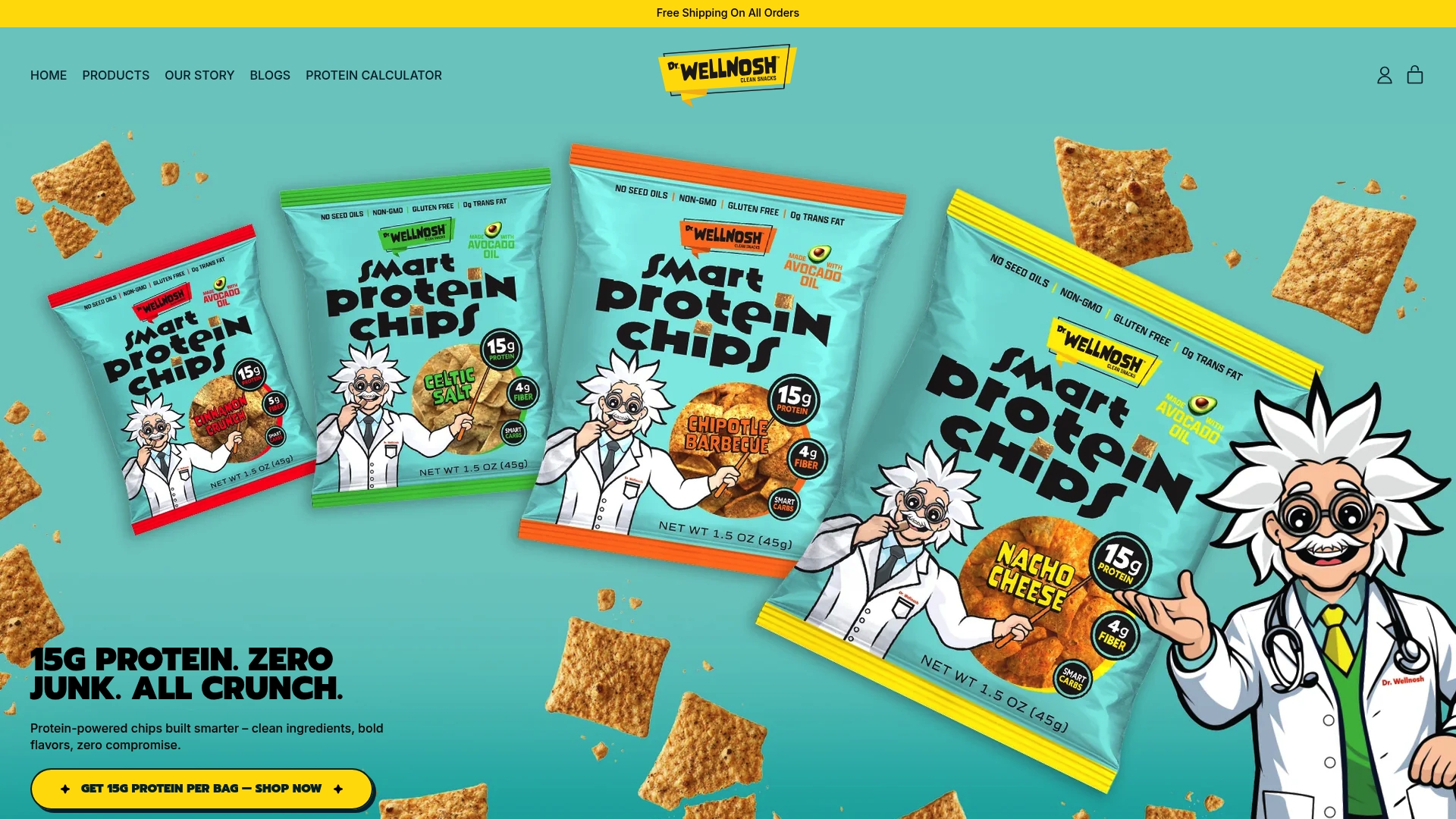
Flavors like Chipotle Barbecue are non-GMO, gluten free, low carb, and contain no added sugar. That means no glycidyl esters from industrial oil heating, no hidden sugar synonyms, and no emulsifier sequences to decode. If you want a snack that passes the ingredient-list test without sacrificing crunch or flavor, Wellnosh is worth trying. Visit wellnosh.com to see the full lineup.
FAQ
What are the worst ingredients in diet snacks?
High-fructose corn syrup, partially hydrogenated oils, artificial sweeteners like sucralose and aspartame, and processing contaminants like glycidyl esters are the most harmful. These ingredients drive cravings, promote inflammation, and in some cases carry carcinogenic risk.
Are “natural flavors” safe in snack ingredients?
“Natural flavors” is a broad legal term that can include hundreds of synthetic compounds derived from natural sources. The designation does not guarantee safety or simplicity, and it is a common red flag in ultra-processed snack products.
Do artificial sweeteners help with weight loss?
Artificial sweeteners reduce calorie intake in the short term but maintain intense sweetness cravings that make whole foods less satisfying over time. Most nutrition experts recommend limiting them rather than relying on them as a weight loss tool.
How do I identify ultra-processed snacks quickly?
Check the ingredient list for emulsifiers, synthetic flavor compounds, multiple sugar sources, and modified starches. If the list contains more than five ingredients you would not find in a home kitchen, the snack is almost certainly ultra-processed.
What snack ingredients are safe for dieting?
Snacks built on whole-food proteins, real fats like avocado oil, and minimal added ingredients support weight management. Short ingredient lists with recognizable components are the clearest signal of a genuinely clean snack.


