

· By Dr. Wellnosh
Travelers: 7–12g Airport Protein Snacks TSA Ready, Dietitian Backed
Pack single-serve, shelf-stable, protein-dense snacks and you sidestep the 3 PM terminal energy crash entirely. Prioritize nuts and seeds, roasted chickpeas or edamame, jerky, protein bars, single-serve nut butter or tuna pouches, and protein chips. Aim for a moderate amount of protein per snack, typically enough to help maintain satiety, keep everything in containers under 3.4 ounces if it’s a gel or liquid, and you’re set for security, and the flight.
TL;DR:
- Pack shelf-stable snacks like nuts, jerky, or protein chips that are under 3.4 ounces in liquid or gel containers to comply with TSA rules.
- Choose snacks with 7 to 12 grams of protein per serving and check labels for low added sugar, fiber, and short ingredient lists.
- Use single-serve, pre-packaged items for liquids like nut butter or hummus to avoid size restrictions, or buy them after security.
- Bring two to three small protein-fiber snacks spaced every 3 to 4 hours to maintain energy and offset jet lag during long flights.
- Opt for protein snacks that support muscle preservation and blood sugar stability to feel less fatigued and more balanced while traveling.
Table of Contents
- The Best Airport Protein Snacks to Pack or Buy
- How Do TSA Rules Affect What You Can Pack?
- What Should You Look for on a Snack Label?
- Why Wellnosh Chips Work for Travel
- Accommodating Allergies and Dietary Restrictions on the Go
- Airport Store vs. Bringing Your Own: Which Wins?
- When Should You Eat During Your Flight?
- Do Protein Snacks Help With Jet Lag and Muscle Loss?
- Small Habits That Make Airport Snacking Easy
- Where to Buy Wellnosh for Your Next Flight
- Sources
- FAQ
The Best Airport Protein Snacks to Pack or Buy
Not every “high protein” label at a terminal kiosk earns the claim. Some bars pack 20 grams of protein and 15 grams of added sugar in the same wrapper. Here’s what actually holds up, grouped by category, with what to expect and what to watch for on the label.
- Roasted pistachios or shelled almonds. A moderate amount of protein per ounce, plus fiber and healthy fat that slow digestion. Watch for salt. Some roasted varieties push past 200mg of sodium per small bag.
- Dry-roasted edamame. Roughly 8 to 9 grams of protein per quarter cup, and it travels dry with zero mess. Check for added oils or sugar coatings on flavored versions.
- Roasted chickpeas. Around 6 grams of protein and 5 grams of fiber per serving. Dietitians frequently recommend roasted chickpeas alongside edamame and nuts specifically because they’re shelf-stable and mess-free.
- Beef or plant-based jerky. Delivers 9 to 15 grams of protein per ounce depending on the cut or blend. Sodium is the real issue here, so compare brands and pick a lower-sodium version when you can, and check that the ingredient list stays short and recognizable rather than loaded with fillers.
- Shelf-stable tuna or salmon pouches. One of the densest protein options in a carry-on, often 15 to 20 grams per pouch, with no refrigeration needed. Bring a small fork or find one at a kiosk.
- Protein bars. Range wildly, from 8 to 25 grams of protein per bar. Flip it over: if sugar alcohols or added sugar sit in the first three ingredients, keep looking.
- Single-serve nut butter packets. Convenient at around 7 grams of protein per packet, and the individual pouch size keeps you clear of the liquids rule. Loose jars over 3.4 ounces do not.
- Protein chips. A newer category that pairs crunch with a real protein count, often 10 to 15 grams per bag depending on the brand, without the grease of a standard potato chip.
- Hard cheese or cheese sticks. Roughly 6 to 7 grams of protein per stick, shelf-stable for a few hours outside refrigeration, easy to eat standing at a gate.
- Cold-case staples when you can find them. Greek yogurt cups, hardboiled egg packs, and cottage cheese containers deliver strong protein density in airport cold cases, though these work best bought after security since most count as gels or semi-liquids.
For a rotation you can prep at home before any of this even matters, a pantry protein snack rotation built around jerky, tuna, and nuts covers most of a week of trips without a grocery run each time.
How Do TSA Rules Affect What You Can Pack?
The TSA limits liquids and gels to containers of 3.4 ounces (100 ml) or less, which applies to many airport snacks classified as such. Yogurt, hummus, and nut butter in a jar all fall under this rule. TSA guidance treats these items as liquids regardless of how solid they look in the container, so a full-size hummus cup gets pulled at the checkpoint just as fast as a bottle of shampoo.
Three ways around it:
- Buy single-serve packets under 3.4 ounces. Most nut butter and hummus brands sell these specifically for travel.
- Buy after you clear security. Anything purchased inside the terminal past the checkpoint has no size restriction.
- Pack powdered protein in a sealed, empty container and mix it with water from a fountain after security, since dry powder isn’t subject to the liquids rule the same way.
Beyond the liquids issue, pack smart: use resealable bags for anything crumbly, bring a napkin or wet wipe for jerky and cheese, and toss in a small utensil for tuna pouches or yogurt.
Pro Tip: Single-serve protein powder sticks travel better than a scooped container. TSA agents sometimes flag loose powder over 12 ounces for secondary screening, and a sealed single-serve stick avoids that hassle completely.
What Should You Look for on a Snack Label?
Two numbers matter more than the marketing on the front of the package: protein grams and protein-to-calorie ratio. A protein-per-100-calorie benchmark is a fast way to compare a jerky stick against a granola bar without doing math at the gate.
Beyond that ratio, run through this checklist:
- Protein per serving: target 7 to 12 grams, and check that the “serving size” listed matches what’s actually in the package, not a fraction of it.
- Fiber: look for at least 3 grams to help you stay full through a delay.
- Added sugar: keep it under 3 grams where possible. Many “protein” bars hide 12 to 15 grams behind the health claims.
- Sodium: stay under 340 mg per serving when you can, especially with jerky and roasted nuts.
- Ingredient order: whole foods like legumes, nuts, or meat should lead the list, not oils or syrups.
Run a plain roasted chickpea snack through this and it usually checks every box: 6 grams protein, 5 grams fiber, under 200mg sodium, one ingredient. A flavored protein bar can fail three out of five on the same shelf. For deeper comparisons across packaged options, this breakdown of high protein snacks under 300 calories applies the same math to dozens of items.
Why Wellnosh Chips Work for Travel
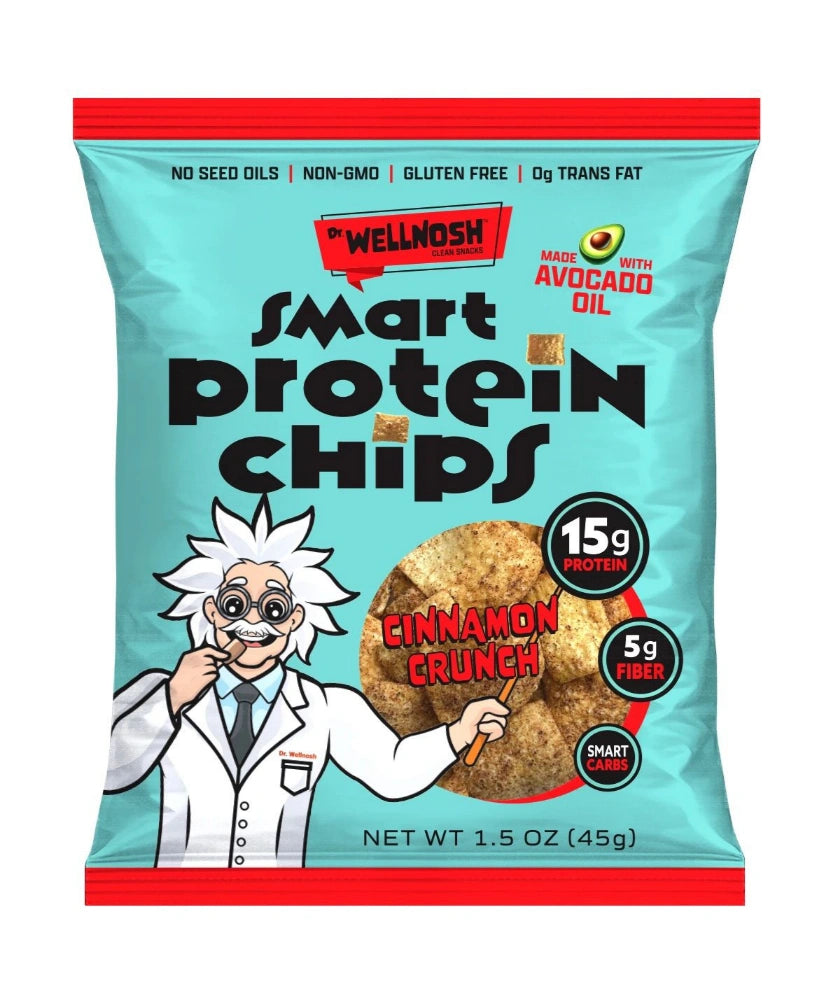
A bag of chips doesn’t usually belong on a “healthy travel” list, but the category has changed. Wellnosh’s plant-based protein chips deliver 15 grams of fava bean protein per bag, cooked in avocado oil instead of seed oils, with a short ingredient list you can actually pronounce. They’re non-GMO, gluten free, low carb, and carry no added sugar.
Three reasons that combination fits a flight better than most terminal options:
- Shelf stability. No refrigeration, no melting, no worrying about a four-hour layover in a hot cabin.
- Single-bag portioning. One bag is one serving, so there’s no guessing at how much you actually ate mid flight.
- A satisfying crunch. A chip that actually crunches curbs the impulse to grab a second, sugary snack thirty minutes later, which is exactly the kind of terminal purchase dietitians warn against.
Accommodating Allergies and Dietary Restrictions on the Go
Airport snacking gets harder fast once you’re managing an allergy or a specific diet, mostly because kiosk staff rarely know ingredient details and packaging can be inconsistent across locations of the same chain. Plan around the restriction before you leave home, not after you’re standing at a newsstand.
Gluten-free travelers should stick to naturally gluten-free categories: plain nuts, roasted chickpeas, jerky (check for soy sauce marinades, which often contain wheat), and dedicated gluten-free bars. Read the allergen statement on every bar, since manufacturing lines change formulas without warning.
Vegan travelers do well with edamame, roasted chickpeas, plant-based jerky, nut butter packets, and plant-based protein bars. Cheese sticks and Greek yogurt are off the table, so lean harder into the legume and nut categories to hit protein targets. A 5-minute vegan travel snack guide walks through TSA-safe packing for exactly this situation.
Nut-free travelers should default to jerky, roasted chickpeas, edamame, tuna pouches, and seed-based options like pumpkin or sunflower seeds. Cross-contamination is a real risk with bulk nut bins at airport markets, so packaged, sealed items are safer than anything scooped from an open bin.
Whatever the restriction, the fix is the same: read every label, every time, even for a brand you trust. Formulas change between flavors and between manufacturing runs.
Airport Store vs. Bringing Your Own: Which Wins?
Bringing snacks from home wins on cost and control, almost every time. You know exactly what’s in the bag, you paid grocery-store prices instead of airport markup, and you cleared the liquids rule before you ever left the house.
Airport stores win on one thing: flexibility when plans change. A canceled flight, a longer layover, or a forgotten snack bag means you’re buying on-site regardless. When that happens, better airport choices include fresh fruit, pre-cut vegetables with hummus, cheese sticks, and plain or lightly salted nuts, all of which now show up in most major terminal markets and even some newer grab-and-go concepts serving fresh, protein-forward bowls and snacks.
A hybrid approach works best for most frequent flyers: pack a base layer of shelf-stable protein (nuts, jerky, a protein bar) for the flight itself, and treat airport stores as backup for perishable items you can’t carry through security anyway, like a hummus cup or a yogurt bought after the checkpoint. That way a delay doesn’t leave you stuck with an empty bag and only $9 sandwiches as an option.
When Should You Eat During Your Flight?
Timing matters almost as much as what you pack. Eating a full meal right before boarding, then nothing for six hours, sets up the exact energy crash a protein-focused snack strategy is meant to prevent.
A better pattern: eat a moderate meal 60 to 90 minutes before boarding, then plan a snack every 3 to 4 hours during the flight rather than waiting for hunger to hit. On a cross-country or international flight, that usually means one snack around the two-hour mark and another closer to landing if the flight runs past six hours.
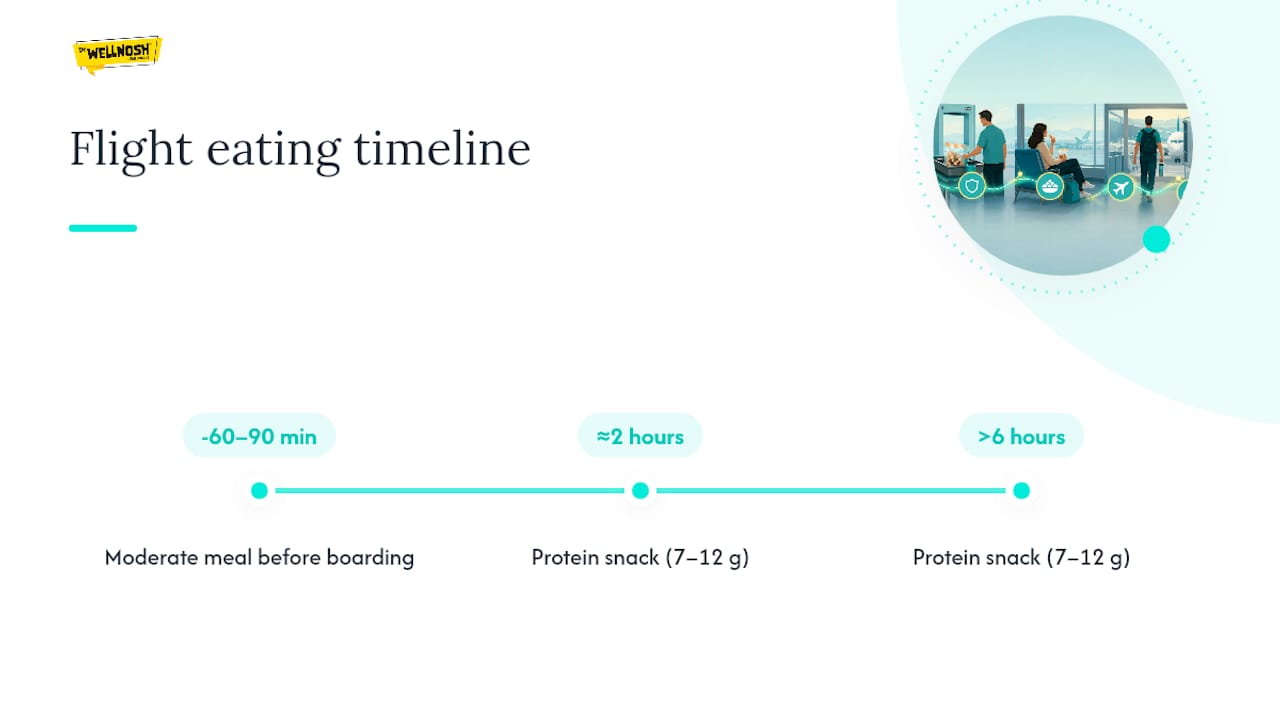
Portion size matters too. A 7 to 12 gram protein snack paired with some fiber, like nuts with dried fruit or a chickpea snack, holds hunger better than a straight carbohydrate snack that spikes blood sugar and drops it fast. Cabin pressure and dehydration already mess with appetite signals, so a lot of travelers either forget to eat or overeat once they’re off the plane. Pre-planning two or three snack windows for the flight, and packing exactly that many portions, keeps you from either extreme.
Do Protein Snacks Help With Jet Lag and Muscle Loss?
Protein snacks don’t fix jet lag directly, but they support two things that make jet lag feel worse: blood sugar stability and muscle maintenance during long, sedentary travel days.
Long flights mean hours of sitting with irregular meal timing, which can leave travelers running on empty by the time they land, right when they need to adjust to a new time zone. A steady intake of protein and fiber throughout the flight, instead of one big meal followed by nothing, helps avoid the sharp energy dips that make jet lag symptoms feel sharper on arrival.
Muscle preservation matters more on multi-day trips than most travelers realize. Long-haul flights combined with disrupted eating patterns and reduced activity can chip away at muscle mass over several days, especially for anyone maintaining a training routine at home. Hitting a consistent 7 to 12 grams of protein per snack, several times during travel days, helps close that gap even when a gym or a real meal isn’t available for 12 or more hours.
Small Habits That Make Airport Snacking Easy
Building a small “snack arsenal” before you ever get to the airport takes the stress out of the whole day. Once you know your bag has enough protein to get you through security, a delay, and the flight itself, you stop scanning every kiosk out of anxiety.
The one habit worth adopting immediately: pack one more snack than you think you need. Delays happen, and an extra protein bar or bag of chips costs nothing sitting in your carry-on.
— Dr. Wellnosh
Where to Buy Wellnosh for Your Next Flight
Wellnosh gives you a travel snack that skips the seed oils and mystery ingredients most terminal chip options are built on. That’s the real contrast: a bag of chips cooked in avocado oil with 15 grams of fava bean protein, instead of the grease-and-crash cycle of a standard convenience-store bag.
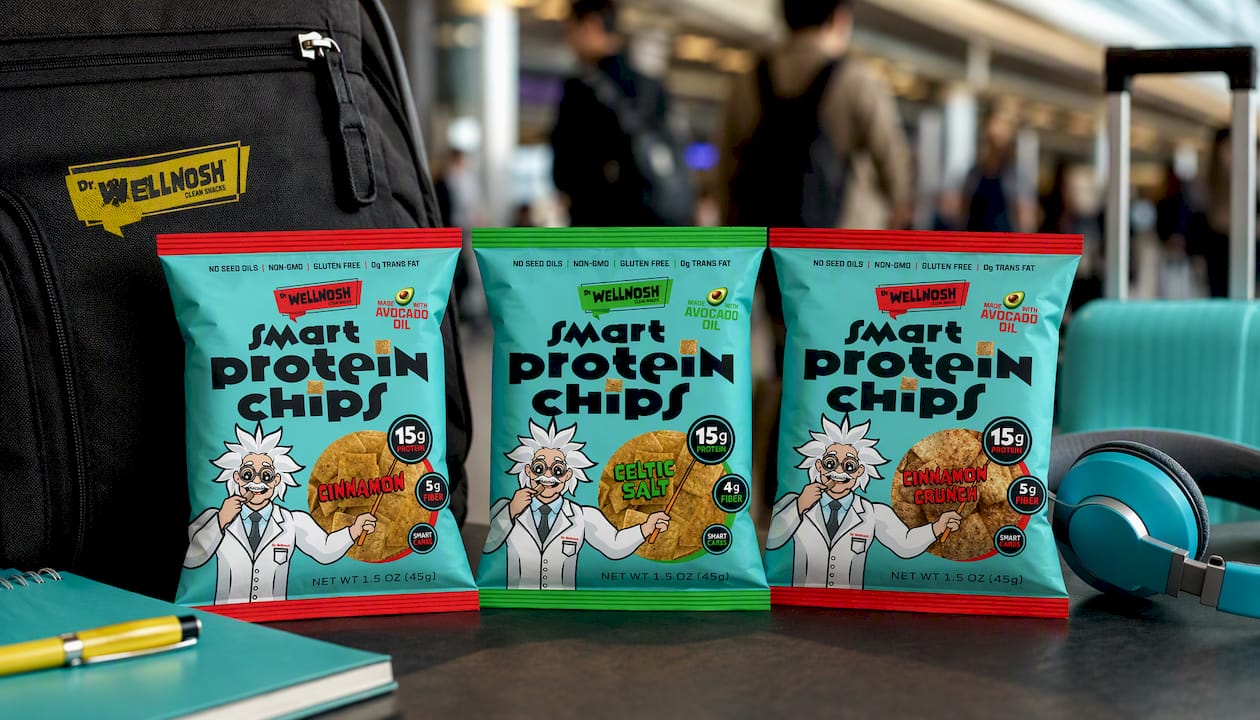
The full protein chips collection covers every flavor offered, including Celtic Salt, Chipotle Barbecue, Nacho Cheese, and Cinnamon Protein Chips, so you can build a variety pack for a longer trip or stick with one flavor for a quick weekend hop. The Cinnamon flavor works especially well as a sweeter option that still avoids added sugar, and it’s worth checking stock before a trip since travel-friendly flavors move fast. If Celtic Salt shows as unavailable when you check, the Celtic Salt product page will reflect current stock status, and the collection page is the fastest way to see what’s actually available to ship before your flight.
Sources
- Airport Snacks: 6 Dietitian-Approved Picks for Travel — MyFitnessPal
- Healthy travel snacks — American Heart Association
- Airport food guide: high-protein, lower-calorie picks — Reshape App
FAQ
What Are Good High-Protein Snacks to Eat at Airports?
Roasted chickpeas, dry-roasted edamame, nuts, jerky, tuna pouches, protein bars, and protein chips all deliver strong protein counts and travel well through security without special handling.
What Is a Good Protein Snack for Travel?
Look for something shelf-stable with 7 to 12 grams of protein per serving, like a single-serve nut butter packet, a jerky stick, or a bag of protein chips with 15 grams of protein like Wellnosh’s fava bean chips.
What Are the Best Snacks to Bring to the Airport?
Pack single-serve, non-liquid items: nuts, roasted chickpeas, jerky, protein bars, and protein chips all clear TSA screening without issue and hold up in a carry-on for hours.
What Snacks Should I Take to the Airport for a Long Flight?
Bring two to three protein-fiber combinations, spaced for a snack every 3 to 4 hours, such as nuts with dried fruit, a jerky stick, and a protein bar or protein chips for the final stretch before landing.
Do TSA Rules Apply to Snacks Like Yogurt or Hummus?
Yes. Yogurt, hummus, and nut butter in containers over 3.4 ounces fall under the liquids and gels rule, so bring single-serve packets or buy those items after clearing security.


