

· By Dr. Wellnosh
How to Build a Travel Snack Bag for Business Trips
The formula is simple: one protein, one handful of nuts or seeds, one fruit, one crunchy item, and one optional single-serve dip under 3.4 ounces, plus an empty reusable bottle. This mix works because it covers sustained energy, TSA compliance, and low mess in one bag. Build a travel snack bag for business trips around that structure and you rarely end up hungry at a gate or stuck buying $9 airport trail mix.
Three quick examples show how it plays out:
- A Wellnosh Variety Pack for crunchy protein, a handful of almonds, and a banana.
- Wellnosh Cinnamon chips, pistachios, dried apricots, and a 2 oz hummus cup.
- Hard-boiled eggs, walnuts, apple slices, and a small dark chocolate square for the sweet fix.
Key Takeaways
A reliable business-travel snack bag combines one protein, nuts or seeds, fruit, a crunchy item, and an optional under-3.4-ounce dip, built around TSA rules and low-odor packaging choices.
| Point | Details |
|---|---|
| Follow the core formula | Combine protein, nuts, fruit, a crunchy item, and an optional small dip, plus an empty water bottle. |
| Respect the liquid limit | Keep any dip, spread, or yogurt under 3.4 ounces per TSA carry-on rules. |
| Choose smart containers | Use a Stasher-style silicone bag or a snackle box with removable compartments to prevent crushing and mixed flavors. |
| Plan for smell and mess | Press air out of chip bags, isolate strong-smelling foods, and pick snacks you can eat one-handed. |
| Anchor the bag with protein chips | Pack the Wellnosh Variety Pack or Cinnamon chips for a shelf-stable, 15g-protein crunchy option that survives security and long travel days. |
Table of Contents
- Essential Items For A Business Travel Snack Bag
- Which Snack Categories Actually Survive Business Travel?
- What Are TSA’s Rules For Bringing Food Through Security?
- Which Containers Actually Keep Snacks Fresh And Tidy?
- Three Snack Bags You Can Copy For Any Trip
- What Should You Do The Night Before And At The Airport?
- How Do You Avoid Messy Or Smelly Snacks On A Flight?
- How Do Customs Rules Affect Packing Snacks For International Trips?
- How Do You Balance Healthy Snacks With Treats On Long Days?
- What Should You Know About Allergy-Safe Snack Packing?
- Business Travel Snacking: What Actually Matters
- Pack Wellnosh Chips For Your Next Business Trip
- Frequently Asked Questions
- Sources
Essential Items For A Business Travel Snack Bag
Before you fill it, get the container right. A collapsible silicone pouch, a rigid “snackle box” with removable compartments, or a Stasher-style reusable bag all work. What matters is that it seals tight and survives being tossed into a laptop bag.
Here’s the order that keeps packing fast and mess-free:
- Pick your outer container (collapsible bag, snackle box, or silicone pouch).
- Add a cloth napkin and a small fork or spork if you’re packing anything wet.
- Drop in your protein: a bag of Wellnosh Cinnamon chips or jerky.
- Add nuts or seeds in a small resealable bag, portioned to about a quarter cup.
- Add one fruit, fresh or dried.
- Slide in a crunchy item like the Wellnosh Variety Pack for flavor rotation.
- Tuck in a dip or spread only if it’s under 3.4 ounces.
- Press air out of any chip bags before sealing to stop them from expanding at altitude.
Bulk-bin buying cuts costs and lets you pack exact portions instead of hauling a full box you’ll only eat a third of. It also means less to throw away later.
Pro Tip: Store anything with a strong smell, like jerky or hard cheese, in its own zip bag inside the main pouch. Nobody in seat 14C wants to know what you’re eating.
Which Snack Categories Actually Survive Business Travel?
Not every healthy snack survives a backpack, a security bin, and four hours in a warm cabin. Build your bag around categories that hold up.
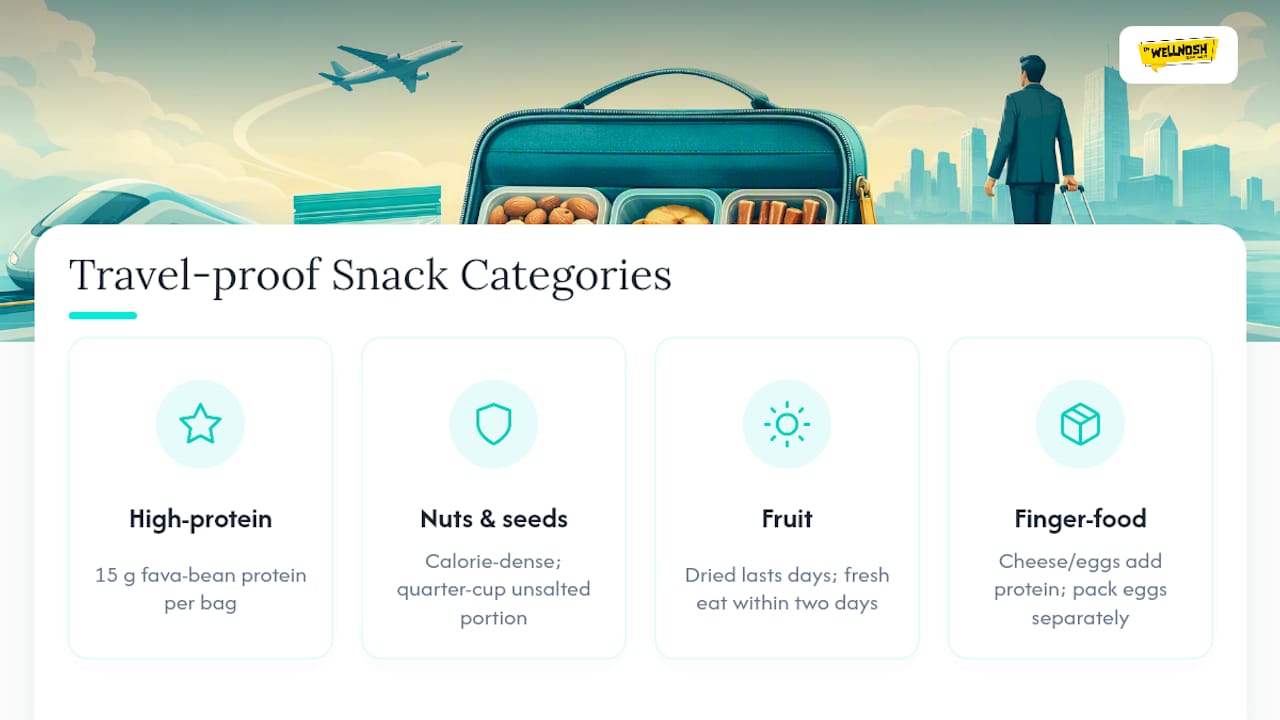
High-protein crunchy snacks anchor the bag. They resist crushing, don’t need refrigeration, and keep you full between meetings. The Wellnosh Variety Pack or a single bag of Cinnamon fits here, delivering 15 grams of fava bean protein cooked in avocado oil with no seed oils or added sugar. That’s a meaningfully different profile than a standard potato chip, which offers close to zero protein.
Nuts and seeds are the second pillar. Dietitians point to them as travel staples because they’re calorie-dense and deliver healthy fats and protein that keep you satisfied when meal timing goes sideways. Stick to a quarter cup portion and choose unsalted or lightly salted versions to avoid the bloated, dehydrated feeling that hits after a salty flight.
Dried and fresh fruit round out the sugar and fiber you need. Dried mango, apricots, or dates travel for days without spoiling. Fresh fruit like apples, grapes, or clementines works too, but eat it within a day or two and skip anything that bruises easily, like bananas packed at the bottom of a bag.
Fresh, finger-food items like cheese cubes and hard-boiled eggs add protein variety. Flight attendants specifically call out hard-boiled eggs and cheese as practical plane snacks, but eggs have a real odor risk in a shared cabin. Pack them in their own container and eat them before boarding if you’re worried about your seatmate’s opinion.
Round it out with one small treat and an empty bottle for water after security.
What Are TSA’s Rules For Bringing Food Through Security?
Solid food has no quantity limit in a carry-on. Liquids, gels, pastes, dips, and spreads do: each container must be 3.4 ounces (100 milliliters) or smaller, per TSA’s carry-on food guidance. A whole rotisserie chicken clears security fine. A jar of peanut butter bigger than a travel toothpaste tube does not, because TSA treats spreadable foods as gels.
That single rule shapes what you pack for dips:
- Single-serve hummus cups (most run 2 ounces) clear easily.
- Individual nut-butter packets, the kind sold in multipacks, fit the limit.
- Yogurt cups under 3.4 ounces are fine; a full quart container is not.
- Salad dressing, sauces, and jam packets all count as gels, so check the ounce marking before you pack them.
Put your snack bag where a screener can see it. If an officer wants a closer look at a container, pull it out without being asked. It moves the line faster for everyone behind you, and it’s the difference between a two-second glance and a full bag search.
Which Containers Actually Keep Snacks Fresh And Tidy?
Gear matters more than most travelers assume, mainly because the wrong container turns a tidy snack bag into a bag of crumbs by hour three.
Reusable silicone bags, the Stasher style, hold up best for mixed snacking. They’re durable, collapsible when empty, and freezer-safe, so you can fill one with water, freeze it overnight, and use it as a makeshift ice pack for perishables on a long drive to the airport. A flat bottom keeps it from tipping in a tote.
A snackle box with removable compartments earns its keep on longer trips. Separating jerky from grapes from crackers stops flavors from mixing and keeps things presentable when you open it at a shared table. AeroCorner’s packing guidance notes that the best plane snacks survive being crushed and produce little mess, which is exactly what a divided box protects against.
For anything genuinely perishable, like cheese or a hard-boiled egg, a small insulated pouch with a soft ice pack buys you a few extra hours. Rigid containers protect anything fragile, like crackers or dried fruit that crumbles under pressure.
Pro Tip: Choose dishwasher-safe containers with wipeable interiors. A snackle box that smells like last week’s hummus is worse than not bringing one at all.
Three Snack Bags You Can Copy For Any Trip
Different trips call for different bags. Here are three builds that take five minutes to assemble.
- Meeting day build: Wellnosh Cinnamon chips, a small bag of almonds, a clementine, a square of dark chocolate, and a reusable water bottle. Nothing here is sticky, loud, or likely to leave crumbs on a conference table.
- Long travel day build: the Wellnosh Variety Pack, a protein bar, dried apricots, a 2 oz hummus cup with baby carrots, and trail mix. Pairing a protein source with nuts and a fresh item covers satiety and energy needs across long delays, which matters more on a five-hour layover than a quick hop.
- Red-eye build: herbal tea bags, a small container of plain yogurt, walnuts, and a banana. Skip caffeine and heavy sugar late at night, and favor items that won’t leave you wide awake at 2 a.m. over the Atlantic.
For dietary variants, swap in a plant-based protein like edamame or the fava-bean-based Wellnosh chips for vegan travelers, cut dried fruit and swap in extra nuts for a lower-carb version, and replace nut-based snacks with roasted chickpeas or sunflower seeds for nut-free packing.
What Should You Do The Night Before And At The Airport?
Pack perishables the morning you leave, not the night before, and refrigerate anything with dairy or egg overnight if you’re prepping early. On international trips, eat or discard high-risk fresh items like cut fruit or dairy before you land, since customs rules get stricter than what security cares about.
Bring an empty reusable bottle through security and fill it at a water fountain afterward. If you’re driving to the airport, freeze a small water pouch or a filled silicone bag overnight and use it as an ice pack in your cooler bag.
At the gate, open anything crinkly or loud before you sit down next to your laptop, not mid-call. Keep a small empty bag in your carry-on for wrappers and peels so you’re not stuffing trash into a seat pocket.
Pro Tip: Set a phone reminder the night before to move perishables from the fridge to your bag last, right before you walk out the door.
How Do You Avoid Messy Or Smelly Snacks On A Flight?
Cabin air is dry and recirculated, which means smells linger longer than they would in an open room. Skip anything with garlic, fish, or strong spice unless you’re eating it before boarding.
Packaging matters as much as the food itself. Loud wrappers, like crinkly chip bags opened mid-flight, draw attention you don’t want during a work call layover. Press air out of sealed bags before you pack them, since cabin pressure changes can cause bags to expand or even pop, leaving you with crushed chips and a startled row of strangers.
Stick to foods you can eat one-handed and without a plate. Crackers with a spread, pre-cut fruit, and pre-portioned nuts work. Anything requiring a knife, a bowl, or a napkin dispenser doesn’t belong in a coach seat.
Wrap anything with sauce or dressing separately from dry items so a leak in your bag doesn’t turn your almonds into a science experiment. A dedicated wet-item pouch, kept apart from your dry snacks, solves most of this before it starts.
Crumbs deserve their own plan too. Snacks that shatter easily, like plain crackers, tend to end up on tray tables and laptop keyboards. A crunchy protein chip that holds its shape, rather than crumbling into dust, causes far less cleanup and fewer dirty looks from the person working next to you.
How Do Customs Rules Affect Packing Snacks For International Trips?
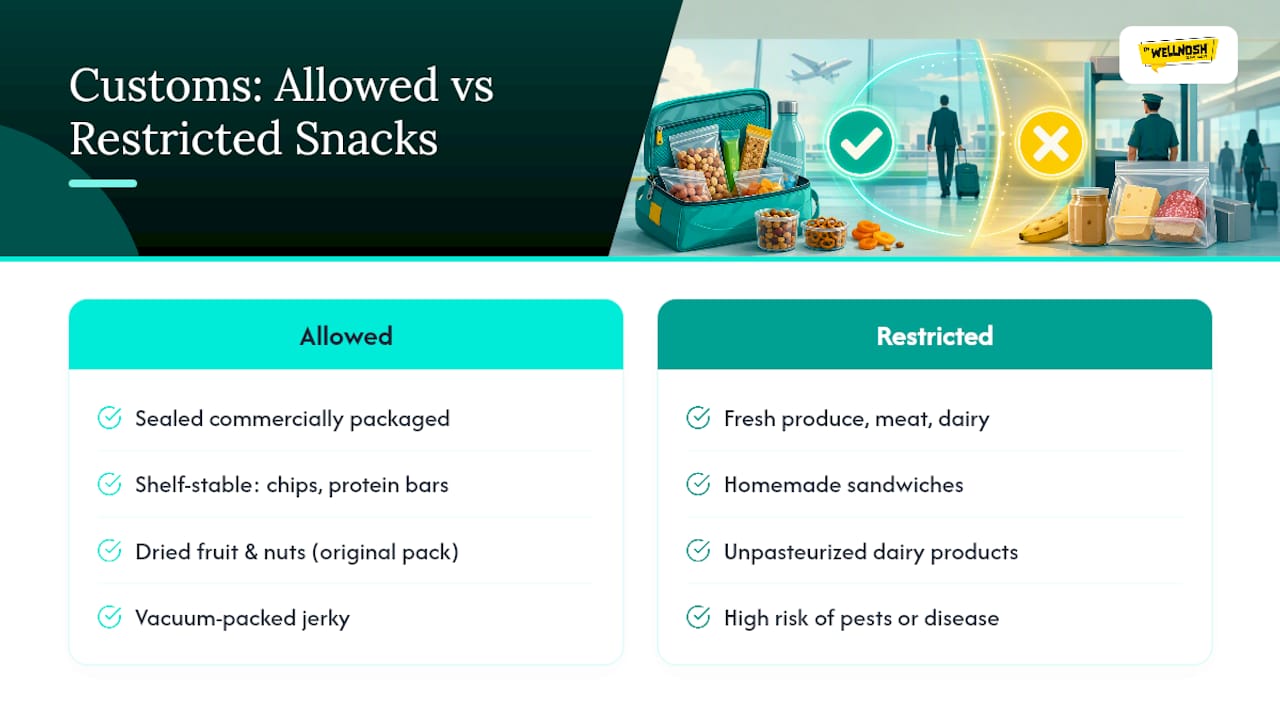
Rules differ by destination, and food that’s fine domestically can get flagged or confiscated crossing a border. Fresh produce, meat, and dairy face the tightest restrictions almost everywhere, since agricultural agencies worry about pests and disease more than nutrition content.
Packaged, shelf-stable snacks generally clear customs without issue. Sealed protein chips, dried fruit, nuts still in their original packaging, and commercially produced jerky rarely raise flags, because they’re processed and clearly labeled. Homemade sandwiches, fresh fruit, and anything containing raw meat or unpasteurized dairy are the categories most likely to get pulled aside or tossed at an international customs checkpoint.
Check the destination country’s specific import rules before you pack anything perishable for a multi-leg international trip. Countries like Australia and New Zealand run some of the strictest agricultural screening in the world, while much of the European Union allows sealed, commercially packaged snacks with fewer restrictions.
The safest strategy for a business traveler with back-to-back international meetings: build your outbound bag with fresh items, and switch to fully packaged, shelf-stable snacks for the return leg or any onward international connection. A sealed bag of chips, a commercial protein bar, or vacuum-packed jerky travels across nearly every border without a second look. Fresh fruit you bought at your destination almost never should cross with you to the next country.
How Do You Balance Healthy Snacks With Treats On Long Days?
A 14-hour travel day that’s 100 percent kale chips and almonds sounds virtuous and rarely survives contact with a delayed flight. Build in one deliberate treat per travel day and you’ll actually stick to the healthy choices for the rest of it.
The trick is portioning the treat, not banning it. A single square of dark chocolate, a small bag of your favorite cookies, or one mini candy bar gives you the psychological reward without derailing the rest of the bag. Pair it with your protein and fruit rather than eating it on an empty stomach, since blood sugar swings hit harder when you’re already running on coffee and stress.
Time it around your actual stress points. Save the treat for the moment you’d otherwise cave and buy a $6 airport cinnamon roll, whether that’s during a three-hour delay or right before a red-eye. A planned treat beats an impulsive one nearly every time, mostly because you already know what you’re getting and how much.
The rest of the bag should do the heavy lifting on satiety so the treat stays a treat instead of becoming lunch. A high-protein base, like a bag of Wellnosh chips, keeps you from arriving at the treat already starving and inhaling three servings instead of one.
What Should You Know About Allergy-Safe Snack Packing?
Business trips often mean shared conference room snacks, hotel breakfast buffets, and client dinners where you don’t control the menu. Your travel bag is the one variable you fully control, so build it around your specific allergy rather than general “healthy” advice.
For nut allergies, skip trail mix and any bar with “may contain tree nuts” labeling, and lean on options like the fava-bean-based Wellnosh Variety Pack, fruit, and seed-based snacks like pumpkin or sunflower seeds instead. For gluten sensitivity, stick to naturally gluten-free items: fresh fruit, hard-boiled eggs, and gluten-free chips rather than crackers or pretzels that require label-checking every time.
Read every label twice, since manufacturers change formulations without much notice. A snack that was safe six months ago isn’t guaranteed to be safe today, and cross-contamination warnings on shared packaging lines matter more when you can’t call the manufacturer from a gate.
Pack more than you think you’ll need. If a flight gets rerouted or a meeting runs long and you can’t safely grab something from a vending machine or hotel minibar, your bag becomes the only guaranteed safe option for the day. Separate allergy-safe items into their own clearly marked pouch if you’re traveling with colleagues who might otherwise grab from a shared bag by mistake.
Business Travel Snacking: What Actually Matters
Most snack-packing advice online obsesses over variety and Pinterest-worthy bento layouts. That’s backward for a business traveler. What actually matters is repeatability: a bag you can rebuild in five minutes at 6 a.m. before a car service arrives, using the same four or five staples every time.
The overrated piece of conventional advice is fresh produce as the star of the bag. Fresh fruit is great, but it’s the first thing to bruise, the first thing customs flags on an international leg, and the first thing you forget to eat before it turns. Shelf-stable protein deserves the starring role instead, because it survives a canceled flight, a hotel room without a fridge, and a three-city week without losing quality.
Prioritize protein density and low mess over anything else. A crunchy, high-protein pick, like a bag of Wellnosh chips, checks both boxes: no refrigeration, no odor risk, no crumbs that end up on a laptop keyboard during a call. Build the rest of the bag around that anchor rather than treating it as an afterthought.
Pack Wellnosh Chips For Your Next Business Trip
A bag of Wellnosh chips solves the specific problem this article keeps circling back to: most travel-friendly protein sources are either messy, smelly, or nutritionally thin. Wellnosh chips are none of those. Each bag delivers 15 grams of fava bean protein, cooked in avocado oil instead of seed oils, with no artificial additives and no added sugar. They’re non-GMO, gluten-free, and low carb, which covers most of the dietary restrictions a business traveler juggles across a multi-city trip.
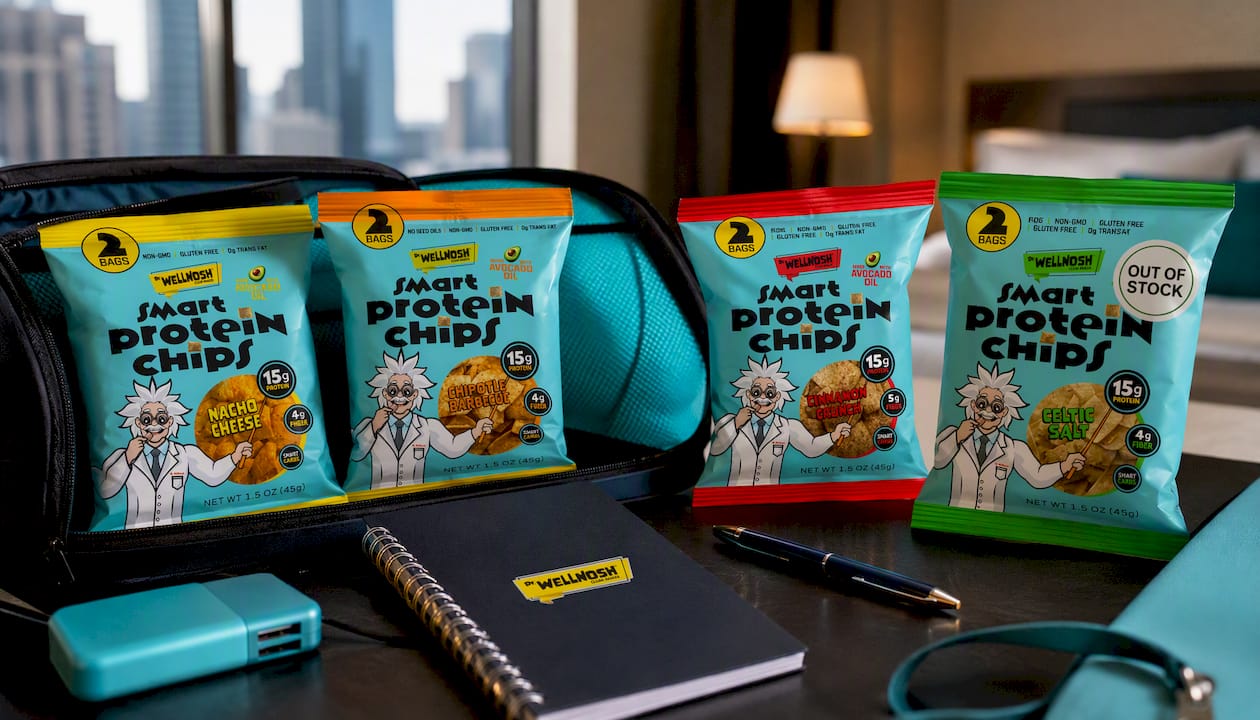
The sealed bags resist crushing when you pack them flat against something rigid, like a laptop or a folder, instead of tossing them loose at the bottom of a backpack. For travelers who want to sample flavors before settling on a favorite, the Variety Pack is the practical starting point, since it lets you test Cinnamon alongside the savory options in a single order. Order the Variety Pack before your next trip and build your snack bag around a protein source that actually holds up through security, a layover, and a long flight.
Frequently Asked Questions
Can I bring homemade sandwiches through airport security? Yes. Solid foods, including sandwiches, have no quantity limit in carry-on bags under TSA guidelines. Just keep any accompanying sauce or dressing under 3.4 ounces.
How many snacks should I pack for a one-day business trip? Plan for two to three snack instances covering roughly four to six hours of travel time, enough to cover a delayed flight or a meeting that runs long without needing an airport purchase.
Are protein chips a good travel snack for keto or low-carb diets? Yes. Low-carb, high-protein chips like the Wellnosh lineup fit keto and low-carb travel plans better than standard potato chips or sugary granola bars, since they skip added sugar and rely on fava bean protein instead of refined starch.
What’s the best way to keep snacks from smelling up my bag? Seal strong-smelling items like jerky or hard-boiled eggs in their own zip bag inside your main pouch, and press air out of chip bags before sealing to prevent expansion at altitude.
Sources
- Taste of Home — Best plane snacks according to flight attendants
- AeroCorner — 25 airplane snack ideas to pack for your flight
- Afar — TSA’s 3-1-1 rule for liquids (dietitian quote)


