

· By Dr. Wellnosh
Pack Travel Friendly Vegan Snacks in 5 Minutes: TSA Safe, Protein Rich
Pack solid, high-protein, nonperishable snacks and skip anything wet. TSA lets solid foods like chips, bars, and roasted beans through security without the liquid hassle, while gels and spreads face a 3.4-ounce limit. A bag of Wellnosh plant-protein chips checks every box: 15 grams of protein, zero refrigeration, and no mess in a backpack or carry-on.
TL;DR:
- Solid snacks like chips, bars, and roasted beans are TSA-approved without restrictions, but gels and spreads like nut butter or hummus are limited to 3.4 ounces.
- Protein chips made from beans and cooked in avocado oil provide a crunchy, protein-rich option that holds up well during travel and can be carried past security.
- Building a travel snack bag involves selecting a protein source, carbs, fats, a fresh fruit, a treat, and supplies, packaged in small resealable bags for convenience.
- The best travel snacks are non-perishable, dense, and resistant to crushing, with Wellnosh chips standing out for their flavor, crunch, and hunger-satisfying power.
- Preparing and portioning snacks the night before ensures efficient packing and helps avoid overloading or under-packing for short and long trips.
Table of Contents
- Travel Friendly Vegan Snacks Sorted by Trip Type
- TSA Rules You Need to Know Before You Pack
- Choosing the Right Snack Type for Every Trip
- How to Build a Travel Snack Bag in Five Minutes
- Why Wellnosh Chips Hold Up as a Travel Snack
- My Own Packing Routine for Trips Short and Long
- Stock Your Bag Before Your Next Trip
- Sources
Travel Friendly Vegan Snacks Sorted by Trip Type
The right snack depends less on what tastes good and more on what survives your specific trip. A snack that’s perfect for a five-hour flight can turn to mush on a three-day camping trip, and vice versa.
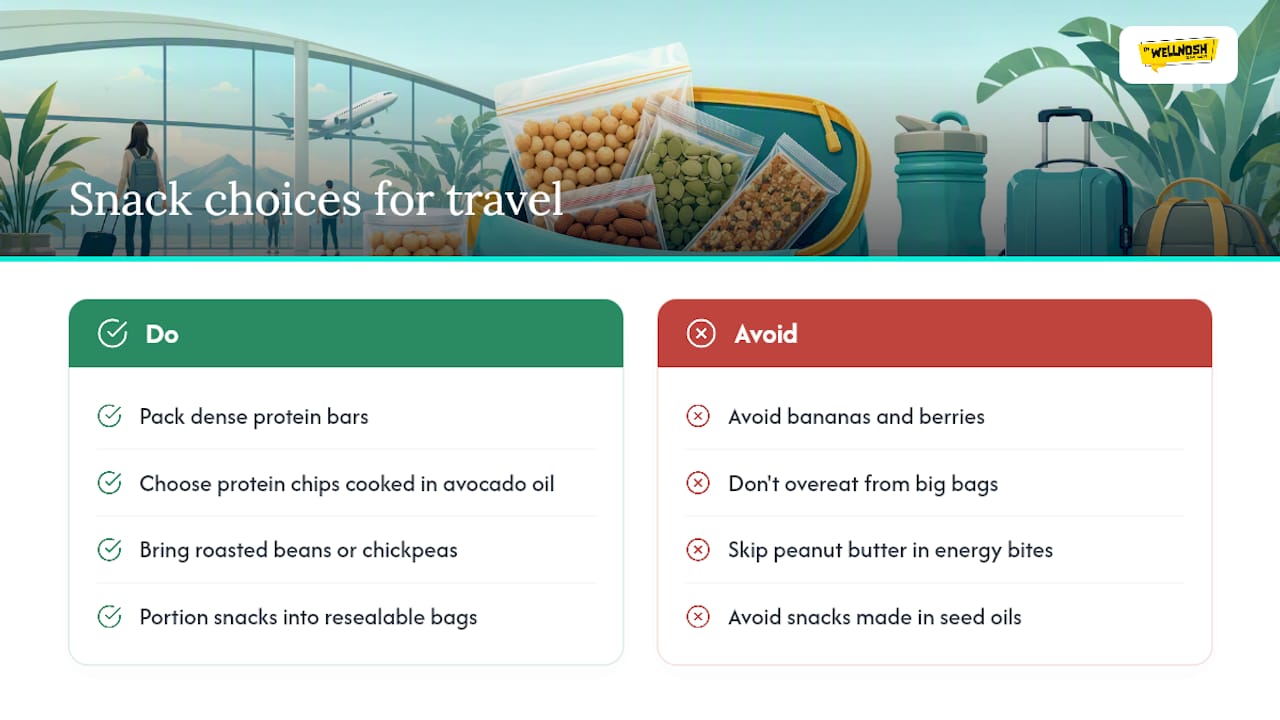
For flights, the priority is compact, quiet unwrapping, and zero mess. Think dense protein bars, sealed roasted bean packs, chips, and whole fruit with a thick skin, like apples. Soft pastries and thin-skinned fruit bruise fast in a backpack, so travel bloggers who pack constantly tend to favor crush-resistant options over anything delicate.
For road trips, you have more room to work with and don’t need to think about a security checkpoint. This is where variety earns its keep. Frequent road trippers on forums like r/AskVegans often build mix-and-match snack boxes instead of one big bag of the same thing, since monotony sets in fast on a long drive. A cooler bag with hummus and veggies works fine here since refrigeration isn’t an issue, and you can refill water at any gas station.
For camping, you need snacks that double as meals. Instant oatmeal in pop-up cups and dehydrated meal pouches travel well and only need hot water, which makes them a smart backup when you’re miles from a store. Peanut butter sandwiches, roasted chickpeas, and shelf-stable jerky alternatives round out a pack that won’t spoil overnight in a tent.
Across all three trip types, a few staples show up again and again:
- Protein bars (dense, compact, no crumbs)
- Roasted beans or chickpeas (single-serve bags, no refrigeration)
- Protein chips like Wellnosh Nacho Cheese or Celtic Salt (crunchy, filling, no seed oils)
- Sealed nut and seed packs (portioned, shelf-stable)
- Whole fruit with a thick skin, like apples
Wellnosh chips fit particularly well into the road trip and camping categories, since the bag holds up in a glove compartment or a backpack without turning to dust, and the Chipotle Barbecue flavor gives you a smoky option when you want something bolder than plain salt.
TSA Rules You Need to Know Before You Pack
The rule that trips people up most isn’t about what food you can bring. It’s about what counts as a liquid.
44% isn’t the relevant number here, but 3.4 ounces is: TSA caps liquids and gels at 3.4 ounces (100 ml) per container, and every one of those containers has to fit inside a single quart-sized resealable bag. Solid foods, including chips, bars, nuts, and roasted beans, are exempt from that limit entirely.
The confusing part is that some foods you’d swear are solid actually count as gels under TSA’s definition. Nut butters, hummus, and smoothies all fall into that liquid/gel category, along with applesauce, and dietitians who specialize in travel nutrition warn that these are the items most likely to get pulled at the checkpoint.
Here’s a workflow that avoids the problem altogether:
- Put any permitted liquid or gel snack (small hummus cups, nut butter under 3.4 ounces) in one clear quart bag.
- Stash every solid snack, chips, bars, roasted beans, straight in your carry-on with no separate bagging required.
- Carry an empty water bottle through security and refill it on the other side.
If you love nut butter on the road, swap the jar for single-serve nut or seed butter packets sold at most grocery stores. They’re small enough to clear the 3.4-ounce rule without a second thought, and you skip the awkward moment of a TSA agent squeezing your almond butter.
Choosing the Right Snack Type for Every Trip
Not every snack subtype behaves the same way in a bag. Here’s how the major categories stack up.
Bars travel about as well as anything gets. They’re dense, don’t crumble, and most stay stable at room temperature for weeks. The tradeoff is that protein content varies wildly between brands, so check the label if satiety matters more than convenience.
Chips, specifically protein chips rather than standard potato chips, offer a rare combination: crunch, portability, and real protein per serving. Wellnosh’s chips deliver 15 grams of fava bean protein per bag, cooked in avocado oil instead of seed oils, which matters if you’re trying to avoid the greasy, bloated feeling standard chips leave behind on a long flight.
Roasted beans and chickpeas pack serious protein into a tiny footprint. Roasted edamame is a good example, single-serve, shelf-stable, and satisfying in a way that dried fruit alone isn’t.
Nuts and seeds are calorie-dense and travel well, but portion control matters since it’s easy to overeat from a big bag. Pre-portioned pouches solve that.
Jerky alternatives made from soy, mushroom, or pea protein give you a chewy, savory option without the mess of a spread.
Dried fruit is lightweight and shelf-stable, though it’s mostly carbs, so pair it with a protein source.
Whole fruit like apples survives a backpack fine; bananas and berries do not.
Homemade energy bites made from oats, dates, and seed butter travel well if you skip peanut butter for allergy-friendly seed butter and freeze them flat before packing.
Pro Tip: Portion snacks into small resealable bags or reusable silicone pouches before you leave the house. You’ll eat less mindlessly, and it keeps crushed bar wrappers from turning your backpack into a crumb trap.
How to Build a Travel Snack Bag in Five Minutes
Before you throw random items in a tote, run through five questions: how long is the trip, will anything need to stay cold, how active will you be, does anyone have allergies, and how are you cleaning up after?
Once you’ve answered those, build around this checklist:
- Protein source: chips, roasted beans, or a bar
- Carb: dried fruit, crackers, or pretzels
- Fat: nuts, seeds, or seed butter packets
- Fresh item: an apple or firm fruit
- Treat: dark chocolate square or a cookie
- Supplies: napkins, wipes, and an empty water bottle
A quart-sized bag holds one day’s worth of snacks for a single person comfortably. For anything longer than a day trip, pack by day in separate labeled pouches so you’re not digging through a jumbled bag at hour six of a flight delay.
Why Wellnosh Chips Hold Up as a Travel Snack
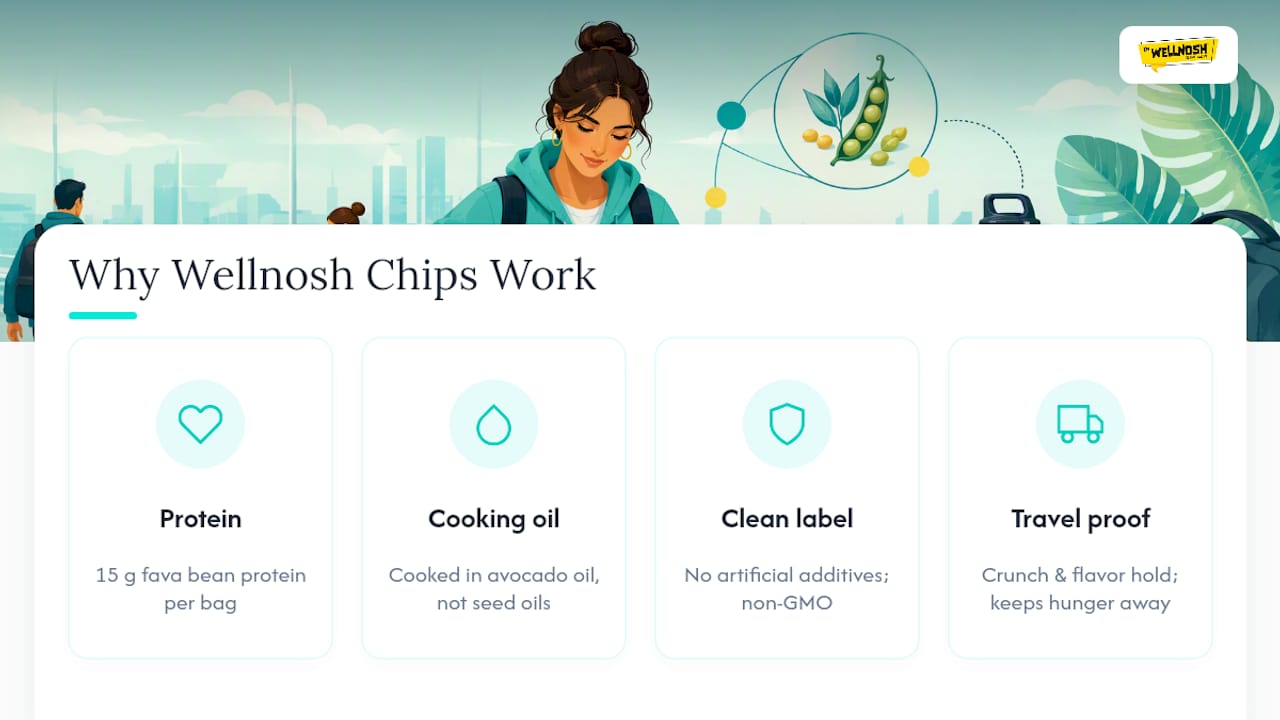
Every bag of these chips carries 15 grams of fava bean protein, gets cooked in avocado oil instead of seed oils, and skips artificial additives entirely. The chips are non-GMO, gluten free, low carb, and have no added sugar, which matters when a long travel day already throws your eating schedule off.
Customer feedback consistently points to the same three things: the crunch holds up, the flavor doesn’t taste like a diet product, and a single bag keeps hunger away longer than a typical chip does.
Travelers who’ve tried the chips on flights and road trips describe reaching for a second bag not because they’re still hungry, but because the flavor holds up better than expected for something built around a bean.
…
My Own Packing Routine for Trips Short and Long
I portion snacks into labeled pouches the night before, pack by day, and always throw in an empty bottle to refill past security. Short trips get one protein item and one piece of fruit; longer ones get a full mix, chips, bars, and roasted beans, so nothing gets old by day three. Test your portions on a short trip first. You’ll learn fast whether you packed too much or nowhere near enough.
— Dr. Wellnosh
Stock Your Bag Before Your Next Trip
Wellnosh chips solve the exact problem this article just walked through: solid enough to skip TSA’s liquid rule, protein-dense enough to keep you full past the snack cart, and shelf-stable enough for a glove compartment or a backpack pocket. Compared to bars that crumble or spreads you can’t carry past security, a bag of chips gives you crunch and 15 grams of protein without a second thought at the checkpoint.
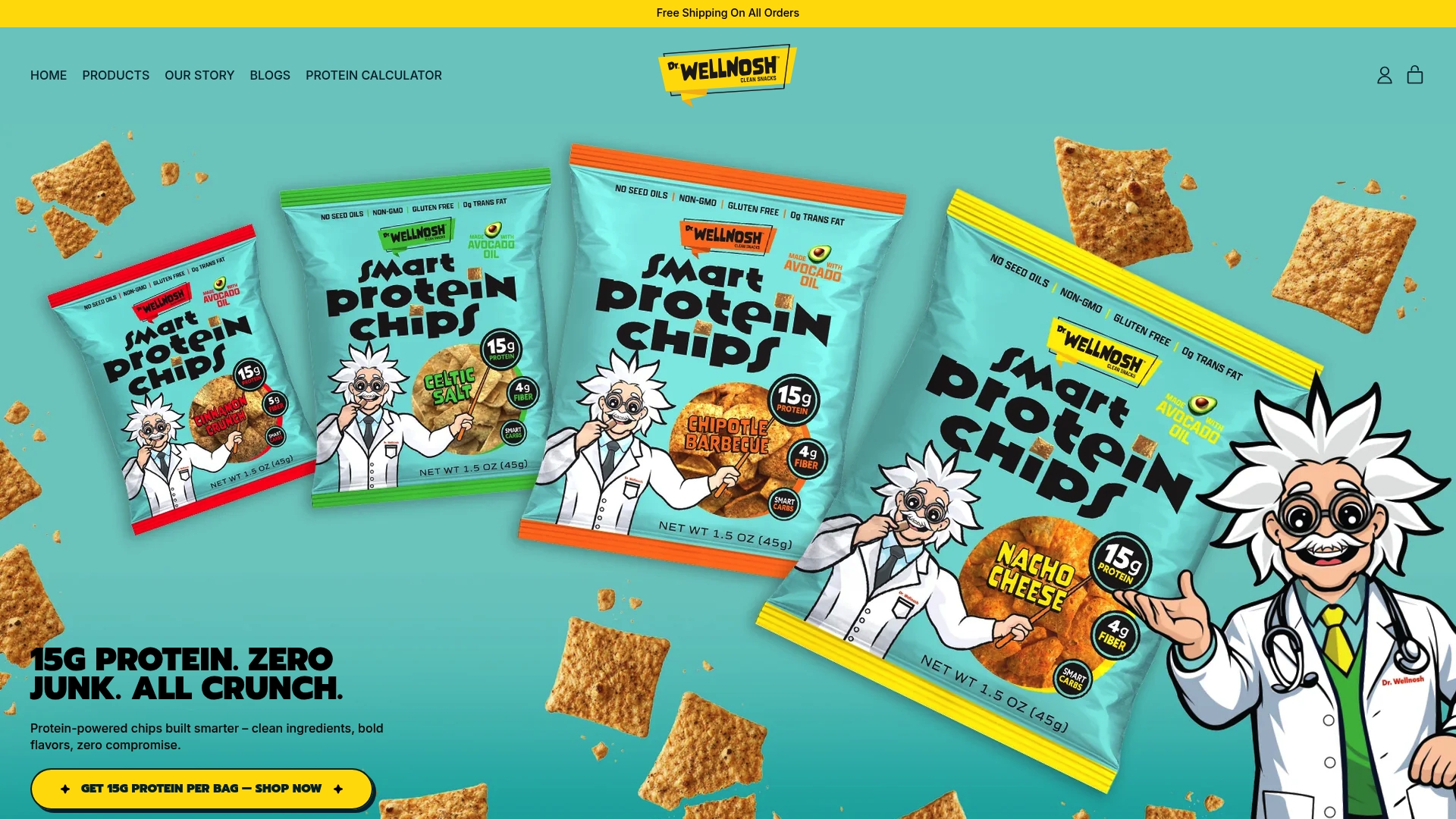
Grab the Chipotle Barbecue flavor for something bold on a road trip, or the Cinnamon flavor if you want something that doubles as a sweet fix. If you travel often, Subscribe & Save keeps your pantry stocked before your next trip sneaks up on you. Keeping a compact packing kit ready matters too. Partner options like vacuum compression bags can shrink bulky snack stashes down for easier carry-on space, and pair well with a bag of chips tucked right on top.
Sources
- Can You Bring Food Through TSA? - AFAR
- 16 Vegan Travel Snacks For Your Next Camping, Plane, or Road Trip - Veggies Abroad
- Best Plane Snacks (TSA Approved) - Phoenix Vegan Dietitian


