

· By Dr. Wellnosh
Hit 30–90g Carbs: Real Food Snacks for Endurance Athletes
The most effective approach is simple: timed carbohydrate snacks paired with electrolytes, adjusted to the clock rather than to hunger. A banana or a few Medjool dates works before you move, a mix of chews and real food keeps you going during, and something like Wellnosh chips with fava bean protein helps you recover afterward. Aim for 30–45 grams of carbohydrate per hour on moderate efforts, and 60–90 grams per hour once intensity or duration climbs.
TL;DR:
- During exercise, athletes should consume 30 to 45 grams of carbohydrates per hour for moderate efforts, increasing to 60 to 90 grams for longer or higher-intensity sessions.
- Pre-exercise snacks eaten 30 to 45 minutes before activity should focus on fast carbs like bananas, toast, or applesauce, avoiding high-fiber or fatty foods.
- Post-exercise recovery should involve eating within 30 to 60 minutes with a combination of carbs and 15 to 25 grams of protein, such as Greek yogurt or chocolate milk.
- Training the gut by gradually increasing carbohydrate intake during long sessions reduces gastrointestinal distress and improves absorption.
- Carrying whole foods like dates and boiled potatoes is feasible with proper pre-portioned packs, especially in varying weather conditions, and can enhance satiety and flavor variety.
Table of Contents
- Best Endurance Athlete Snacks: A Quick Reference by Phase
- Pre-Exercise Snacks and Timing: The 30-to-45-Minute Rule
- During-Exercise Fueling: How Many Carbs Per Hour You Actually Need
- Post-Exercise Snacks: Refilling Glycogen and Repairing Muscle
- How to Build and Test Your Fueling Plan Before Race Day
- Carrying Whole-Food Fuel: Storage, Heat, and Portability
- Publisher Perspective: What Plant-Protein Snacks Get Right for Athletes
- Why Wellnosh Chips Work Between Sessions and After Training
- Sources
- FAQ
Best Endurance Athlete Snacks: A Quick Reference by Phase
Different phases of a workout call for different fuel. Here’s the shortlist, organized by when you eat, not just what you eat.
Pre-exercise (30–45 minutes before):
- Banana with a spoonful of honey (fast carbs, low fiber)
- White toast with jam (glycogen top-off, gentle on digestion)
- Applesauce pouch (easy to sip, no chewing required)
During exercise (every 30–45 minutes):
- Energy chews or gels (fast, standardized carb dosing)
- Medjool dates (dense carbs, portable, natural sugars)
- Small boiled potato with salt (carbs plus sodium)
- Rice cakes or rice-based energy bites (easy to chew while breathing hard)
Post-exercise (within 30–60 minutes):
- Wellnosh protein chips for a savory, protein-forward option
- Greek yogurt with fruit (carbs and protein together)
- Chocolate milk or a protein shake (fast-absorbing, minimal chewing)
Pre-Exercise Snacks and Timing: The 30-to-45-Minute Rule
A short window before you start makes a real difference. Eating something light 30 to 45 minutes ahead helps top off muscle glycogen and electrolyte stores, which delays fatigue once you’re moving, according to Johns Hopkins Medicine. The goal here is carbs, not a full meal. Fat and fiber slow digestion, and slow digestion is the last thing you want bouncing around your stomach mid-run.
Good pre-exercise options include:
- Banana with honey
- White toast with jam or honey
- Applesauce pouch
- A small handful of pretzels
- Low-fiber cereal with a splash of milk
If you’re someone whose stomach reacts to almost anything before exercise, cut the portion in half and lean toward liquids or purées over solids. An applesauce pouch or a small smoothie tends to sit better than dry toast for athletes prone to pre-race nerves.
Pro Tip: Test your pre-exercise snack on a training day that mimics your race intensity, not on an easy recovery jog. Your gut behaves differently under load.
During-Exercise Fueling: How Many Carbs Per Hour You Actually Need
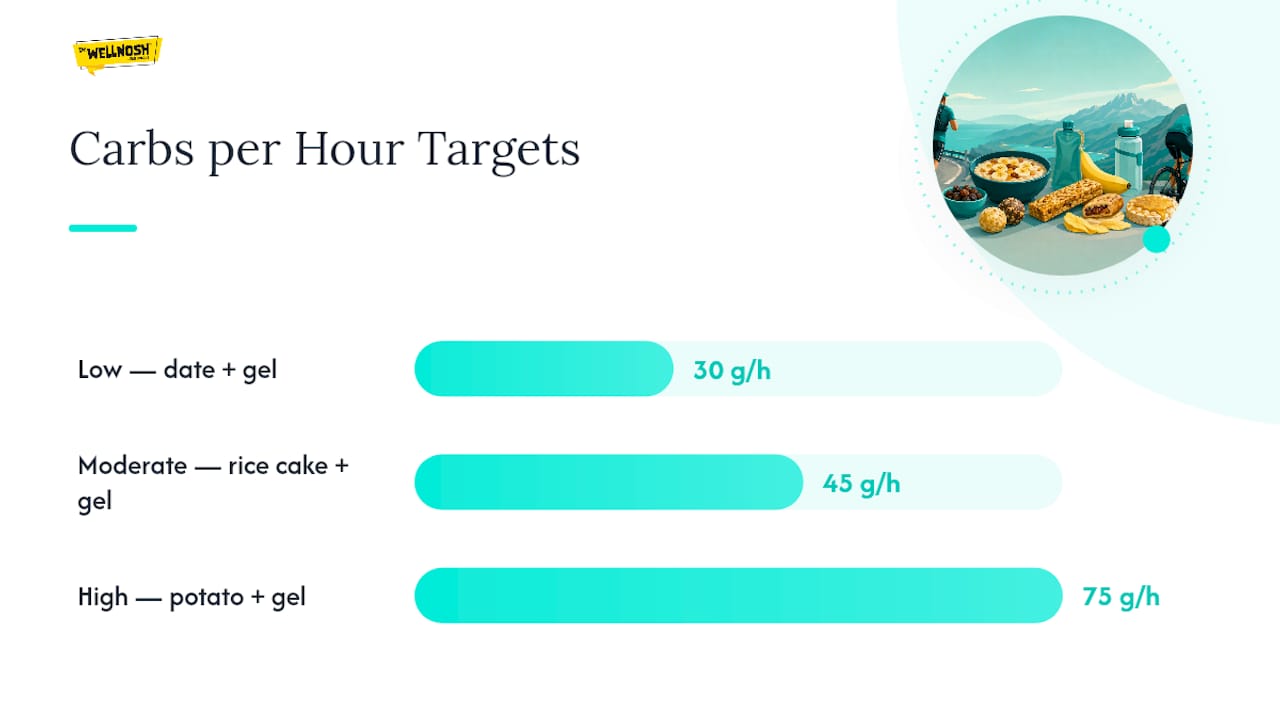
The number that matters most during long efforts is 30 to 45 grams of carbohydrate per hour for moderate exercise, rising to 60 to 90 grams per hour for long or high-intensity sessions, based on a review of carbohydrate feeding and endurance performance. That’s a wide range, and where you land in it depends on effort level, heat, and how trained your gut is at absorbing carbs on the move.
A practical rhythm for hitting that target:
- Every 15 to 20 minutes, take a small carb hit rather than waiting an hour and eating a large amount at once.
- Alternate fast fuels and real food. A gel or chew handles the quick carb spike; a date, a bite of rice cake, or a small piece of boiled potato adds calorie density and helps fight the flavor fatigue that comes from gels alone, a pattern Triathlete has documented among long-distance athletes.
- Pair every carb hit with sodium, either through an electrolyte drink or a salted whole food like boiled potato, especially in heat.
Mixing formats also keeps you eating when appetite fades three hours into a long ride. A pure-gel strategy gets old fast; real food breaks the monotony.
Post-Exercise Snacks: Refilling Glycogen and Repairing Muscle
Recovery nutrition has two jobs: replace the carbs you burned and give your muscles roughly 15 to 25 grams of protein to work with. The window that matters most is the first 30 to 60 minutes after you stop, when your body is primed to shuttle nutrients into depleted muscle.
Quick post-exercise options that hit both targets:
- A protein shake with a banana blended in
- Greek yogurt topped with granola and berries
- Wellnosh protein chips paired with a piece of fruit for the carb side
- Chocolate milk, which delivers a near-ideal carb-to-protein ratio in one glass
- Nut butter on toast or rice cakes
If your session ran long or hard, a snack alone might not cut it. Treat it as a bridge, and eat a real meal with vegetables and a larger protein source within two hours.
How to Build and Test Your Fueling Plan Before Race Day
Your gut can be trained the same way your legs can. Gradually increasing carbohydrate intake during long training sessions improves how well your intestines absorb sugar, which is exactly the physiological adaptation that reduces cramping and GI distress later. Coaches at the Korey Stringer Institute point out that fueling needs are individual, which is exactly why testing matters more than following a generic plan.
A simple three-step protocol:
- Start conservative on a long training run: 30 grams of carbs per hour, nothing new or unusual.
- Record how your stomach reacts, along with energy levels at the halfway and finish points.
- Increase by 10 to 15 grams per hour on your next long session, swapping textures (gel to chew to real food) if anything caused bloating.
Pro Tip: Never test a brand-new fuel source on race morning. Every gel, chew, or whole food in your race plan should have already survived at least two long training sessions.
Carrying Whole-Food Fuel: Storage, Heat, and Portability
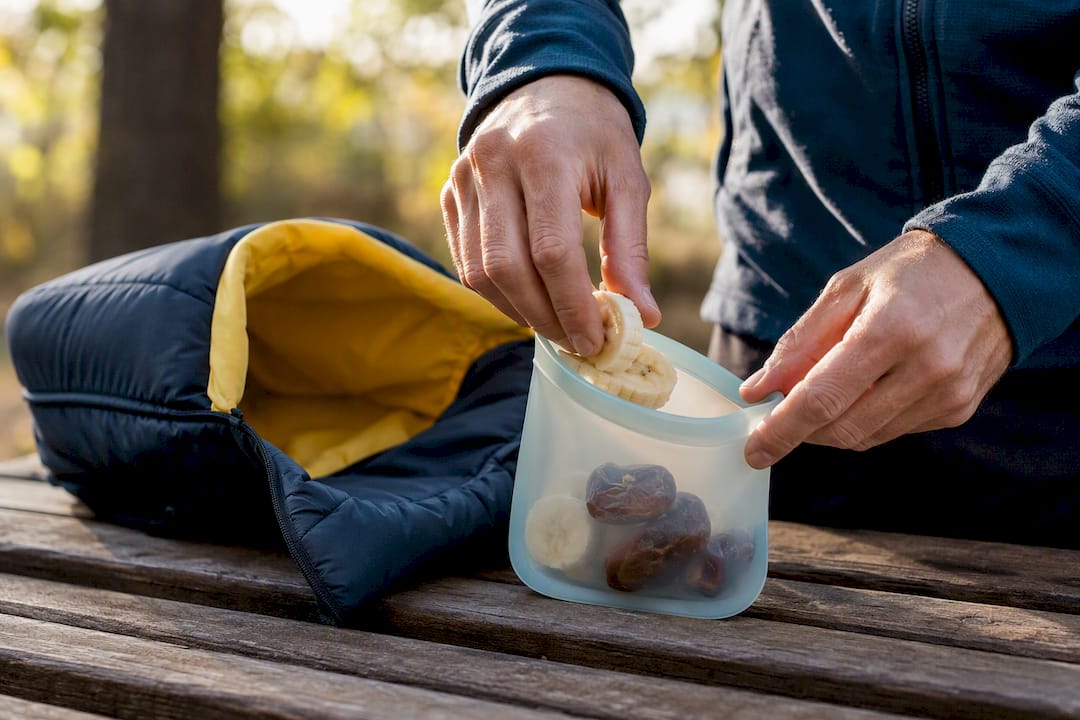
Whole foods take more planning than a pocketful of gels, but the payoff in satiety and taste variety is worth it. Runners regularly carry baby-food pouches, Medjool dates, and boiled salted potatoes in hydration vests and belts, pre-portioned into small bags so each grab equals roughly one hour’s dose.
A few things that make it work:
- Pre-portion snacks into hourly baggies the night before a long effort.
- Freeze bars or dense bites in hot weather so they thaw to the right texture mid-run instead of melting.
- Salt boiled potatoes generously; they lose flavor and sodium value if left plain.
- In cold weather, keep soft items like dates or pouches closer to your body to prevent them from stiffening.
Packing strategies from travel-focused healthy eating guides apply just as well to multi-hour training blocks as they do to trips.
Publisher Perspective: What Plant-Protein Snacks Get Right for Athletes
Recovery is where a lot of athletes underinvest, reaching for whatever’s in the pantry instead of something built for the job. Wellnosh chips deliver 15 grams of fava bean protein per bag, cooked in avocado oil, non-GMO, gluten free, with no added sugar. That combination fits the between-session or post-workout slot well, especially for anyone who wants a savory option instead of another shake. Test any new snack in training first, never on race day.
— Dr. Wellnosh
Why Wellnosh Chips Work Between Sessions and After Training
Most recovery snacks force a choice: sweet and easy to digest, or savory and often greasy. Wellnosh skips that trade-off with 15 grams of fava bean protein per bag, cooked in avocado oil instead of seed oils, with no added sugar and no artificial ingredients to slow you down.
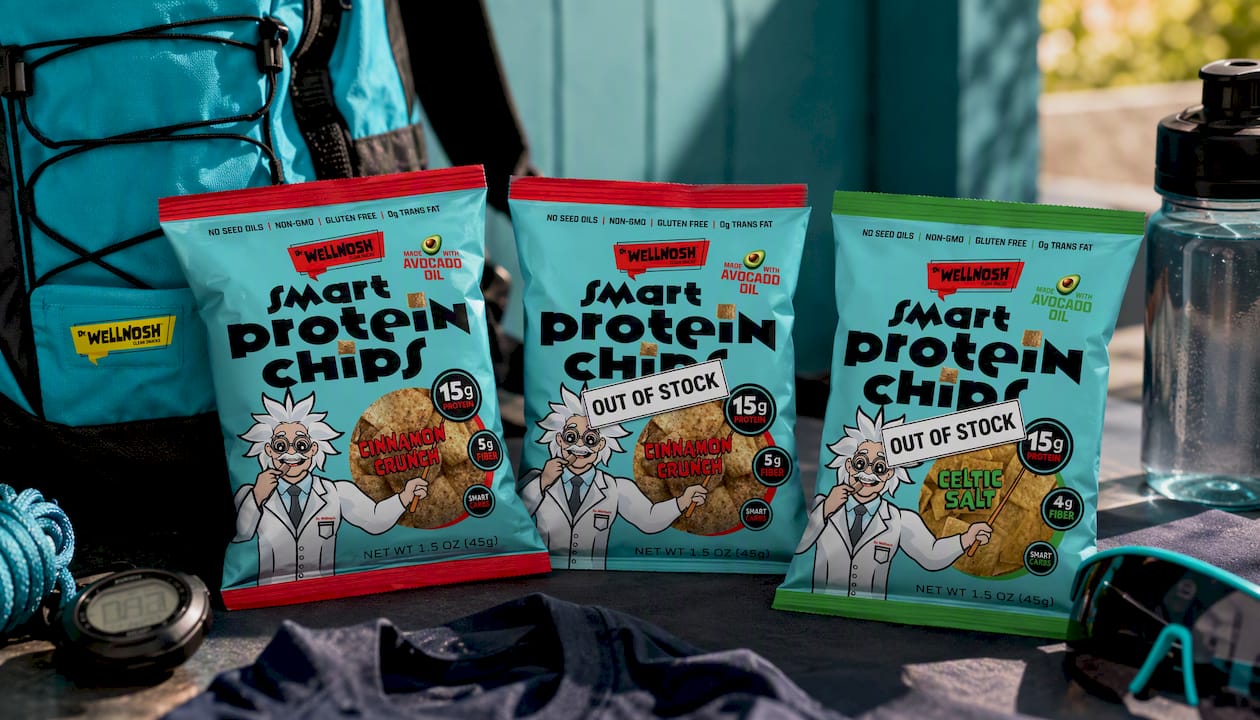
That makes it a solid pick right after a long run when you want something savory instead of another shake, or as a satiating snack between two training sessions in the same day. The Celtic Salt, Chipotle Barbecue, and Cinnamon flavors each run $34.99, and the full protein chips collection is worth a look if you’re building out a rotation of clean, portable snacks for training weeks ahead. Order a bag and see how it fits into your next recovery window.
Sources
- Carbohydrate feeding and endurance performance (PMC)
- Nutrition for athletes: What to eat before a competition — Hopkins Medicine
- Real foods for long-distance training — Triathlete
- How to fuel long runs with whole foods — Runner’s World
FAQ
What food should endurance athletes eat?
Endurance athletes do best on a mix of fast carbs (gels, dates, rice cakes) during exercise and carb-plus-protein combinations after, with a light, low-fiber carb snack before starting. The right mix depends on effort length and intensity, but 30 to 90 grams of carbohydrate per hour is the working range most training plans use.
What is the 4-2-1 rule for athletes?
There’s no single, universally recognized rule in endurance nutrition science; the term shows up in various informal training guides with different meanings. Stick with the sourced hourly carb ranges in this guide, 30 to 45 grams for moderate work and 60 to 90 grams for long or intense efforts, rather than relying on that shorthand.
What foods increase endurance?
Carbohydrate-dense foods like dates, bananas, rice cakes, and boiled potatoes fuel endurance directly by supplying glucose to working muscles. Pairing them with a protein source afterward, such as Wellnosh chips, supports the recovery that lets you train harder the next day.
What foods will give an athlete energy?
Fast-digesting carbs, bananas, honey, white toast, energy chews, and Medjool dates, deliver quick, usable energy during exercise. For sustained energy on long efforts, mix those with slower-digesting whole foods like small boiled potatoes to avoid a sugar crash.
How soon after exercise should I eat a recovery snack?
The 30 to 60 minute window after finishing is when your body is most efficient at restocking glycogen and using protein for repair. A snack with roughly 15 to 25 grams of protein and a solid carb source, like Greek yogurt with fruit, fits that window well.


