

· By Dr. Wellnosh
What Makes a Dorm Friendly Snack: 2026 Guide
A dorm-friendly snack is defined as any shelf-stable, nutrient-balanced food that delivers protein, healthy fats, and complex carbohydrates without requiring refrigeration, cooking, or cleanup. That definition matters because most students default to chips, candy, or instant noodles, which spike blood sugar and crash focus within an hour. The right snack works as functional fuel, not a meal replacement. It fits in a backpack, survives a week on a desk shelf, and costs under a dollar per serving. This guide breaks down exactly what makes a campus-friendly snack worth stocking, from nutritional science to storage strategy to budget math.
What makes a dorm friendly snack nutritionally?
A balanced snack combines protein, healthy fats, and complex carbohydrates to stabilize blood sugar and support sustained focus. Each macronutrient plays a specific role. Protein slows digestion and keeps you full longer. Healthy fats support brain function. Complex carbs provide steady glucose without the spike-and-crash pattern that derails afternoon lectures.
Snack pairings combining protein and carbs reduce afternoon focus slumps and stabilize blood sugar during long classes. That means a handful of almonds with a rice cake outperforms a granola bar loaded with added sugar, even if the granola bar has more total calories.
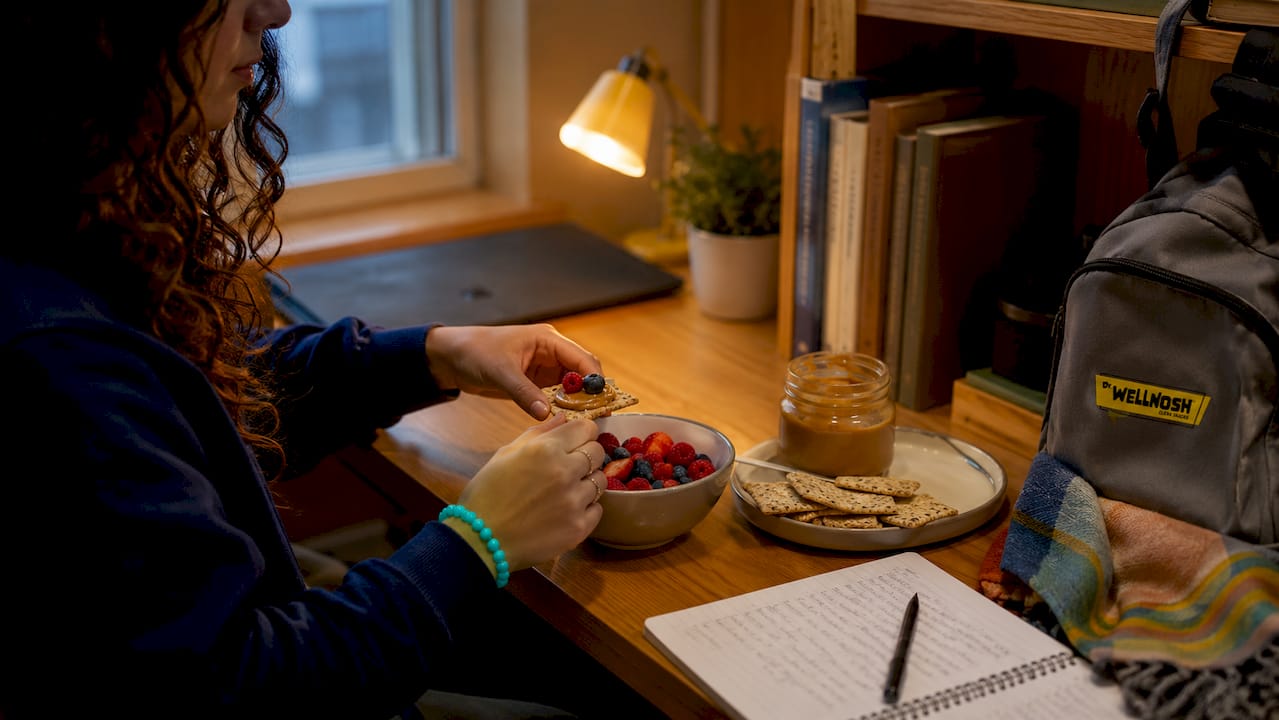
The consequences of carb-only snacking are real and measurable. Students who eat sugary snacks between classes report lower concentration and higher fatigue by mid-afternoon. Swapping those snacks for nutrient-dense options that combine all three macronutrients produces a noticeably steadier energy curve throughout the day.
Pro Tip: Aim for at least 8–10 grams of protein per snack. That threshold is enough to trigger satiety signals without making you feel too full to concentrate.
Strong nutrient-dense ingredients to build your snack stock around include:
- Nuts and nut butters: High in protein and healthy fats, shelf-stable for months
- Seeds (pumpkin, sunflower, hemp): Dense in minerals and easy to portion
- Whole-grain crackers: Complex carbs that pair well with protein sources
- Dried legumes and roasted chickpeas: High fiber, high protein, no refrigeration needed
- Fava bean protein chips: 15g of plant-based protein per bag, as found in Wellnosh’s lineup
What storage and physical attributes define dorm-friendly snacks?
Shelf stability is the single most important physical attribute for a dorm snack. Most dorm rooms have a mini-fridge shared between two students, no freezer, and limited counter space. A snack that requires refrigeration after opening is a liability, not an asset.
Ideal dorm snacks include nuts, seeds, dried fruits, whole-grain crackers, jerky, and snack bars. These items last weeks or months unrefrigerated, which means you can buy in bulk without worrying about spoilage. That durability also reduces food waste, a real cost for students on tight budgets.
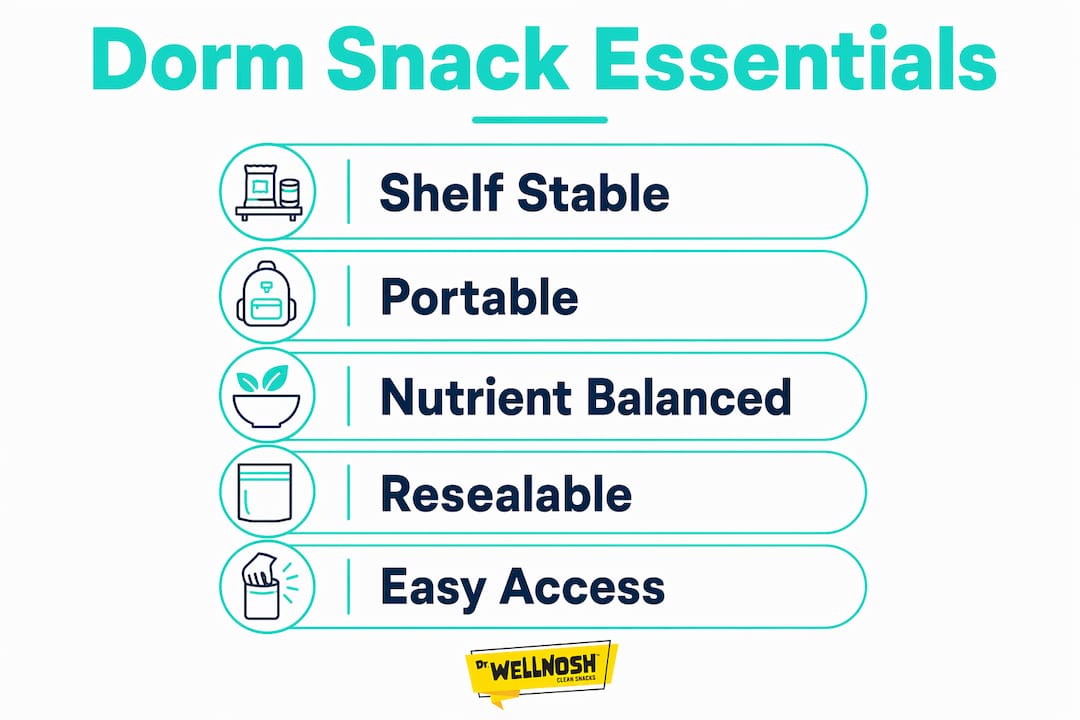
Portability matters just as much as shelf life. The best snacks for students fit in a backpack pocket, open with one hand, and leave no residue on a keyboard or textbook. Zero-prep and mess-free are non-negotiable qualities for anyone eating between classes or during a study session.
Pro Tip: Store snacks in three zones: desk drawer for daily grabs, backpack pouch for on-the-go, and a shelf or bin for bulk backup. That system keeps your most-used items accessible without creating clutter.
A few physical qualities to check before buying any snack for dorm life:
- Resealable packaging: Keeps snacks fresh after opening without needing extra containers
- Single-serve portions: Reduces overeating and simplifies sharing with roommates
- Compact size: Fits in tight spaces like desk drawers and under-bed storage
- Odor-neutral: Shared dorm rooms make strongly scented foods a social problem
- Durable packaging: Survives being tossed in a backpack without crushing or leaking
How can students build a budget-friendly dorm snack stock that lasts?
Students can maintain a snack pantry on $40–$60 per month by buying shelf-stable bulk staples and avoiding single-serve convenience packaging. That monthly range covers a solid variety of nuts, nut butters, oats, dried fruit, and protein snacks without stretching a student budget. The key is buying the right items in the right quantities.
Buying snacks one at a time from a campus vending machine or convenience store is the most expensive way to snack. A single-serve bag of nuts from a vending machine costs $2.50 or more. The same quantity bought in a bulk bag costs under $0.50 per serving. That gap adds up to $30–$40 per month in unnecessary spending.
Here is a practical numbered approach to building your dorm snack stock:
- Set a monthly snack budget of $40–$60 and treat it like a fixed expense, not a discretionary one.
- Identify your five staple snacks that cover protein, fat, and carbs. Examples: peanut butter, oats, mixed nuts, whole-grain crackers, and a protein chip option.
- Buy staples in bulk from warehouse stores or online retailers to reduce cost per serving.
- Supplement with single-serve items only for portability, not as your primary stock.
- Track what runs out first and reorder before you run out, not after. Running out leads to expensive impulse buys.
| Snack Item | Estimated Monthly Cost | Servings Per Month |
|---|---|---|
| Mixed nuts (bulk bag) | $8–$12 | 20–30 |
| Peanut butter (large jar) | $5–$7 | 25–35 |
| Whole-grain crackers | $4–$6 | 15–20 |
| Dried fruit (bulk) | $5–$8 | 20–25 |
| Protein chips (multipack) | $12–$18 | 10–15 |
What are some easy, shareable dorm snacks for any schedule?
Zero-prep, grab-and-go snacks that can be eaten with one hand are the best fit for students with hectic schedules. That standard rules out anything requiring a bowl, utensil, or more than 30 seconds of preparation. The snacks below meet that bar and also work well for sharing with roommates or study groups.
Strong grab-and-go options that require no refrigeration:
- Trail mix (DIY or pre-made): Combine nuts, seeds, and dried fruit for a balanced protein-fat-carb snack
- Jerky (beef, turkey, or plant-based): High protein, shelf-stable, and satisfying in small portions
- Rice cakes with individual nut butter packets: A complete macro pairing that travels well
- Roasted chickpeas: Crunchy, high in fiber and protein, and available in resealable bags
- Wellnosh protein chips: 15g of fava bean protein per bag, cooked in avocado oil, non-GMO, gluten free, and available in flavors like Nacho Cheese, Chipotle Barbecue, and Celtic Salt
Pairing strategy matters more than most students realize. A rice cake alone is a carb spike waiting to happen. Add a tablespoon of almond butter and you have a snack that sustains energy for two hours instead of 30 minutes. The same logic applies to crackers paired with jerky, or dried fruit paired with a small handful of walnuts.
Pro Tip: Batch-prep trail mix on Sunday evenings. Portion it into small zip-lock bags or reusable containers so you have a week’s worth of grab-and-go snacks ready without any daily effort.
Sharing snacks with roommates also reduces individual cost. A multipack of protein chips split between two students cuts the per-serving cost in half. Buying a large jar of peanut butter for a shared snack station is cheaper than each student buying their own small jar. Treating snacks as a shared resource, rather than individual purchases, is one of the most underused budget strategies in dorm life.
How can students organize their dorm snack supplies effectively?
A frequency-based storage system in dorms optimizes limited space by placing daily-use snacks within arm’s reach and storing bulk backup in less accessible spots. Most students pile everything in one drawer and then forget what they have. That leads to duplicate purchases, expired food, and wasted money.
Setting up a designated snack station helps students manage inventory, avoid duplicates, and reduce impulse spending. A snack station does not need to be elaborate. A small shelf organizer, a clear bin, or even a section of a bookshelf works. The goal is visibility. When you can see what you have, you use it before it expires and you know when to reorder.
Clear containers are the most practical upgrade for dorm snack storage. Transferring bulk nuts or crackers into labeled clear containers takes five minutes and saves you from digging through bags to find what you want. It also makes it easy to see when a supply is running low.
Pro Tip: Label each container with the reorder date, not just the contents. That one habit prevents the most common dorm snack problem: running out of your go-to snack during finals week.
A few organization habits that make a real difference:
- Keep your top three daily snacks on your desk or within arm’s reach
- Store bulk backup items in a bin under your bed or on a high shelf
- Do a weekly five-minute inventory check every Sunday to plan the week ahead
- Rotate stock so older items get used first, reducing waste
Key Takeaways
A dorm-friendly snack must combine balanced nutrition, shelf stability, and zero-prep convenience to support academic performance and fit the physical constraints of dorm living.
| Point | Details |
|---|---|
| Balanced nutrition is non-negotiable | Combine protein, healthy fats, and complex carbs to avoid energy crashes between classes. |
| Shelf stability comes first | Choose snacks that last weeks unrefrigerated, like nuts, jerky, dried fruit, and protein chips. |
| Budget with bulk buying | A $40–$60 monthly snack budget works when you buy staples in bulk and avoid vending machines. |
| Pairing beats single-ingredient snacks | Protein plus carbs sustains energy for two hours; carbs alone spike and crash within 30 minutes. |
| Organization prevents waste | A frequency-based storage system and visible snack station reduce duplicate buys and expired food. |
What I’ve learned from watching students snack their way through finals
Students consistently underestimate how much their snack choices affect their academic output. I have seen students pull all-nighters fueled by nothing but energy drinks and candy, then wonder why their retention is poor and their mood is volatile. The food-brain connection is not abstract. It shows up in real time during a three-hour study session.
The mistake I see most often is treating snacks as a reward rather than as fuel. A snack is not a treat you earn after finishing a chapter. It is a scheduled input that keeps your brain running at the level your coursework demands. Students who plan their snacks the same way they plan their study schedule consistently perform better during high-pressure periods like midterms and finals.
The other lesson that took me a while to internalize: convenience is not laziness. Choosing a protein-rich snack that requires zero prep is not cutting corners. It is a rational decision that removes one more friction point from an already demanding day. The students who snack well are not the ones with the most discipline. They are the ones who set up their environment so that the right choice is also the easiest choice.
— Dr. Wellnosh
Wellnosh protein chips: built for dorm life
Wellnosh protein chips meet every criterion on the campus-friendly snack checklist. Each bag delivers 15g of fava bean protein, contains no seed oils or artificial additives, and is cooked in avocado oil for a clean ingredient list you can actually read. The chips are non-GMO, gluten free, low carb, and have no added sugar, which means they fuel a study session without the crash that follows most conventional snacks.
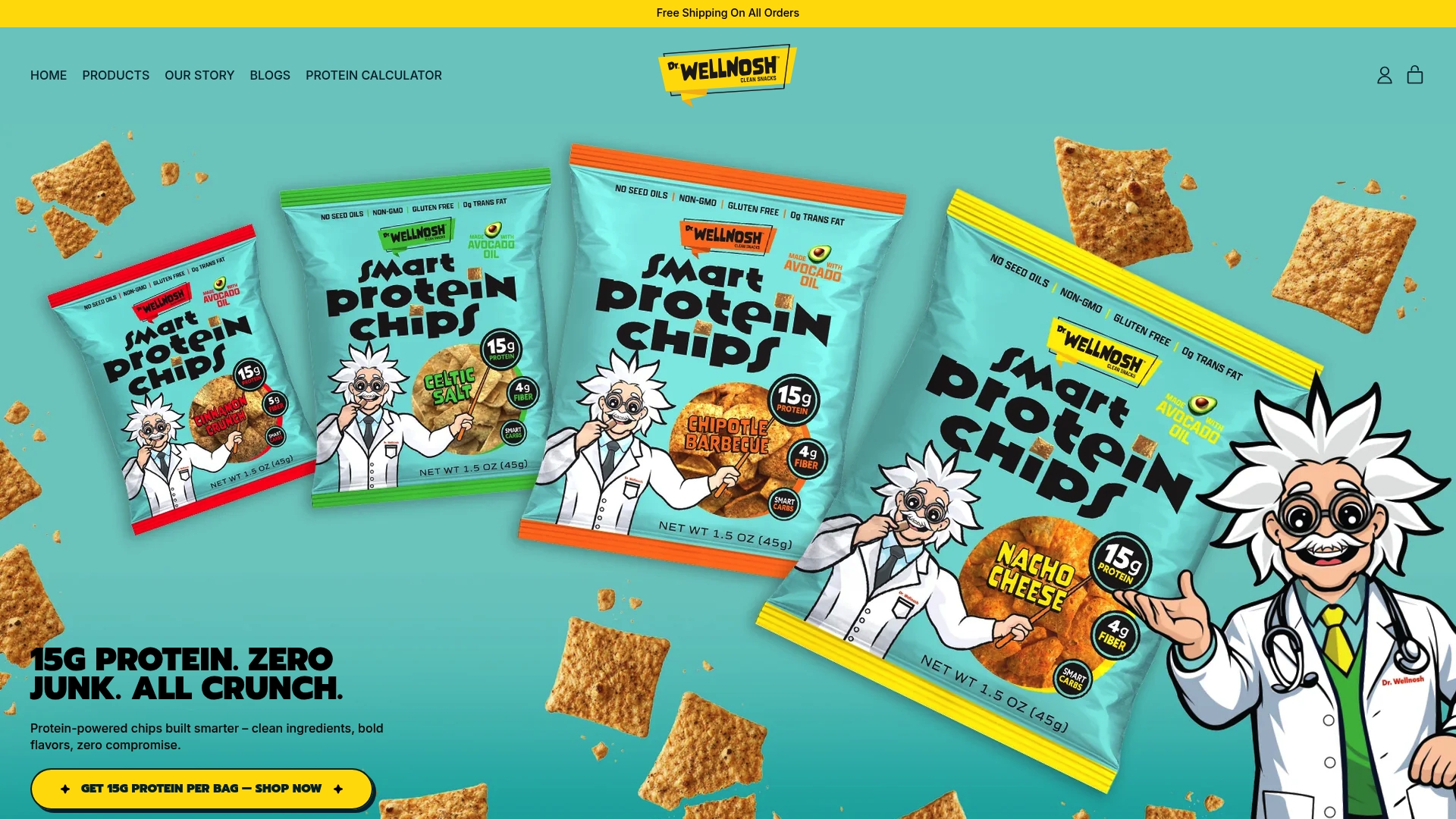
The resealable bag format makes Wellnosh chips easy to store in a desk drawer or backpack without losing freshness. Flavors like Chipotle Barbecue, Nacho Cheese, and Celtic Salt give you real variety without compromising on nutrition. For students building a smart snack stock, Wellnosh is a shelf-stable, high-protein option that earns its place in any dorm pantry.
FAQ
What makes a snack dorm friendly?
A dorm-friendly snack combines protein, healthy fats, and complex carbohydrates with shelf stability and zero-prep convenience. It must survive unrefrigerated for weeks and be easy to eat during class or while studying.
How much should students budget for dorm snacks?
Students can maintain a solid snack supply on $40–$60 per month by buying shelf-stable staples in bulk and avoiding single-serve vending machine purchases.
What are the best grab-and-go snacks for college students?
Nuts, jerky, rice cakes with nut butter, roasted chickpeas, and protein chips are the top options. They require no prep, no refrigeration, and deliver balanced macronutrients in a portable format.
How do you store snacks in a small dorm room?
Use a frequency-based system: keep daily snacks on your desk, store bulk backup under your bed or on a high shelf, and use clear containers so you can see what you have and when to reorder.
Are protein chips a good dorm snack?
Protein chips are one of the best dorm snack options because they are shelf-stable, portable, and deliver meaningful protein per serving. Wellnosh protein chips provide 15g of fava bean protein per bag with clean, pronounceable ingredients and no seed oils.


