

· By Dr. Wellnosh
Clean Snacks for Energy at Work: A Pro's Guide
Clean snacks for energy at work are nutrient-dense foods that combine protein, healthy fats, and complex carbohydrates to deliver a steady flow of fuel to your brain and body throughout the workday. The right snack keeps blood sugar stable, prevents the mental fog that follows a sugar crash, and supports the kind of focus that demanding work actually requires. Professionals who snack with intention, rather than out of habit or convenience, consistently report better concentration and fewer afternoon slumps. Wellnosh was built around exactly this principle: that what you eat between meals matters as much as what you eat at them.
What makes a snack “clean” and why nutrient balance matters for energy at work
A clean snack is defined by what it leaves out as much as what it includes. Health authorities recommend snacks built from whole, nutrient-dense foods with minimal added sugars, sodium, and saturated fats. That means fresh fruit, nuts, seeds, roasted chickpeas, vegetables with hummus, and whole grain crackers. Processed snacks loaded with refined sugar and seed oils do not qualify, regardless of how they are marketed.
The macronutrient combination is what separates a clean snack from a merely “healthy-sounding” one. Pairing protein and healthy fats with carbohydrates prevents sharp blood sugar spikes and the crashes that follow. A spike feels like a burst of energy. The crash that follows feels like mental fog, irritability, and the urge to reach for coffee or something sweet again.
Here is what a genuinely clean snack profile looks like:
- Protein: Slows digestion and keeps you full longer. Sources include Greek yogurt, hard-boiled eggs, nuts, seeds, and legume-based chips.
- Healthy fats: Support brain function and slow glucose absorption. Sources include avocado, almonds, walnuts, and avocado oil-cooked snacks.
- Complex carbohydrates: Provide a gradual glucose release. Sources include oats, whole grain crackers, fruit, and vegetables.
- Minimal additives: No artificial flavors, no seed oils, no added sugar. Ingredients you can read and recognize.
Pro Tip: Read the ingredient list before the nutrition label. If the first three ingredients are a form of sugar, refined flour, or a seed oil like canola or soybean oil, put it back.
The industry term for this approach is “balanced macronutrient snacking,” and it is the standard framework used by registered dietitians when advising professionals on workday nutrition. Clean snacking is the informal, widely used shorthand for the same concept.
Which snacks best sustain mental focus during work hours
The most effective snacks for mental performance combine fast and slow energy sources in one portable package. Almonds paired with dried apricots deliver steady brain fuel and have been shown to improve cognitive performance. The fat and protein in the almonds slow the absorption of the natural sugars in the apricots, producing a gradual glucose curve instead of a spike.
Other strong options for professionals include:
- Vegetables with hummus: Fiber from the vegetables plus protein and fat from the hummus creates a slow, clean energy release.
- Greek yogurt with berries: Protein and probiotics from the yogurt, antioxidants and natural sugars from the berries.
- Walnuts and dark chocolate: Omega-3 fatty acids from walnuts support brain cell function. Dark chocolate provides a small caffeine boost and antioxidants.
- Energy balls: Rolled oats, nut butter, and seeds pressed into a ball. High in fiber, protein, and healthy fat. Easy to prep on Sunday for the whole week.
- High-protein chips cooked in avocado oil: Portable, low-carb, and free of seed oils. Wellnosh Smart Protein Chips deliver 15g of fava bean protein per bag with no added sugar and no artificial additives.
The table below shows how these snack types compare on the nutrients that matter most for focus and energy:
| Snack | Protein | Healthy fats | Complex carbs | Added sugar |
|---|---|---|---|---|
| Almonds and dried apricots | Moderate | High | Moderate | None |
| Vegetables with hummus | Moderate | Moderate | High | None |
| Greek yogurt with berries | High | Low | Moderate | None |
| Walnuts and dark chocolate | Moderate | High | Low | Trace |
| Wellnosh Smart Protein Chips | Very high | Moderate | Low | None |
Maintaining a constant energy flow rather than allowing rapid peaks and dips prevents mental fatigue and supports sustained cognitive function. That is the core argument for choosing snacks from this list over a granola bar or a bag of pretzels.
How timing and portioning affect your productivity at work
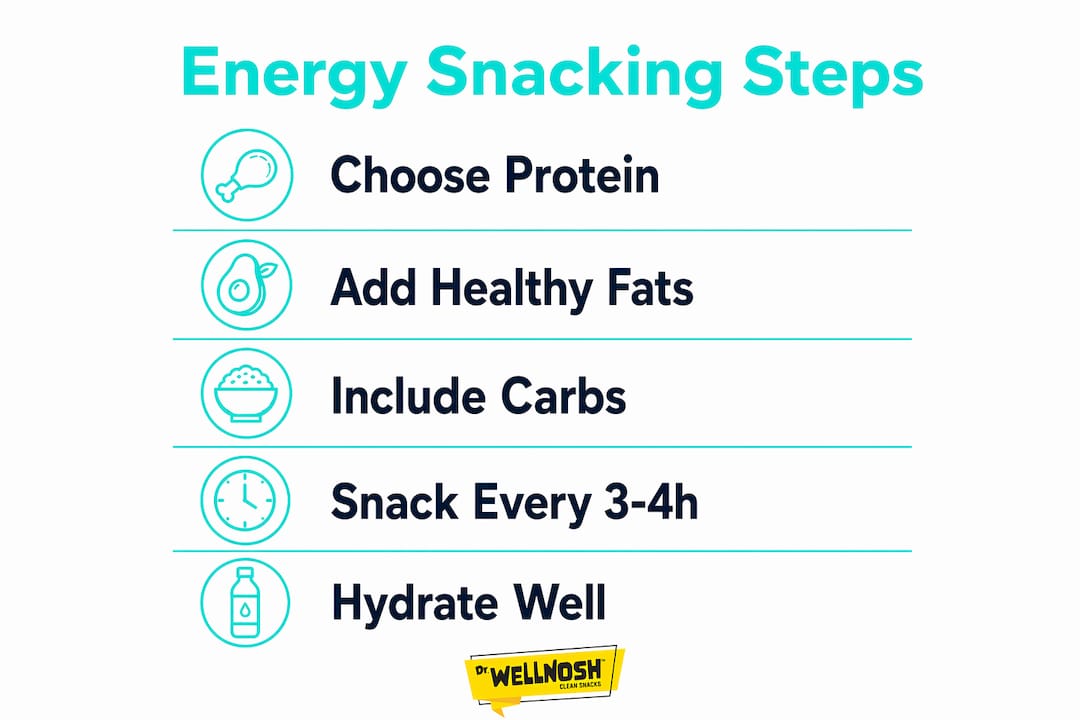
Snack timing is as important as snack content. Eating balanced snacks every 3–4 hours combining complex carbohydrates, lean protein, and healthy fats maintains stable blood sugar and sustained focus throughout the day. Skipping snacks and waiting until you are hungry enough to eat anything is the fastest route to a vending machine.

The two most common energy dips in a professional workday are the pre-lunch dip (around 11:00 a.m.) and the afternoon slump (around 3:00 p.m.). Blood sugar fluctuations cause both. A mid-morning snack at around 10:00 a.m. and an afternoon snack at around 3:00 p.m. target these windows directly.
A practical snack schedule for a standard workday looks like this:
- 7:00–8:00 a.m. Breakfast with protein and complex carbs. Oats with Greek yogurt, for example.
- 10:00–10:30 a.m. Mid-morning snack. An apple with almond butter, or a bag of Wellnosh Smart Protein Chips.
- 12:30–1:00 p.m. Lunch with lean protein, vegetables, and whole grains.
- 3:00–3:30 p.m. Afternoon snack. Walnuts with a small piece of dark chocolate, or vegetables with hummus.
- 5:30–6:00 p.m. Dinner. No need for a late-afternoon snack if dinner is within two hours.
Portion size matters as much as timing. A snack should be 150–250 calories, enough to stabilize blood sugar without triggering a post-meal energy dip. Eating too much at a snack break produces the same sluggishness as a heavy lunch.
Pro Tip: Prep your snacks on Sunday. Hard-boil a batch of eggs, portion out nuts into small containers, and make a week’s worth of energy balls. Prepared snacks stored properly last days or weeks and remove the decision fatigue that leads to unhealthy choices.
Small, intentional snack choices can dramatically improve mental clarity and energy throughout the workday without requiring a complex diet overhaul. The key word is intentional. Snacking with a plan beats snacking on impulse every time.
How hydration supports clean snacking for mental clarity
Hydration is the most overlooked variable in workday performance. Even mild dehydration at 2% significantly impairs cognitive performance, making water intake as important as the snacks themselves. That level of dehydration is easy to reach during a busy morning of back-to-back meetings without a water bottle in sight.
Water also facilitates nutrient absorption. The protein, vitamins, and minerals in your snacks move through your system more efficiently when you are well hydrated. Eating a clean snack while dehydrated is like putting premium fuel in a car with a clogged fuel line.
The best beverages to pair with clean snacks at work include:
- Water: Still or sparkling, no additives. The default choice.
- Herbal tea: Caffeine-free options like chamomile or peppermint support hydration without the afternoon caffeine spike.
- Green tea: Low caffeine, high in L-theanine, which supports calm focus without jitteriness.
- Electrolyte water: Useful after exercise or in hot environments. Choose options with no added sugar.
Avoid fruit juices, energy drinks, and sweetened coffees as snack companions. They add sugar and calories without the fiber or protein that would slow the resulting blood sugar spike. Drinking water or low-sugar beverages with snacks supports mental clarity and nutrient absorption simultaneously.
A simple habit: keep a 20-ounce water bottle on your desk and refill it twice before 3:00 p.m. Pair each snack with at least 8 ounces of water. That single practice addresses the hydration gap that undermines focus for many professionals.
Key Takeaways
Clean snacks that combine protein, healthy fats, and complex carbohydrates are the most effective tool for maintaining steady energy and focus throughout the professional workday.
| Point | Details |
|---|---|
| Define “clean” by ingredients | Choose snacks with whole foods, no added sugar, no seed oils, and readable ingredient lists. |
| Balance your macronutrients | Pair protein and healthy fats with complex carbs to prevent blood sugar spikes and mental fog. |
| Time snacks every 3–4 hours | Target the 10:00 a.m. and 3:00 p.m. energy dips to prevent the pre-lunch dip and afternoon slump. |
| Prep snacks in advance | Pre-portioned snacks remove decision fatigue and reduce reliance on vending machines or convenience foods. |
| Hydrate alongside every snack | Even 2% dehydration impairs cognition; pair each snack with at least 8 ounces of water. |
The snack habit most professionals get wrong
Most professionals treat snacking as a reaction to hunger rather than a proactive strategy. That single mindset shift is where clean snacking either works or fails. When you wait until you are hungry, your blood sugar is already dropping and your judgment about what to eat is already compromised. You reach for whatever is fast and available, which is rarely the best option.
The other common mistake is treating “healthy” as a fixed category. A rice cake with nothing on it is technically low in calories, but it spikes blood sugar and leaves you hungry again in 45 minutes. A small bag of Wellnosh Smart Protein Chips with 15g of fava bean protein, cooked in avocado oil, with no added sugar, keeps you full and focused for hours. The difference is not just the label. It is the macronutrient structure.
What I have found works for busy professionals is building a snack kit at the start of each week. Three to five snack options, pre-portioned, stored where you work. The goal is to make the clean choice the easy choice. Consistency in smart snacking with high-protein, fiber-rich foods improves energy and productivity without requiring a strict diet. That is not a marketing claim. It is what the research consistently shows.
Building this habit takes about three weeks before it feels automatic. Start with one snack per day that you plan in advance. Add a second the following week. By week three, the pattern is set and the decision fatigue is gone.
— Advantage
Wellnosh Smart Protein Chips: clean fuel for your workday
Busy professionals need snacks that travel well, taste good, and actually support focus. Wellnosh Smart Protein Chips deliver 15g of fava bean protein per bag, cooked in avocado oil, with no seed oils, no added sugar, no artificial additives, and a short ingredient list you can read without a chemistry degree.
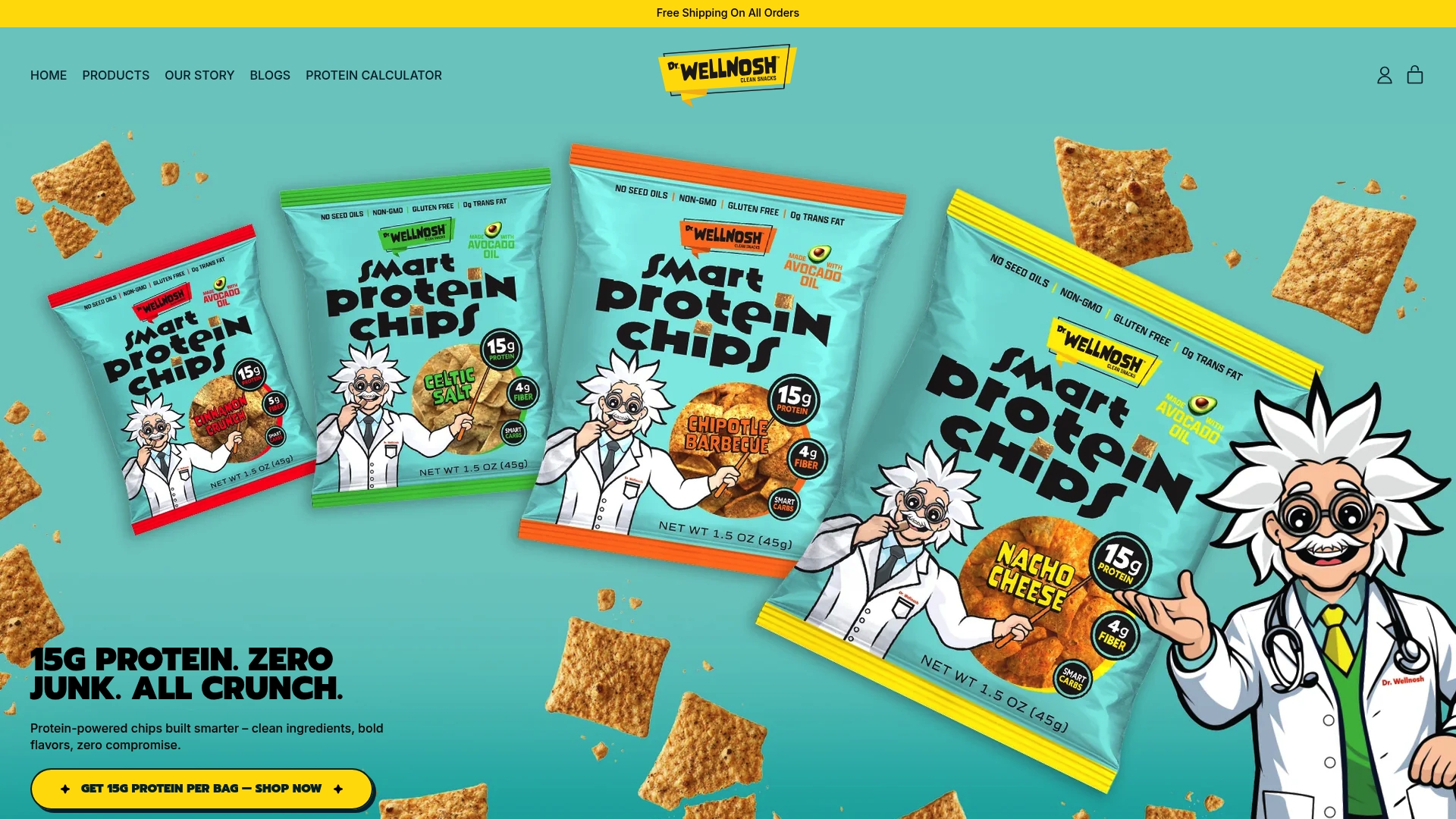
The Variety Pack includes Nacho Cheese, Celtic Salt, Chipotle Barbecue, and Cinnamon, so you can rotate flavors without rotating your standards. For professionals who prep snacks weekly, the 8-Pack Bundle keeps a full week of clean, portable fuel on hand. If you want to start with a single flavor, the Chipotle Barbecue is a strong first choice: savory, satisfying, and built for the 3:00 p.m. slump.
FAQ
What qualifies as a clean snack for work?
A clean snack combines whole foods with minimal added sugars, sodium, and saturated fats. Health authorities define clean snacking as choosing nutrient-dense options like nuts, seeds, vegetables with hummus, and legume-based proteins over processed, additive-heavy alternatives.
How often should professionals snack during the workday?
Eating a balanced snack every 3–4 hours maintains stable blood sugar and prevents the pre-lunch dip and afternoon slump. A mid-morning snack around 10:00 a.m. and an afternoon snack around 3:00 p.m. cover the two most common energy dips in a standard workday.
Does hydration really affect focus at work?
Yes. Even 2% dehydration significantly impairs cognitive performance. Pairing each snack with at least 8 ounces of water supports both mental clarity and the absorption of nutrients from the snack itself.
What is the best snack for sustained mental focus?
Snacks that pair protein and healthy fats with complex carbohydrates deliver the most sustained mental focus. Almonds with dried fruit, Greek yogurt with berries, and high-protein chips cooked in avocado oil are all strong options for professionals.
How do I avoid unhealthy snacking at work?
Prepare snacks in advance and store them where you work. Pre-portioned, ready-to-eat options like hard-boiled eggs, trail mix, or Wellnosh Smart Protein Chips remove the decision fatigue that leads to vending machine choices during busy workdays.


