

· By Dr. Wellnosh
Home Cooks: Which Oil Handles 520°F, Avocado Oil Or Canola Oil?
For most health-conscious cooks, avocado oil is the better default: it packs more monounsaturated fat, handles high heat without breaking down, and comes with a cleaner nutrient profile. Canola oil earns its place too, mostly for its price and its plant-based omega-3 content. If you’re baking, canola works fine. If you’re searing steak or roasting at 450°F, reach for avocado oil.
TL;DR:
- Avocado oil’s high smoke point makes it ideal for searing, roasting, and frying more than canola oil, which generally maxes out around 400°F.
- Cold-pressed avocado oil retains more antioxidants and flavor but comes at a higher price than refined versions, which still offer high heat tolerance.
- Canola oil provides more plant-based omega-3 fatty acids, especially ALA, making it suitable for diets low in fish or omega-3 sources.
- Adulteration concerns are higher with avocado oil, so consumers should seek brands with third-party testing and clear sourcing disclosures.
- When choosing between the two, cost, processing method, and application are the key factors influencing the optimal oil for specific cooking needs.
Table of Contents
- Avocado Oil vs Canola Oil: A Quick Side-by-Side
- Fatty-Acid Profiles and Micronutrients: What Each Oil Actually Delivers
- Smoke Point, Oxidation, and How Each Oil Behaves When Heated
- Cold-Pressed vs Solvent-Refined: How Processing Changes What’s in the Bottle
- What the Clinical Evidence Actually Shows
- How to Swap Avocado Oil and Canola Oil in Real Recipes
- Price, Availability, and Environmental Trade-Offs
- Storage and Shelf Life: Keeping Either Oil From Going Rancid
- Why Wellnosh Chooses Avocado Oil for Every Bag
- Taste the Difference Avocado Oil Makes
- Sources
Avocado Oil vs Canola Oil: A Quick Side-by-Side
Before you dig into the fatty-acid chemistry, here’s the short version. Both oils are liquid at room temperature, both are widely available, and both show up in packaged snacks and home kitchens alike. The differences that actually matter show up in three places: fat composition, heat tolerance, and how each oil is made.
- Fat profile: Avocado oil is dominated by monounsaturated fat (MUFA), similar to olive oil. Canola oil leans more polyunsaturated (PUFA) and contains a meaningful dose of ALA, a plant-based omega-3.
- Smoke point: Refined avocado oil tops out around 520°F, while refined canola sits closer to 400°F. That’s a real gap for anyone who sears or stir-fries at high heat.
- Antioxidants: Avocado oil carries more vitamin E and lutein, especially in unrefined form. Canola brings less of these but isn’t without merit nutritionally.
- Flavor: Avocado oil ranges from buttery and mild (refined) to grassy and rich (cold-pressed). Canola oil is nearly flavorless, which some cooks actually prefer.
- Cost: Canola oil usually runs cheaper per ounce, often by a wide margin, which matters if you’re cooking daily in volume.
Best for searing, roasting, and grilling: avocado oil. Best for neutral baking, everyday sautéing, and stretching a grocery budget: canola oil. Neither is a villain. The right pick depends on what’s actually happening in the pan.
Fatty-Acid Profiles and Micronutrients: What Each Oil Actually Delivers
Fat composition is where these two oils genuinely diverge, and it’s worth understanding the categories before comparing numbers. Fats break down into saturated (SFA), monounsaturated (MUFA), and polyunsaturated (PUFA). Avocado oil is dominated by MUFA, the same fat that makes olive oil a heart-health darling. Canola oil skews more toward PUFA and, notably, contains alpha-linolenic acid (ALA), a plant-based omega-3 that avocado oil largely lacks.
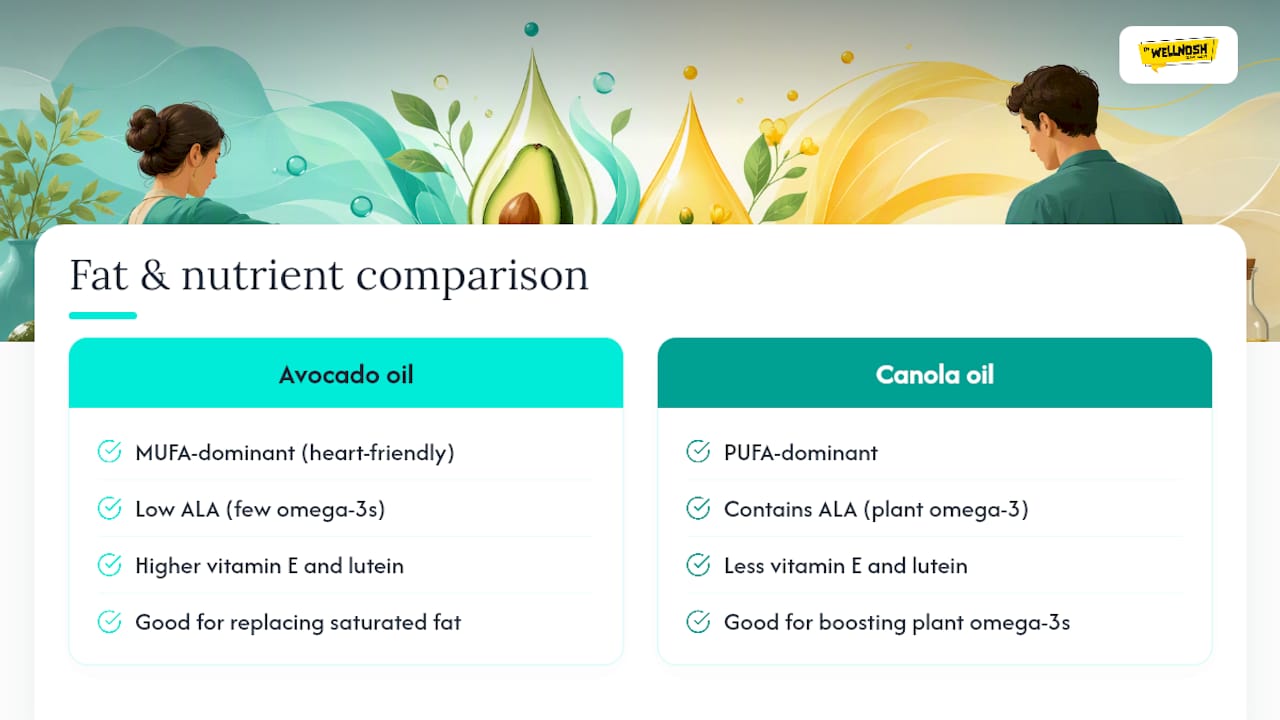
This isn’t a case of one oil being “better” across the board. Canola oil provides more plant-based omega-3 than avocado oil, while avocado oil is richer in monounsaturated fat. If your diet is short on omega-3s and you don’t eat much fish, canola’s ALA content is a genuine nutritional point in its favor. If your priority is swapping saturated fat for something proven to support cardiovascular health, avocado oil’s MUFA-heavy profile does that job just as well as olive oil does.
Why the omega-6 to omega-3 ratio gets overhyped
A lot of wellness content treats the omega-6 to omega-3 ratio like a scoreboard, with lower always better. Canola oil actually has a fairly favorable ratio compared to other seed oils, closer to 2:1, while avocado oil’s omega-6 content is low in absolute terms but so is its omega-3 content. The ratio obsession misses the bigger picture: what matters more is your total diet, not the ratio inside a single bottle of oil. Someone eating salmon twice a week and cooking with canola oil is in a very different omega-3 position than someone eating neither fish nor flax and relying on seed oils for all their fat intake.
Micronutrients: where avocado oil pulls ahead
Beyond the fat breakdown, avocado oil brings a nutrient bonus that canola doesn’t match. Unrefined and minimally processed avocado oil retains meaningful amounts of vitamin E, an antioxidant that helps protect cell membranes from oxidative damage, along with lutein, a carotenoid more commonly associated with leafy greens and eye health. Canola oil contains some vitamin E as well, but refining strips out much of it along with other minor antioxidants.
This micronutrient edge is one reason avocado oil shows up more often in cold applications like dressings and finishing drizzles, where you actually taste and absorb those compounds rather than degrading them under heat.
What the heart-health guidance actually says
The consistent theme across major health institutions isn’t “pick oil A over oil B.” It’s that replacing saturated fats with plant-based unsaturated oils generally supports heart health, whether that oil is avocado, canola, olive, or sunflower. The oil matters less than what it’s replacing. Swapping butter or lard for either avocado or canola oil in your regular cooking is a net positive for most people’s lipid profiles. The differences between the two plant oils are real but secondary to that larger substitution effect.
Smoke Point, Oxidation, and How Each Oil Behaves When Heated
Smoke point isn’t just a trivia number. It’s the temperature at which an oil starts breaking down, releasing free radicals and compounds that affect both flavor and, over repeated exposure, potential health risk. This is where avocado oil’s advantage becomes concrete rather than theoretical.
- Refined avocado oil tolerates heat up to roughly 520°F, making it suitable for searing, wok cooking, and even some grilling applications where the pan surface runs hot.
- Refined canola oil has a lower ceiling, generally cited around 400°F, which covers most home sautéing and baking but leaves less headroom for aggressive searing.
- Unrefined or “virgin” versions of either oil smoke at noticeably lower temperatures and are better reserved for finishing, dressings, or gentle sautéing rather than high-heat cooking.
The bigger issue isn’t a single high-heat moment, though. It’s repeated heating. Oils used in deep frying or repeated pan-searing accumulate polar compounds over time, breakdown products linked to oxidative stress when consumed in quantity. Research on vegetable oils used in repeated deep-fat frying of potato chips found that high-MUFA oils reached unsafe polar-compound thresholds more slowly than many seed oils, which tracks with why commercial fryers watch oil turnover closely. In a home kitchen, that translates to a simple rule: if you’re frying something more than once or twice in the same oil, avocado oil’s stability buys you more usable cycles before quality drops.
Restaurant and food-manufacturing operations deal with this at scale. Long fry campaigns require attention to foam buildup, viscosity changes, and flavor carryover between batches, and avocado oil performs well on flavor but needs closer monitoring across repeated high-heat cycles compared to some engineered high-oleic seed oils built specifically for industrial frying stability.
Pro Tip: Watch the oil, not the clock. Fresh oil pours smoothly and stays clear. Oil that’s breaking down turns darker, foams more when food hits it, and starts smelling faintly like crayons or burnt popcorn. Any of those signs means it’s time to toss it, regardless of how many “uses” you’ve gotten out of it.

Practical takeaway for home cooks: keep pan temperatures under each oil’s smoke point, avoid reusing oil more than once or twice for frying, and lean on avocado oil specifically when you know you’re pushing into high-heat territory like cast-iron searing or stir-frying at full burner power.
Cold-Pressed vs Solvent-Refined: How Processing Changes What’s in the Bottle
How an oil gets from the source to the bottle changes what ends up in your food, and this is where avocado oil and canola oil take genuinely different paths. Cold-pressed or “virgin” avocado oil is mechanically extracted from the fruit’s flesh, similar to how extra virgin olive oil is made, preserving more of the antioxidants and flavor compounds naturally present in the avocado.
Canola oil, by contrast, is almost always solvent-extracted from crushed canola seeds, then refined, bleached, and deodorized, a process often abbreviated RBD in the industry. This process is efficient and produces a shelf-stable, neutral-tasting oil, but it also strips out much of the natural vitamin E and antioxidant content along the way. Refined avocado oil goes through a similar deodorizing step, which is part of why it loses some of the grassy flavor and nutrient density of the virgin version in exchange for a higher smoke point.
- Cold-pressed avocado oil: higher antioxidant retention, stronger flavor, lower smoke point, higher price.
- Refined avocado oil: neutral flavor, high smoke point, fewer antioxidants than virgin, mid-range price.
- Refined canola oil: neutral flavor, moderate smoke point, minimal antioxidants, lowest price.
Purity is a bigger concern with avocado oil than with canola, mostly because avocado oil’s premium price has attracted mislabeling. UC Davis testing has identified adulteration and authenticity issues in some commercially sold avocado oils, including products cut with cheaper oils but still labeled as pure avocado oil. Separate reporting on this issue found that the bottle labeled “100% avocado oil” on a grocery shelf isn’t always what it claims to be, which is a real problem for anyone paying a premium specifically for the fatty-acid and antioxidant benefits.
The practical fix: look for brands that disclose third-party testing, list a clear country of origin, and avoid vague “blend” language on the label. Canola oil doesn’t carry the same adulteration risk profile, partly because it’s cheaper to begin with and there’s less financial incentive to cut it with something else.
What the Clinical Evidence Actually Shows
The research on plant oils and heart disease is more settled than the internet debate around it suggests. Systematic reviews of clinical and mechanistic studies consistently show benefits when saturated fats are replaced with unsaturated plant oils, though the size of that benefit varies depending on which oil, how much, and what it’s replacing in the diet. This applies to both avocado and canola oil, since both are overwhelmingly unsaturated fat sources.
Where things get noisy is the broader “seed oil” debate, and canola oil gets caught in that crossfire even though it behaves quite differently from something like soybean or corn oil in the wellness-media narrative. The core claim from that corner of the internet, that seed oils cause inflammation and chronic disease independent of anything else, doesn’t hold up well against the actual evidence. Harvard’s public health researchers note that observed harms attributed to seed oils often stem from their use in ultra-processed foods rather than from the oils themselves. A bag of chips fried in canola oil and loaded with refined starch and sodium is a different food than a home-cooked stir-fry using the same oil with vegetables and lean protein. Blaming the oil for outcomes driven by the whole food category is a common but sloppy leap.
Clinical centers echo this distinction. Cleveland Clinic points out that seed oils used in moderation for home cooking aren’t equivalent to the oils used in industrially fried, ultra-processed foods, and that oils like avocado and olive are frequently recommended for everyday roasting and sautéing precisely because of their favorable fat profile and heat tolerance. More recent commentary from Johns Hopkins researchers reinforces that the evidence behind seed oils and health outcomes is still evolving, with public messaging often running ahead of what the data conclusively shows.
So where does that leave a health-conscious cook trying to make a real decision? A few things are well-supported: swapping saturated fat for either avocado or canola oil tends to help cardiovascular markers, and cooking method matters as much as oil choice, since burnt, overheated, or repeatedly reused oil creates more oxidative byproducts regardless of the source. What’s less certain is whether the specific differences between avocado and canola oil, as opposed to broader dietary patterns, move the needle much on inflammation or long-term disease risk for someone eating a generally balanced diet. The honest framing is that oil choice is a meaningful lever, not a magic one, and it works best alongside a diet that isn’t leaning on fried, packaged food as a daily staple.
How to Swap Avocado Oil and Canola Oil in Real Recipes
Substitution between these two oils is almost always a one-to-one volume swap, but the results shift depending on what you’re making.
- Baking (cakes, muffins, quick breads): Canola oil is the practical default here since its neutral flavor won’t compete with vanilla, chocolate, or spice. Avocado oil works too but costs more for no real payoff in a batter that’s mostly sugar and flour.
- Salad dressings and marinades: This is where avocado oil’s flavor and antioxidant content actually shine, especially the cold-pressed version. Canola oil works but tastes flat by comparison.
- Searing steak, chicken, or fish: Avocado oil is the better call given its higher smoke point. Canola can handle a medium-high sear but starts smoking sooner if your pan runs hot.
- Deep frying at home: Either works for occasional use, but avocado oil holds up better across multiple frying sessions if you’re batch-cooking or reusing oil once.
- Stir-fries: Avocado oil’s heat tolerance matches the high, fast cooking that stir-frying demands; canola is a reasonable backup if that’s what’s in the pantry.
Snack manufacturers face a scaled-up version of this same decision. Long, repetitive frying runs put oils through more thermal stress than a home kitchen ever will, which is part of why some producers lean on engineered high-oleic seed oils built specifically for frying stability in artisan chip production, while others prioritize avocado oil for its flavor and nutrient profile even though it demands closer process monitoring.
Price, Availability, and Environmental Trade-Offs
Budget is where canola oil wins outright. It’s typically the cheaper option by a wide margin at most grocery stores, and its neutral flavor makes it forgiving for everyday cooking where flavor nuance doesn’t matter much. If cost is your primary constraint, buy canola for high-volume, everyday tasks like sautéing vegetables or greasing a pan, and reserve a smaller bottle of avocado oil for the specific jobs where its smoke point or flavor actually earns the premium, like searing meat or finishing a salad.
Sustainability comparisons are murkier than marketing suggests. Avocado cultivation is water-intensive, and demand growth has pushed some production into water-stressed regions, a real trade-off worth knowing about even if it doesn’t show up on the nutrition label. Canola, grown widely across temperate farmland, generally has a smaller water footprint per acre but comes with its own land-use and monoculture concerns common to large-scale row-crop agriculture.
Certifications matter more for avocado oil than canola, mainly because of the authenticity issues covered earlier. A third-party purity seal or transparent sourcing statement is worth paying for with avocado oil. With canola, organic certification mostly affects pesticide exposure rather than oil purity, since adulteration isn’t the same risk category.
Storage and Shelf Life: Keeping Either Oil From Going Rancid
Refined oils, both avocado and canola, generally last longest and can sit in a cool, dark pantry for up to a year unopened, and several months once opened. Unrefined, cold-pressed avocado oil is more delicate. Its retained antioxidants slow oxidation somewhat, but its lower processing also means it’s more sensitive to light and heat, so refrigeration after opening extends its usable life meaningfully.
Refined canola oil doesn’t need refrigeration and holds up fine at room temperature in a sealed, dark bottle. The main enemies for both oils are light, heat, and air exposure, so a cabinet away from the stove beats a countertop rack next to a sunny window.
Rancidity is easy to catch once you know the signs: a sharp, crayon-like smell, a bitter or “off” aftertaste, or a color that’s darkened noticeably from when you bought it. If an oil smells or tastes even slightly like old nuts gone stale, don’t cook with it. Trust your nose over the sell-by date.
Why Wellnosh Chooses Avocado Oil for Every Bag
Choosing a cooking oil for a snack that gets fried repeatedly, at scale, isn’t the same decision as picking one bottle for a home kitchen. We looked at the same trade-offs covered in this guide, smoke point, oxidative stability, nutrient retention, and flavor, and avocado oil won on the combination that mattered most for a protein chip meant to taste good and hold up nutritionally.
Its high smoke point means it handles the heat of frying without breaking down as quickly as lower-tolerance oils, and its MUFA-heavy fat profile fits the clean-ingredient standard we hold every recipe to. That’s not a claim that avocado oil makes any single snack a health food on its own. Moderation and overall diet pattern still matter more than any one ingredient, oil included. But when a fava bean protein chip is going to be fried, avocado oil is the option that lines up with both performance and the nutrition profile we want on the label.
— Dr. Wellnosh
Taste the Difference Avocado Oil Makes
Everything covered here about avocado oil’s stability and nutrient profile aligns with the qualities emphasized in these protein chips. They feature fava bean protein, are cooked in avocado oil instead of seed oils, and have ingredient lists free from artificial additives and added sugar, designed to appeal to those seeking clean, pronounceable ingredients.
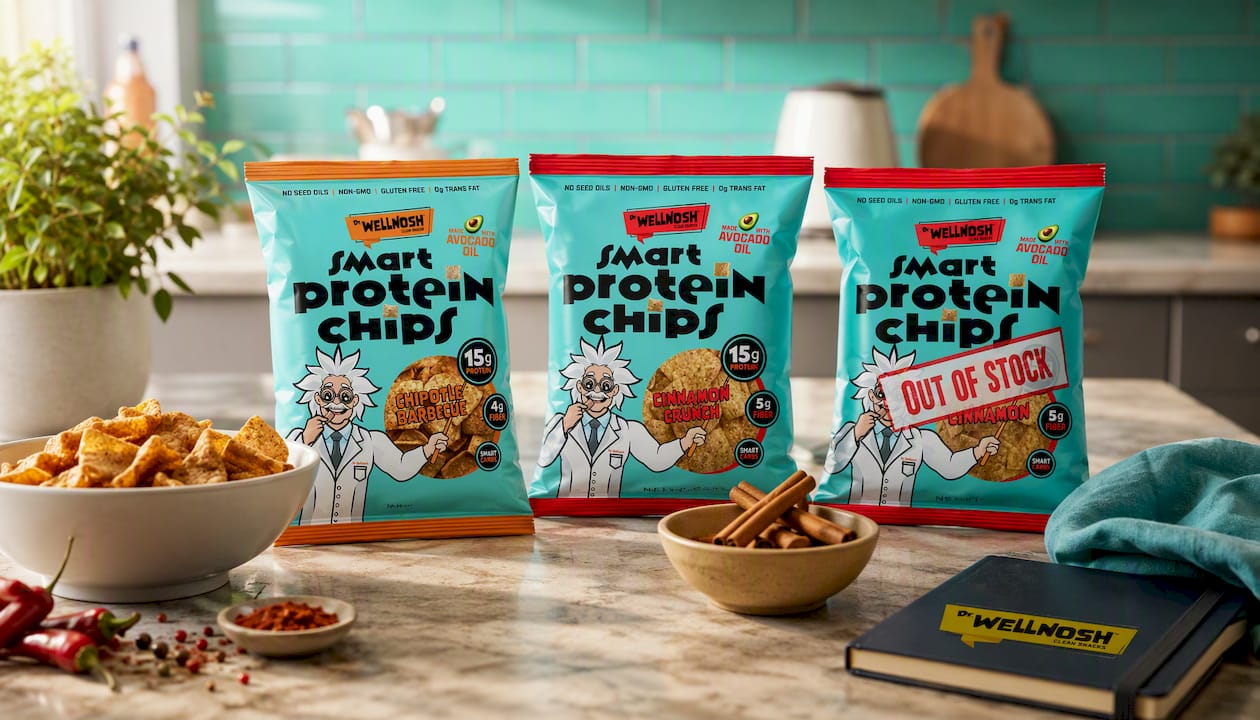
If you’ve read this far wondering what avocado oil tastes like in practice rather than theory, Chipotle Barbecue is a solid starting point, or try Nacho Cheese and Celtic Salt for two very different flavor directions. For anyone looking for other better-for-you snacking swaps, this rundown of healthier chip alternatives covers additional options worth knowing about. Order a bag, or set up a Subscribe & Save plan, and see how a protein chip cooked in avocado oil actually holds its crunch.


