

· By Dr. Wellnosh
For Health Conscious Readers: Trials Show Seed Oils Lower LDL
Current human trials and major public-health reviews do not support the idea that seed oils are inherently toxic or inflammatory. In fact, when seed oils replace saturated fats like butter or lard, LDL cholesterol and cardiovascular risk tend to drop. The real health problems tied to seed oils almost always trace back to something else: ultraprocessed foods, deep-fried menus, or oil that’s been reheated one too many times.
TL;DR:
- Replacing saturated fats with seed oils like canola and sunflower lowers LDL cholesterol and reduces cardiovascular risk according to large population studies.
- Human trials do not show that linoleic acid, the primary omega-6 fat in seed oils, increases inflammatory biomarkers; higher intake is sometimes linked to lower cardiometabolic risk.
- The presence of hexane residue in refined seed oils is at safe, trace levels that pose no health threat, but repeated high-heat cooking and reuse of oil do generate harmful oxidation byproducts.
- The main health concern from seed oils arises from overuse in ultraprocessed foods and repeated high-temperature frying, not from the oils themselves.
- A balanced diet emphasizing whole foods and minimally processed snacks reduces health risks more effectively than elimination of seed oils alone.
Table of Contents
- So, Are Seed Oils Bad? Here’s What the Data Says
- Do Seed Oils Cause Inflammation? Mechanisms vs. Human Data
- How Seed Oils Are Processed: Hexane, Refining, and What It Actually Means
- Overheating and Reusing Oil: The Risk That’s Actually Real
- Choosing and Using Oils in a Healthy Diet
- Looking for Seed Oil Free Snacks? Here’s What to Check
- The Omega-6 Question, One More Time
- What Randomized Trials Say About Seed Oils and Heart Health
- Why Ultraprocessed Foods Muddy the Seed Oil Debate
- Historical Trends: Why Seed Oil Intake Rose in the First Place
- Seed Oils vs. Butter, Lard, and Coconut Oil
- Common Myths About Seed Oils, Debunked
- Seed Oils, Weight Management, and Metabolic Health
- Environmental Considerations of Seed Oil Production
- An Author Note on Evidence and Transparency
- A Seed-Oil-Free Snack Option Worth Trying
- Sources
So, Are Seed Oils Bad? Here’s What the Data Says
The claim that seed oils are “bad” doesn’t hold up against the strongest evidence available. Randomized controlled trials, the kind of study that can actually test cause and effect rather than just correlation, consistently fail to show that linoleic acid (the dominant omega-6 fat in canola, soybean, and sunflower oil) raises inflammatory markers in real people. That single fact undercuts most of the internet’s seed oil panic.
Institutions with no financial stake in the outcome back this up. A review from Johns Hopkins Bloomberg School of Public Health concludes that scientific evidence doesn’t support seed oils as an independent cause of inflammation, and that the ingredient’s bad reputation is largely guilt by association with ultraprocessed snack foods. Harvard’s cardiovascular researchers have reached similar conclusions, and the Dietary Guidelines for Americans 2020–2025 explicitly recommends swapping saturated animal fats for plant oils, not avoiding them.
Here’s what the substitution studies actually found:
- Meta-analyses show that replacing saturated fat with plant oils lowers LDL cholesterol and reduces cardiovascular risk across large population studies.
- A systematic review of canola, flaxseed, and sesame oils found improved lipid profiles and glycemic control in people with metabolic disease, though results varied by oil type and study design.
- Trials measuring linoleic acid intake directly found no consistent rise in inflammatory biomarkers, and some studies linked higher intake to lower cardiometabolic risk.
Pro Tip: If you want to judge a fat by its evidence base rather than its internet reputation, ask one question: has it been tested in a randomized trial on humans, or only in a petri dish and a mouse? That distinction separates most seed oil fear from most seed oil fact.
Do Seed Oils Cause Inflammation? Mechanisms vs. Human Data
The anti-seed-oil argument usually starts with biochemistry: linoleic acid, an omega-6 fat, can convert into arachidonic acid, which the body can use to build inflammatory compounds. Seed oils do contain a lot of linoleic acid, which is a major polyunsaturated fat found in many seed oils such as soybean and canola oil. That part of the story is true.
Where the argument falls apart is the leap from “this conversion pathway exists” to “this oil causes chronic inflammation in the human body.” The conversion of linoleic acid to arachidonic acid is tightly regulated and doesn’t scale linearly with intake. Most of the alarming claims come from animal studies or cell-culture experiments, not people eating normal diets over normal timeframes. As Stanford Medicine researchers have noted, mechanistic conversions in a lab dish don’t reliably predict what happens across a population eating real food.
Human trials tell a different story. When researchers directly measured linoleic acid intake against health outcomes, they found no consistent increase in inflammatory biomarkers, and some data pointed toward lower risk with higher intake. No single blood test fully captures chronic inflammation, which is part of why mechanistic claims and population-level outcomes so often disagree.
What we still don’t know:
- Whether certain genetic subgroups metabolize linoleic acid differently than average
- How seed oil intake interacts with overall omega-3 status in the diet
- Long-term effects at the extreme upper end of intake, which few study participants reach
The gap between “this pathway exists in theory” and “this food harms you in practice” is where most seed oil myths live. Mechanistic possibility isn’t the same as measured harm.
How Seed Oils Are Processed: Hexane, Refining, and What It Actually Means
Seed oils reach your pantry through a mix of pressing and solvent extraction, and hexane is the solvent most commonly used for the second step. That single word, “hexane,” does more to fuel seed oil anxiety than almost anything else in the conversation, but the toxicology doesn’t support the fear.
Refining removes the solvent almost entirely. Toxicology and regulatory reviews find that residual hexane in finished oil sits at trace levels considered insignificant at normal consumer exposure, and cooking heat drives off what little remains. This isn’t a case of “trust the industry.” It’s a case of measured residue levels falling well below thresholds where toxicologists see any signal of harm.
That doesn’t mean every processing concern is imaginary. What’s real is what happens after the oil leaves the refinery: repeated high-heat use, especially in commercial deep fryers that reuse the same oil for days, does generate oxidation byproducts and trans-like compounds linked to health harm. That’s a legitimate risk. It’s just not the risk most people are actually worried about when they say “hexane.”
Overheating and Reusing Oil: The Risk That’s Actually Real
If there’s one seed oil concern that deserves genuine attention, it’s what happens to oil after repeated use at high heat, not what happens during refining. Frying oil that gets reheated over and over, the kind used in industrial fryers for chips, fast food, and fair-food stands, breaks down chemically. That breakdown produces oxidation products and trans-like compounds tied to cardiovascular and metabolic harm.
- Avoid oil that’s visibly darkened, smells off, or has been used for multiple frying cycles, whether at home or judging by the smell at a restaurant.
- Choose high-oleic sunflower or canola oil for high-heat cooking, since their fatty acid profile resists oxidation better than standard versions.
- Store oils in a cool, dark place, and refrigerate delicate oils like flaxseed to slow rancidity.
- Check “best by” dates before buying, especially for oils sold in clear bottles under bright store lighting, which accelerates degradation.
Pro Tip: Rancid oil doesn’t always taste “bad” in an obvious way. It often just tastes flat or slightly bitter. If a snack or fried food tastes stale rather than fresh, oxidized oil is a likely culprit, regardless of which oil type was used.
Choosing and Using Oils in a Healthy Diet
The most useful move you can make isn’t eliminating seed oils. It’s building a diet where whole foods dominate and any oil, seed-derived or otherwise, plays a supporting role rather than a starring one.
- Replace saturated fats (butter, lard, coconut oil) with plant oils where you can. That single swap is one of the more reliably studied ways to lower LDL cholesterol.
- Reach for extra-virgin olive oil or avocado oil for dressings, drizzling, and lower-heat cooking, both for flavor and for their well-documented cardiovascular profile.
- Consider high-oleic seed oils for high-heat tasks like searing or frying. They offer real oxidative stability while retaining the unsaturated-fat advantages over saturated options.
- Prioritize cutting ultraprocessed foods generally, since that’s where most of the “bad” oil exposure actually happens, not from a bottle of canola oil in your own kitchen.
Reducing ultraprocessed snack intake tends to matter more than swapping one fat source for another, since many processed snack ingredients carry their own separate baggage beyond the cooking oil involved.
Looking for Seed Oil Free Snacks? Here’s What to Check
If you’ve decided you’d rather skip seed oils in packaged snacks specifically, even while accepting they’re not the dietary villain the internet makes them out to be, that’s a completely reasonable preference. Plenty of people simply prefer the fat profile of avocado or olive oil, or want a snack that pairs cleanly with a high-protein, low-carb approach.
Plant-based chips built around that preference typically deliver a notable amount of fava bean protein and are cooked in avocado oil instead of the vegetable oil blends common in conventional chips.
| Attribute | Detail |
|---|---|
| Protein per bag | protein |
| Cooking oil | Avocado oil (no seed oils) |
| Dietary profile | Non-GMO, gluten free, low carb, no added sugar |
These chips aren’t a substitute for whole foods, and no packaged snack should be treated as one. But paired with a diet built around vegetables, lean protein, and portion awareness, a seed-oil-free snack that also delivers real protein solves a problem that flavor-forward chips usually don’t: staying satisfied between meals without the grease-heavy aftermath.
The Omega-6 Question, One More Time
The linoleic acid conversation deserves a second look because it’s the single argument doing the most work in the “seed oils are inflammatory” narrative, and it’s worth being precise about what the science says versus what gets repeated online.
Linoleic acid is an essential fatty acid. Your body can’t make it, so you have to eat it, and seed oils happen to be a concentrated source. Critics point to its conversion into arachidonic acid as proof of an inflammatory pathway. But conversion efficiency in humans is low and tightly regulated, and raising dietary linoleic acid doesn’t reliably raise arachidonic acid levels in blood the way the simple version of the story implies.
Randomized trials testing this directly found no consistent rise in inflammatory markers among people eating more linoleic acid, and some studies actually linked higher intake to lower diabetes and cardiovascular risk. That’s a genuinely counterintuitive finding for anyone who’s only encountered the mechanistic argument. The biochemistry pathway is real. The population-level harm that’s supposed to follow from it, in trial after trial, simply doesn’t show up.
What Randomized Trials Say About Seed Oils and Heart Health
Cardiovascular outcomes are where the seed oil evidence is strongest, and where the debunking case is most convincing. This isn’t observational data prone to confounding. It’s controlled trials where researchers assign one group a specific fat and measure what happens.
The consistent finding: swapping saturated fat for plant oils like canola, sunflower, or soybean lowers LDL cholesterol, the type most strongly linked to heart disease risk. That effect shows up across decades of meta-analyses spanning different populations and study designs. It’s one of the more replicated findings in nutrition science, a field not exactly famous for consensus.
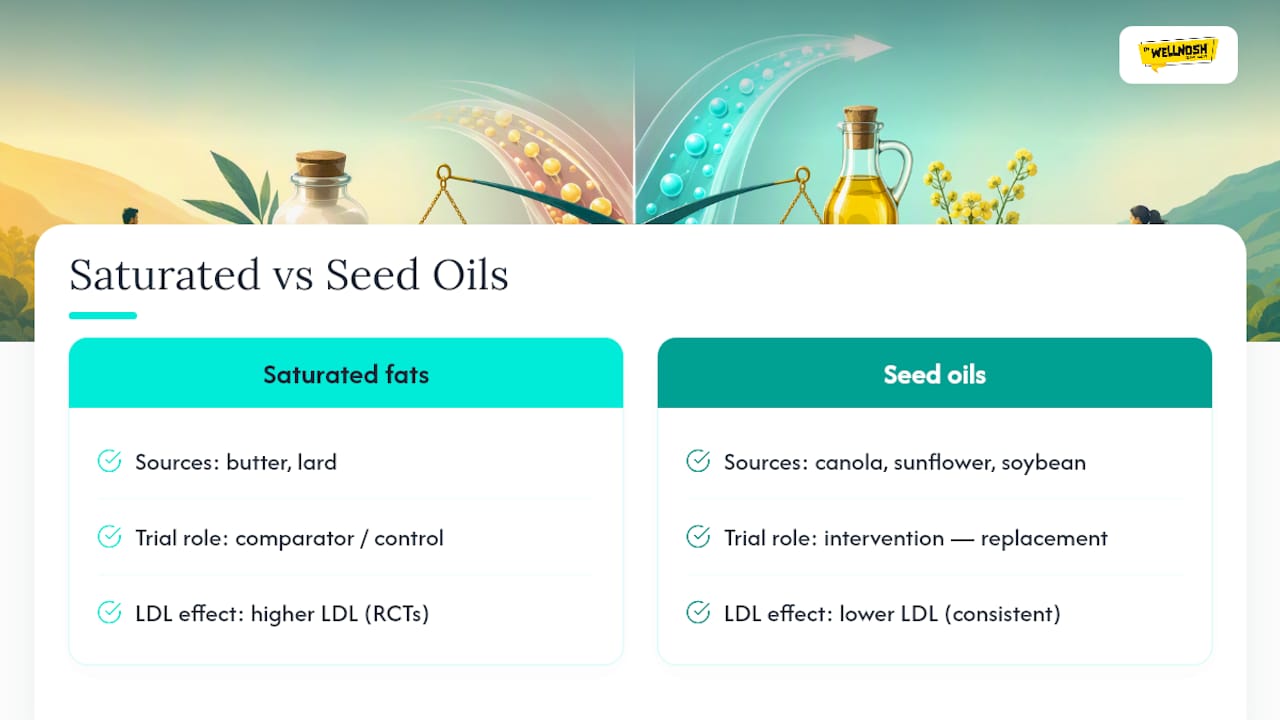
Metabolic disease patients see benefits too. A systematic review of seed oils including canola, flaxseed, and sesame found improvements in lipid profiles and glycemic control among people with diabetes or dyslipidemia, though the effect size varied by oil and by study. That inconsistency matters. It means not every seed oil behaves identically, and blanket statements in either direction, “seed oils are terrible” or “seed oils are a cure-all,” oversimplify a nuanced picture.
Why Ultraprocessed Foods Muddy the Seed Oil Debate
Here’s the confounding variable that explains most of the seed oil confusion: seed oils are everywhere in ultraprocessed food, and ultraprocessed food is independently linked to worse health outcomes. Separating the oil’s effect from the food’s effect is genuinely hard.
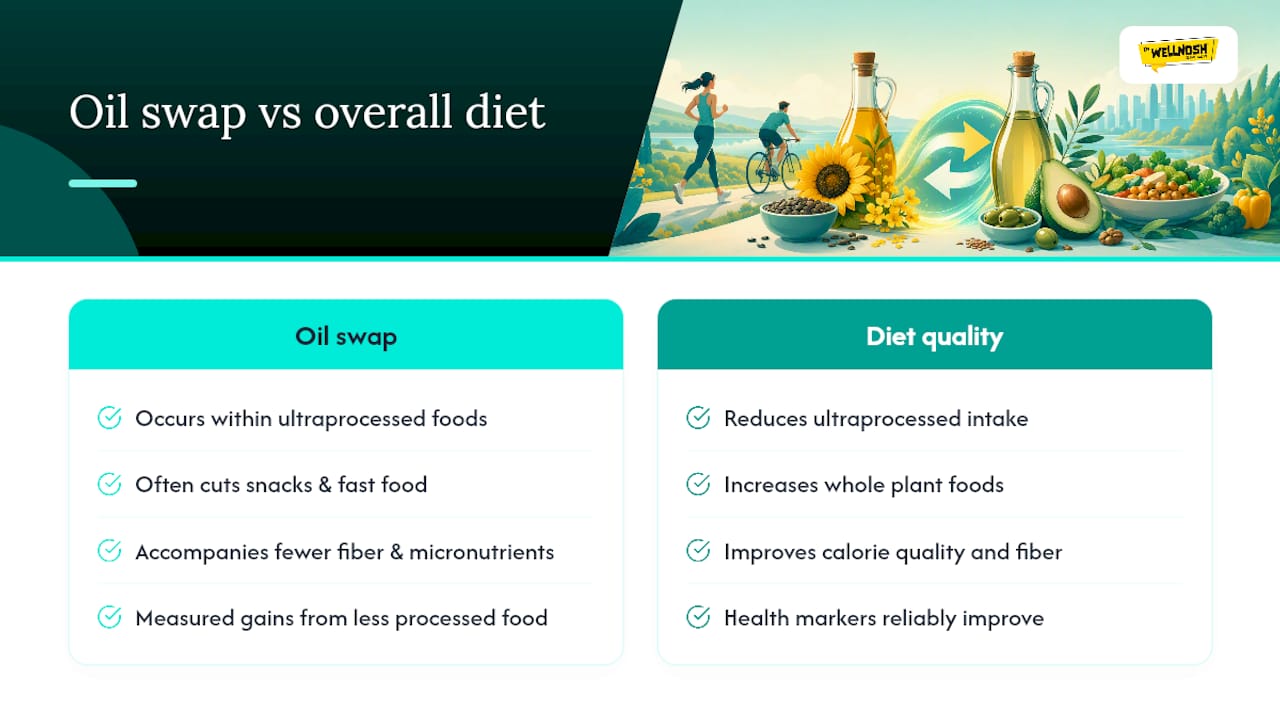
Think about where most people actually consume seed oils in bulk: fast food, packaged snack chips, fried appetizers, boxed baked goods. Those products also tend to be high in refined carbohydrates, sodium, and added sugar, and low in fiber and micronutrients. When someone eliminates seed oils, they often simultaneously cut out entire categories of these foods, and their health markers improve. The improvement gets credited to the oil swap when it likely reflects the whole dietary shift.
Experts who study this pattern closely tend to reach the same conclusion: improving overall diet quality, less ultraprocessed food, more whole plant foods, matters more than singling out one ingredient for blame. That’s the more useful lever to pull, even if it’s a less satisfying headline than “this one oil is poisoning you.”
One practical observation echoes across nutrition practices: when clients feel better after removing seed oils, the measurable change is usually a reduction in processed-food intake and better overall calorie quality, not a direct physiological effect of the oil’s removal alone. That’s worth sitting with if you’ve credited a recent health improvement to cutting canola oil specifically.
Historical Trends: Why Seed Oil Intake Rose in the First Place
Seed oil consumption climbed sharply across the 20th century, largely because these oils were cheap, shelf-stable, and easy to produce at industrial scale compared to animal fats. That timeline overlaps with rising rates of obesity and metabolic disease, which is exactly why critics point a finger at the oil itself.
But overlapping timelines aren’t proof of causation. The same decades saw explosive growth in refined grain consumption, added sugar, portion sizes, and sedentary lifestyles. Seed oils rose alongside a much larger shift toward convenience food generally, not as an isolated variable. Treating one ingredient as the singular explanation for a multi-decade, multi-factor health trend ignores everything else that changed at the same time.
The claim that seed oils “are new” also oversimplifies. Some seed oils, like sesame and sunflower, have been part of human diets for centuries in various forms. What changed wasn’t the existence of the oil. It was the scale of industrial refining and the sheer volume showing up in packaged and fast food.
Seed Oils vs. Butter, Lard, and Coconut Oil
The fat comparison question comes up constantly, and the honest answer depends on what outcome you’re optimizing for.
For cardiovascular markers specifically, plant oils tend to outperform saturated animal fats and coconut oil, primarily through their effect on LDL cholesterol. Butter and lard are high in saturated fat, and the Dietary Guidelines for Americans specifically recommend limiting saturated fat intake and favoring the plant-oil swap. Coconut oil, despite its health-food branding, is also predominantly saturated fat and behaves more like butter than like canola oil in cholesterol studies.
That doesn’t make butter or lard forbidden foods. Flavor, texture, and how a fat performs at a given cooking temperature all factor into real kitchen decisions, and moderate use of any fat within an otherwise balanced diet isn’t the same as regular heavy use. The comparison that actually matters isn’t “which fat is morally superior.” It’s “which fat, used how often and in what quantity, fits the rest of what you’re eating.”
Common Myths About Seed Oils, Debunked
A handful of claims keep circulating well past their evidence base:
- Myth: Seed oils are a modern toxin. Reality: several seed oils have a long culinary history, and the toxicology on trace hexane residue shows no meaningful consumer risk.
- Myth: Seed oils cause inflammation directly. Reality: randomized trials measuring linoleic acid intake against inflammatory biomarkers don’t show that effect.
- Myth: All seed oils behave the same way. Reality: canola, sunflower, flaxseed, and sesame oil differ in fatty acid composition and showed different results in metabolic studies.
- Myth: Cutting seed oils alone will fix chronic disease risk. Reality: the bigger lever is reducing ultraprocessed food intake overall, not isolating one ingredient.
Seed Oils, Weight Management, and Metabolic Health
Seed oils are calorie-dense, roughly 120 calories per tablespoon regardless of source, which means portion size matters more than oil type for weight management. Swapping seed oil for olive oil doesn’t create a calorie deficit on its own. What actually shifts metabolic health is the surrounding dietary pattern.
The metabolic-disease research is genuinely encouraging here. Certain seed oils showed improved glycemic control and lipid profiles in patients with diabetes or dyslipidemia, suggesting these fats can support metabolic health rather than undermine it, when they’re not accompanying a diet heavy in refined carbohydrates and added sugar. The oil itself isn’t driving metabolic dysfunction. The dietary pattern it typically appears in often is.
If weight management is the goal, the more productive question isn’t “which oil should I fear.” It’s “how much ultraprocessed food, refined carbohydrate, and added sugar is in my typical day,” since processed snacks tied to quick hunger returns tend to undermine weight goals far more than the cooking oil used to make them.
Environmental Considerations of Seed Oil Production
Seed oil crops like soybean, canola, and sunflower are grown at massive industrial scale, and that scale carries real environmental tradeoffs worth acknowledging even in a health-focused conversation. Large monoculture farming for oil crops can strain soil health, require significant water and fertilizer input, and contribute to land-use pressure in some growing regions.
At the same time, seed oil crops generally require less land per calorie of fat produced compared to raising livestock for animal fats like butter or lard, since crop-based oil production skips the resource-intensive step of feeding and raising animals first. That’s a genuine sustainability advantage worth weighing against the crop’s other environmental costs.
Olive and avocado oil production carry their own footprint concerns, including water-intensive growing conditions in some regions and land-use change tied to expanding avocado cultivation. No cooking fat is environmentally free. The honest framing is tradeoffs across the board, not a clean villain and a clean hero.
An Author Note on Evidence and Transparency
Food nutrition debates move fast on social media and slowly in the lab. I’d rather anchor conclusions to randomized trials and institutional reviews than to whichever claim is trending this month. Some brands make snacks cooked in avocado oil, a choice grounded in flavor and formulation preference rather than a claim that seed oils are dangerous. The sources behind this article are linked throughout and listed below for anyone who wants to check the primary research directly.
— Dr. Wellnosh
A Seed-Oil-Free Snack Option Worth Trying
If you’ve read this far and still prefer to keep seed oils out of your own kitchen, even knowing they’re not the villain the headlines suggest, Wellnosh gives you a straightforward option: real protein, real crunch, cooked in avocado oil instead of the vegetable oil blends most chips rely on.
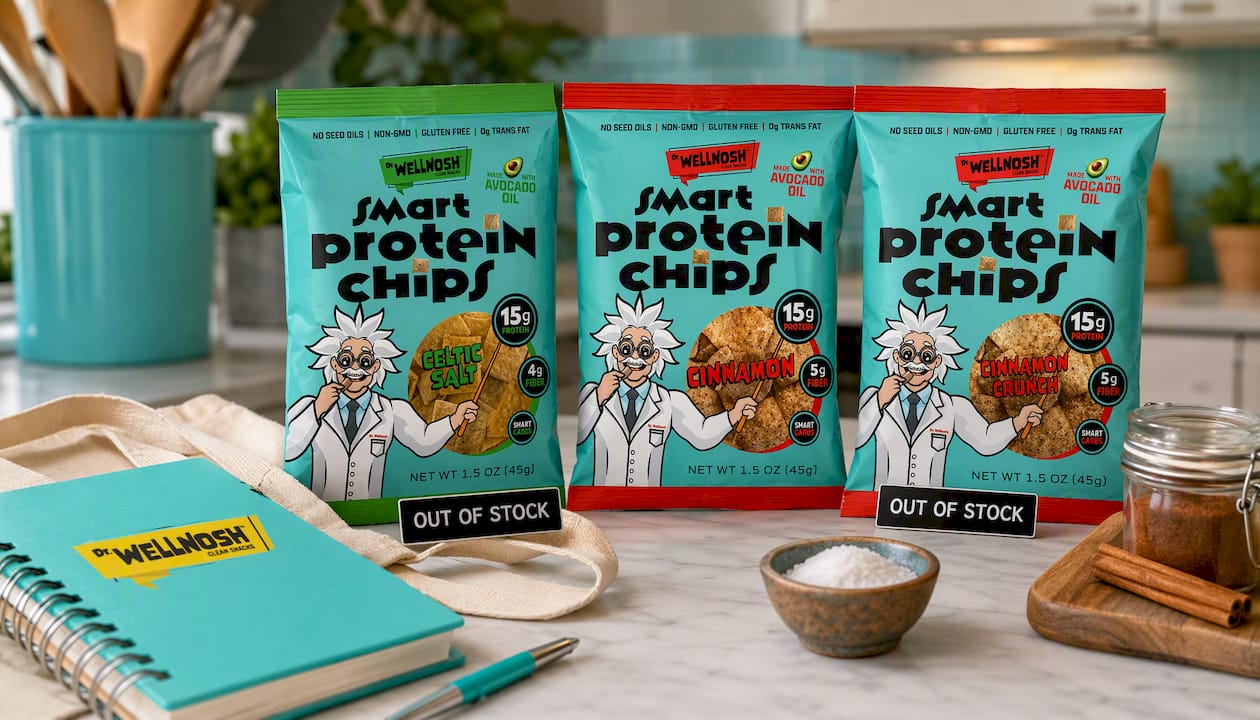
Some snacks deliver a notable amount of fava bean protein and feature ingredient lists that are non-GMO, gluten free, low carb, and free of added sugar. That combination may suit fitness-focused snackers, keto and low-carb eaters, and anyone trying to get more protein into a snack that still tastes like a snack. Pair it with the plant-based ingredient basics worth knowing before you shop, or a Mediterranean-style approach to whole-food cooking from The Sensory Chef’s guide for the rest of your meals, and the seed-oil question mostly takes care of itself.
Ready to try one? The Celtic Salt flavor delivers a clean, simple crunch, while the Cinnamon chips bring a sweeter option to the lineup for anyone craving something different at snack time. Head to Wellnosh to check current flavor availability and start your first order today.
Sources
- Meta-analysis on dietary fat substitution and cardiovascular risk (example PubMed entry)
- Study on linoleic acid intake and health outcomes (PubMed entry)
- Systematic review on seed oils and metabolic markers (PMC)
- The Evidence Behind Seed Oils’ Health Effects | Johns Hopkins Bloomberg School of Public Health
- Seeding doubt: The truth about cooking oils | Harvard Health


