

· By Dr. Wellnosh
How to Spot Hidden Additives in Health Snacks Right Now
To spot hidden additives in health snacks, skip the front-of-package slogans and go straight to the ingredient list. Ingredients are listed by weight, from most to least, so the first three tell you almost everything about what you’re actually eating. Terms like “natural flavors,” a long chemical name you can’t pronounce, or a preservative buried near the bottom are your red flags. Front-of-package words like “natural” or “wholesome” carry no legal weight, according to NHS food label guidance, which is exactly why marketers lean on them so heavily.
Before you toss anything in your cart, run this quick check:
- Flip the bag over and find the ingredient list, not the nutrition panel.
- Scan the first three ingredients for sugar, refined flour, or an unfamiliar chemical name.
- Count total ingredients. More than five or six on a “simple” snack is worth a second look.
Pro Tip: Keep your phone camera ready. Snap a photo of any ingredient list with a word you don’t recognize, then look it up later instead of standing in the aisle for ten minutes.
Key Takeaways
Reading the ingredient list before the front-of-package claims is the single most reliable way to catch hidden additives before they end up in your cart.
| Point | Details |
|---|---|
| Ingredient order matters most | Ingredients are listed by weight, so check the first three for sugar, refined flour, or unfamiliar chemicals. |
| Vague terms deserve scrutiny | “Natural flavors” and “yeast extract” can mask dozens of compounds or MSG-like additives. |
| Frequency drives risk | Cumulative exposure from daily snacking matters more than one occasional treat. |
| “Free-from” isn’t additive-free | Allergen-friendly labels often add gums or starches to replace removed ingredients. |
| Choose short, clean-label swaps | Wellnosh protein chips use short ingredient lists with 15g of fava bean protein and avocado oil, no seed oils or artificial additives. |
Table of Contents
- Common Hidden Additives in Snacks and Where They Hide
- Why Do Hidden Additives in Snacks Actually Matter?
- How Do You Read a Snack Label Step by Step?
- What Do Vague Terms Like “Natural Flavors” Actually Mean?
- Which Apps and Tricks Help You Screen Snacks Faster?
- What Does the Research Actually Say About Snack Additives?
- Your Two-Minute Snack Label Checklist
- Can “Free-From” and Allergen Labels Still Hide Additives?
- What Actually Changes How You Shop for Snacks
- A Cleaner Snack Swap Worth Keeping in Your Cart
- Frequently Asked Questions
- Sources
Common Hidden Additives in Snacks and Where They Hide
Most shoppers know to avoid “junk food.” Fewer know that a bag marketed as “protein-packed” or “veggie chips” can carry the same additives as a candy bar, just dressed up differently. Here are the ones that show up most often, and the aliases that let them hide in plain sight.
-
Artificial colors (Red 40, Yellow 5, Blue 1). These synthetic dyes make snacks look more vivid than the actual ingredients would allow. They turn up in flavored crackers, “fruit” snacks, and brightly colored tortilla chips. Look for the specific dye names or “FD&C” prefixes.
-
BHA, BHT, and TBHQ. These preservatives extend shelf life by slowing fat oxidation. The FDA has flagged BHT for closer review as part of its expanded post-market chemical assessment program. They show up most in cereal bars, chips fried in older-style oils, and packaged crackers.
-
High fructose corn syrup (HFCS). A cheap sweetener linked to blood sugar spikes when eaten often. It hides in granola bars, flavored yogurt-covered snacks, and even some savory sauces on snack mixes.
-
Artificial sweeteners (sucralose, acesulfame potassium, aspartame). Common in “sugar-free” or “diet” snack lines. Watch for the phrase “sugar-free” as a trigger to check the sweetener panel directly.
-
Sodium nitrite. A curing agent in jerky, meat snack sticks, and some meat-based protein bars. Look for “sodium nitrite” or “celery powder,” which often functions as a natural nitrate source with the same chemical effect.
-
Trans fats and partially hydrogenated oils. Legally, a product can claim “0g trans fat” if it has less than 0.5 grams per serving, but partially hydrogenated oil still counts. Check the ingredient list, not just the nutrition facts panel, for microwave popcorn and older cracker brands.
-
“Natural flavors.” This single phrase can represent dozens of compounds, since the FDA allows broad grouping under that label. It appears in nearly every flavored chip, cracker, and snack bar on the shelf.
-
Seed oils and oxidized frying oils. Soybean, cottonseed, and canola oils used in high-heat frying can degrade into oxidized compounds during repeated use. Common in fried chips and shelf-stable crackers.
-
Carrageenan. A thickener derived from seaweed, used in dairy-based snack dips, protein shakes, and some “creamy” snack products. Look for “carrageenan” listed directly, since it has no common alias.
-
MSG and its aliases. Monosodium glutamate rarely appears by that name anymore. Instead, look for “yeast extract,” “hydrolyzed vegetable protein,” “autolyzed yeast,” or “torula yeast” on savory snack mixes, flavored chips, and seasoned nuts.
-
Emulsifiers and thickeners (polysorbate 80, soy lecithin, xanthan gum). These keep textures smooth and consistent in processed snack bars and dips. Not all are concerning at low doses, but a long string of them signals heavy processing.
Why Do Hidden Additives in Snacks Actually Matter?
The real risk isn’t eating one bag of chips with an odd preservative. It’s eating the same flagged ingredients daily, week after week, without ever adding up the exposure. That cumulative pattern, not the occasional snack, is what food safety researchers actually worry about.
Consumer Reports tested a sample of popular processed foods and found that some contained additives or contaminants at levels of concern when compared against safety thresholds. For several products, scientists calculated how often a person could safely eat them, and some fell short of what a normal snacking habit would produce, according to Consumer Reports’ testing.
Manufacturers aren’t required to disclose how much of a given additive is in a product, only that it’s present. That means two snacks with identical ingredient lists could carry very different actual doses, and you’d never know from the label alone. The FDA’s newer post-market assessment program exists precisely because additives approved decades ago are now getting a second look, based on how much of them people actually consume today.
Serving sizes complicate this further. A bag of chips might list a one-ounce serving, but most people eat two or three times that in one sitting, multiplying whatever additive exposure the label implies.
How Do You Read a Snack Label Step by Step?
Here’s the process that takes less than a minute once you’ve done it a few times:
- Ignore the front of the package entirely. Words like “natural,” “wholesome,” or “made with real fruit” carry no regulatory definition.
- Flip to the ingredient list first, before the nutrition facts panel. Ingredients are ordered by weight, so whatever’s listed first makes up the largest share of the product.
- Check the first three ingredients. If sugar, refined flour, or an unrecognizable chemical name shows up here, the product is likely ultra-processed regardless of what the bag claims, per NHS labeling guidance.
- Scan for aliases, especially around MSG, sugar, and preservatives.
- Count total ingredients. More than five or six for a simple snack is a signal of heavy processing.
- Check the stated serving size against how much you’d realistically eat.
Here’s a mock example: “Corn, vegetable oil (soybean, sunflower), sugar, salt, natural flavor, yeast extract, TBHQ (to preserve freshness).” Notice sugar sitting third, “natural flavor” doing double duty as a catch-all, “yeast extract” quietly supplying MSG-like compounds, and TBHQ tucked at the end as a preservative most shoppers scroll right past.
Quick heuristics worth memorizing:
- More than five ingredients on a snack marketed as “simple” or “clean” deserves a second look.
- Any ingredient name you can’t pronounce or explain is worth researching before buying.
- Sugar or refined flour in the top three spots means the product is closer to candy than to whole food, no matter what the label calls it. Our guide to hidden carbs in snacks breaks down how this plays out with carb counts specifically.
What Do Vague Terms Like “Natural Flavors” Actually Mean?
Vague phrases exist because the FDA allows manufacturers to group dozens of compounds under one umbrella term. That’s convenient for the company and frustrating for you, since a single line item can mask a chemical cocktail.
- “Natural flavors” or “artificial flavors.” These can legally represent dozens of individual compounds bundled together, since flavor formulas are treated as proprietary. If the rest of the ingredient list is long, treat this phrase as a yellow flag rather than a dealbreaker.
- “Spices.” A similar catch-all that can include everything from paprika to MSG-adjacent flavor enhancers. Harmless most of the time, but worth noting if you’re managing a specific sensitivity.
- “Evaporated cane juice.” A marketing-friendly term for sugar. If you see it in the first three ingredients, treat it exactly like you would “sugar.”
- “No added MSG.” This claim can be technically true while the product still contains free glutamates through “yeast extract” or “hydrolyzed protein,” which produce a nearly identical effect in the body, according to reporting on hidden additive labeling practices.
When you hit a vague term and the rest of the ingredient list is short and recognizable, it’s usually fine to let it slide. When the list is long and stacked with other alert words, that’s when to put the product back or look up the brand’s ingredient sourcing directly. Our post on ingredients to avoid in diet snacks goes deeper on how these terms cluster together in practice.
Which Apps and Tricks Help You Screen Snacks Faster?
Ingredient-scanning apps can speed up label review, especially when you’re standing in an aisle with three similar products and thirty seconds to decide. Tools like ingredient analyzers work by matching label text and E-numbers against databases of flagged or restricted substances, then flashing a rating or a warning. AdditiveChecker, for example, flags ingredients banned in other countries even when they’re still legal in the US, which is useful context most shoppers never see. These tools have real limits, though. They rely on exact name matching, so they can miss proprietary flavor blends or process contaminants that never appear on the label at all.
In-store rules that don’t require an app:
- Prefer snacks with five or fewer recognizable ingredients.
- Scan the first three ingredients specifically for sugar or refined flour before anything else.
- Treat a long ingredient list as a reason to compare against a competitor product on the same shelf.
- For imported snacks, cross-reference any E-number codes against an online additive database if the name alone doesn’t ring a bell.
- Trust a USDA Organic seal as a partial shortcut. Organic certification restricts many synthetic dyes and preservatives, though it doesn’t guarantee an additive-free product.
What Does the Research Actually Say About Snack Additives?
Recent testing backs up what careful label readers have suspected for a while: some popular snacks carry additive or contaminant levels worth taking seriously, and regulators are catching up.
- Consumer Reports’ testing of 40 popular processed foods found more than a third exceeded safety thresholds for at least one additive or contaminant, prompting specific consumption recommendations for flagged products, per Consumer Reports.
- The FDA finalized a post-market chemical assessment program and is actively reassessing BHT, a sign that additives approved decades ago are getting fresh scrutiny.
- Peer-reviewed research on ultra-processed food consumption patterns connects frequent intake to a range of health outcomes worth taking seriously, based on findings published in PMC.
For shoppers, the takeaway is straightforward: use label tactics on every purchase, and treat frequent, daily consumption of flagged ultra-processed snacks as the pattern to actually change.
Your Two-Minute Snack Label Checklist
Print this or save it to your phone for the next grocery run:
- Flip the package and read the ingredient list before anything else.
- Check whether sugar, refined flour, or an unfamiliar chemical sits in the top three ingredients.
- Count total ingredients. More than five or six is a flag on a supposedly simple snack.
- Watch for “natural flavors,” “yeast extract,” or “hydrolyzed protein” as MSG-adjacent aliases.
- Compare the stated serving size to what you’d realistically eat in one sitting.
- Look for a USDA Organic seal as a partial shortcut, not a full guarantee.
Use this checklist on every new product, but don’t stress over an occasional treat that doesn’t pass. One bag of something imperfect once a month isn’t the exposure pattern researchers are worried about. For a deeper breakdown of the label mechanics behind these rules, see the step-by-step label reading section above.
Can “Free-From” and Allergen Labels Still Hide Additives?
A “gluten-free” or “dairy-free” label tells you about one specific exclusion. It says nothing about everything else in the bag. Manufacturers often compensate for a removed ingredient by adding more gums, starches, or flavor enhancers to replicate texture, which means a “free-from” snack can carry just as many, or more, processed additives than the conventional version it’s replacing.

The same applies to allergen statements. A “contains no artificial colors” claim on the front doesn’t mean the product skips preservatives, emulsifiers, or MSG aliases. These claims are legally accurate but narrow by design, covering exactly what they say and nothing more.
Your move here is the same one that works everywhere else: ignore the claim on the front and read the ingredient list behind it. If a “gluten-free” cracker has ten ingredients where a simpler version has four, that’s worth noticing. Look specifically at what filled the gap left by the removed ingredient. Xanthan gum, tapioca starch, and modified food starch are common replacements, and none of them are dangerous in isolation, but they add to the total processing load of the snack. A genuinely clean “free-from” product should still read short and recognizable, not longer than the original it replaced.
What Actually Changes How You Shop for Snacks
Most advice about food labels treats every additive as equally alarming, which isn’t accurate and isn’t useful. Some ingredients on this list, like carrageenan or soy lecithin, show up in small amounts and don’t deserve the same scrutiny as sodium nitrite eaten daily in processed meat snacks. Treating your ingredient list like a pass/fail test misses the point. The real skill is pattern recognition: noticing when a product’s overall processing load is high, not panicking over a single line item.

What surprises most people once they start reading labels seriously isn’t the obvious junk food. It’s discovering that a “protein bar” or “veggie straw” marketed as a healthy swap often carries the exact same red flags as the snack it’s replacing, just with better branding. Wellnosh built its ingredient lists specifically to survive this kind of scrutiny, which is a bar we’d encourage every shopper to hold every snack brand to, not just ours. For more on how we think about ingredient transparency, our clean protein snacking guide covers the reasoning in more detail.
This article offers general information and isn’t personalized medical advice. Talk to a healthcare professional about specific dietary concerns.
A Cleaner Snack Swap Worth Keeping in Your Cart
Once you’ve run a few bags through the ingredient-list test, you’ll start noticing how rare a truly short, recognizable list actually is. Wellnosh built its protein chips around that exact standard: fava bean protein, avocado oil, and a handful of ingredients you can actually pronounce, with 15 grams of protein per bag and none of the seed oils or artificial preservatives that show up on the list above.
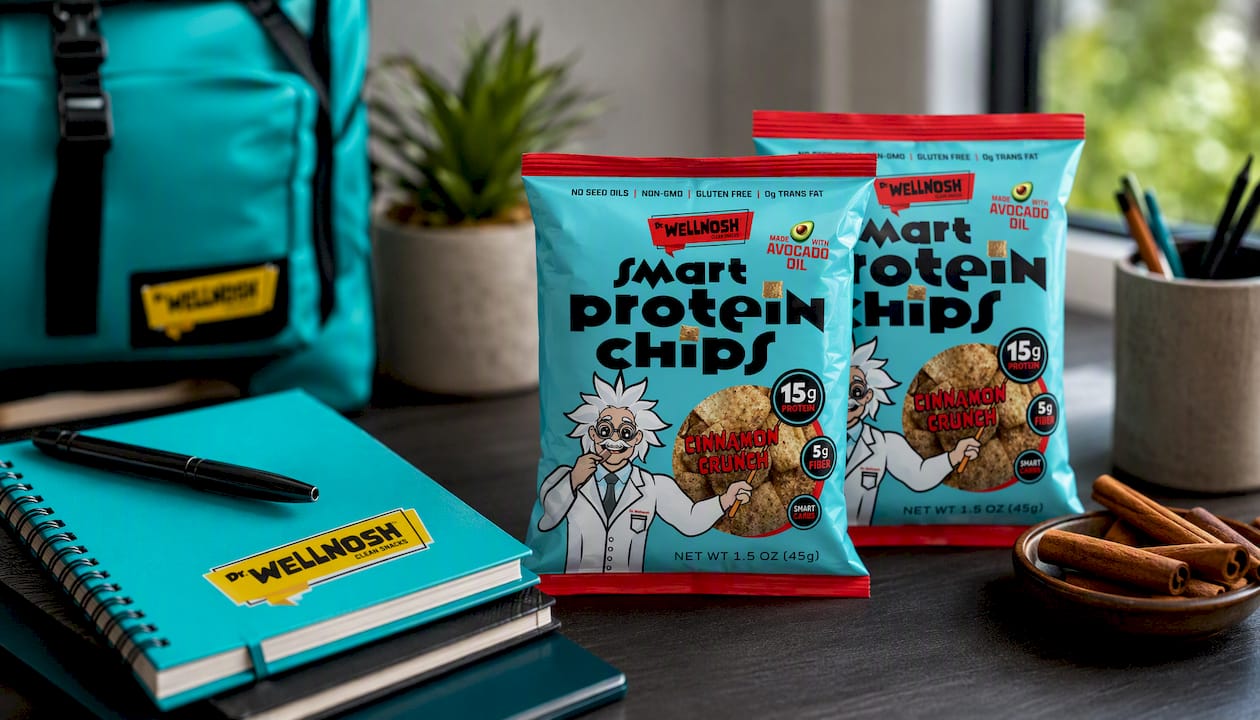
Because the ingredient list stays short and transparent, you’re not repeatedly exposing yourself to the aliases and preservatives covered in this guide every time you reach for a snack. The Cinnamon flavor delivers a lightly sweet crunch without high fructose corn syrup or artificial sweeteners doing the work, and if you find it’s temporarily out of stock, Nacho Cheese, Celtic Salt, and Chipotle Barbecue follow the same clean-label approach. Subscribe & Save is available if you’d rather not think about restocking every few weeks. Check current flavor availability and place an order to see what a genuinely short ingredient list tastes like.
Frequently Asked Questions
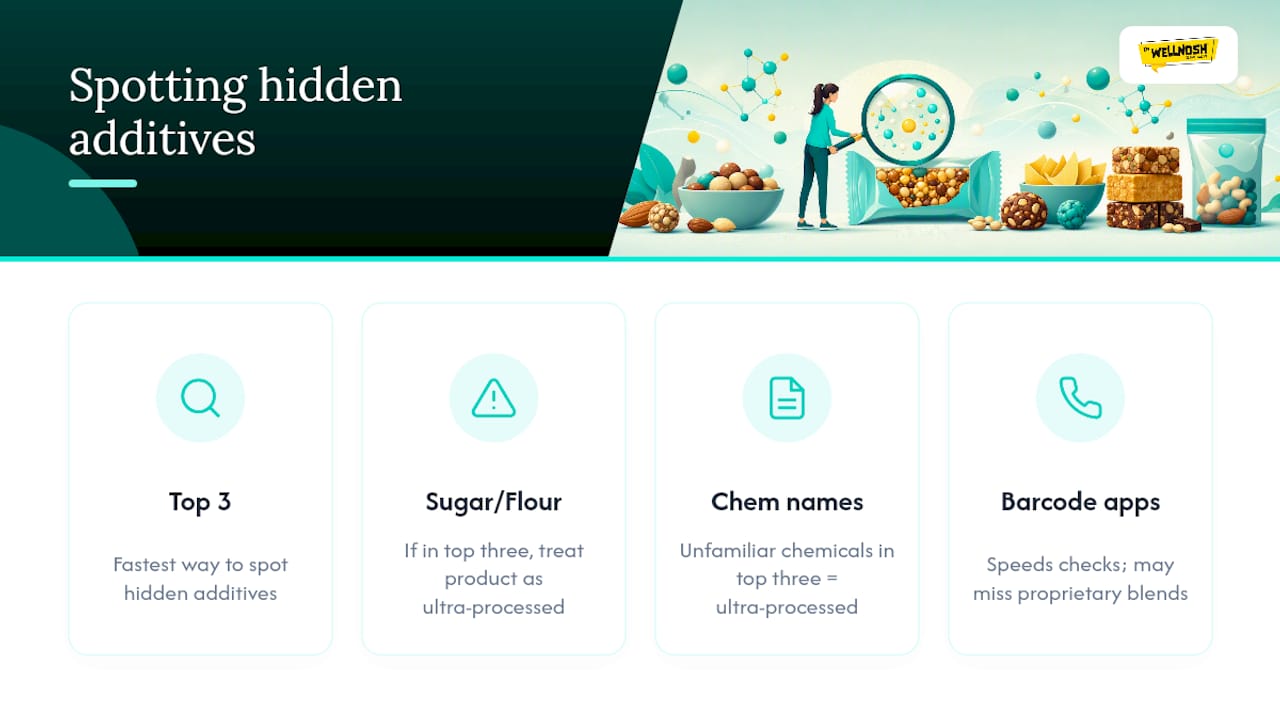
What’s the fastest way to spot hidden additives in health snacks? Flip the package over and read the first three ingredients. If sugar, refined flour, or an unfamiliar chemical name appears there, treat the product as ultra-processed regardless of front-of-package claims.
Are “natural flavors” actually safe? They’re generally recognized as safe by regulators, but the term can bundle dozens of compounds under one label. Treat it as a mild flag, especially when paired with a long overall ingredient list.
Do gluten-free or dairy-free snacks avoid hidden additives? Not automatically. Manufacturers often add gums or starches to replace texture lost from removing an allergen, so a “free-from” label doesn’t guarantee a short ingredient list.
How often should I actually worry about additives in snacks? The real concern is frequency, not a single serving. Daily or near-daily consumption of ultra-processed snacks is the pattern that Consumer Reports and FDA guidance both flag as worth changing.
Can barcode-scanning apps replace reading the label myself? They speed up the process by matching ingredients against databases, but they can miss proprietary flavor blends or contaminants formed during manufacturing. Use them as a shortcut, not a replacement for checking the list yourself.
This article is general information, not a substitute for advice from a qualified doctor. Consult a qualified healthcare professional about your own circumstances before acting on anything here.
Sources
- How to limit your exposure to additives & contaminants in popular snacks | Consumer Reports
- How to read food labels | NHS
- FDA finalizes food chemical safety post-market assessment program; launches reassessment of BHT | FDA
- Representative peer-reviewed article on processing and health outcomes | PMC


