

· By Dr. Wellnosh
What Counts as a Macro Friendly Snack (Plus 6 to Grab Now)
A macro-friendly snack pulls its weight nutritionally instead of just filling time between meals. That means it delivers real protein, works some fiber into the carbohydrate side of the equation, and doesn’t blow your calorie budget for the sake of a few bites of flavor. For most adults, aiming for a meaningful amount of protein per snack is recommended, with higher targets around workouts.
Six snacks you can grab right now without thinking twice:
- A single-serve container of Greek yogurt, which runs about 12 to 18 grams of protein
- A tuna packet, which typically provides an amount of protein in the mid-to-high range for similar snacks
- Two hard-boiled eggs, about 12 grams of protein and built-in portion control
- A half cup of roasted chickpeas for crunch, fiber, and plant protein
- A bag of Wellnosh protein chips delivering a substantial amount of plant protein per bag
- An apple with natural peanut butter to provide fiber plus healthy fat
Key Takeaways
A macro-friendly snack works because it pairs a real dose of protein with fiber, keeping you fuller on fewer calories than sugar or refined carbs alone can manage.
| Point | Details |
|---|---|
| Target 10 to 20g protein | Most snacks should land in this range; bump higher for post-workout or meal-replacement situations. |
| Pair protein with fiber | This combination curbs appetite better than cutting calories without protein support. |
| Build 30g combos deliberately | Stack a concentrated protein source, a fiber-rich carb, and an optional fat to hit bigger targets. |
| Read labels for sodium and sugar | Portable options like jerky and crackers can hide over 300mg sodium or 8g added sugar per serving. |
| Keep a portable option ready | Wellnosh chips offer 15g fava bean protein per bag, cooked in avocado oil with no added sugar, for grab-and-go macro balance. |
Table of Contents
- What to Look for in a Macro Friendly Snack
- Categorized Macro Friendly Snack Ideas for Every Situation
- How to Build a Snack That Hits 30 Grams of Protein
- Sample Portions and Their Approximate Macros
- Why Protein and Fiber Beat Calorie-Cutting Alone
- Snack Habits That Actually Stick
- A Ready-Made Option When You Don’t Have Time to Prep
- Sources
What to Look for in a Macro Friendly Snack
Reading a label for two seconds tells you almost everything. Check these five numbers before anything hits your cart or your mouth:
- Protein grams: aim for at least 10 grams; 15 to 20 grams keeps you fuller longer
- Fiber grams: 3 grams or more helps slow digestion and blunt hunger spikes
- Added sugar: under 5 grams for anything marketed as a “healthy” snack
- Sodium: watch anything over 300 milligrams per serving, especially jerky and packaged crackers
- Protein-to-calorie ratio: a snack with 15 grams of protein and 150 calories is doing far more work than one with 8 grams and 200 calories
Registered dietitians consistently point to protein paired with fiber as the combination that actually curbs appetite, rather than calorie count alone. That pairing is the backbone of any macro-balanced snacking approach.
Pro Tip: If you’re using a snack to hold you over for three or more hours, treat it like a mini-meal. Bump the target to 20 to 25 grams of protein and add a fat source. If it’s a quick 60 to 90 minute bridge between meals, 10 to 15 grams of protein is plenty.
Categorized Macro Friendly Snack Ideas for Every Situation
Different days call for different snacks. Some need zero prep, some are worth 15 minutes on a Sunday, and some double as a light meal when life gets busy.
Store-bought and portable
- Single-serve Greek yogurt cups, preferably low in added sugar
- Tuna or salmon packets, which can be paired with whole-grain crackers for fiber
- Turkey or beef jerky, noting that sodium content may be high
- Wellnosh protein chips providing significant fava bean protein per bag
- High-protein crackers or crisps, with protein sources early in the ingredient list
- String cheese or Babybel, offering a moderate amount of protein each
Quick-prep whole foods
- Cottage cheese with pineapple or berries, about 12 to 14 grams of protein per half cup
- Hard-boiled eggs with sliced cucumber and salt
- Edamame, steamed and salted, around 17 grams of protein per cup
- Roasted chickpeas tossed in olive oil and paprika
- Apple slices with almond or peanut butter
- Rice cakes topped with cottage cheese and everything bagel seasoning
Meal-ish, make-ahead options
- Chicken salad scooped onto cucumber rounds instead of bread
- Mediterranean chickpea jars layered with cucumber, feta, and lemon dressing
- High-protein yogurt bowls with granola, chia seeds, and berries
- Overnight oats made with Greek yogurt instead of milk for extra protein
- Egg muffins baked in a tin with spinach and cheese, four to a batch
Recipe collections like Allrecipes’ high-protein roundup are a solid source for turning these into actual recipes instead of vague ideas.
Sweet and craving-friendly
- Protein muffins made with Greek yogurt and a scoop of protein powder
- Frozen Greek yogurt bark topped with berries and a drizzle of dark chocolate
- Cottage cheese blended smooth with cocoa powder and a touch of honey
- Protein yogurt cups with under 8 grams of sugar
- Chia pudding made with unsweetened almond milk and cinnamon
Plant-based swaps
Vegan and plant-forward eaters have real options here, not just afterthoughts. Edamame, roasted chickpeas, and nut butter pairs all deliver solid protein without dairy or meat. Wellnosh chips fit this category cleanly since they’re built on fava bean protein rather than whey or casein, making them workable for vegan, vegetarian, and gluten-free eaters without any substitution needed.
How to Build a Snack That Hits 30 Grams of Protein
The formula is simple: pair a concentrated protein source with a moderate carb or fiber source, then add fat only if you have room in your calorie budget.
Six combos that land close to 30 grams:
- One cup cottage cheese (20 to 24 grams protein) plus a half cup of berries and two tablespoons of nuts
- One can of tuna (about 25 grams) plus whole-grain crackers and sliced cucumber
- Two scoops of Greek yogurt (about 20 grams) blended with a half scoop of protein powder and berries
- Three hard-boiled eggs (about 18 grams) plus a Wellnosh chip bag (15 grams) for a combined protein-forward pairing
- One cup of edamame (17 grams) plus a hard-boiled egg for vegetarians who skip whey powder
- A double portion of tuna packets plus an apple for anyone who wants minimal prep
For vegans, stacking a plant protein powder into oats or a smoothie base is usually the fastest way to close the gap without relying on animal protein. Every combo above trades off portability differently. Cottage cheese needs a container and a spoon, while the tuna and cracker combo travels in a bag with zero mess.
Sample Portions and Their Approximate Macros
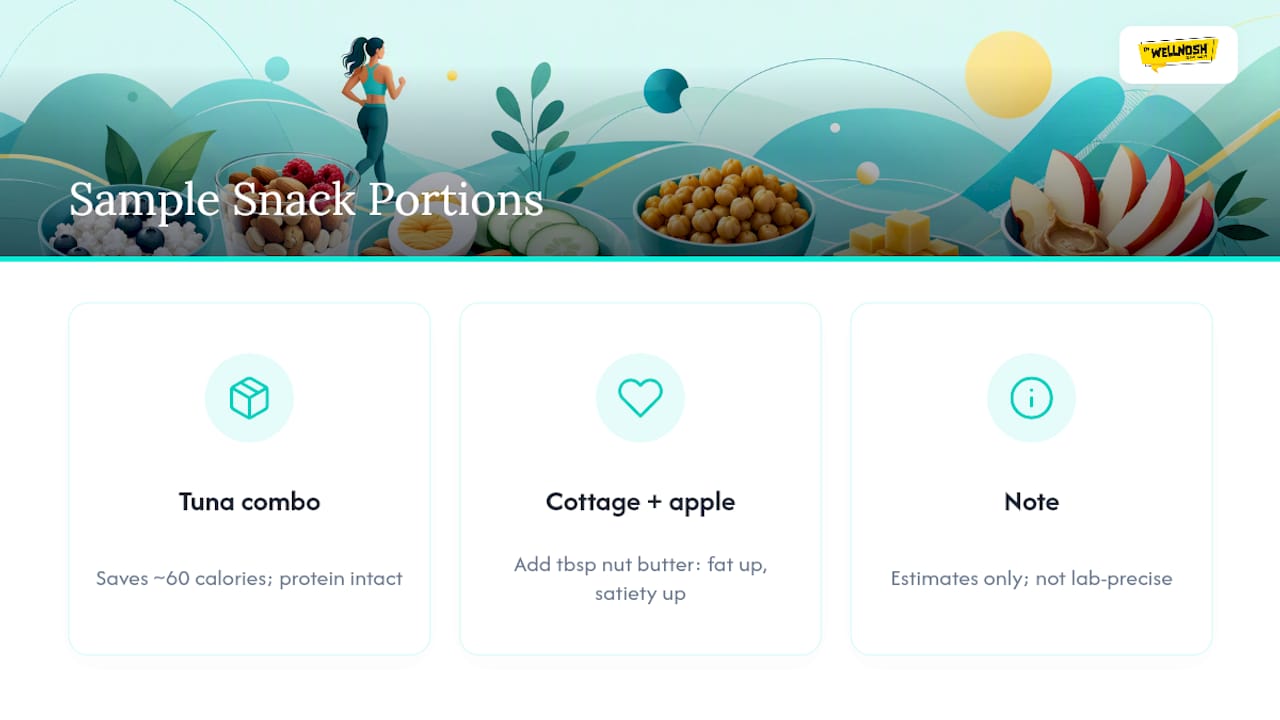
These numbers are estimates meant to make tracking easier, not lab-precise figures.
Swap the crackers for cucumber slices in the tuna combo and you shed roughly 60 calories while keeping protein intact. Add a tablespoon of nut butter to the cottage cheese and apple, and fat climbs but so does satiety.
Why Protein and Fiber Beat Calorie-Cutting Alone
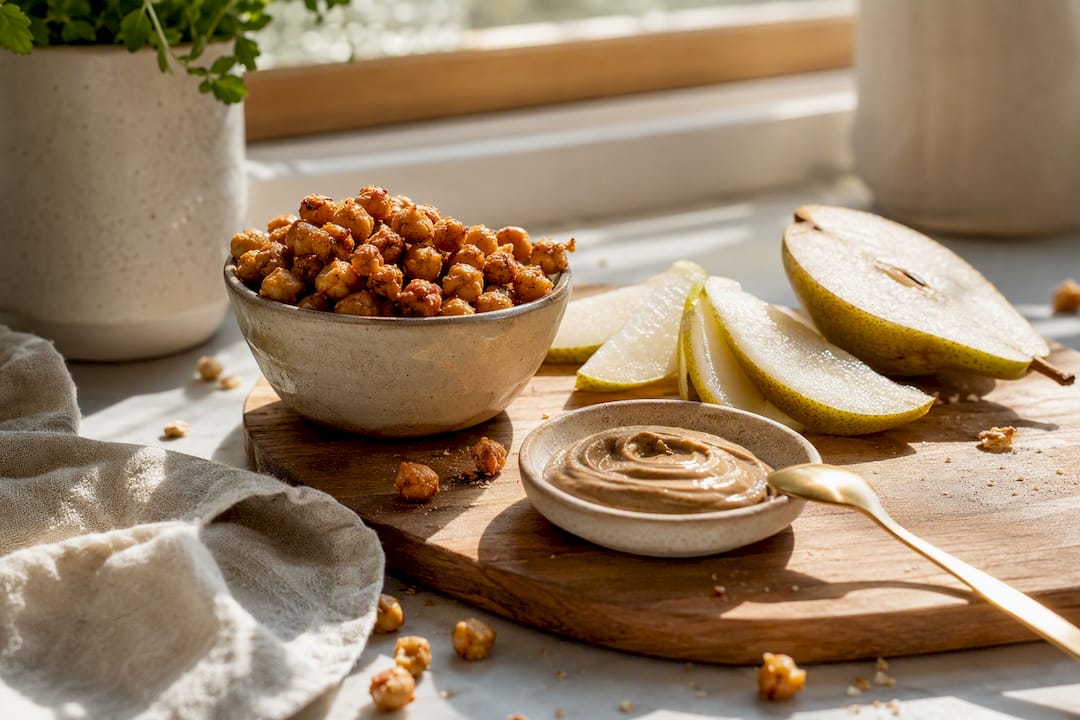
Higher-protein snacks increase short-term fullness and tend to reduce how much you eat later in the day, according to a nutrition review published on PubMed Central. Fiber slows digestion further, which is why a plain rice cake leaves you hungry in twenty minutes while the same rice cake topped with cottage cheese does not.
Quick label checklist before buying:
- Protein grams per serving, not per package
- Added sugars, ideally under 5 grams
- Sodium per serving, especially on jerky and flavored crackers
- Where the protein source sits in the ingredient list, earlier means more of it
- Nutrition Facts protein listings can be misleading if a brand rounds up serving sizes to hit a marketing number
Dietitians increasingly point to protein-to-calorie ratio as a better screening tool than headline claims like “high protein” printed on the front of a bag.
Snack Habits That Actually Stick
Consistency beats perfection here. Prep your protein sources once a week (boil a dozen eggs, portion out cottage cheese into small containers) and you remove the daily decision fatigue that derails most people’s macros by Wednesday.
Keep one portable, shelf-stable option in your bag or desk drawer at all times. That’s the single habit that prevents the vending machine detour. Small, boring routines protect your macros far better than any clever recipe you’ll make twice and abandon.
A Ready-Made Option When You Don’t Have Time to Prep
A plant-based protein chip paired with a piece of fruit or a hard-boiled egg solves the two biggest snack problems at once: portability and protein density. Wellnosh chips deliver 15 grams of fava bean protein per bag, cooked in avocado oil instead of seed oils, with no added sugar and nothing artificial on the ingredient list.
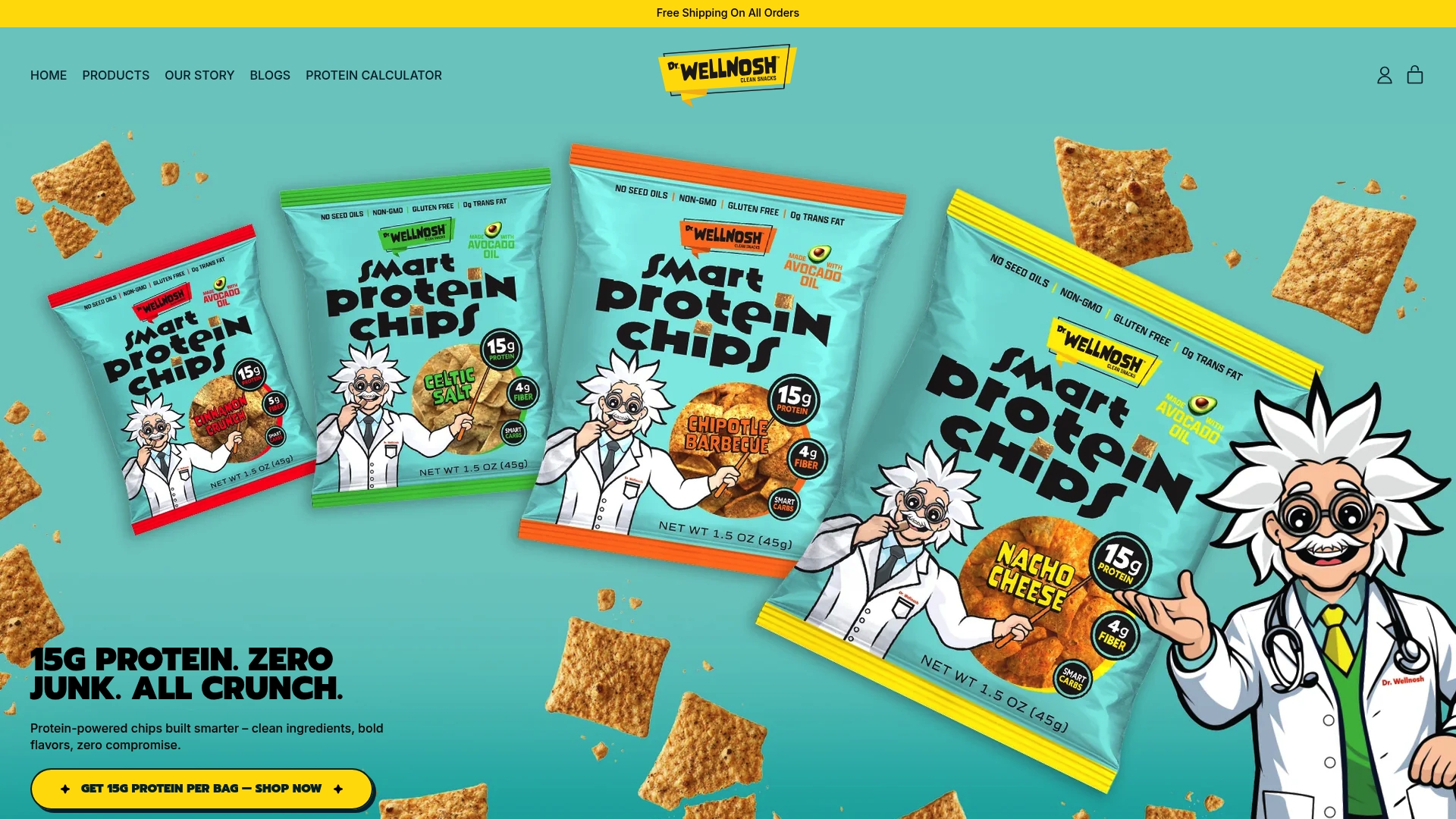
They’re non-GMO, gluten free, and low carb, which means they slot into vegan, keto, or standard high-protein plans without modification. Grab a bag of Chipotle Barbecue and pair it with an apple or a string cheese to round out the carb and fat side of your macros. Check the product page for current flavor availability and subscription options if you want a standing supply on hand for the weeks when meal prep just doesn’t happen.
Sources
- 8 Snacks That Offer as Much Protein as Cottage Cheese—Plus Dietitian Tips
- PMC review on protein and appetite (PMC7539343)
- High-protein snack recipes roundup — Allrecipes
This article is general information, not a substitute for advice from a qualified doctor. Consult a qualified healthcare professional about your own circumstances before acting on anything here.


