

· By Dr. Wellnosh
What "No Artificial Additives" Actually Means on a Snack Label
No artificial additives snacks are products built from whole or fully spelled-out ingredients, not umbrella terms like “natural flavors” or “spices” that hide what’s actually inside the bag. The label should read like a short, boring grocery list. If you can picture every item on it, that’s the standard.
Two facts matter here. Peer-reviewed research has linked certain artificial food additives to behavioral and metabolic effects, which is why pediatric-minded shoppers push for caution. And plenty of snacks marketed as “no artificial colors or flavors” still lean on refined vegetable oils and added sugars, so the phrase alone isn’t proof of anything.
Wellnosh’s protein chips are built around that gap. Each bag delivers 15 grams of fava bean protein, gets cooked in avocado oil instead of seed oils, and skips added sugar entirely. Dr. Wellnosh, who oversees the brand’s formulation standards, treats the ingredient panel as the only marketing claim that matters.
Before you grab anything off a shelf, check for these three things first:
- A short ingredient list you could read out loud without stumbling
- No blanket terms like “natural flavor,” “spices,” or “flavorings” without specifics
- A named protein or fiber source, not just “may contain” filler
If a snack passes those three checks, it’s worth a closer look. If it doesn’t, put it back.
Key Takeaways
Snacks genuinely free of artificial additives combine a short, fully spelled-out ingredient list with enough protein or fiber to actually satisfy hunger, not just an absence of synthetic dyes.
| Point | Details |
|---|---|
| Check the ingredient order first | Whatever appears in the first three ingredients makes up the bulk of the product by weight. |
| Watch for sugar aliases | Brown rice syrup, dextrose, and cane juice are sugar under different names, even on “clean” labels. |
| Seals help, but don’t replace reading | Non-GMO Project and USDA Organic confirm sourcing, not sugar or protein content. |
| Prioritize protein and fiber for fullness | Aim for roughly 7 to 10 grams of protein or 3 to 5 grams of fiber per serving to avoid a quick crash. |
| Wellnosh meets the clean-label standard | Its chips deliver 15 grams of fava bean protein per bag, cooked in avocado oil with no seed oils or added sugar. |
Table of Contents
- No Artificial Additives Snacks: Wellnosh’s Product Lineup Explained
- How Do You Check a Label for Hidden Additives?
- What Ingredients Should You Actually Avoid?
- Which Snack Categories Are Reliably Additive-Free?
- Do Protein and Fiber Matter More Than the “Natural” Label?
- Dr. Wellnosh on Formulating Without Hidden Additives
- Sources
No Artificial Additives Snacks: Wellnosh’s Product Lineup Explained
Every Wellnosh flavor exists because it solves a specific craving without smuggling in a seed oil or a sugar alcohol to get there. Here’s what’s actually in the bag for each one, and who it fits best.
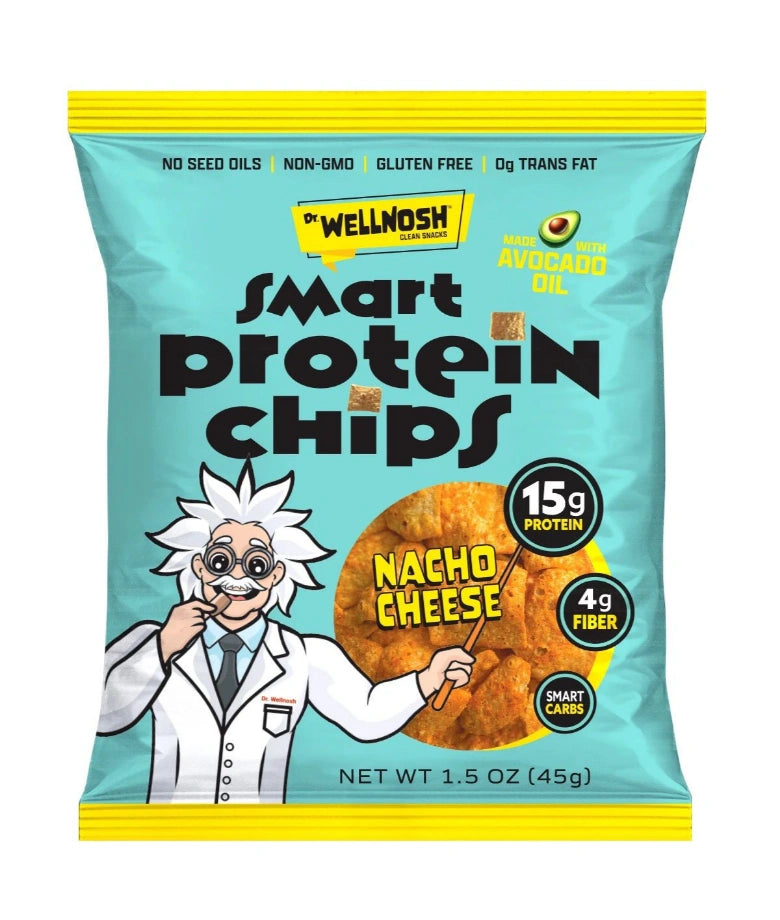
Nacho Cheese replaces the neon-orange cheese powder found in typical tortilla chips with real cheese seasoning and paprika for color, not Yellow 6 or Red 40. It’s cooked in avocado oil, carries the standard 15 grams of fava bean protein per bag, and has zero added sugar. This is the flavor for someone replacing a bag of nacho-flavored corn chips with something that won’t spike blood sugar an hour later. Best for: post-workout refueling when you want something savory instead of another shake.
Celtic Salt strips the flavor profile down to fava beans, avocado oil, and unrefined sea salt. There’s no flavor complexity to hide behind, which means the ingredient panel is about as short as a snack label gets. Best for: anyone who wants a plain, versatile chip they can pair with guacamole, hummus, or a protein shake without fighting competing flavors.
Chipotle Barbecue brings smoky heat through chipotle pepper and real spice blends rather than “natural smoke flavor” or liquid smoke concentrate with a dozen sub-ingredients. It’s the flavor most likely to replace a barbecue-flavored chip that leans on corn syrup solids and artificial smoke compounds. Best for: lunch-box swaps where you want bold flavor without the sugar crash that often comes with sweetened barbecue seasoning.
Cinnamon takes the brand into snack territory usually dominated by cereal-style bars and granola clusters loaded with cane sugar or maltodextrin. Wellnosh’s version uses actual cinnamon and a touch of natural sweetness from the bean base itself, still landing at no added sugar. Best for: an afternoon snack that satisfies a sweet craving without the sugar alcohols common in “keto-friendly” sweet snacks.
Variety Pack bundles all four flavors into one order, which matters more than it sounds. Clean-label switching is often where people quit, because committing to a single flavor before you know if you’ll like it feels risky. The Variety Pack removes that friction.
Availability rotates by flavor and demand, so check current stock directly on each product page before building a subscription around a single flavor.
Pro Tip: Buy the Variety Pack first, even if you already have a favorite guess. Taste preference for savory versus sweet snacks shifts throughout the week, and having options on hand beats forcing yourself to finish a flavor you’re tired of by Wednesday.
Across all four flavors, the constants are what make the “no artificial additives” claim hold up under scrutiny: 15 grams of fava bean protein, avocado oil instead of canola or soybean oil, non-GMO ingredients, and gluten-free, low-carb formulation with no added sugar. None of that changes flavor to flavor. Only the seasoning does.
How Do You Check a Label for Hidden Additives?
Reading a snack label correctly takes about 20 seconds once you know the order to check things in. Most shoppers skim the front of the bag and skip straight to the nutrition facts, but the ingredient list below it is where the real answers live.
- Read the ingredient list top to bottom before anything else. Ingredients are listed by weight, so whatever appears first makes up the largest share of the product. If sugar, corn syrup, or a vegetable oil blend shows up in the first three items, the “no artificial additives” claim on the front doesn’t tell the whole story.
- Scan for sugar synonyms hiding in plain sight. Brown rice syrup, cane juice, dextrose, maltose, and fruit juice concentrate are all sugar under a different name. A snack can legitimately claim no artificial sweeteners while still carrying three or four of these in a row.
- Flag ambiguous preservative and flavor terms. “Natural flavors” is legally allowed to represent dozens of compounds without disclosing a single one. Brands committed to real transparency, like That’s All Protein, spell out every seasoning by name instead of hiding behind that phrase.
- Look for named preservatives and decide if they concern you. Sodium benzoate, BHA, and BHT show up in shelf-stable snacks more often than people realize, usually to extend freshness in products with higher fat content.
- Cross-check third-party seals against the ingredient list, not instead of it. A Non-GMO Project or USDA Organic seal confirms sourcing standards, but it says nothing about sugar content or protein density. Triscuit’s organic line, for example, carries Non-GMO Project verification with a genuinely short ingredient list, but that seal alone won’t tell you the protein count.
- Confirm protein and fiber numbers support real fullness. A snack with 2 grams of protein and 1 gram of fiber isn’t doing much nutritional work regardless of how clean its ingredient list looks.
A few extra checks are worth building into habit:
- Store filters like Target’s “no artificial flavors, colors or preservatives” category are a useful starting shortcut, not a final verdict. Always confirm with the actual ingredient panel.
- Ingredient lists under 10 items are a reasonable rule of thumb for “minimally processed,” though it’s not an absolute cutoff.
- If a term on the label needs a dictionary to understand, that’s usually a sign to look closer, not shrug it off.
Retailer categories exist because demand for this kind of shopping has grown fast enough to justify dedicating shelf space and filter tags to it. But the filter narrows the search. It doesn’t replace reading the bag.
What Ingredients Should You Actually Avoid?
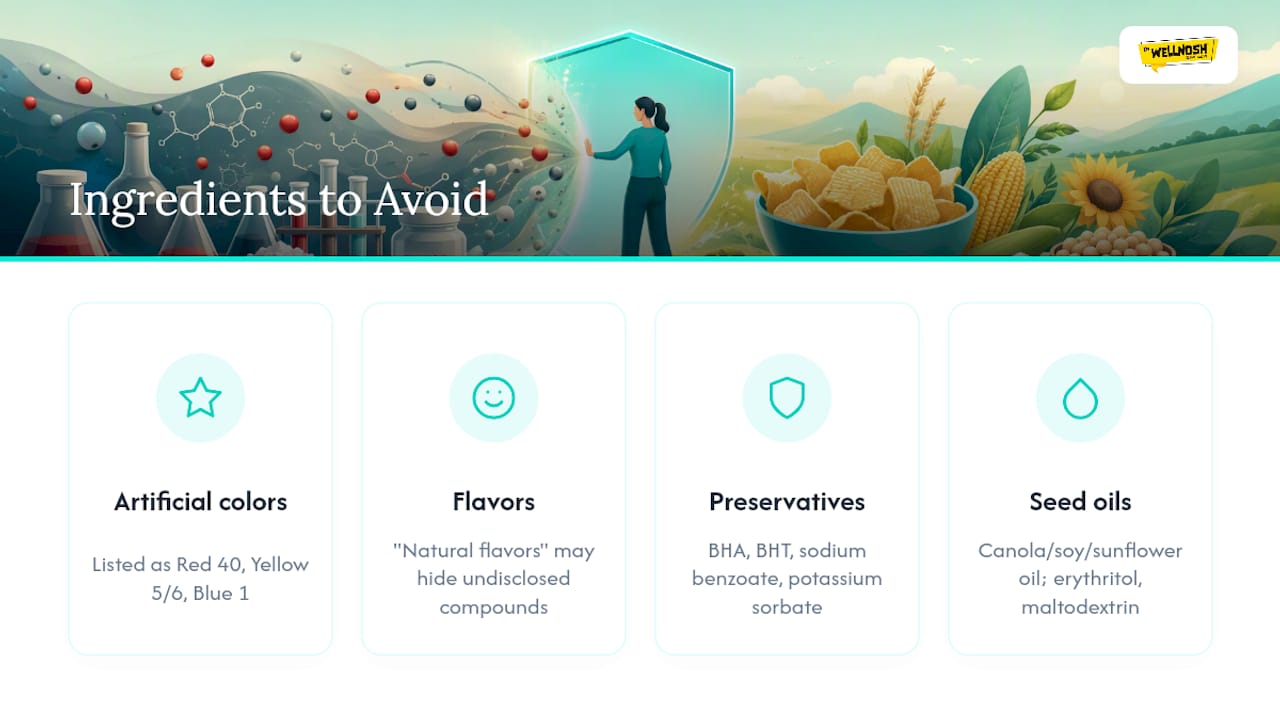
Four categories cause most of the damage hiding behind an otherwise clean-sounding front label. Knowing their aliases matters more than knowing the category name.
Artificial colors show up under specific numbered names: Red 40, Yellow 5, Yellow 6, Blue 1. These are synthetic dyes with no nutritional function, added purely for visual appeal, and they’re the additive category parents flag most often when scanning kids’ snacks.
Artificial flavors and the “natural flavors” gray zone cause more confusion than any other line on a label. “Artificial flavor” at least admits what it is. “Natural flavors” can legally include dozens of undisclosed compounds, which is why brands serious about transparency name their actual seasonings instead of hiding behind that catch-all.
Preservatives extend shelf life but often show up under names that don’t sound like preservatives at first glance: BHA, BHT, sodium benzoate, potassium sorbate. None of these are inherently dangerous in small amounts, but their presence in a product marketed as “clean” is worth questioning.
Seed oils, sugar alcohols, and refined starches are the sneakiest category because they rarely announce themselves on the front of the bag. Canola, soybean, and sunflower oil dominate conventional fried snacks because they’re cheap, not because they’re stable at high heat. Some brands fry in tallow or avocado oil instead, and avocado oil in particular holds up better under heat than most seed oils without the animal-based tradeoff. Sugar alcohols like erythritol and maltitol show up constantly in “keto” and “sugar-free” snacks and can cause digestive discomfort in larger amounts. Refined starches like maltodextrin add bulk and texture cheaply, with little nutritional upside.
None of these four categories are automatically dangerous in isolation. The problem is cumulative exposure across a day of snacking, especially for kids eating multiple packaged snacks between meals.
Which Snack Categories Are Reliably Additive-Free?
Some snack categories are structurally easier to trust than others, simply because there’s less room for a manufacturer to sneak something in.
Fresh produce and simple prepared items sit at the top of the list because there’s no ingredient panel to decode. Cut vegetables with hummus, apple slices, or a banana solve the “I need something now” moment without any label-reading required.
Nuts and seeds in single-ingredient packs are nearly foolproof, provided you check for one thing: added oils or flavor coatings. A bag that says “almonds” is different from one that says “almonds, canola oil, natural flavors.”
Whole-food bars with short ingredient lists vary widely by brand, but the good ones read like a recipe: dates, nuts, a bit of sea salt. Watch for bars that lean on concentrated syrups as their primary binder, since those can spike blood sugar as fast as candy despite an “all-natural” front label.
Jerky and meat sticks hinge on their curing ingredients. Look for salt, vinegar, and named spices rather than “flavoring” or nitrate blends with unclear sourcing. Grass-fed beef stick brands built around ingredient transparency tend to list exactly what went into the cure, which is the standard worth holding every jerky brand to.
Chips made from single ingredients cover more ground than people expect. Plant-based slices, like dehydrated jackfruit chips made from one fruit and nothing else, and whole-grain baked crackers both qualify when the ingredient list stays short. Wellnosh’s protein chips fall into this broader category too, built from fava bean protein and avocado oil rather than a potato-and-seed-oil base.
The common thread across every category: fewer processing steps mean fewer opportunities for something artificial to sneak in.
Do Protein and Fiber Matter More Than the “Natural” Label?
A snack can be completely free of artificial additives and still leave you hungry again in 40 minutes. That’s the tradeoff most clean-label guides skip past.
Protein and fiber are what actually determine whether a snack holds you over. A practical rule of thumb: look for at least 7 to 10 grams of protein or 3 to 5 grams of fiber per serving if the goal is real satiety rather than a quick sugar bump. Wellnosh chips hit that protein mark at 15 grams per bag, which puts them closer to a light meal than a between-meal nibble.
Concentrated natural syrups deserve more suspicion than they get. Brown rice syrup and similar concentrated sweeteners can spike blood glucose nearly as fast as refined sugar, even in a bar that proudly advertises “no artificial sweeteners” on the front. The body doesn’t know the difference between a natural glucose spike and an artificial one.
Cooking fat matters just as much as the seasoning does. Seed oils like soybean and canola oxidize more readily under high heat than avocado oil, which is part of why Wellnosh built its frying process around avocado oil from the start.
Pro Tip: Pair a lower-protein snack with something that fills the gap instead of avoiding it entirely. Fruit with nut butter, or a bag of chips alongside a string cheese, turns a quick snack into something that actually keeps you full until your next meal.
Dr. Wellnosh on Formulating Without Hidden Additives
Formulating a snack with zero artificial additives starts with a constraint most manufacturers try to avoid: fewer tools to fix a bad batch. Fava bean protein isolate and avocado oil don’t behave the way modified starches or synthetic flavor compounds do, so getting the crunch and taste right takes more trial and error, not less.
That approach shapes every flavor decision Wellnosh makes. Real cheese seasoning instead of cheese powder blends. Named spices instead of “seasoning blend.” Avocado oil instead of a seed-oil frying medium chosen for cost. It’s a slower, more expensive way to build a snack, and it’s the only version of “clean label” that holds up once someone actually reads the bag.
A Note From the Kitchen Side of Clean Snacking
The hardest part of switching to additive-free snacks isn’t finding options. It’s the assumption that clean automatically means bland. That assumption is wrong more often than it’s right, but it takes a few good bags to prove it.
What actually works in practice is treating flavor as non-negotiable, not a tradeoff you accept for cleaner ingredients. A chip that satisfies a craving and travels well in a lunch bag or gym bag solves a real problem. One that technically qualifies as “clean” but tastes like cardboard just gets left in the pantry.
— Dr. Wellnosh
Where to Start: Picking Your First Wellnosh Order
Everything covered above, from ingredient transparency to protein density to avocado oil instead of seed oils, is baked into every Wellnosh flavor by design, not by accident.
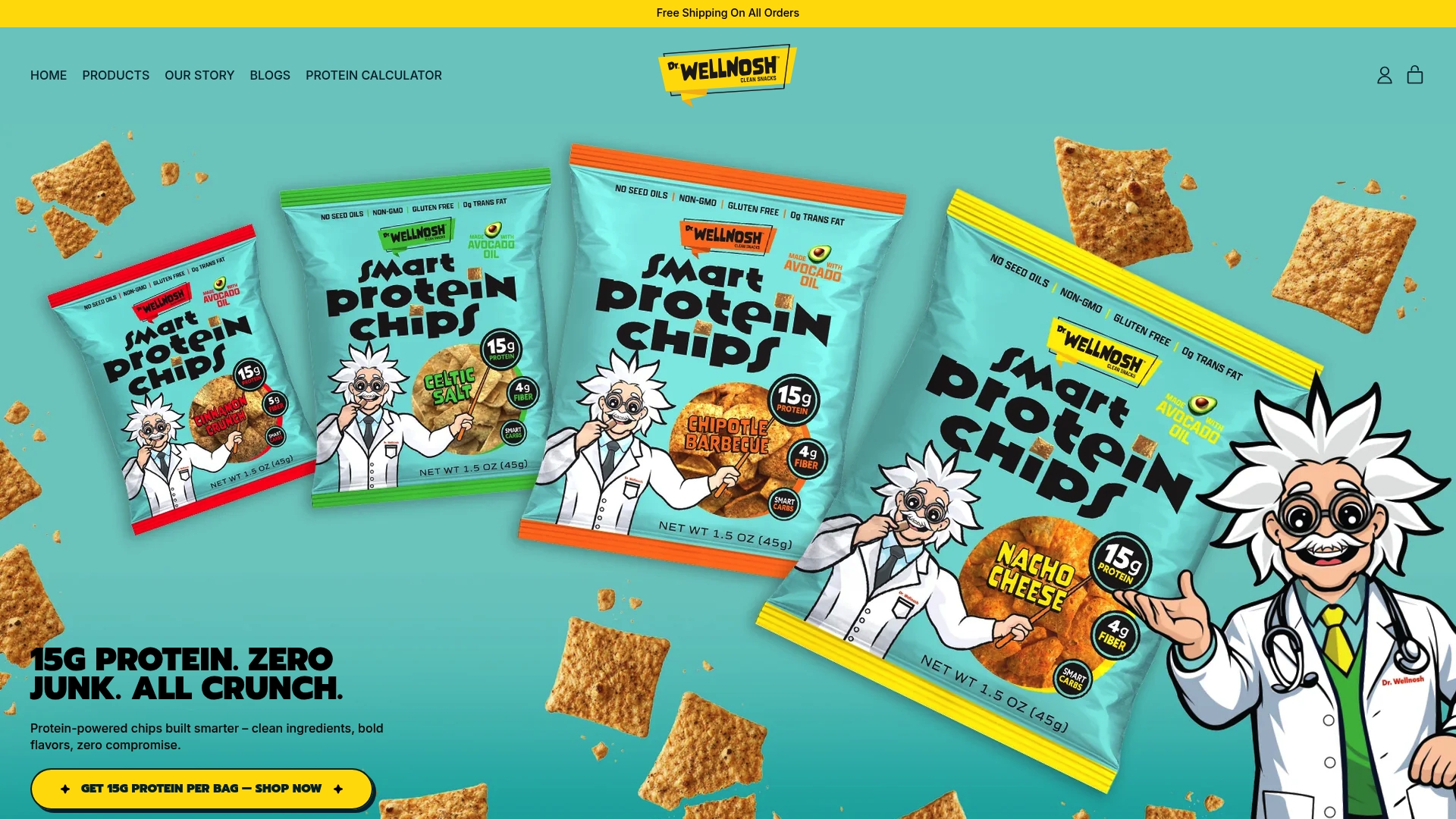
If you’re testing the waters, start with the Variety Pack. It lets you compare Nacho Cheese, Celtic Salt, Chipotle Barbecue, and Cinnamon side by side before you commit to a single flavor for a recurring order. Once you find your favorite, the Chipotle Barbecue page and the Cinnamon page both offer Subscribe & Save pricing, so restocking doesn’t mean remembering to reorder every few weeks. For travel days or holiday snacking, pairing a bag with the kind of planning covered in healthy holiday eating guides keeps clean choices easy even outside your normal routine. Order the Variety Pack now and let your own taste test settle which flavor earns the subscription slot.
Sources
- SnackWorks — product and ingredient information
- NCBI PMC article on food additives and health
- Target — curated snack category for ‘no artificial’ products


