

· By Dr. Wellnosh
How to Meet Daily Protein Needs as an Active Woman
If you train regularly, aim for 1.4 to 2.0 grams of protein per kilogram of body weight per day (about 0.64 to 0.91 grams per pound), according to the International Society of Sports Nutrition. For most active women, protein needs generally fall within a moderate to moderately high daily range, depending on body weight and training intensity.
Here’s the quick math: a 140 lb woman (63.5 kg) lifting weights three to four times a week would target roughly 89 to 127 grams daily, with most strength-focused women settling near the middle to upper end of that range.
- Distribution rule: split your total across 3 meals plus 1 snack.
- Per-meal target: aim for 25 to 40 grams of protein at each main meal.
- Snack target: 15 to 25 grams to fill the gap between meals.
That’s the whole prescription in one paragraph. Everything below explains how to personalize it, hit it with real food, and stop thinking about it after week two.
Key Takeaways
Active women meet daily protein needs most reliably by targeting 1.4 to 2.0 g/kg per day and spreading it across 3 to 4 meals at roughly 25 to 35 grams each.
| Point | Details |
|---|---|
| Set your daily range | Target 1.4 to 2.0 g/kg (about 100 to 150 g/day for most active women) based on weight and training type. |
| Dose protein per meal | Aim for roughly 20 to 40 g per meal, spaced every 3 to 4 hours, to support muscle repair. |
| Fix breakfast first | Most women under eat protein in the morning; adding 25 to 30 g there improves the whole day’s distribution. |
| Adjust for life stage | Pregnancy and perimenopause both typically call for higher intake within the 1.4 to 2.0 g/kg range. |
| Use snacks to close gaps | Wellnosh chips add 15 g of plant-based protein per bag for a fast, food-first way to hit per-meal targets. |
Table of Contents
- How Do You Calculate Your Daily Protein Target?
- How Much Protein Should You Eat Per Meal?
- What Do High-Protein Days Actually Look Like?
- When Should You Use Protein Supplements Instead of Food?
- How Can You Track Protein Without Obsessing Over It?
- Why This Guidance Holds Up
- Does Pregnancy or Perimenopause Change Your Protein Needs?
- What Most Protein Advice Gets Wrong for Active Women
- Close a Protein Gap Without Cooking Anything
- Frequently Asked Questions
- Sources
How Do You Calculate Your Daily Protein Target?
The math takes about ten seconds once you know your weight in kilograms. Divide your body weight in pounds by 2.2046, then multiply by a number between 1.4 and 2.0 depending on your training style and goals.
- Convert your weight. A 150 lb woman weighs 68 kg (150 ÷ 2.2046).
- Pick your multiplier. Endurance-focused training (running, cycling, swimming) tends to sit at the lower end, around 1.4 to 1.6 g/kg. Strength and power training, or any phase of intentional fat loss, pushes toward 1.6 to 2.0 g/kg.
- Multiply. That 68 kg woman training for strength at 1.8 g/kg needs about 122 grams a day.
Compare that to the RDA of 0.8 g/kg, which Harvard Health describes as a floor built for sedentary adults to avoid deficiency, not a target for anyone lifting weights or logging miles. Active women burn through amino acids faster through muscle repair and turnover, so the RDA badly undershoots what your body actually uses. If you’re in an energy deficit while training hard, lean toward the top of the 1.4 to 2.0 g/kg range. Restricting calories without bumping protein is one of the fastest ways to lose muscle instead of fat.
How Much Protein Should You Eat Per Meal?
Your body can’t bank a big protein dose from dinner and coast on it all day. Muscle protein synthesis, the process that repairs and builds tissue after training, responds best to a steady supply.
The practical threshold is about 0.3 grams per kilogram per meal, which the Gatorade Sports Science Institute ties to roughly 20 to 40 grams depending on body size. Spreading that dose every 3 to 4 hours outperforms loading it all into one meal, largely because your body can only use so much protein for muscle repair at once. The rest gets used for energy or stored, not saved for later.
A workable cadence looks like this:
- Breakfast: 25 to 30 g
- Lunch: 30 to 35 g
- Post-workout snack: 20 to 25 g
- Dinner: 30 to 35 g
- Optional evening snack: 15 to 20 g
Pro Tip: If you only fix one meal, fix breakfast. Most women eat 10 to 15 grams at breakfast and 40-plus at dinner, which is backwards for muscle repair and for keeping you full through the morning.
What Do High-Protein Days Actually Look Like?
Numbers on a page mean nothing until they turn into food on a plate. Here are three sample days targeting different totals, so you can pick the one closest to your own math.
- 100 g/day template: Greek yogurt with berries (20 g) + eggs and toast (18 g) + grilled chicken salad (35 g) + a handful of edamame (12 g) + cottage cheese with fruit (15 g).
- 130 g/day template: Protein oats with a scoop of powder (30 g) + turkey wrap (28 g) + salmon with quinoa (32 g) + Greek yogurt (18 g) + a protein snack post workout (18 g).
- 160 g/day template: Egg white omelet with cottage cheese (30 g) + chicken and rice bowl (40 g) + tofu stir-fry (28 g) + a protein shake (25 g) + canned tuna on crackers (25 g) + a small snack (12 g).
Easy boosters to fold into any of these: canned salmon or tuna (20 to 25 g per can), edamame (17 g per cup), lentils (18 g per cup cooked), and tofu (10 g per half cup). If your appetite runs low or you’re eating fewer calories overall, shrink portions across the board rather than skipping protein sources entirely. Protein is the last thing you want to cut when calories drop.
When Should You Use Protein Supplements Instead of Food?
Supplements exist to patch gaps, not replace meals. Reach for a shake or bar when a home-cooked option isn’t realistic, like right after a workout when you need 20 to 25 grams fast, or when travel wrecks your usual routine.
- Whey digests quickly and carries a complete amino acid profile, good for post-workout timing.
- Casein digests slowly, better suited to an evening dose that feeds muscle repair overnight.
- Plant blends (pea, rice, fava) need a mix of sources to match whey’s completeness, but work well for anyone avoiding dairy.
- Stick to labeled serving sizes. More isn’t better once you’ve already hit your daily target.
How Can You Track Protein Without Obsessing Over It?
Counting every gram forever isn’t sustainable, and it isn’t necessary. Track for one focused week, then switch to autopilot.
- Log meals in a free app (or a paper checklist) for 3 days to see where you actually land.
- Build 2 to 3 go-to breakfasts and lunches once you know your gaps, then repeat them.
- Anchor a protein source to every meal: eggs or yogurt at breakfast, a lean source at lunch, another at dinner.
- Keep one portable 15 to 25 gram snack in your bag or desk drawer for the days that go sideways.
- Batch-cook a protein (chicken, lentils, tofu) on Sunday and portion it into containers for the week.
Why This Guidance Holds Up
The 1.4 to 2.0 g/kg range isn’t a fitness-influencer number. It comes from the ISSN’s position stand on protein and exercise, cross-checked against the Dietary Guidelines for Americans and Harvard Health’s explainer on why the standard RDA undersells active people’s needs.
- The per-meal dosing math (about 0.3 g/kg) comes from female-athlete-specific research, not a generic bodybuilding rule of thumb.
- Wellnosh’s own dietary protein requirement guide for athletes breaks down these numbers further for readers who train seriously.
- Wellnosh chips deliver 15 grams of plant-based protein per bag from fava beans, cooked in avocado oil with no seed oils or added sugar, a straightforward way to close a 15 to 20 gram gap without cooking anything.
Does Pregnancy or Perimenopause Change Your Protein Needs?
Life stage changes the math. Pregnancy increases protein needs because your body is building new tissue, not just maintaining what you have. Most guidance for the second and third trimesters pushes intake higher than a non-pregnant baseline, and this is a case where checking with your OB or a registered dietitian matters more than following a generic range, since individual needs vary with pre-pregnancy weight and pregnancy complications.
Perimenopause tells a different story. Declining estrogen accelerates muscle loss and lowers the body’s sensitivity to the muscle-building signal protein normally provides, a phenomenon researchers call anabolic resistance. Practically, that means many women in their 40s and 50s need to sit at the higher end of the 1.4 to 2.0 g/kg range, not the lower end, even if their training volume hasn’t changed. Bone density also starts declining faster during this window, and adequate protein alongside resistance training and calcium supports the skeleton, not just muscle.
Breastfeeding carries its own bump in needs, largely tied to milk production, and typically calls for planning meals around lean sources rather than relying on preworkout timing tricks that assume a training-focused lifestyle. In every one of these stages, the core strategy from earlier sections still applies: pick a number, spread it across meals, and lean on real food first. What shifts is where in the range you land, and how closely you should loop in a doctor or dietitian before making a big change, especially during pregnancy or if you have an existing health condition.
What Most Protein Advice Gets Wrong for Active Women
Most protein content aimed at women either scares them off animal protein entirely or pushes shake-first advice that ignores how real meals actually work. Neither serves someone juggling a training schedule, a job, and dinner for other people.
The bigger miss is timing advice that treats every woman like a competitive bodybuilder counting minutes after a lift. The per-meal threshold research matters far more day to day than the “anabolic window” myth ever did. Hit roughly 25 to 35 grams at three or four points in your day, and the exact minute after your workout matters far less than most fitness content implies.
If I had to pick one lever, it’s breakfast. Almost every woman I’d guess reads this article eats too little protein in the morning and tries to make up for it at dinner, which works against muscle repair and appetite control alike. Fix that one meal before you touch anything else. Supplements and snacks like Wellnosh chips are useful tools for closing a 15 to 20 gram gap, not a substitute for building better meals in the first place. Food first, gaps second. That order matters more than which brand of powder sits in your cabinet.
Close a Protein Gap Without Cooking Anything
Some days the math works out fine on paper and falls apart by 3 PM anyway. That’s the gap Wellnosh chips are built to close: 15 grams of fava bean protein per bag, cooked in avocado oil, with real ingredients you can pronounce and zero added sugar.
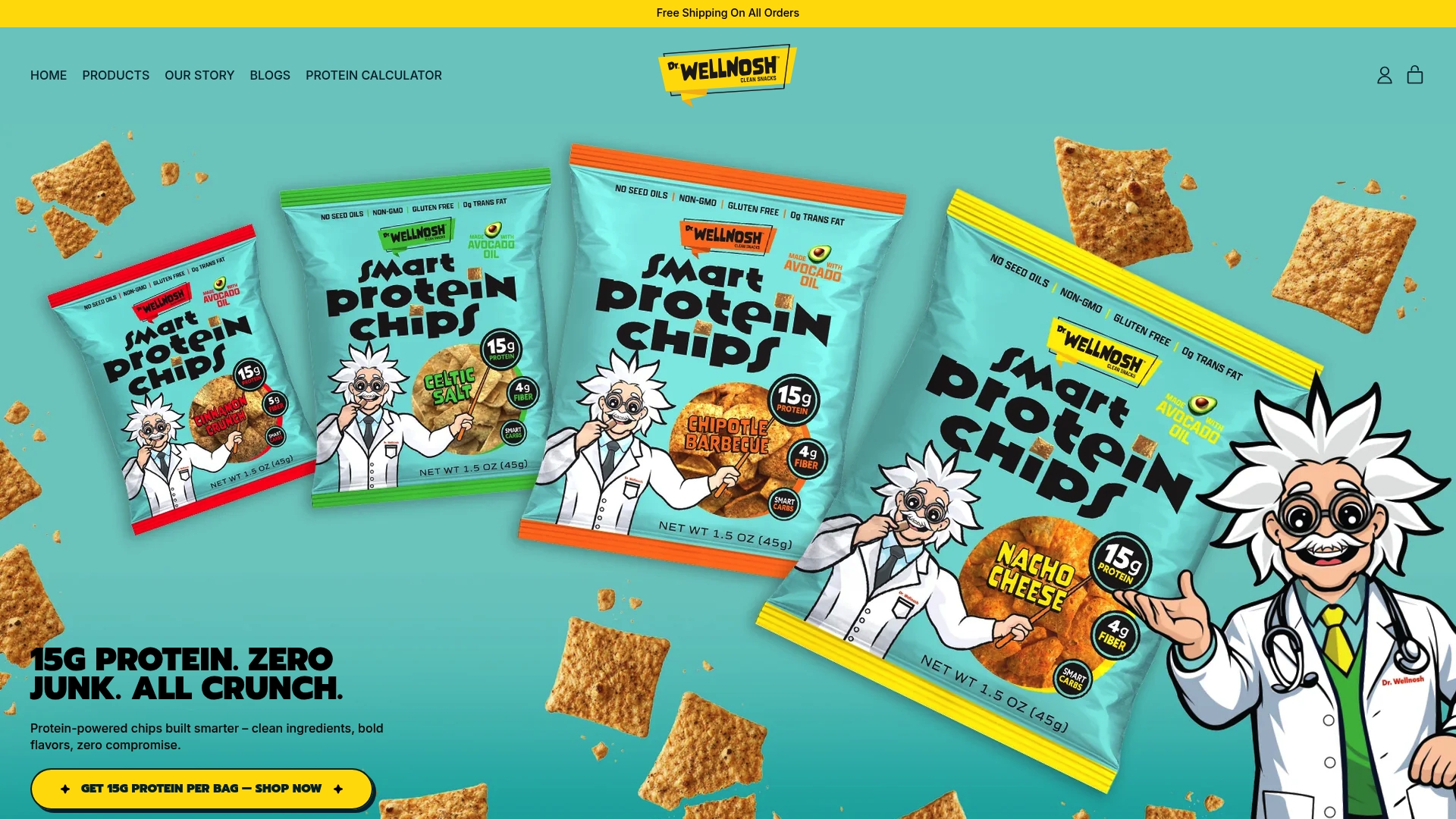
They work as a mid-afternoon protein boost when lunch ran light, a post-workout snack when you need 20-plus grams and don’t want to cook, or a travel-friendly option that survives a gym bag or a flight delay. Nacho Cheese and Celtic Salt fans tend to reach for them daily; if you want a savory option with heat, Chipotle Barbecue delivers the same 15 grams with a kick, and Cinnamon covers the sweeter craving without added sugar. Not sure which flavor fits your routine? The Variety Pack lets you try Nacho Cheese, Celtic Salt, Chipotle Barbecue, and Cinnamon before committing to a favorite. Order a bag and stash a few in your gym bag this week.
Frequently Asked Questions
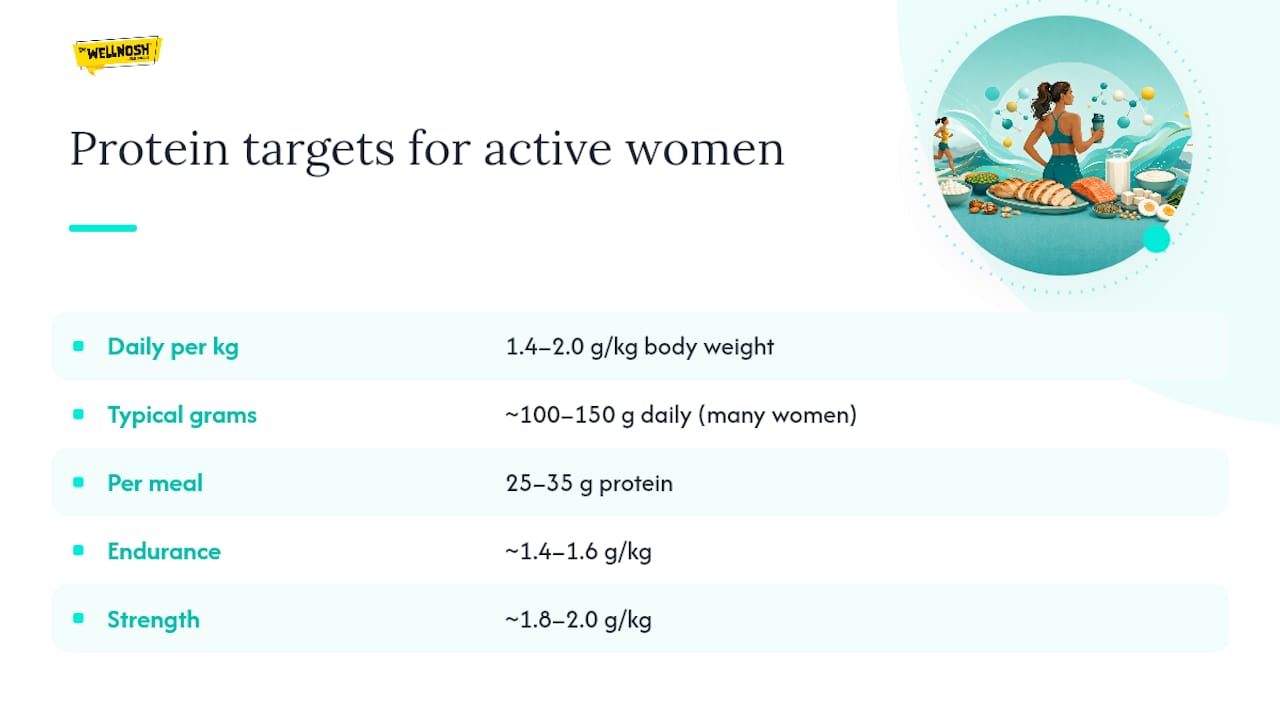
How many grams of protein should an active woman eat per day? Most active women should target 1.4 to 2.0 grams per kilogram of body weight daily, which works out to roughly 100 to 150 grams for many women, depending on body size and training intensity.
Is it possible to eat too much protein as an active woman? Intakes within the 1.4 to 2.0 g/kg range are considered safe for healthy adults by the International Society of Sports Nutrition, though the American Heart Association recommends favoring lean and plant-based sources over those high in saturated fat.
Do endurance athletes need less protein than strength athletes? Endurance-focused women can often sit near the lower end, around 1.4 to 1.6 g/kg, while strength and power training or active fat loss usually calls for the upper end, closer to 1.8 to 2.0 g/kg.
What’s a fast way to add protein without cooking? Canned fish, Greek yogurt, cottage cheese, edamame, or a plant-based protein snack like Wellnosh chips can each add 15 to 25 grams with zero prep time.
Do plant-based sources work as well as animal protein for active women? Plant sources like tofu, lentils, and fava beans support training goals well when eaten in slightly larger portions or combined across sources, since most single plant proteins lack one or more amino acids that animal protein provides in full.
Sources
- Protein and exercise: position stand (International Society of Sports Nutrition)
- Muscle protein metabolism and protein requirements for female athletes (Gatorade Sports Science Institute)
- How much protein do you need every day? (Harvard Health Publishing)
- Dietary Guidelines for Americans 2020–2025


