

· By Dr. Wellnosh
Hit 60–70g a Day with a Three Piece Hotel Room Protein Kit
The fastest way to keep your protein intake on track in a hotel room is a three-piece kit: one shelf-stable “anchor” (jerky, a tuna pouch, or a bag of protein chips), one RTD shake or powder stick, and one crunchy plant-based snack for texture. Between them you’ll typically land 8 to 30 grams of protein per item, and none of it needs a fridge. That’s the whole strategy.
TL;DR:
- Using an ice bucket or minibar fridge can extend the safe storage of perishable protein foods like Greek yogurt and eggs for up to 48 hours.
- Shelf-stable snacks such as jerky, tuna pouches, and plant-based protein chips provide dense protein without refrigeration and are TSA-friendly.
- Packing bulk protein snacks and only buying perishable items locally can halve trip costs compared to purchasing snacks at the hotel or airport.
- RTD shakes are convenient but weigh more, while powder sticks offer higher protein density and require a shaker for mixing during travel.
- Building a travel kit with 8 to 70 grams of daily protein from lightweight, non-perishable items supports maintaining your nutrition routine on the go.
Table of Contents
- What Are the Best Hotel Room Protein Snacks?
- How Do You Store Protein Snacks in a Hotel Room With No Fridge?
- Which Shelf-Stable Snacks Pack the Most Protein Per Bite?
- Are RTD Shakes or Protein Powder Better for Travel?
- What Higher-Protein Foods Can You Add If You Have a Fridge or Ice?
- Two Ready-Made Hotel Snack Kits You Can Pack in Five Minutes
- Where Can You Buy Protein Snacks Near Your Hotel If You Didn’t Pack Enough?
- Is It Cheaper to Pack Protein Snacks or Buy Them at the Hotel?
- A Travel Habit Worth Stealing
- Keep Your Hotel Snack Kit Stocked With Wellnosh
- Sources
- FAQ
What Are the Best Hotel Room Protein Snacks?
Your shortlist doesn’t need to be long. It needs to be dense, portable, and boring enough to survive a suitcase without leaking or crushing.
- Jerky or meat sticks: 10 to 12g protein per ounce, and they last for months in a bag.
- Tuna or salmon pouches: 15 to 20g protein per pouch, plus omega-3s you won’t get from a bar.
- Protein bars: 10 to 25g depending on brand, though sugar content varies wildly.
- Nut butter squeeze packs: generally contain a moderate amount of protein, useful as a fat and flavor booster rather than a main event.
- Roasted chickpeas or edamame: typically provide moderate protein content with a satisfying crunch.
- Shelf-stable protein chips like Wellnosh’s Celtic Salt Protein Chips: 15g plant protein per bag, no refrigeration required.
All of these clear TSA screening in a carry-on without issue, since they’re solid foods, not gels or liquids over 3.4 ounces. For a two or three night trip, two or three anchor items plus a couple of bars covers you. For a week or longer, double that and add a second RTD or powder stick for backup.
Protein Snapshot: A practical kit built around jerky, a couple of bars, and single-serve powder sticks can deliver 60 to 70 grams of protein across a travel day, all from a jacket pocket.
How Do You Store Protein Snacks in a Hotel Room With No Fridge?
Most hotel rooms without a kitchenette still have two workarounds most travelers never use: the ice bucket and the front desk.
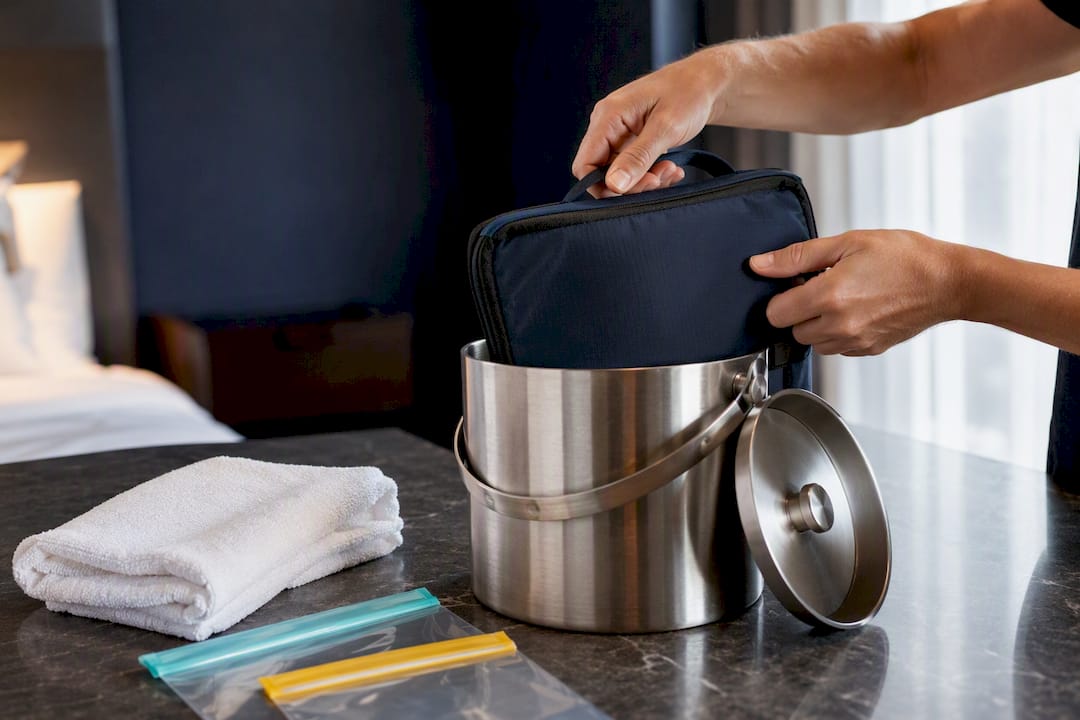
- Ask for an ice bucket at check-in. Line it with a resealable bag, dump in ice, and refill every 8 to 12 hours to keep perishables cool.
- Check for a minibar fridge. Even a small one buys you a day of safe storage for yogurt, cheese, or leftover takeout.
- Keep powders in their original packaging or a clearly labeled bag when flying, since unmarked white powder can slow you down at security.
Hotel staff will typically hold packages and hand over ice on request without a fuss, which makes the ice bucket trick one of the easiest hacks in travel nutrition.
Pro Tip: Pack a couple of extra gallon-size resealable bags and a thin foldable cooler bag. It weighs nothing in your suitcase but turns any ice bucket into a real cooler for day trips away from the room.
Which Shelf-Stable Snacks Pack the Most Protein Per Bite?
Not every shelf-stable snack earns its space in your bag. Some are mostly filler with a protein number slapped on the label. Here’s how the real contenders stack up.
- Dry jerky and meat sticks: dense protein, zero refrigeration, but sodium runs high. Best for long car rides or flights where you need protein without prep.
- Roasted legumes and soy snacks: 6 to 12g protein per serving with a crunch that beats most chips, and they’re naturally plant-based.
- Nut and seed mixes: protein plus healthy fats, though portions matter since calories add up fast in a small bag.
- Single-serve tuna or salmon pouches: 15 to 20g of complete protein with omega-3s, best eaten with crackers or straight from the pouch.
- Protein bars and shelf-stable chips: the fastest bite when you’re rushing to a meeting. Wellnosh’s Chipotle Barbecue Protein Chips deliver 15g of fava bean protein per bag with no added sugar, which makes them a solid low-carb, vegan-friendly option next to a typical bar.
Dry, low-moisture foods like these combine protein density with a long shelf life and almost no spoilage risk, which is exactly what you want rattling around a suitcase for a week. For travelers avoiding gluten, dairy, or animal protein, roasted legumes, nut mixes, and plant-based chips cover the gap without much hunting.
Are RTD Shakes or Protein Powder Better for Travel?
Both work, and if you’re curious about sample-packet strategies for easy protein discovery on the road, check out Best Coffee Sample Packs for Easy Discovery – D&K Bean and Leaf as an analogy for how single-serve or sample-packet options simplify travel packing. The right pick depends on how much space you have and how much cleanup you’re willing to deal with.
RTD shakes need zero prep. Twist the cap, drink, done. Single-serve powder sticks weigh almost nothing and pack more protein per ounce, but you need water and something to shake it in.
- RTD shakes: typically 10 to 30g protein per bottle, no cleanup, heavier to carry.
- Powder sticks: often 20 to 25g protein per serving, lighter, more flavor variety, but they require a shaker or even a hotel water glass with a lid.
- Packing rule of thumb: 2 to 4 RTDs for a weekend trip, or 4 or more powder sticks for a week away.
A collapsible shaker cup or even a hotel coffee mug with a tight lid works fine for mixing. Powders and RTDs both clear airport security as long as containers stay under the standard liquid limits or you check them in luggage.
What Higher-Protein Foods Can You Add If You Have a Fridge or Ice?
If your room has a working minibar fridge or you’re committed to the ice bucket refill routine, a few perishable options are worth the extra effort:
- Greek yogurt cups: around 15 to 20g protein, safe for roughly 24 to 48 hours refrigerated.
- String cheese: 6 to 8g protein per stick, holds up well for 48 to 72 hours cold.
- Hard-boiled eggs: 6g protein each, best eaten within 24 to 48 hours of refrigeration.
- Deli meat packs: 10 to 15g per serving, but treat these as a 24-hour item once opened.
Label anything perishable with the date you opened it, and keep raw or previously cooked meats separate from ready-to-eat snacks to avoid cross-contamination in a shared ice bucket.
Two Ready-Made Hotel Snack Kits You Can Pack in Five Minutes
Weekend kit (2 to 3 nights):
- Two jerky packs or one tuna pouch, for a dense protein anchor that needs no prep.
- One bag of protein chips provides a crunchy break from chewy jerky and bars.
- Two RTD shakes, for mornings when you’re rushing out the door.
Week-long kit (5 to 7 nights):
- Four to six jerky or meat stick packs, rotated daily.
- Two to three bags of protein chips in different flavors help avoid palate fatigue.
- Five or six single-serve powder sticks plus a collapsible shaker.
- Two tuna pouches as a backup on days you skip a real meal.
Swapping in a flavor rotation, like Nacho Cheese one day and Cinnamon the next, keeps the kit from feeling like a chore by day four.
Where Can You Buy Protein Snacks Near Your Hotel If You Didn’t Pack Enough?
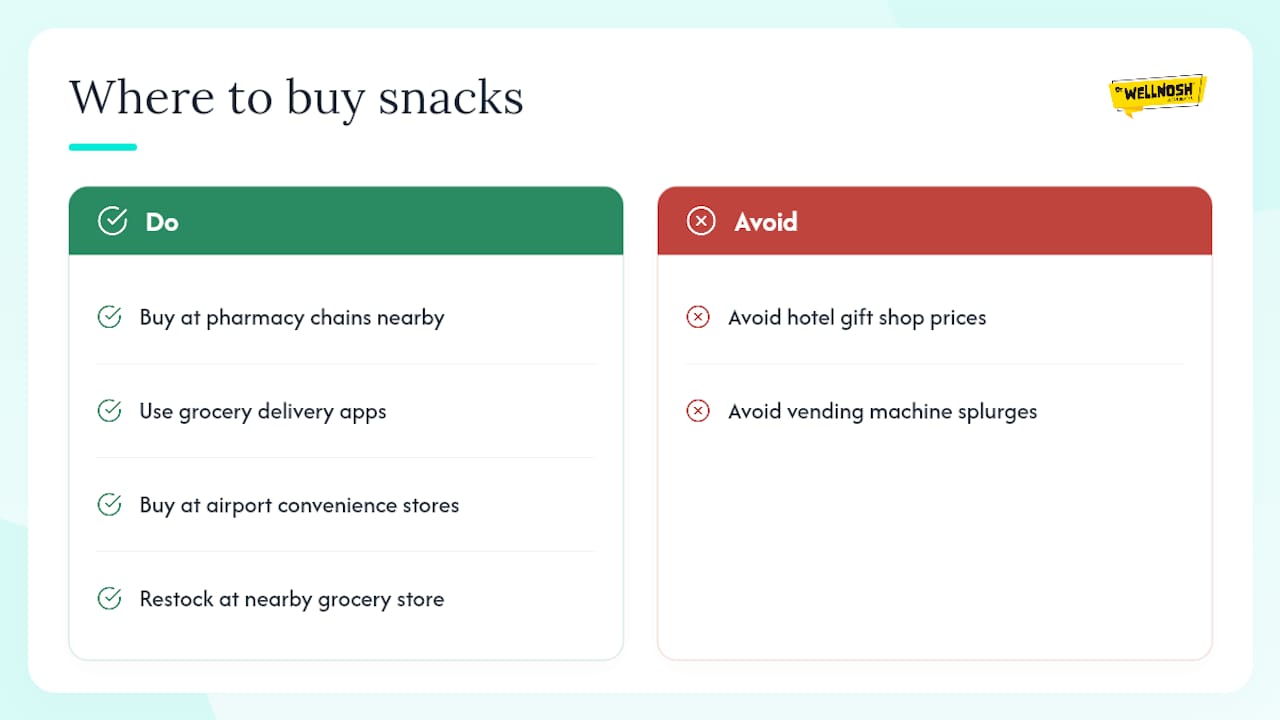
Running short mid-trip happens to almost everyone, and it’s rarely a disaster. Most hotels sit within walking distance of a pharmacy chain, and stores like CVS or Walgreans now stock protein bars, jerky, and RTD shakes near the checkout or in a dedicated snack aisle. Grocery delivery apps are often the faster fix, especially in a city hotel where a 20 minute delivery window beats a 15 minute walk each way.
Airport terminals are another overlooked source before you even reach the hotel. Convenience stores past security increasingly carry jerky, protein bars, and nut packs, so a quick stop before boarding can cover the gap if your original kit runs thin.
If you’re staying somewhere with a grocery store nearby, a five-minute stop can restock an entire week’s worth of jerky, Greek yogurt, and hard-boiled eggs for less than a single vending machine binge. Hotel front desks will often point you toward the nearest 24-hour pharmacy or grocery store if you ask, and many concierge staff keep a running list for exactly this request. Gas station convenience stores, while not glamorous, frequently stock protein shakes and meat sticks at reasonable prices, and they’re often the only option open late at night in smaller towns.
The one thing worth skipping is the hotel gift shop rack, where a small bag of nuts or a protein bar routinely costs double what you’d pay two blocks away.
Is It Cheaper to Pack Protein Snacks or Buy Them at the Hotel?
Packing wins on cost almost every time. A bag of jerky or a box of protein bars bought in bulk before a trip runs a fraction of what the same item costs from a minibar or hotel gift shop, where markups of 200 to 300 percent on snacks are common.
RTD shakes are the clearest example. A four-pack bought at a grocery store before you leave costs roughly what a single bottle costs from a hotel minibar. Powder sticks stretch even further, since one canister split into single-serve bags can outlast an entire trip for less than the price of two hotel-bought bars.
That said, packing has its own hidden cost: bag space and the risk of overpacking items you don’t end up eating. The better value play is a hybrid approach. Pack your anchor items (jerky, chips, powder sticks) since they’re light, cheap in bulk, and don’t spoil. Then plan to buy exactly one or two perishable items locally, like Greek yogurt or a sandwich, rather than hauling cold items through security in the first place.
Protein chips and bars purchased in a multi-pack before travel also tend to beat single hotel-shop prices per gram of protein, since you’re not paying a convenience markup on every individual serving. If you travel often, buying snacks in bulk at home and repacking small kits for each trip is the single biggest cost saver, cutting per-trip snack spending by roughly half compared to buying everything on the road.
A Travel Habit Worth Stealing
My own travel routine hasn’t changed in years: one shaker bottle lives permanently in my carry-on, packed or not. It’s the item I forget least because I never take it out. On travel days, I’ll grab a plant-based bag of chips over a candy bar almost every time, not because sugar is evil, but because 15 grams of protein from a fava bean base keeps me steady until the next real meal instead of crashing an hour later. The micro-habit that actually sticks: pack the shaker first, then build everything else around it.
— Dr. Wellnosh
Keep Your Hotel Snack Kit Stocked With Wellnosh
Wellnosh is the shelf-stable crunch your hotel kit is missing when jerky and bars start feeling repetitive by day three of a trip. Each bag delivers 15g of plant-based protein from fava beans, cooked in avocado oil instead of seed oils, with no added sugar, no artificial additives, and nothing that needs a fridge.
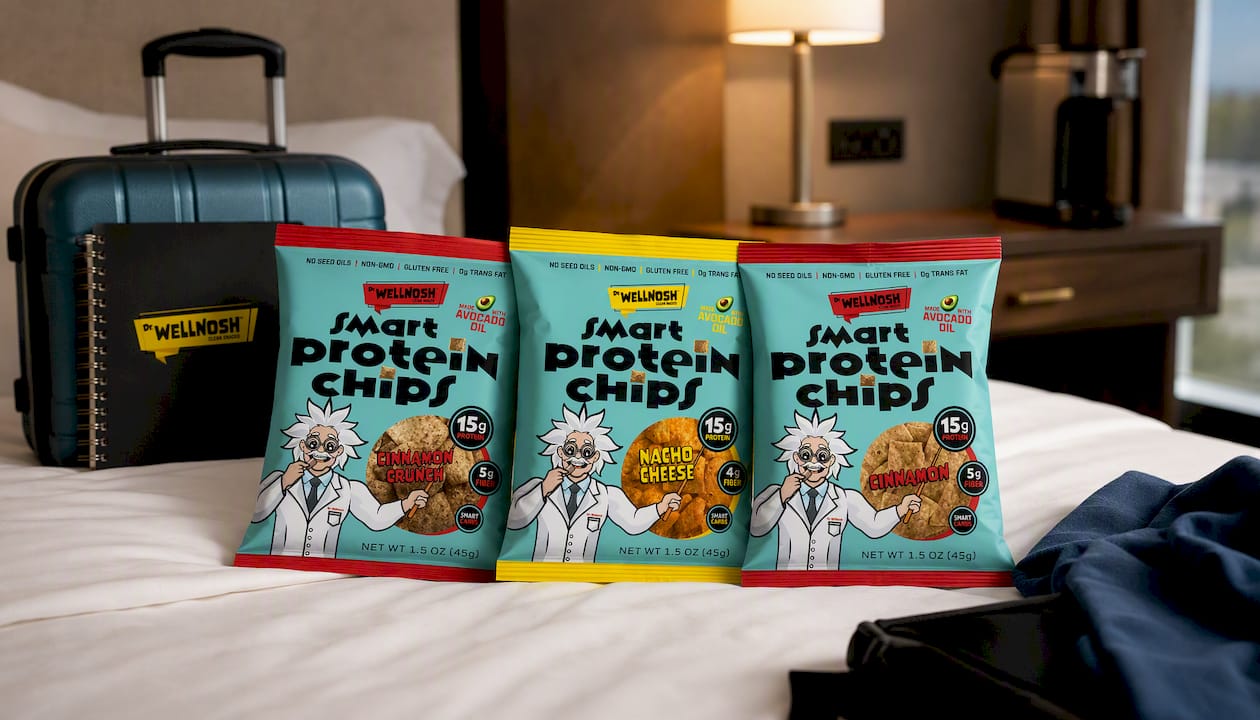
That combination matters more on the road than at home. A satisfying, crunchy snack that doesn’t need refrigeration is exactly what keeps you out of the minibar at 10pm, when the only other options are a $6 candy bar or a $9 can of nuts. These chips are often non-GMO, gluten free, and low carb, covering many dietary restrictions travelers may encounter. Grab a bag of Cinnamon Protein Chips for something sweeter, or browse the full protein chips collection to build a flavor rotation before your next trip.
Sources
For deeper packing strategies and protein-per-serving data, see HighProteinSnacksPro’s travel guide, Optimum Nutrition’s RTD and powder breakdown, and Premier Protein’s advice on staying on track while away from home. For general product details, visit Wellnosh.
- Highproteinsnackspro
- How to Build a High-Protein Snack Pack with RTD Shakes
- High-Protein Snacks That Travel Well | Reshape App
FAQ
How Many Grams of Protein Should a Travel Snack Have?
Aim for 10 to 30 grams per snack depending on the item, with bars and pouches on the higher end and nut packs on the lower end. A practical kit strategy built around jerky, bars, and powder sticks can reach 60 to 70 grams across a full travel day.
Can You Bring Protein Powder Through Airport Security?
Yes, protein powder is allowed in carry-on bags, though TSA may ask to screen it separately if it’s a large quantity. Keeping it in original packaging or a clearly labeled bag speeds up the process.
What’s the Best No-Fridge Protein Snack for a Hotel Room?
Shelf-stable options like jerky, tuna pouches, and protein chips top the list since none require refrigeration. Wellnosh’s protein chips offer 15g of plant protein per bag as a crunchy alternative to jerky or bars.
How Do You Keep Yogurt or Cheese Cold Without a Fridge?
Ask the front desk for an ice bucket, line it with a resealable bag, and refill the ice every 8 to 12 hours. This keeps perishables safe for roughly a day, though a minibar fridge is a more reliable option when available.
Are RTD Protein Shakes Worth Packing for a Short Trip?
For trips of two or three nights, two to four RTD shakes are worth the extra weight since they need zero prep and no mixing. For longer trips, single-serve powder sticks pack lighter and offer more protein per ounce.


