

· By Dr. Wellnosh
3–5g Fiber per Ounce: Shop Bean Chips by the Label
Most commercial bean chips deliver 3 to 5 grams of fiber per 1-ounce serving, roughly double what you’d get from potato chips at that same size. That’s the number to check before anything else on the label. Watch portion size, though: bags run 4 to 6 ounces, and it’s easy to eat two or three servings without noticing. Compare fiber per ounce, not per bag, and you’ll shop smarter.
TL;DR:
- The fiber content of bean chips ranges from 3 to 5 grams per ounce, depending on the bean variety and processing method, with whole-bean flour preserving more fiber.
- Processing techniques like baking and low-temperature extrusion help retain resistant starch and insoluble fiber better than deep frying, which can break down structural fiber.
- Higher fiber density in chips correlates with measurable health benefits, such as reduced levels of cardiovascular risk markers like apolipoprotein B-100.
- Ingredient order and formulation significantly influence fiber content, with less refined bean flours containing more natural fiber than starch blends.
- Pairing bean chips with high-fiber dips or vegetables helps meet daily fiber needs without over-relying on processed snacks.
Table of Contents
- Bean Chips Fiber Content: Reading the Numbers Right
- Why Fiber From Bean Chips Actually Matters
- What Drives Fiber Differences Between Brands
- How to Compare Bean Chips in the Store
- How Wellnosh Fits a Fiber-Forward Snack Pattern
- Soluble vs. Insoluble Fiber in Bean Chips
- Does Baking or Frying Change the Fiber Count?
- Fitting Bean Chips Into a High-Fiber Diet
- Can Bean Chips Cause Digestive Discomfort?
- Balancing Convenience and Whole-Food Choices
- Snack Smarter With a Higher-Protein, Fiber-Supporting Option
- Sources
- FAQ
Bean Chips Fiber Content: Reading the Numbers Right
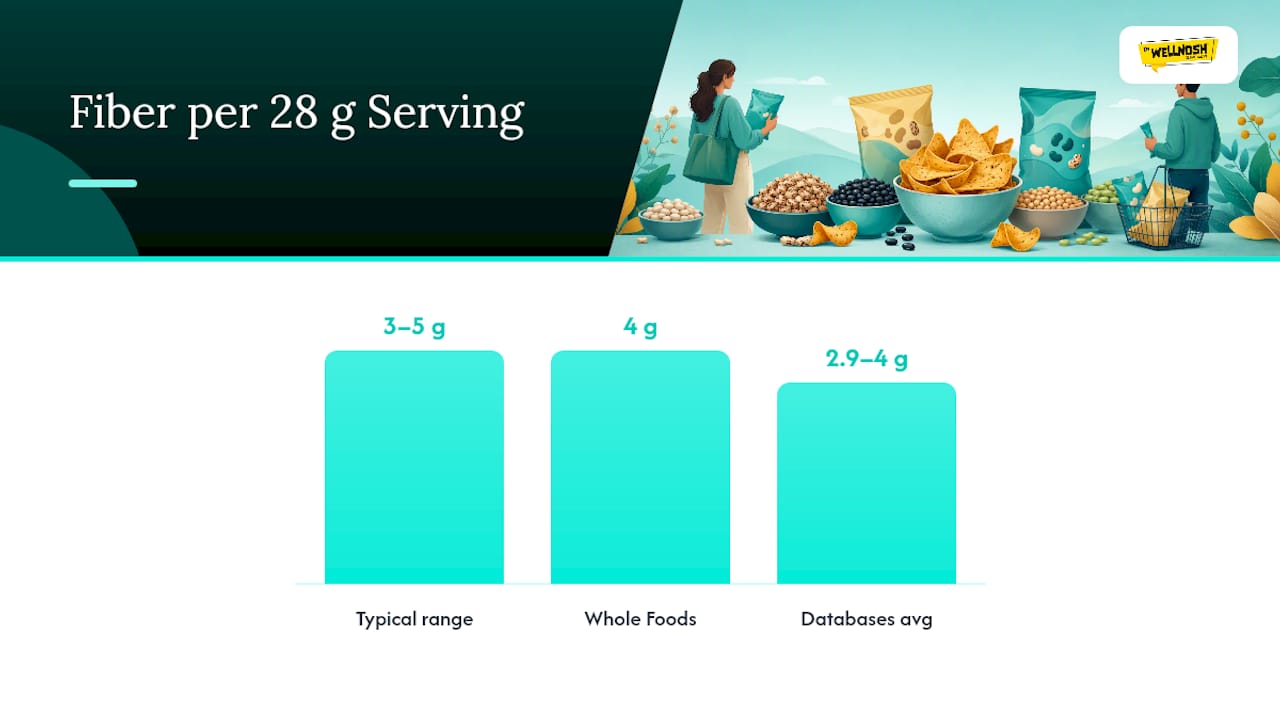
Retail Nutrition Facts panels for bean-based chips typically land between 3 and 5 grams of dietary fiber per 28-gram serving. A black bean chip product sold through Whole Foods Market lists 4 grams of fiber per 1-ounce serving, which sits right in the middle of that range. Some aggregated nutrition databases put the average closer to 2.9 to 4 grams per serving, depending on the bean blend and how much rice or corn starch gets mixed in.
You’ll occasionally see outlier claims, like homemade recipes advertising “over 30% fiber by weight.” Those numbers come from concentrated bean flours in a kitchen experiment, not a bag on a shelf, so they’re not a fair comparison to packaged snacks.
Here’s how to normalize any label so you can compare brands apples to apples:
- Find the serving size in grams (usually printed next to “Serving Size” on the panel).
- Divide fiber grams by serving grams, then multiply by 28 to get fiber per ounce.
- Multiply that number by 3.57 to estimate fiber per 100 grams, useful for comparing against international products or bulk bins.
Statistic Callout: A snack listing 5.2 grams of fiber in a 32-gram serving works out to about 4.5 grams per ounce and roughly 16 grams per 100 grams, a fiber density that lab analysis of pulse-based baked snacks confirms is achievable when processing preserves the bean’s original fiber structure.
Why Fiber From Bean Chips Actually Matters
The fiber number on the label isn’t just a nutrition-label formality. In a randomized crossover trial, 20 participants ate 32 grams daily of a common bean baked snack for four weeks. Researchers found a measurable drop in apolipoprotein B-100, a marker tied to cardiovascular risk, and the effect was statistically linked to the added dietary fiber intake.
The reduction in ApoB-100 was associated with additional dietary fiber intake (p = 0.04), based on a randomized crossover trial testing a bean baked snack against a control snack over four weeks.
Separately, Consumer Reports’ comparison testing found that bean chips generally carry more fiber and protein than potato or corn chips, and that combination tends to increase satiety. Eating something that fills you up faster often means eating less of it, which matters more for total snacking than any single nutrient on its own.
Keep the caveats in mind. The trial involved 20 people, a small sample by clinical standards. Processing varies wildly between brands, and fiber is one variable in a much bigger nutritional picture that includes sodium, added oils, and overall calorie density.
What Drives Fiber Differences Between Brands
Not all bean chips are created equal, and the gap often comes down to what’s actually in the recipe before it ever hits the fryer or oven.
- Whole-bean flour retains more fiber than refined bean starch or isolated bean protein, since processing that strips out the fiber-rich hull cuts the nutrient along with it.
- Baking and low-temperature extrusion preserve resistant starch and insoluble fiber better than deep frying, which can break down some of the structural fiber during high-heat cooking.
- Bean species matters. Navy beans, black beans, chickpeas, and fava beans each carry different natural fiber densities, and blending them with rice or corn shifts the final ratio.
- Formulation blends dilute fiber. If a chip lists rice flour or corn starch before the bean ingredient, the fiber content usually tracks closer to that filler than to the bean itself.
- Added oils and sodium don’t touch the fiber number, but they do change the net health picture, since a high-fiber chip loaded with sodium isn’t automatically the better choice for someone watching blood pressure.
Pro Tip: Scan the ingredient list before the Nutrition Facts panel. If a bean flour, like fava bean or black bean flour, sits in the first or second position, the fiber count on the label is more likely to reflect a genuinely bean-forward product rather than a starch blend with beans added for flavor. For more on how ingredient order affects what’s actually in the bag, see what’s really in a bag of bean chips.
How to Compare Bean Chips in the Store
Standing in front of five different bags, here’s the order of operations that actually works:
- Normalize the serving size first. Convert everything to fiber per ounce so a 1-ounce serving isn’t unfairly beating a 1.5-ounce serving on paper.
- Rank by fiber-to-calorie ratio, not just raw fiber grams. A chip with 4 grams of fiber at 130 calories beats one with 5 grams of fiber at 180 calories for most goals.
- Check sodium next. Bean chips can run higher in sodium than you’d expect; if you’re tracking intake, protein chips with sodium under 200 milligrams are worth comparing against standard bean-chip brands.
- Scan for whole-bean ingredients as described above, and note whether the chip is baked or fried, since baking tends to preserve more of the original fiber structure.
- Confirm the fiber number against a second reference if the label seems unusually high. Cross-check against another brand’s page, like The Good Bean’s original black bean chip listing, to get a feel for the normal range.
How Wellnosh Fits a Fiber-Forward Snack Pattern
Wellnosh chips are built around fava bean protein, not fiber marketing, and that distinction matters for how you use them. They are cooked in avocado oil rather than seed oils, and formulated without artificial additives.
- Non-GMO, gluten free, low carb, no added sugar
- Made with pronounceable, whole-food ingredients rather than isolated starches
- Cooked in avocado oil, avoiding the seed oils common in conventional chips
A fava-bean base tends to preserve more of the legume’s natural fiber structure than a heavily refined bean-starch blend, since less processing happens between the whole bean and the finished chip. Wellnosh doesn’t publish a specific fiber-per-serving figure, so pair the protein content with a fiber-dense side rather than assuming the chip alone covers your fiber target. A handful of raw vegetables or a low-sodium bean dip adds volume and fiber without stacking on extra calories. For more fava-bean-specific comparisons, see five fava bean snack alternatives.
Soluble vs. Insoluble Fiber in Bean Chips
Beans naturally contain both soluble and insoluble fiber, and they don’t do the same job in your body.
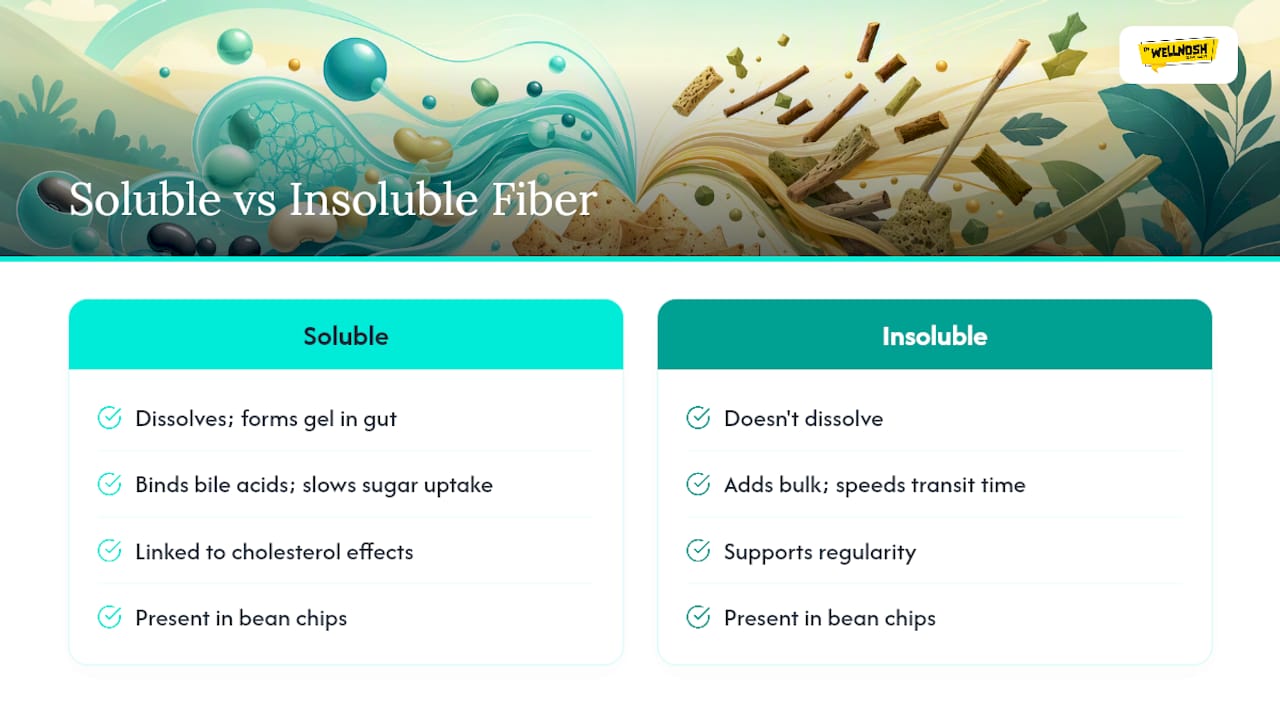
Soluble fiber dissolves in water and forms a gel-like substance in your gut. It’s the type most closely tied to the cholesterol and lipid effects seen in bean-based snack research, since it can bind to bile acids and slow how quickly sugar gets absorbed into your bloodstream. Insoluble fiber doesn’t dissolve. It adds bulk to stool and speeds up transit time through your digestive tract, which is the fiber type most people associate with regularity.
Bean chips generally carry a mix of both, though the exact ratio depends on the bean variety and how much of the original seed coat survives processing. Black beans and navy beans tend to have a slightly higher soluble fiber share than chickpeas, though all four common bean types (navy, black, chickpea, and fava) contribute a meaningful amount of both fiber types.
The practical takeaway: you don’t need to obsess over the soluble/insoluble breakdown on a snack label, since most brands don’t separate the two anyway. What matters is that a bean-based chip is delivering both fiber types in the same bite, something a plain corn or potato chip essentially cannot claim, since those bases run far lower in fiber to begin with.
Does Baking or Frying Change the Fiber Count?
Cooking method changes more than crunch and calorie count. It changes how much of the bean’s original fiber survives to the finished chip.
Baking and low-temperature extrusion tend to preserve more insoluble fiber and resistant starch than deep frying, because high oil temperatures can break down some of the structural carbohydrate in the bean. That’s part of why food-science research on pulse-based snacks points to formulation and processing parameters, not just the bean itself, as the deciding factor in final fiber content.
Frying isn’t a fiber-destroying process across the board. A quickly fried chip can still retain a solid fiber count if the bean flour going in was minimally refined. But stacking two processing choices, heavy refining plus high-heat frying, tends to compound the fiber loss more than either factor alone. If a label lists a fiber number that seems low for a “bean chip,” check whether the first ingredient is actually a bean flour or a starch blend, since that combination often explains the gap better than the cooking method does.
Fitting Bean Chips Into a High-Fiber Diet
A single serving of bean chips covers a meaningful chunk of your daily fiber target, but it shouldn’t be your only source. Most adults need somewhere in the range of 25 to 38 grams of fiber a day, and a 4-gram serving gets you roughly one-tenth of the way there.
Treat bean chips as a bridge snack between meals, not a fiber-loading strategy on their own. Pairing them with a fiber-rich dip, like mashed avocado, hummus, or salsa loaded with diced vegetables, stacks fiber sources without doubling your sodium or calorie load from chips alone. If you’re building a broader high-fiber eating pattern, rotating bean chips alongside whole legumes, vegetables, and whole grains keeps your fiber intake diverse rather than dependent on one processed source. For ideas on what else fits that pattern, the best snacks that keep you full all day covers fiber and protein pairing beyond chips specifically. Readers building out a broader high-protein grocery list can also check EmpowerFit’s high protein grocery list for meal ideas that complement a fiber-forward snack routine.
Can Bean Chips Cause Digestive Discomfort?
Yes, and if you’re not used to eating much fiber, jumping straight to a full bag can backfire. Beans contain oligosaccharides, complex sugars your gut bacteria ferment, which is the same mechanism behind the well-known “beans and gas” reputation whole legumes carry.
Chips made from bean flour carry a lower risk of this than eating a full cup of whole beans, since the processing that turns beans into chip form breaks down some of those fermentable sugars. Still, going from near-zero fiber intake to several grams in one sitting can cause bloating, gas, or mild cramping in people whose gut bacteria aren’t used to processing that much fiber at once.
The fix is straightforward: increase fiber gradually over one to two weeks and drink enough water alongside it, since fiber needs fluid to move through your digestive tract efficiently. Anyone with a diagnosed digestive condition, like IBS or a sensitivity to FODMAPs, should treat bean-based snacks the same way they’d treat whole legumes and introduce them carefully rather than assuming the chip format is automatically gentler.
Balancing Convenience and Whole-Food Choices
Bean chips earn their spot in a rotation when you need something portable that still delivers real fiber and protein, not just empty crunch. Whole beans win on nutrient density every time, since nothing gets processed out. Reach for chips on busy days, and reach for a bowl of black beans or lentils when you have time to cook.
Moderation still applies. Pair a serving of chips with a vegetable-based dip or a piece of fruit to round out the fiber and micronutrients a processed snack can’t fully deliver on its own.
— Dr. Wellnosh
Snack Smarter With a Higher-Protein, Fiber-Supporting Option
If you’ve been comparing bags for fiber grams alone, it’s worth asking what else that snack is giving you. Wellnosh chips add 15 grams of fava bean protein per bag on top of a legume base, cooked in avocado oil instead of seed oils, so you’re not trading crunch for a greasy aftertaste or a mystery-oil ingredient list.
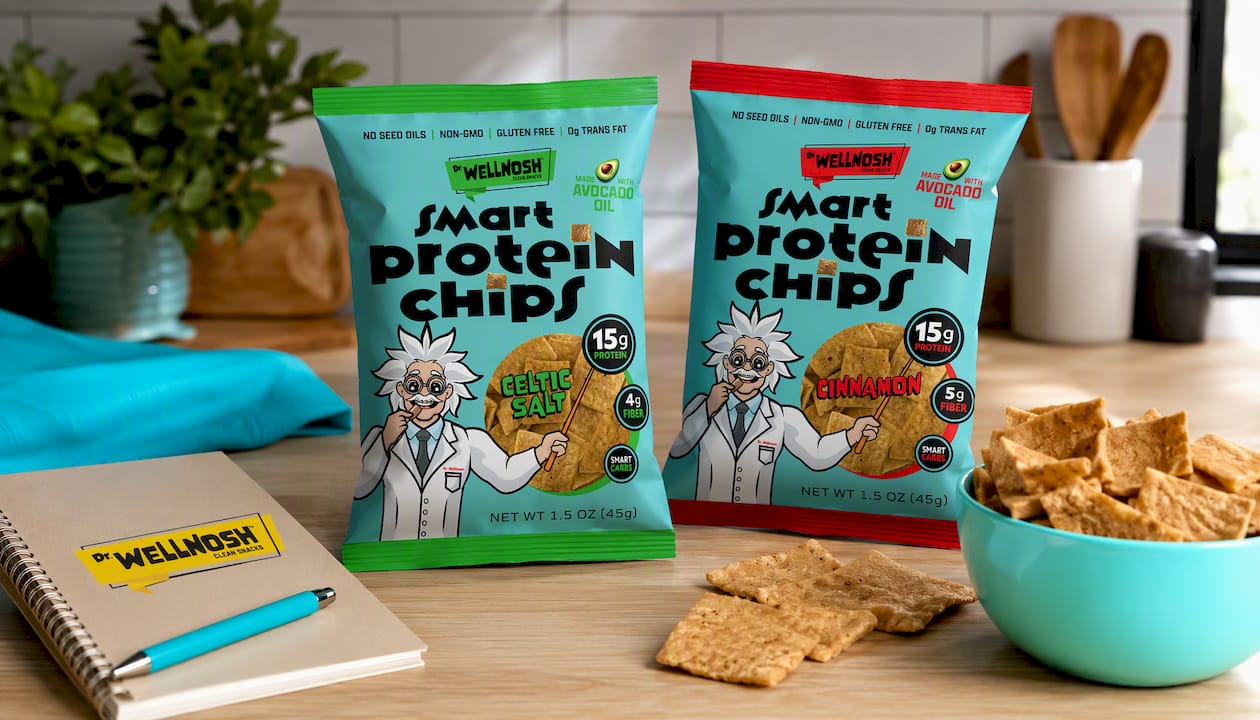
The Celtic Salt flavor and Cinnamon flavor are currently sold out, but both are worth checking back on if you want a simple, clean-ingredient option in your rotation. In the meantime, a one-time bag or a Subscribe & Save order through Wellnosh keeps a protein-forward, plant-based snack on hand without committing to a case you haven’t tried yet. Grab a Variety Pack first if you’re unsure which flavor fits your snacking habits.
FAQ
Are bean chips healthy?
Bean chips generally offer more fiber and protein per serving than potato or corn chips, and Consumer Reports found that combination can boost satiety, though sodium and oil content still vary by brand.
Are beans high in fiber?
Yes, beans are naturally one of the higher-fiber foods available, and that fiber carries over into bean-based chips, though processing and formulation determine how much survives into the final product.
What chips are high in fiber?
Bean-based chips made primarily from black bean, navy bean, chickpea, or fava bean flour typically deliver 3 to 5 grams of fiber per ounce, well above standard potato or corn chips.
Are black bean chips healthier than tortilla chips?
Black bean chips usually carry more fiber and protein per serving than traditional corn tortilla chips, making them a stronger choice for satiety, though sodium levels should still be checked label by label.


