

· By Dr. Wellnosh
Pick by Heat: Olive Oil vs Avocado Oil, EVOO 350°F, Avocado 520°F
For most everyday cooking, extra virgin olive oil should be your primary pantry oil, and refined avocado oil should be your backup for high-heat jobs. Olive oil wins on flavor and decades of health research; avocado oil wins on smoke point and neutrality. The rest comes down to what you’re cooking and how hot your pan needs to get, which the sections below break down the information by temperature, nutrition, and taste.
TL;DR:
- Extra virgin olive oil is safe for home sautéing and roasting up to about 210°C, even though its smoke point is lower than refined avocado oil.
- Use extra virgin olive oil for raw, finishing, and low-to-medium heat cooking; opt for refined avocado oil for searing, stir-frying, or high-heat applications.
- Olive oil contains significantly more antioxidants and polyphenols than avocado oil, which is mainly due to extensive long-term research and Mediterranean diet studies.
- Flavor differences are key: olive oil offers a bold, grassy or peppery taste, while avocado oil is neutral with a slight buttery note, guiding pairing choices.
- Label details like “extra virgin” and “refined” reflect processing and flavor, with refined oils tolerating higher heat but losing many beneficial compounds.
Table of Contents
- Olive Oil vs Avocado Oil: Smoke Points and Cooking Methods
- Which Oil Wins on Nutrition and Heart Health?
- Olive Oil vs Avocado Oil: Matching Flavor to the Recipe
- What the Label Actually Tells You About Quality
- Shopping and Storage: Getting the Most From Every Bottle
- How Wellnosh Puts Avocado Oil to Work
- The Bottom Line for Your Kitchen
- Why the Smoke Point Debate Misses the Point
- Snack Smarter: Chips Cooked in Avocado Oil, Not Seed Oil
- Sources
- FAQ
Olive Oil vs Avocado Oil: Smoke Points and Cooking Methods
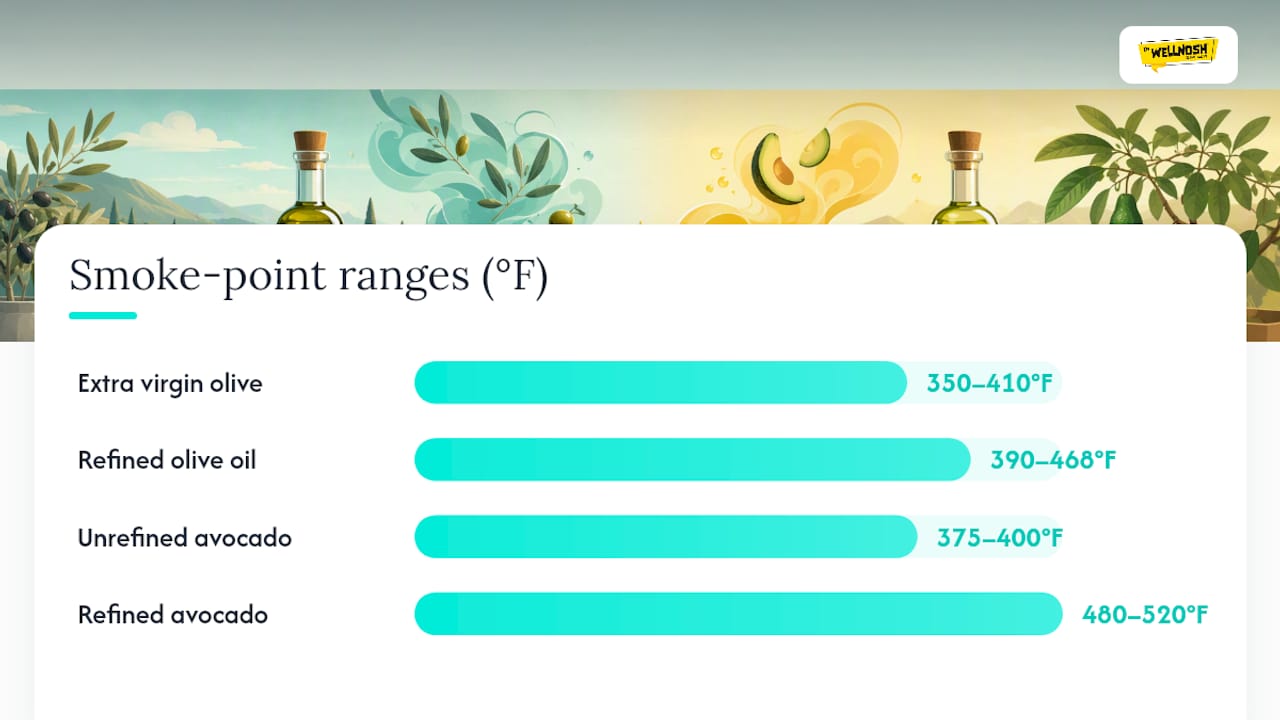
Smoke point gets more attention than it deserves, but it still matters once you’re searing a steak or running a deep fryer. Here’s the actual range for each type, because “avocado oil has a higher smoke point” doesn’t tell you much without numbers attached.
- Extra virgin olive oil: roughly 350°F to 410°F (175°C to 210°C), depending on quality and acidity
- Pure or refined olive oil: roughly 390°F to 468°F (199°C to 242°C)
- Refined avocado oil: roughly 480°F to 520°F (249°C to 271°C)
- Unrefined (virgin) avocado oil: roughly 375°F to 400°F (191°C to 204°C)
A quick note on the numbers: extra virgin olive oil retains its antioxidants and stays stable up to about 190°C to 210°C, which covers the vast majority of home sautéing and roasting. That stability comes from its oleic acid and polyphenol content, not just the smoke point number printed on a chart.
Here’s the thing most articles skip: smoke point isn’t really about when oil “burns.” It’s the temperature at which an oil starts breaking down and releasing free fatty acids and smoke, affecting flavor and potentially creating harmful compounds if you push it too far. For most home cooking, you never get close to these ceilings. A sauté typically runs 300°F to 350°F. A roast holds around 400°F to 425°F. Only searing, deep-frying, or stir-frying at restaurant-level heat pushes past 450°F, where refined avocado oil pulls ahead.
That’s why extra virgin olive oil is genuinely safe for sautéing and roasting, despite its lower smoke point compared to refined oils. The smoke-point panic is mostly overblown for anyone cooking on a home stove rather than a commercial line.
Match method to oil like this: use extra virgin olive oil for sautéing, roasting, baking, and shallow frying. Use refined avocado oil for searing, stir-frying, grilling, and deep-frying. Save unrefined avocado oil and finishing-grade olive oil for drizzling, dressings, and dishes served raw or warm instead of screaming hot.
On reuse: you can safely reuse olive oil for frying multiple times if you filter out food particles and store it in a cool, dark place between uses, but flavor and stability decline with each reuse… After that, flavor and stability drop off fast, so it’s not worth pushing further.
Which Oil Wins on Nutrition and Heart Health?
Both oils lean heavily on oleic acid, a monounsaturated fat that behaves similarly to what’s found in nuts and fatty fish, and both are calorically similar and support the absorption of fat-soluble vitamins and carotenoids from vegetables cooked alongside them. If you’re comparing macros alone, they’re nearly a tie.
Where they split is antioxidant content and the depth of research behind them.
- Extra virgin olive oil carries meaningfully more polyphenols and antioxidants than avocado oil, especially when it’s fresh and minimally processed.
- Refining either oil strips out flavor compounds along with much of that antioxidant load.
- Avocado oil offers vitamin E and lutein, both useful for skin and eye health, but in smaller, less-studied amounts than olive oil’s polyphenol profile.
- Neither oil is a magic bullet on its own. What matters more is what they’re replacing in your diet.
The evidence gap is real, and worth being honest about. Olive oil has far more extensive research behind it, largely thanks to decades of Mediterranean-diet studies tying it to lower cardiovascular risk. Avocado oil shares a similar fatty-acid makeup, but it simply hasn’t been tracked across large populations for 20 or 30 years the way olive oil has. That’s not a knock on avocado oil’s chemistry. It’s a gap in the data, not a flaw in the product.
If your actual goal is swapping out saturated fat or seed oils for something better, either one clears that bar. Trials examining seed oils and cardiovascular markers generally point the same direction: monounsaturated fats from olive or avocado oil beat the alternatives seed oils typically replace. The healthier move for most cooks isn’t agonizing over which of these two wins by a fraction. It’s picking whichever one fits the dish, and using it instead of butter, margarine, or a bottle of soybean oil.
Olive Oil vs Avocado Oil: Matching Flavor to the Recipe
This is where the decision actually gets interesting, because flavor, not fatty-acid charts, is what separates these two oils in daily cooking. Avocado oil is neutral with a faint, slightly buttery quality, while extra virgin olive oil carries a bolder, sometimes peppery or grassy character that varies by region and harvest.
Six ways to put that difference to work:
- Caprese salad or bruschetta: extra virgin olive oil, drizzled raw, so its fruitiness actually shows up in the bite.
- Vinaigrettes and marinades: extra virgin olive oil again; its sharpness balances acid from lemon or vinegar.
- Vanilla cake or banana bread: refined avocado oil, so the oil doesn’t fight the other flavors in the batter.
- Blackened salmon or a hard sear on a steak: refined avocado oil, since it holds up at high heat without smoking.
- Roasted vegetables: either works, but olive oil adds a savory note that plain roasted carrots or broccoli benefit from.
- Mayonnaise or aioli: avocado oil if you want a clean, neutral base; olive oil if you want a grassier, more assertive spread.
Pro Tip: Run a two-bottle pantry: keep an everyday extra virgin olive oil for cooking and raw use, and a refined avocado oil for anything that hits a hot pan hard. Registered dietitians generally agree that picking oil by cooking method and taste preference matters more than chasing marginal nutritional differences between the two.
That two-bottle approach also shows up in practical guides for home cooks using EVOO, which recommend one bottle for cooking and a second, higher-quality bottle reserved strictly for finishing.
What the Label Actually Tells You About Quality
“Extra virgin,” “refined,” and “cold-pressed” aren’t marketing fluff. Each term describes a specific processing step that changes flavor, stability, and price.
- Extra virgin: mechanically pressed with no heat or chemicals, retaining the most flavor and polyphenols. This applies to both olive and avocado oil.
- Virgin: similar to extra virgin but slightly lower quality grade, often with a touch more acidity.
- Refined: processed with heat or chemical solvents to strip impurities, raise the smoke point, and neutralize flavor.
- Cold-pressed: pressed without added heat, a method usually (but not always) paired with extra virgin grading.
- Deodorized: a refining step that removes aroma and taste entirely, common in oils marketed as flavor-neutral.
Refining either oil boosts heat tolerance but strips out much of the polyphenol content and flavor that makes extra virgin versions worth the premium. That trade-off is the whole story in one sentence: heat resistance goes up, character goes down.
When you’re shopping, check for a harvest date rather than just a “best by” date, look for single-origin bottles over vague blends, and treat third-party certifications as a decent proxy for quality control.
Pro Tip: If you only buy one premium bottle, make it a finishing-grade extra virgin olive oil you use raw. Buy a cheaper refined oil, olive or avocado, for anything going into a hot pan, since heat destroys most of what you’re paying extra for anyway.
Shopping and Storage: Getting the Most From Every Bottle
Price tells you a lot before you even open the bottle. Everyday extra virgin olive oil generally runs affordable per liter, premium single-origin EVOO costs noticeably more, and refined avocado oil sits in a comparable mid-range depending on brand and origin.
- Store both oils sealed, away from heat and direct light. A cabinet beats a shelf next to the stove.
- Use opened extra virgin olive oil within 2 to 3 months for peak flavor. It doesn’t spoil overnight, but it fades.
- Refined oils, including refined avocado oil, hold their quality longer thanks to lower polyphenol content and a more processed profile.
- Filter and reuse frying oil sparingly. Three uses is a reasonable ceiling before quality drops off.
- Keep a neutral refined bottle on hand for daily high-heat cooking, and reserve a quality EVOO purchase for finishing rather than frying.
How Wellnosh Puts Avocado Oil to Work
Cooking oil choice isn’t theoretical for every brand. Wellnosh cooks its plant-based protein chips in avocado oil specifically because of how it performs at the temperatures snack production actually requires, staying stable and neutral rather than dominating the flavor of ingredients like Celtic Salt or Chipotle Barbecue seasoning.
- A high amount of plant protein per bag
- Cooked in avocado oil rather than seed oils
- Made without genetically modified organisms, gluten, added sugars, and with low carbohydrates
Comparing avocado oil to canola oil at high heat shows why the choice matters for anything cooked past 400°F, which is closer to snack production temperatures than most home stovetop cooking ever gets.
Choosing avocado oil for high-temperature cooking isn’t a trend decision. It’s a stability decision. A neutral oil that holds up under heat lets the actual ingredients, the fava beans, the seasoning, the crunch, do the talking instead of the oil.
Product testing at that scale isn’t the same as a home kitchen, but the underlying logic holds either way: heat stability and flavor neutrality matter more than a marketing label once the pan (or fryer) gets hot.
The Bottom Line for Your Kitchen
Keep extra virgin olive oil as your everyday cooking and finishing oil, and stock refined avocado oil for anything that needs serious heat, like searing or stir-frying. Three rules of thumb: pick flavor first for raw and finishing uses, pick heat tolerance first for searing and frying, and lean on olive oil first if heart-health research is your priority. Try both side by side in the same dish once. The difference is more obvious on your tongue than on any nutrition label.
Why the Smoke Point Debate Misses the Point
The internet argument over olive oil versus avocado oil treats this like a boxing match with one winner, and that framing does readers a disservice. Smoke point charts get passed around as if they settle the question, but they ignore the fact that almost nobody sautés at 500°F on a home stove.
What the research actually supports is more boring and more useful: pick based on what you’re cooking, not which oil “wins” on paper. Olive oil’s health data is stronger because it’s been studied longer, not necessarily because avocado oil is inferior. That distinction gets lost constantly.
The bigger blind spot is refinement. Cooks obsess over oil type while ignoring that a refined, deodorized version of either oil has already lost most of what made it worth choosing in the first place. If you take one thing from this: read the label before you read the smoke point chart. Buy fresh, buy specific, and let the dish decide which bottle you reach for.
— Dr. Wellnosh
Snack Smarter: Chips Cooked in Avocado Oil, Not Seed Oil
If you’ve made the switch to avocado oil for its heat stability and clean flavor, your snacks deserve the same standard. Most chips on grocery shelves are fried in cheap seed oils and offer little more than empty calories. Wellnosh protein chips are cooked in avocado oil and pack 15 grams of fava bean protein per bag, non-GMO, gluten free, low carb, with no added sugar and no artificial additives.
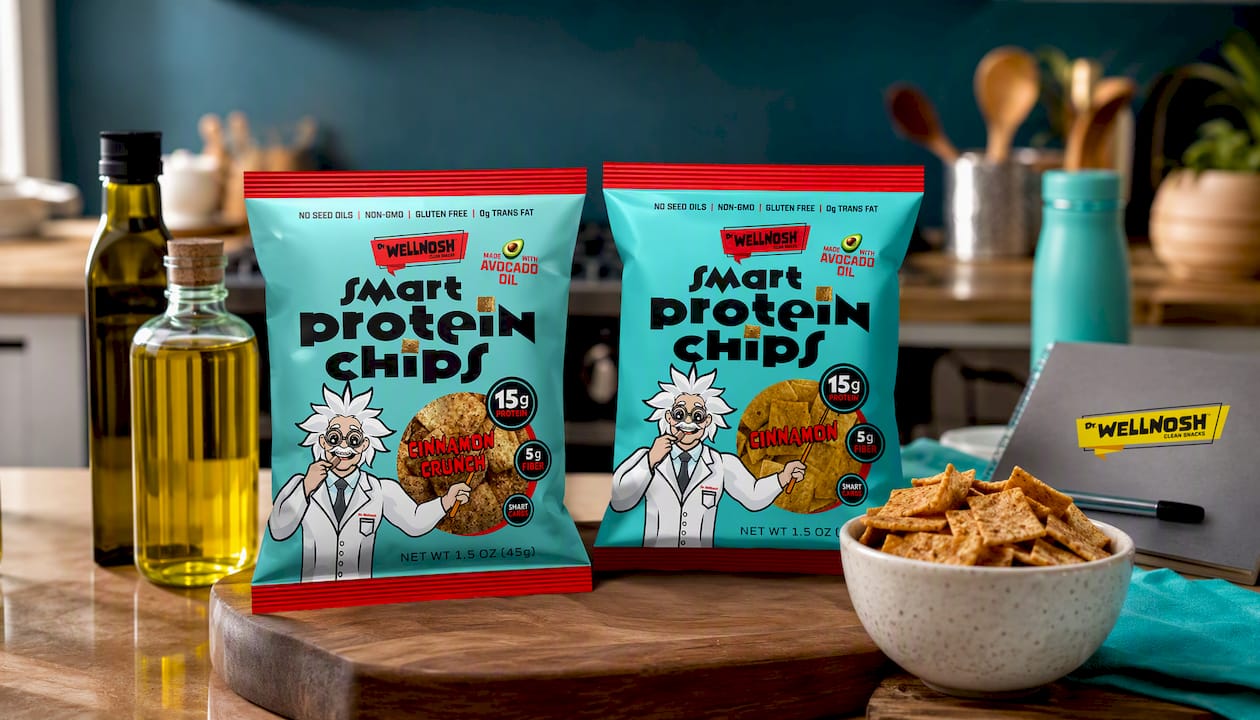
For anyone who just read through smoke points and label terminology to make a smarter cooking oil choice, that same logic applies at snack time. A bag of chips fried in avocado oil, instead of a seed oil blend, is a small but real upgrade if you’re already paying attention to what’s in your pan. Flavors like Nacho Cheese, Chipotle Barbecue, Celtic Salt, and the newly restocked Cinnamon flavor cover both savory and sweet cravings, and the Cinnamon bag is worth grabbing before it sells out again. Order a bag or start a Subscribe & Save plan today and see how a protein chip cooked in avocado oil actually holds up against the usual snack aisle options.
Sources
FAQ
Is avocado oil actually better for you than olive oil?
Not clearly. Both oils share a similar monounsaturated fat profile, but olive oil has far more long-term research behind it through Mediterranean-diet studies, while avocado oil’s health claims rest on thinner population data.
Is there a downside to avocado oil?
Its biggest drawback is the research gap, not its chemistry. It performs well at high heat and shares olive oil’s fatty-acid strengths, but it hasn’t been studied across large populations for decades the way olive oil has.
Which is the healthiest oil overall?
Extra virgin olive oil edges ahead for most cooks because of its polyphenol content and the depth of cardiovascular research behind it, though avocado oil remains a solid choice, especially for high-heat cooking where olive oil’s flavor compounds break down faster.
Why are some cooks switching from olive oil to avocado oil?
Mostly for its higher smoke point and neutral flavor, which suit searing, stir-frying, and baking better than olive oil’s bolder taste and lower heat ceiling. It’s a swap based on cooking method, not a verdict that one oil beats the other across the board.


