

· By Dr. Wellnosh
Students: Hit 20–30g Fast with No Cook High Protein Dorm Snacks
Keep three things stocked: canned tuna or salmon pouches, meat sticks or jerky, and a shelf-stable protein chip like Wellnosh. Add single-serve Greek yogurt if you have fridge space. The rule that makes any of these actually keep you full: pair the protein with fiber or a complex carb, not just protein alone.
TL;DR:
- Pairing protein with fiber or complex carbs significantly improves fullness, as in snacks like yogurt with granola or tuna with whole-grain crackers.
- Shelf-stable protein options such as tuna, jerky, protein chips, and nut butter packets provide between 7 and 22 grams of protein each, suitable for dorm storage.
- Simple no-cook meals like microwave egg muffins, protein oatmeal, or tuna with rice can deliver up to 30 grams of protein using minimal equipment.
- Bulk-buying nuts, jerky, and hard-boiled eggs allows cost-effective portioning into single servings to prevent overeating and save money.
- Combining protein with fiber-rich foods creates satiety, with examples like apple slices with peanut butter or Greek yogurt with berries, to curb hunger longer.
Table of Contents
- Dorm Snacks High Protein Options That Don’t Need a Fridge
- Simple High-Protein Meals You Can Make Without a Kitchen
- How to Stock a Dorm Pantry Without Blowing Your Budget
- The Protein Plus Fiber Formula for Snacks That Actually Fill You Up
- A Note From Dr. Wellnosh on Fitting Protein Into Dorm Life
- A Student-Athlete’s Snack Rotation for Long Practice Days
- Keep Wellnosh Chips in Your Dorm Snack Rotation
- Sources
- FAQ
Dorm Snacks High Protein Options That Don’t Need a Fridge
Shelf-stable snacks are the backbone of any dorm setup, mostly because you don’t have to worry about a mini-fridge dying on you the week before finals. Here’s what to actually buy, with protein counts so you know what you’re getting.
- Canned or pouch tuna and salmon: around 18 to 22 grams of protein, and a standard can delivers close to 22 grams. Pair with whole-grain crackers.
- Jerky and meat sticks: roughly 9 to 12 grams per serving, no prep required, and they survive a backpack for days.
- Single-serve nut butter packets: 7 to 8 grams per 2-tablespoon packet. Great with an apple or banana for the fiber side of the equation.
- Roasted chickpeas or edamame snack packs: 6 to 10 grams, plus fiber built right in.
- Mixed nuts or trail mix: 5 to 8 grams, but portion them. A 1-ounce baggie keeps you from mindlessly eating the whole bag during a study session.
- Protein chips: Protein chips contain around 15 grams of plant protein per bag, require no refrigeration, and hold up fine at the bottom of a gym bag.
- Protein bars: useful in a pinch, but check the label first.
Protein Callout: A can of tuna, a Wellnosh chip bag, and a handful of jerky can each anchor a snack on their own. Combined with a piece of fruit or crackers, you’re looking at 20 to 30 grams of protein without touching a stove or a fridge.
On bars specifically, plenty of them are candy with a protein label slapped on; for guidance on comparing protein bar nutrition labels and avoiding candy-like bars, check out the best protein bars in Singapore for taste and nutrition guide. Dietitians flag high added sugar as the main issue, so read the nutrition panel before you buy a whole box. If a bar’s first three ingredients read like a dessert recipe, put it back. For a rundown on other quick no-cook builds, Wellnosh’s guide to clean no-cook snacks covers several worth trying.
Simple High-Protein Meals You Can Make Without a Kitchen
You don’t need a stove to hit real protein numbers. A microwave, a kettle, and a mini-fridge cover almost everything on this list.
- Microwave egg muffins. Batch-cook a dozen in a communal kitchen or with a microwave egg cooker, then store portions in your mini-fridge and reheat for 60 to 90 seconds. Two muffins offer a moderate protein amount.
- Protein oatmeal. Microwave instant oats, stir in a scoop of protein powder, and top with peanut butter. You’ll land around 20 to 25 grams.
- Tuna or chicken pouches with a rice pouch. Heat both, combine, and you’ve got a real meal at roughly 25 to 30 grams of protein in under three minutes.
- Greek yogurt parfait. Layer yogurt with granola and berries for 15 or more grams of protein with almost no effort.
- Cottage cheese bowl. Half a cup delivers over 10 grams on its own; add fruit or a drizzle of honey and you’ve got dessert that doubles as recovery food.
- Tofu or edamame with frozen rice. Microwave both together for a vegetarian meal that still clears 15 to 20 grams of protein.
Leftovers from any of these keep for two to three days in a mini-fridge. Label the container with the date if you’re prone to forgetting what’s actually in there.
How to Stock a Dorm Pantry Without Blowing Your Budget
Your mini-fridge has room for maybe three or four perishables at once, so be selective. Rotate single-serve yogurt, cottage cheese, and hard-boiled eggs, and always keep dates visible so nothing goes forgotten in the back.
- Buy shelf-stable proteins in multi-packs, then portion nuts, jerky, or chips into single servings so you’re not tempted to eat a whole bag in one sitting.
- Hard-boiled eggs cost pennies and deliver about 6 grams of protein each, making them one of the cheapest options on this list.
- Buy nuts, seeds, and jerky in bulk when you can, since per-ounce pricing drops fast compared to single-serve bags.
- Keep an airtight container for anything you portion yourself. Stale trail mix is a real problem in a dorm room with poor air circulation.
Pro Tip: Do a Sunday portioning session. Thirty minutes with baggies and a container turns a week’s worth of snacks into grab-and-go servings, so you’re never deciding what to eat at 11 p.m. with a chemistry exam tomorrow.
The Protein Plus Fiber Formula for Snacks That Actually Fill You Up
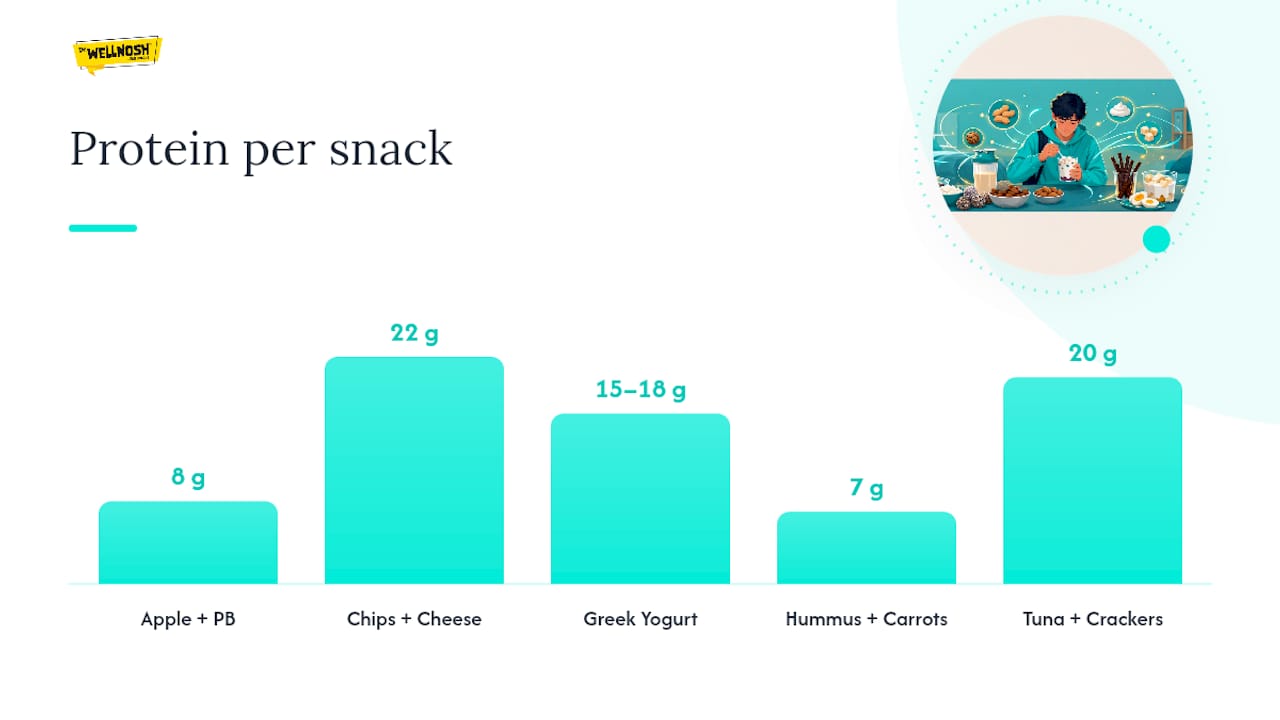
Protein slows digestion, and fiber adds bulk that keeps your stomach signaling “full” longer. That combination is why pairing protein with fiber curbs hunger far more effectively than eating either alone, according to Cleveland Clinic’s guidance on satiety-focused snacking.
The formula is simple: one protein source, one fiber or complex-carb source, and an optional healthy fat if you want more staying power.
- Apple slices + peanut butter packet: about 8 grams protein, 5 grams fiber.
- Wellnosh chips + string cheese: about 22 grams protein combined, minimal fiber but strong staying power from the fat and protein together.
- Greek yogurt + granola + berries: 15 to 18 grams protein, 3 to 4 grams fiber.
- Hummus + baby carrots: 7 grams protein, 6 grams fiber, good for a study-session snack that won’t crash your energy.
- Tuna pouch + whole-grain crackers: 20 grams protein, 3 grams fiber, ideal after a practice when you need something fast.
For more full-day satiety combos, it helps to rotate a few of these so you’re not eating the same thing every afternoon.
A Note From Dr. Wellnosh on Fitting Protein Into Dorm Life
. Read more from Dr. Wellnosh’s ongoing coverage on what actually makes a snack dorm-friendly versus just marketed that way.
These protein chips carry 15 grams of plant protein per bag, are cooked in avocado oil with no added sugar and no seed oils. They come in Nacho Cheese, Celtic Salt, Chipotle Barbecue, and Cinnamon, plus a Variety Pack, and every bag sits fine in a backpack or desk drawer without refrigeration.
… Pair a bag with a piece of fruit or a yogurt cup, or drop one into a study kit next to your laptop charger, since it’s the kind of snack that solves the “I have twenty minutes between classes” problem directly.
— Dr. Wellnosh
A Student-Athlete’s Snack Rotation for Long Practice Days
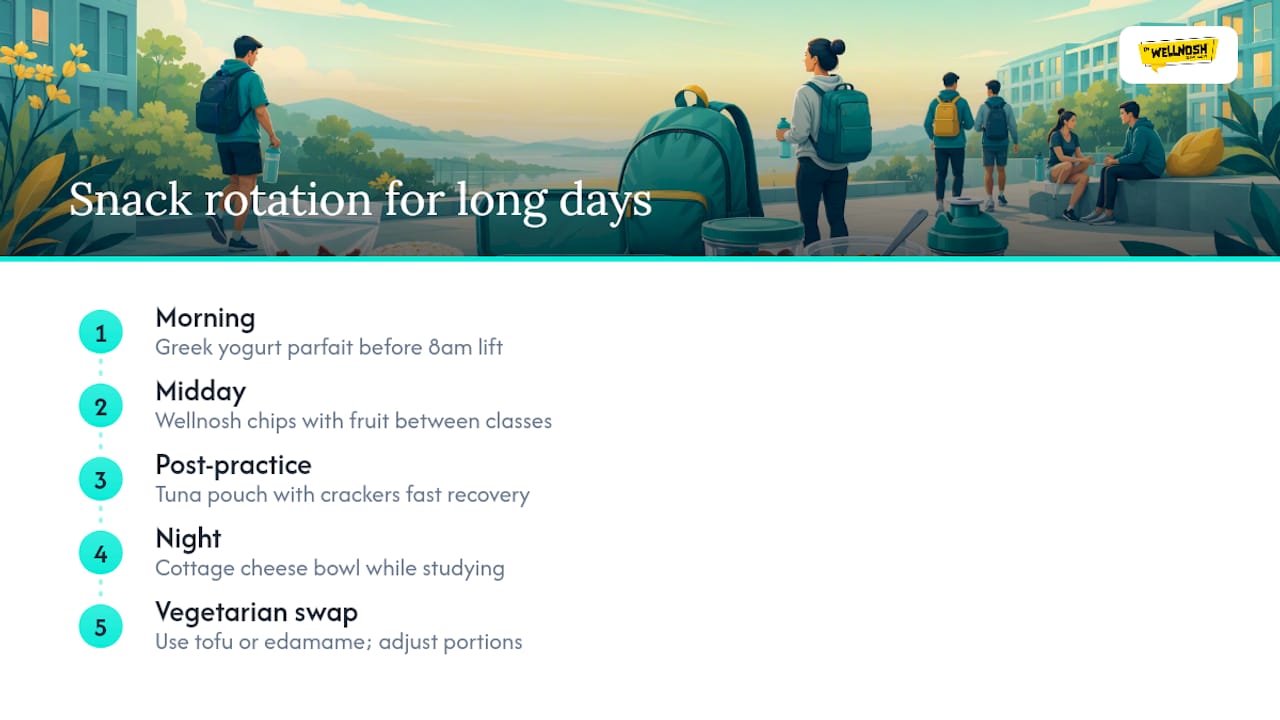
Morning: Greek yogurt parfait before an 8 a.m. lift. Midday: Wellnosh chips with fruit between classes. Post-practice: tuna pouch with crackers for fast recovery. Night: cottage cheese bowl while studying. Swap dairy for tofu or edamame if you’re vegetarian or vegan, and adjust portions up or down based on how hard your day actually was.
Keep Wellnosh Chips in Your Dorm Snack Rotation
A bag of these protein chips solves the exact problem this article has been walking through: something shelf-stable, genuinely high in protein, and satisfying enough that you’re not back in the vending machine line an hour later. Each bag delivers 15 grams of plant protein, is cooked in avocado oil instead of seed oils, with no added sugar and a short, pronounceable ingredient list.
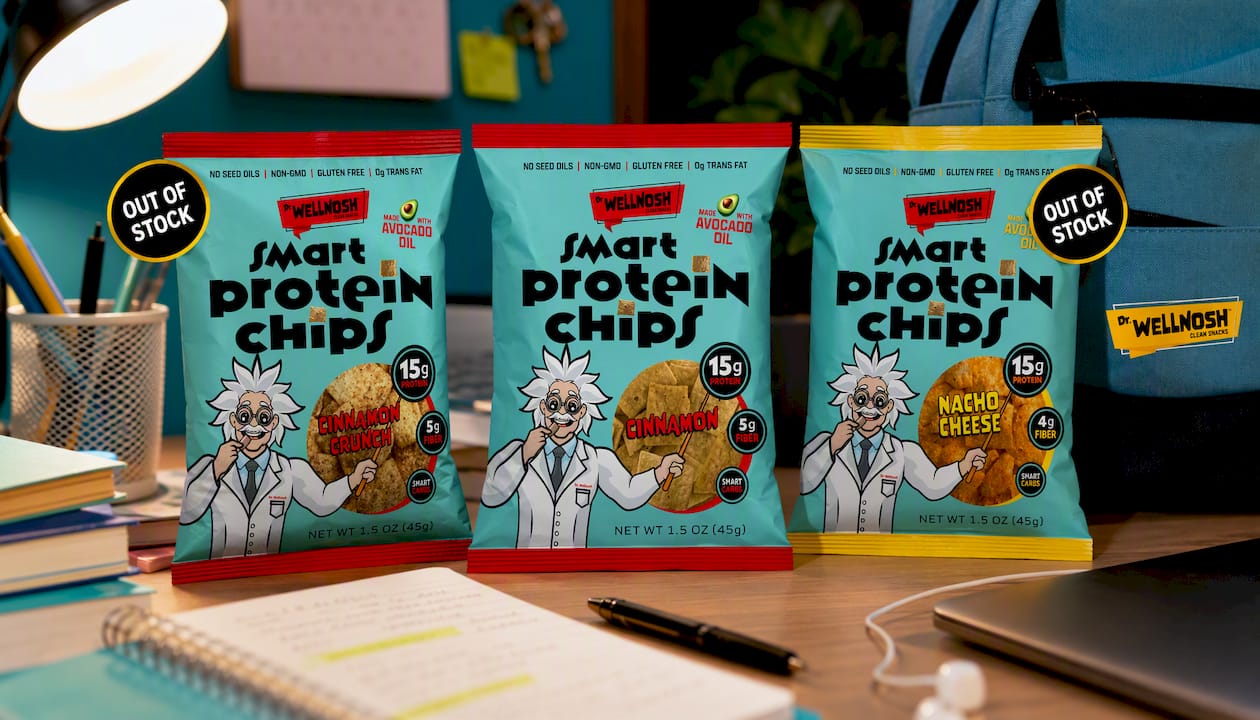
Pair a bag with string cheese, fruit, or a yogurt cup for a full protein-and-fiber snack, or toss one straight into a backpack for the walk to class. The lineup includes Nacho Cheese and Cinnamon, including the Cinnamon variant listing, alongside Celtic Salt, Chipotle Barbecue, and a Variety Pack for anyone who wants to try all four before committing. A Subscribe & Save option is available if you’d rather not think about restocking every few weeks. Head to the Wellnosh product lineup and pick a flavor to start your next order.
Sources
- 9 High-Protein Snacks To Keep You Full
- 30 High Protein Snacks That Are Healthy and Portable
- Cheap Protein Snacks You Can Keep in Your Dorm (52)
FAQ
What are the best snacks to bring to college dorms?
Shelf-stable, single-serve items work best: canned tuna, jerky, nut butter packets, protein chips, and trail mix. All survive without refrigeration and travel well in a backpack.
What are some good high-protein snacks for classrooms?
Anything mess-free and quiet to eat, like meat sticks, a bag of protein chips, or a small container of nuts, works well between classes without drawing attention.
What are some examples of high-protein dorm meals?
Microwave egg muffins, tuna pouches with rice, and Greek yogurt parfaits all deliver 15 to 30 grams of protein using just a microwave or no heat at all.
What snack is very high in protein?
Canned tuna is one of the highest, at around 22 grams per can, with Wellnosh protein chips close behind at 15 grams per shelf-stable bag.


