

· By Dr. Wellnosh
15g Post Workout Chips: When Wellnosh Actually Aids Recovery
Yes, post workout chips can work as legitimate recovery fuel, but only if the bag delivers close to 15 to 20 grams of protein or you pair it with something that closes the gap. Eat within roughly 30 to 60 minutes of finishing your session, though that window is more forgiving than most people assume. The sections below cover exactly how to pair, read labels, and choose smart.
TL;DR:
- A single bag of Wellnosh protein chips provides 15 grams of protein, meeting the lower end of the 15 to 20 grams recommended for post-workout recovery.
- Heavier or longer workouts may require pairing the chips with an additional 10 to 15 grams of protein, such as Greek yogurt or protein powder, to reach 25 to 30 grams.
- Chips are most effective when consumed within 30 to 60 minutes after exercising, especially when paired with carbohydrates or more protein for glycogen and muscle repair.
- Reading labels is crucial, avoiding products with more than 300 milligrams of sodium, over 2 grams of added sugar, or lengthy ingredient lists.
- For optimal recovery, pair chips with whole foods like yogurt, fruit, or cottage cheese rather than relying solely on snack foods, especially when time and refrigeration are limited.
Table of Contents
- Why Wellnosh Plant-Based Protein Chips Fit a Post-Workout Routine
- How to Use Protein Chips After a Workout for Best Results
- What Protein Chips Give You (and What They Don’t)
- How to Read a Chip Bag Label for Post-Workout Use
- Six Pairings That Turn a Bag of Chips Into a Full Recovery Snack
- When Convenience Chips Are the Right Call, and When They’re Not
- Grab Your Wellnosh Chips and Skip the Vending Machine Guesswork
- Sources
Why Wellnosh Plant-Based Protein Chips Fit a Post-Workout Routine
Most bags of chips sitting in a vending machine are dead weight nutritionally: fried in seed oil, seasoned with more sodium than sense, and offering maybe 2 grams of protein if you’re lucky. Wellnosh built its product to solve a different problem: how do you get a crunchy, satisfying snack into a gym bag that actually contributes to recovery instead of just filling time until your next real meal?
Each bag delivers about fifteen grams of fava bean protein, cooked in avocado oil instead of the seed oils that dominate the snack aisle. The chips are non-GMO, gluten free, low carb, and carry no added sugar, which matters more than people realize when you’re trying to hit a protein target without also loading up on empty carbs your body doesn’t need at that moment.
That 15 gram baseline lands right at the low end of the 15 to 20 gram post-workout protein target that dietitians recommend, which means a single bag can function as a complete snack on its own for lighter training days, or as the base you build on after heavier sessions. If you’re curious how the format stacks up against other high-protein snacks entirely, Wellnosh’s comparison of chip alternatives walks through the tradeoffs in more detail.
A few scenarios where this format earns its place in your routine:
- The gym bag stash. No refrigeration needed, no melting, no leaking containers.
- Travel days. Airports and hotel gyms rarely stock anything better than a vending machine.
- The gap between workout and dinner. A crunchy 15 gram snack curbs the urge to overeat two hours later.
- Plant-based recovery. Fava bean protein gives vegan and vegetarian lifters a whole-food-adjacent option instead of another whey-based bar.
Flavors currently include Nacho Cheese, Chipotle Barbecue, and the Variety Pack for anyone who hasn’t settled on a favorite yet. Cinnamon and Celtic Salt are both temporarily out of stock as demand has outpaced current batches.
Pro Tip: Keep two bags in your gym bag at all times. One for right after training, one as backup for the day you forget to meal prep entirely.
How to Use Protein Chips After a Workout for Best Results
Getting the timing and portioning right takes about ten seconds of math, not a nutrition degree. Here’s the actual sequence to run through.
- Check the bag’s protein count. Wellnosh sits at 15 grams per bag, which covers the low end of the recommended range on its own.
- Decide if you need more. If you lifted heavy, ran long, or you’re a bigger athlete, you’re likely aiming closer to 25 to 30 grams, not just 15.
- Choose a pairing based on what’s missing. Need more protein? Add Greek yogurt or a scoop of protein powder. Need more carbs for glycogen replenishment? Add fruit or a small serving of rice cakes.
- Pack it the night before. Chips don’t need cold storage, so pairing items like a small yogurt cup or a banana are the only things that need planning ahead.
Concrete pairing math looks like this: a Wellnosh bag (15 grams protein) plus a half cup of Greek yogurt (roughly 10 to 12 grams) lands you around 25 to 27 grams total, comfortably inside the 10 to 25 gram range dietitians commonly recommend for post-workout snacks. Add a banana to that combo and you’ve covered both protein and the carbohydrate side dietitians emphasize for glycogen replenishment.
For gym bag and travel situations specifically, low-prep options matter more than perfect ratios:
- Single-serve Greek yogurt cups that don’t require refrigeration for a few hours
- Shelf-stable protein powder packets you can mix with water on the spot
- Dried fruit or a banana for fast carbs with zero prep
- A second bag of chips if you’re training heavy and need the extra grams
Athletes who lift heavier or train for longer sessions should lean toward the higher end of that range, closer to 25 to 30 grams, rather than assuming one bag covers everything. Timing itself is more flexible than older advice suggested: muscle protein synthesis stays elevated for a couple of hours post-exercise, so missing the 30-minute mark by a bit won’t undo your session.
What Protein Chips Give You (and What They Don’t)
Convenience has a cost, and it’s worth naming plainly: protein chips are almost always going to lean on isolated or concentrated protein sources rather than the broader nutrient package you get from a whole egg or a cup of Greek yogurt. That’s not a knock on the format. It’s just the honest tradeoff.
Whole foods carry fiber, micronutrients, and a wider amino acid spread that processed convenience snacks typically don’t match. A cup of Greek yogurt isn’t just protein. It’s calcium, probiotics, and B12 riding along for free. A bag of chips, however well formulated, is protein and crunch, full stop.
Here’s the practical breakdown:
What chips deliver well:
- Zero prep, zero refrigeration, zero cleanup
- Consistent, labeled protein counts you can plan around
- A satisfying, crunchy format that actually curbs snacking urges better than a shake
Where they fall short:
- Lower micronutrient density than whole-food sources
- Often rely on protein isolates or concentrates rather than intact whole-food protein
- Plant-based protein sources like fava bean may need pairing with a complementary source to fully round out leucine content, a key trigger for muscle protein synthesis
By the numbers: Dietitians generally recommend 15 to 20 grams of protein paired with carbohydrates within about 30 to 60 minutes of training to support muscle repair and glycogen replenishment. That range is the target to build toward, whether you get there from one food or a combination of two.
The honest takeaway: chips are a supplement to a good recovery plan, not a replacement for eating real food most of the time. Use them when convenience is the deciding factor. Lean on whole foods when you have the time and the fridge access to make them work. Readers curious about how this plays out for plant-based athletes specifically can check Wellnosh’s breakdown of plant protein snacks for athletes for more context on where fava bean protein fits into a broader training diet.
How to Read a Chip Bag Label for Post-Workout Use
Not all “protein chips” are created equal, and the marketing on the front of the bag rarely tells the full story. The nutrition panel on the back does.
Start with protein per serving versus protein per bag. Some brands list an impressive gram count, then reveal the bag contains two and a half servings, meaning you’d need to eat the whole thing to hit that number. Wellnosh lists 15 grams per bag, not per fraction of a bag, which removes the guesswork.
From there, run down this checklist every time you’re evaluating a new bag:
- Protein grams: aim for at least 10 to 15 grams per bag as a floor
- Calories per serving: check whether the calorie count matches the portion you’ll actually eat
- Added sugar: zero is ideal; some “protein” snacks sneak in more sugar than a candy bar
- Saturated fat and sodium: high numbers on either front usually mean the chip is compensating for flavor rather than nutrition
- Oil type: avocado oil and olive oil are far preferable to soybean, canola, or other seed oils for inflammation and overall fat quality
Red flags: more than 300 milligrams of sodium per serving, added sugar over 2 grams, or an ingredient list longer than a paragraph.
Green flags: a short ingredient list, a named oil you recognize, and a protein source you could point to on a farm.
Pro Tip: If you can’t pronounce half the ingredients, that’s usually a decent sign the chip is more filler than fuel.
Six Pairings That Turn a Bag of Chips Into a Full Recovery Snack
Reaching a real 15 to 30 gram protein target doesn’t require cooking anything. It just requires knowing which pairing closes the gap fastest.
- Chips alone (15g protein). Fine as-is after a lighter session like a moderate cardio day or a short lifting circuit.
- Chips + half cup Greek yogurt (about 25 to 27g total). The yogurt adds carbs and calcium on top of the protein bump.
- Chips + a banana (roughly 16 to 17g protein, plus fast carbs). Best for glycogen replenishment after longer endurance sessions.
- Chips + hummus + banana (vegan combo, around 18 to 20g protein). Hummus adds a small protein boost while keeping the whole snack plant-based.
- Chips + a scoop of protein powder mixed with water (30g or more). The move for heavier lifters chasing the higher end of the range.
- Chips + cottage cheese cup (around 25 to 28g protein). A slower-digesting protein that pairs well if your next meal is a couple hours out.
Each of these travels well in a gym bag except the yogurt and cottage cheese options, which need a small cooler pack if you’re not eating within an hour or two. For more combinations that specifically target the 20 to 30 gram range, Wellnosh’s guide to fast gym snacks breaks down several more.
When Convenience Chips Are the Right Call, and When They’re Not
Convenience snacks get a bad reputation among people who treat nutrition as a purity contest, and that reputation isn’t entirely fair. A bag of well-formulated protein chips solves a real problem: getting usable protein into your body when a full meal isn’t an option.
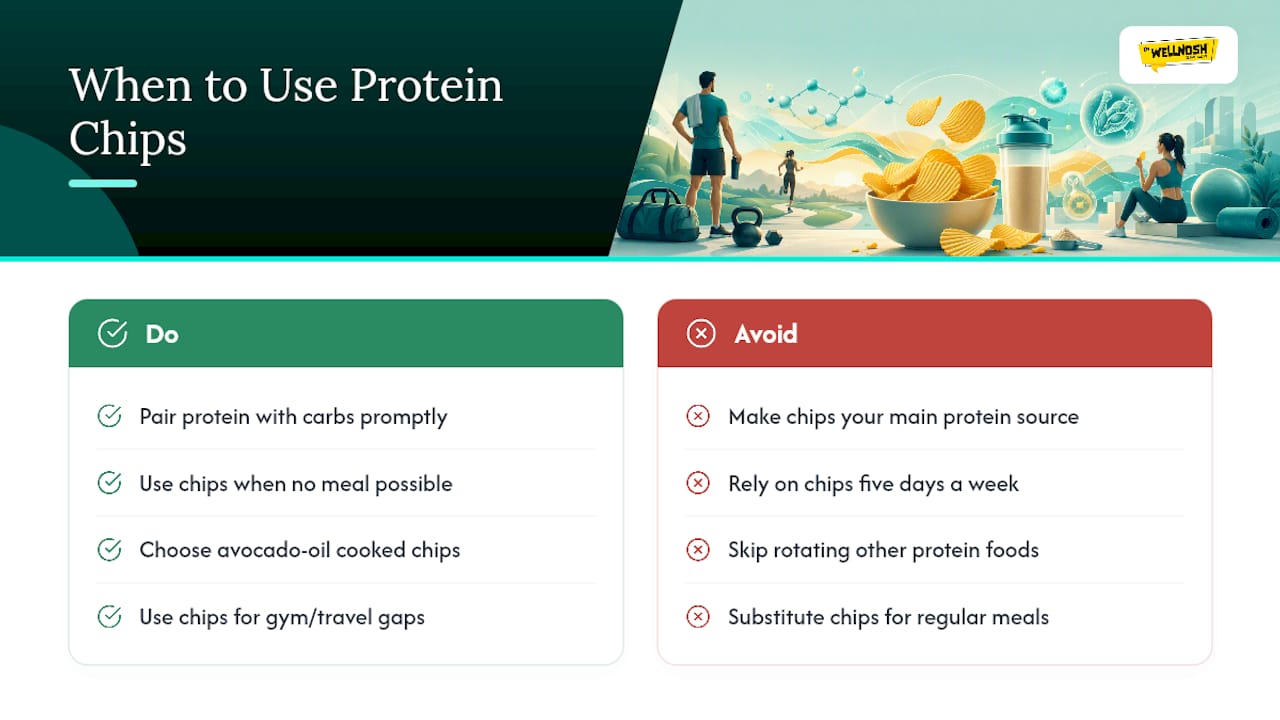
The rule that matters more than any specific product is this one: pair protein with carbohydrates after training, and do it within a few hours if possible. Everything else, including brand choice, flavor, and exact gram counts, is secondary to that core habit. Well-formulated protein chips cooked in avocado oil instead of seed oils are a smart default for the days when a real meal isn’t within reach.
Where I’d push back on the convenience-first crowd is here: don’t let a bag of chips become your only source of post-workout protein five days a week. Rotate in yogurt, eggs, and a real meal whenever your schedule allows it. Treat the chips as the tool for the gym bag, the travel day, and the gap between sessions and dinner, not as a substitute for eating well the rest of the time.
— Dr. Wellnosh
Grab Your Wellnosh Chips and Skip the Vending Machine Guesswork
Compare that to a $2 bag of fried potato chips from a vending machine, and the choice isn’t close: Wellnosh gives you around fifteen grams of protein per bag instead of almost none, cooked in avocado oil instead of whatever seed oil was cheapest that quarter.
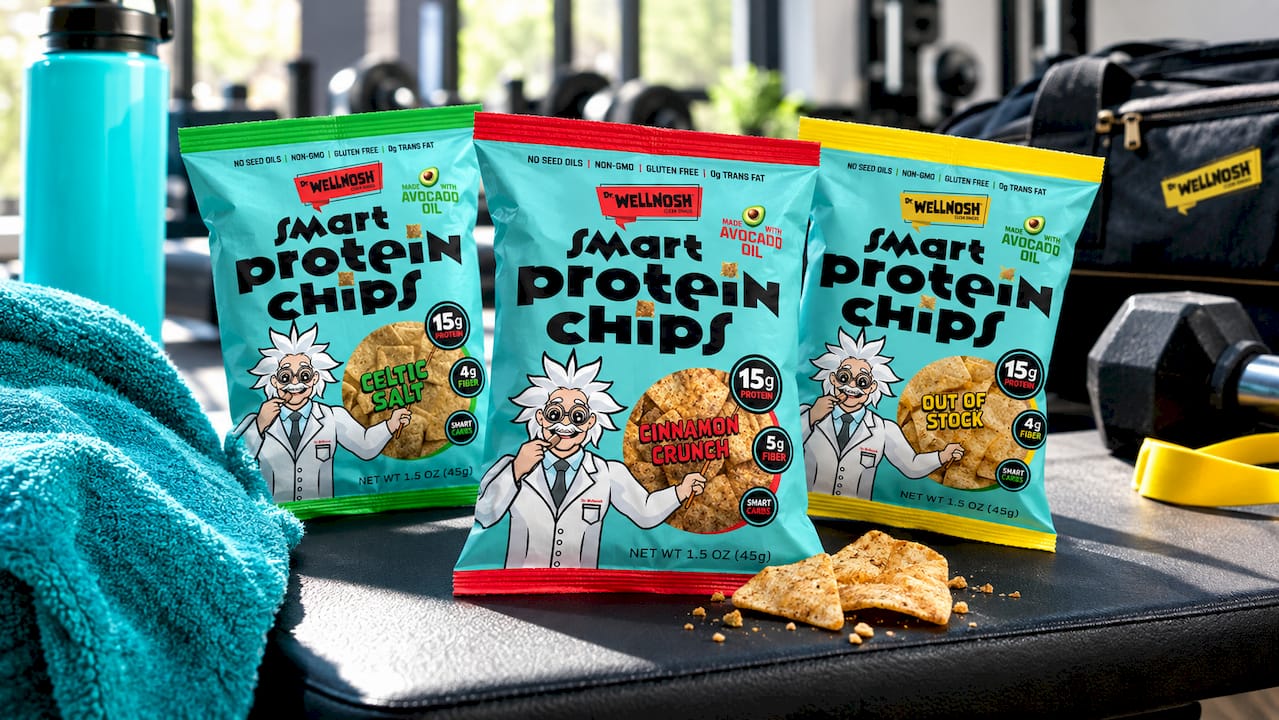
Nacho Cheese and the Variety Pack are both in stock and ready to ship, and Chipotle Barbecue rounds out the current lineup for anyone who wants heat with their crunch. Cinnamon is currently out of stock, and Celtic Salt is temporarily unavailable too, both due to demand outpacing production. If you snack regularly after training, the Subscribe & Save option locks in a recurring delivery so you’re never digging through a vending machine as a backup plan. Head over to the Wellnosh product page for Cinnamon to check restock timing, or grab an in-stock flavor now and start building your post-workout routine around a snack that actually contributes to recovery instead of just filling the gap.
Sources
The protein targets, timing windows, and pairing guidance in this article draw on the following sources:
- Postexercise recovery: proper nutrition is key to refuel, rehydrate and rebuild after strenuous workouts — Today’s Dietitian
- The Ideal Post-Workout Snack to Recover and Build Muscle, According to a Dietitian — TODAY
- 30 healthy snack ideas from registered dietitians — American Institute for Cancer Research
- Dietitians share the 5 best high-protein post-workout snacks — Health
This article is general information, not a substitute for advice from a qualified doctor. Consult a qualified healthcare professional about your own circumstances before acting on anything here.


