

· By Dr. Wellnosh
What Causes Weight Loss Plateaus: Snacking Habits Explained
A weight loss plateau is defined as the point where your calorie burn matches your calorie intake, stopping further fat loss despite no obvious change in behavior. Metabolic adaptation is the primary biological driver, but snacking habits are the most common behavioral reason the calorie deficit quietly disappears. Understanding what causes weight loss plateaus and snacking’s role in that process is the fastest way to break through a stall. The fix rarely requires extreme dieting. It requires knowing exactly where your calories are actually going.
What causes weight loss plateaus: how metabolism slows the process
Metabolic adaptation is the body’s automatic response to weight loss. As your body gets smaller, it burns fewer calories at rest. That means the calorie intake that once created a deficit eventually becomes maintenance, and weight loss stops.
Several biological changes drive this process:
- Reduced resting energy expenditure. A lighter body requires less energy to function. The calorie target that worked at 200 pounds does not work at 175 pounds.
- Hormonal shifts. Weight loss affects leptin and ghrelin, the hormones that control fullness and hunger. Leptin drops, reducing the signal that you are full. Ghrelin rises, increasing the signal that you are hungry. The result is stronger cravings with less natural resistance to them.
- Muscle loss. Losing muscle lowers your metabolic rate further. Adequate protein intake and resistance training are the two most effective tools for preserving muscle during a calorie deficit.
These changes are not signs of failure. They are normal physiological adaptations. The problem is that most people do not adjust their calorie targets or food choices to account for them.
Pro Tip: Recalculate your calorie needs every 10–15 pounds of weight lost. Your body’s energy requirements change as your weight drops, and your targets should change with them.
How snacking habits unknowingly stall your weight loss
Calorie creep is the most common reason a weight loss plateau happens without any obvious change in eating behavior. Small, frequent snacks and overlooked calories from cooking oils, sauces, and condiments can push intake above a deficit without you noticing.
The most common sources of hidden snack calories include:
- Tasting during cooking. A spoonful of pasta sauce, a bite of cheese, a handful of nuts while prepping dinner. These add up to hundreds of calories per week.
- Snack accompaniments. Dipping vegetables in hummus, adding peanut butter to an apple, or drizzling olive oil on a salad all add significant calories to what looks like a light snack.
- Habitual snacking. Eating out of boredom, stress, or routine rather than hunger is one of the most common causes of weight loss stalls. The snack itself may be healthy, but the frequency is the problem.
- Liquid calories. Coffee drinks, smoothies, protein shakes, and flavored waters often carry more calories than people realize.
Behavioral drift, meaning gradual, unnoticed increases in portion size and snack frequency, is a primary target when breaking through a plateau. The fix is not cutting out snacks entirely. The fix is seeing them clearly.
Pro Tip: Track all intake including snacks, sauces, and cooking oils for 1–2 weeks. Most people are surprised by what they find. Apps like MyFitnessPal or Cronometer make this straightforward.

What snack choices actually support continued weight loss?
Snacking fits into a weight loss plan when calorie budgets are respected and high-satiety choices are selected. The goal is to manage hunger between meals without adding surplus calories.
High-satiety snacks that work
The most effective snacks for weight loss share three traits: high protein, high fiber, and low calorie density. Greek yogurt with berries delivers protein and fiber together. Raw vegetables like carrots, celery, and bell peppers are high in volume and nearly calorie-free. Fiber and protein-rich snacks reduce hunger without pushing you over your daily calorie target.
Nuts are nutritious but calorie-dense. A single ounce of almonds contains around 160 calories. Pre-portioning nuts into small containers before snacking prevents the common habit of eating directly from a large bag, which makes portion tracking nearly impossible.
Snack comparison: common choices vs. smarter alternatives
| Common Snack | Calories (approx.) | Smarter Alternative | Calories (approx.) |
|---|---|---|---|
| Regular potato chips (1 oz) | 150 | Wellnosh protein chips (1 bag) | Lower carb, 15g protein |
| Peanut butter on crackers | 300+ | Greek yogurt with berries | 150 |
| Granola bar | 200–250 | Hard-boiled egg + cucumber | 100 |
| Flavored lattes | 250+ | Black coffee or unsweetened tea | 0–5 |
| Handful of mixed nuts (unportioned) | 300+ | Pre-portioned 1 oz serving | 160 |
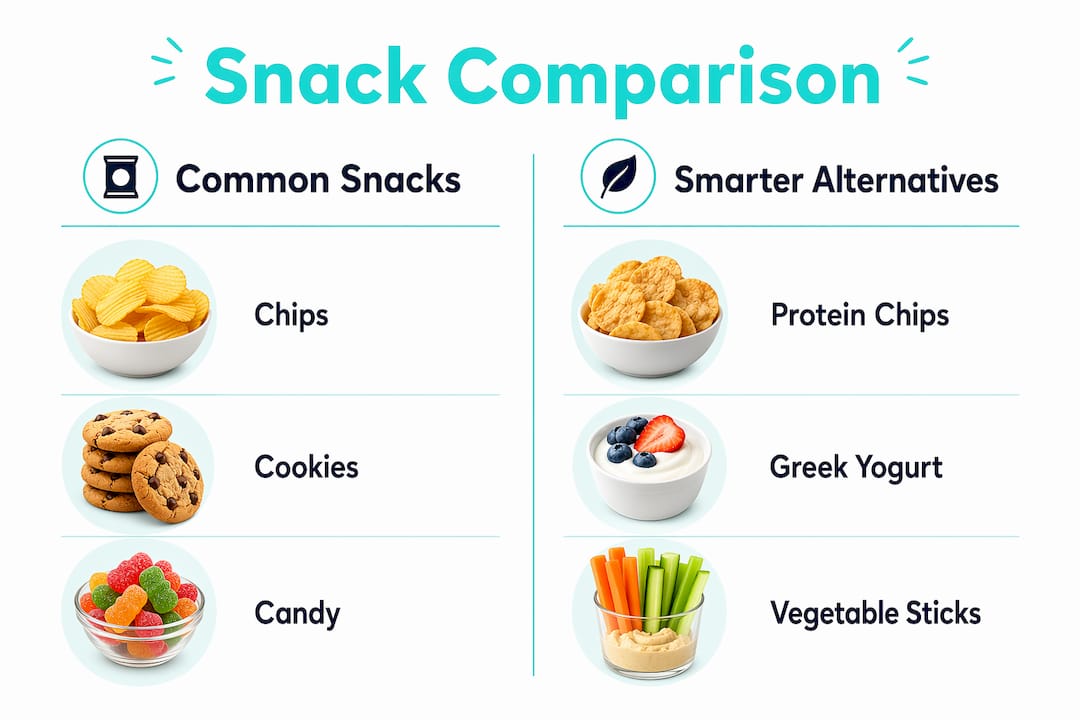
Replacing calorie-dense, low-protein snacks with higher-protein, lower-calorie options reduces total daily intake without requiring you to eat less food by volume. That is the practical definition of snacking for weight loss.
Lifestyle factors that make plateaus worse and cravings stronger
Stress, poor sleep, and hormonal changes are three lifestyle factors that directly increase snacking frequency and make weight loss stalls harder to break.
Chronic stress elevates cortisol, which promotes fat storage, particularly in the abdominal area, and increases cravings for high-calorie comfort foods. Stress eating is not a willpower problem. It is a hormonal response that requires a behavioral strategy, not just discipline.
Sleep deprivation disrupts the same hunger hormones affected by weight loss. Poor sleep raises ghrelin and lowers leptin, creating the same appetite-amplifying effect as metabolic adaptation. People who sleep fewer than seven hours per night consistently report stronger cravings and higher snack intake the following day.
Hormonal changes related to menopause and thyroid dysfunction alter metabolism and appetite in ways that make standard calorie targets less reliable. These conditions require medical evaluation, not just dietary adjustment.
GLP-1 medications like semaglutide slow gastric emptying, which can cause water retention and constipation. These effects can make the scale appear stalled even when fat loss is continuing. People using GLP-1 agonists should not interpret a scale plateau as a true fat loss plateau without accounting for these factors.
Pro Tip: Prioritize seven to nine hours of sleep per night as a weight loss strategy, not just a health habit. Sleep directly controls the hormones that drive snacking behavior.
Key Takeaways
Weight loss plateaus are caused by metabolic adaptation combined with behavioral factors, and snacking habits are the most common and fixable behavioral driver of stalled progress.
| Point | Details |
|---|---|
| Metabolism slows with weight loss | Recalculate calorie needs every 10–15 pounds to stay in a real deficit. |
| Snack calories accumulate unnoticed | Track all food including sauces and cooking oils for 1–2 weeks to find hidden calories. |
| Hormones increase hunger during plateaus | Choose high-protein, high-fiber snacks to counter rising ghrelin and falling leptin. |
| Lifestyle factors amplify cravings | Manage stress and prioritize sleep to reduce cortisol-driven snacking. |
| Smart snack swaps reduce intake | Replacing calorie-dense snacks with protein-rich alternatives lowers daily calories without eating less volume. |
The uncomfortable truth about plateaus and snacking
Plateaus are not failures. They are the body doing exactly what it evolved to do: adapt to a lower calorie environment and protect its energy stores. Understanding that removes the frustration and points directly to the solution.
The most common thing I see is people who are genuinely eating well but have stopped tracking the small stuff. A tablespoon of olive oil here, a handful of trail mix there, a bite of something while cooking. None of those feel like eating. But they are. And they add up to the exact number of calories needed to close a deficit.
The strategies that actually work are not dramatic. They are consistent. Log everything for two weeks. Swap one or two high-calorie snacks for protein-rich alternatives. Adjust your calorie target to reflect your current weight, not the weight you started at. Get your sleep. These are not exciting interventions, but they are the ones that break plateaus without making you miserable.
Extreme restriction almost always backfires. It increases cortisol, accelerates muscle loss, and makes hunger hormones worse. Gradual, specific adjustments to snack quality and tracking habits produce more durable results than cutting calories aggressively.
The goal is not to fear snacking. The goal is to snack with intention.
— Advantage
Wellnosh protein chips: a smarter snack for weight loss plateaus
Replacing a high-calorie, low-protein snack with a better option is one of the most direct strategies to break a weight loss stall. Wellnosh Smart Protein Chips deliver 15g of fava bean protein per bag, cooked in avocado oil, with no seed oils, no artificial additives, and no added sugar.
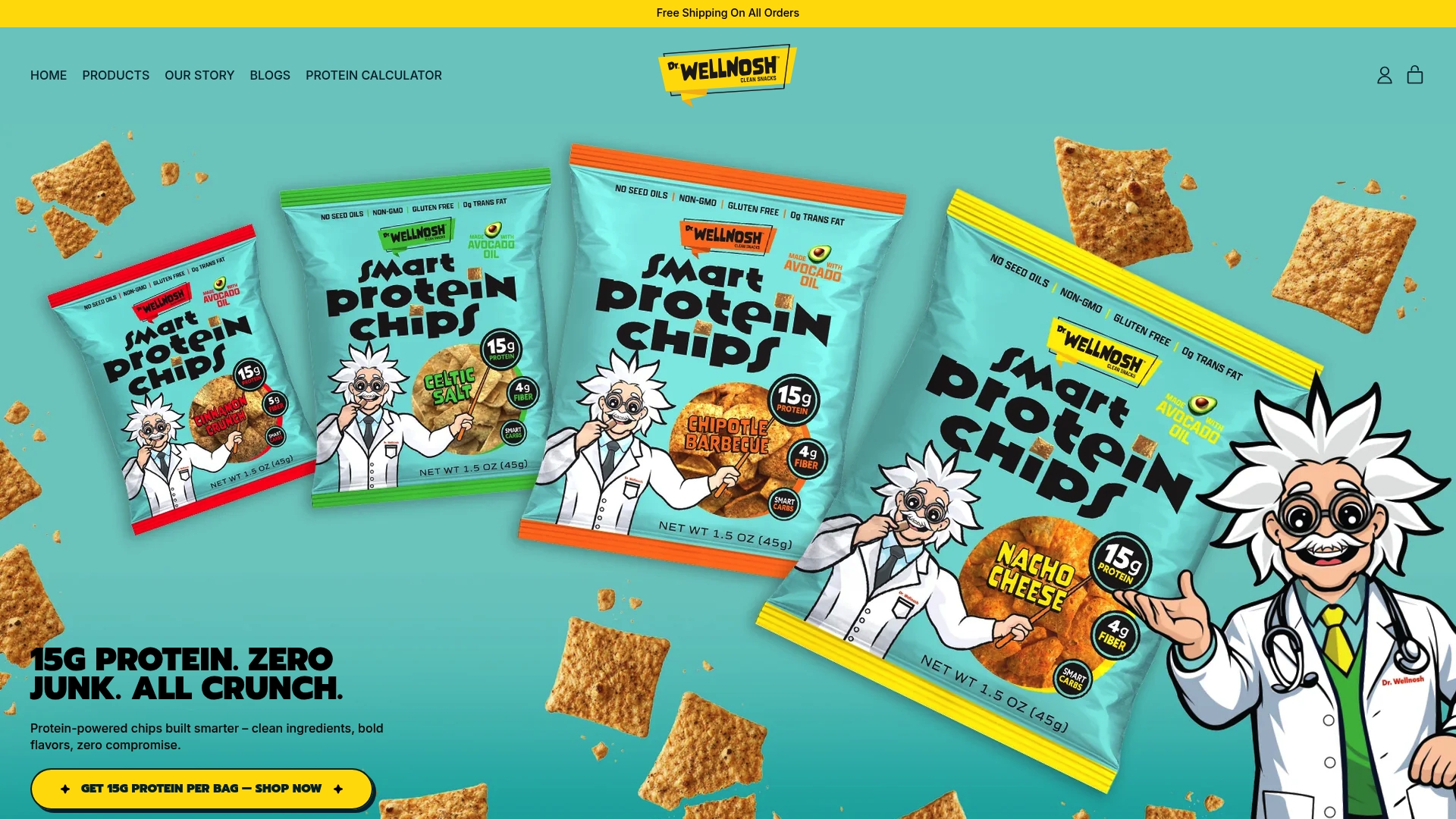
Each bag is non-GMO, gluten free, and low carb, making it a genuinely portion-controlled option that satisfies hunger without pushing you over your calorie target. Flavors like Chipotle Barbecue and Celtic Salt give you the crunch and satisfaction of a real snack without the calorie cost of conventional chips. For people navigating a plateau, swapping out a typical snack for a bag of Wellnosh protein chips is a concrete, immediate change that supports both satiety and calorie control.
FAQ
What is a weight loss plateau?
A weight loss plateau occurs when your calorie intake matches your calorie burn, stopping further fat loss. Metabolic adaptation is the primary cause, as a smaller body requires fewer calories to function.
How does snacking cause a weight loss stall?
Frequent small snacks, cooking tastes, and calorie-dense condiments add unnoticed calories that close the calorie deficit. Tracking all snack intake for 1–2 weeks is the most reliable way to identify the source of the stall.
What snacks are best for breaking a weight loss plateau?
High-protein, high-fiber, low-calorie snacks are the most effective choices. Options like Greek yogurt, raw vegetables, hard-boiled eggs, and protein-rich chips manage hunger without adding surplus calories.
Can stress and poor sleep cause a weight loss plateau?
Yes. Elevated cortisol from stress promotes fat storage and increases cravings. Poor sleep disrupts hunger hormones, raising ghrelin and lowering leptin, which drives increased snacking.
Do GLP-1 medications cause weight loss plateaus?
GLP-1 medications can create the appearance of a plateau through water retention and constipation caused by slowed gastric emptying. Scale weight may stall even when actual fat loss is continuing, so non-scale measures of progress are important.


