

· By Dr. Wellnosh
Protect Your Keto: 3 Homemade Chips and Label Reading Hacks
Some chips fit a ketogenic diet, but typical potato or corn chips do not. Skip the standard bag and reach for pork rinds, cheese crisps, certain protein chips, seaweed snacks, or homemade almond and flax-based chips instead. Whether any of them actually work for you comes down to two things: reading the Nutrition Facts panel correctly and sticking to a realistic portion.
TL;DR:
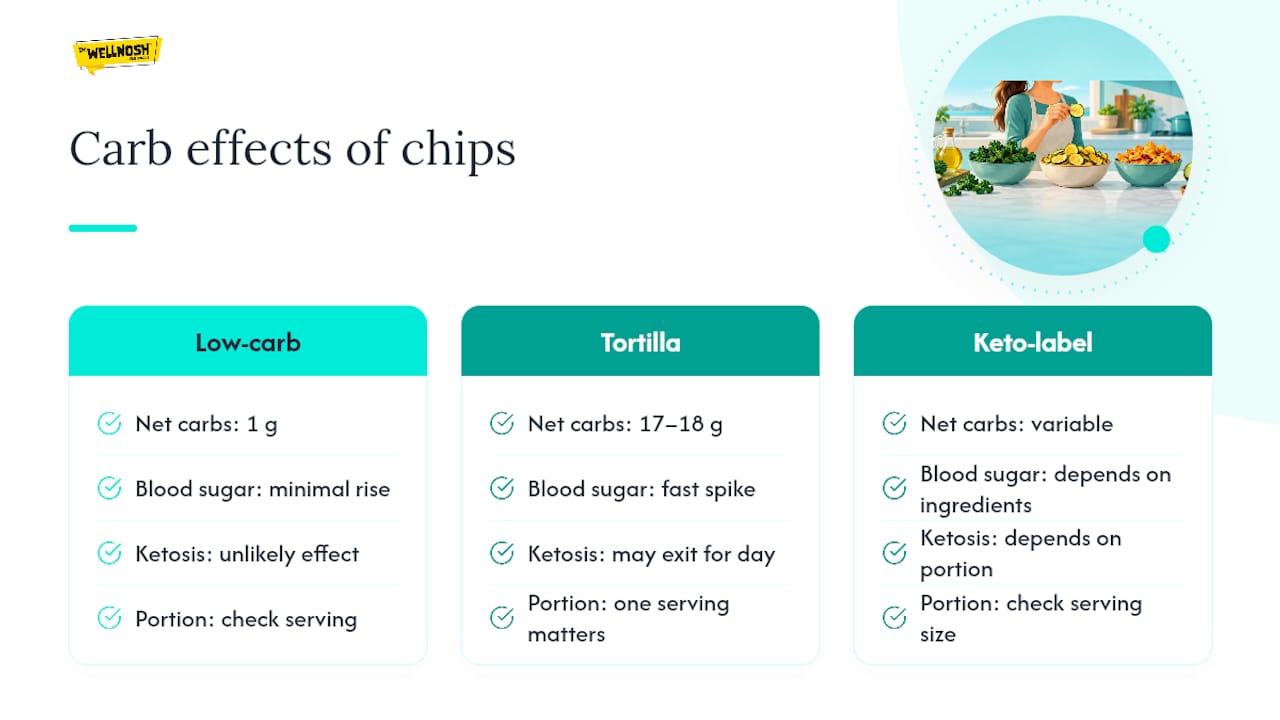
- Most store-bought keto chips like pork rinds and cheese crisps stay below 2 grams net carbs per serving, while traditional tortilla chips can reach 17-18 grams.
- Reading the nutrition label carefully, especially serving size, total carbs, fiber, sugar alcohols, and ingredients, is essential to avoid hidden carbs and fillers.
- Homemade chips from almond flour, cheese, or seasoned pork rinds offer better control over ingredients and carb content, with faster preparation methods available.
- Chips can quickly consume a large portion of daily carb limits, so portion control, pairing with fats or proteins, and recalculating net carbs are crucial for maintaining ketosis.
- “Keto” labeling on products can be misleading; actual carb counts and ingredient quality determine whether a snack fits into a strict ketogenic diet.
Table of Contents
- Are Chips Keto-Friendly? Comparing Your Best Options
- How Do You Check If Store-Bought Chips Are Keto?
- Three Homemade Keto Chip Recipes That Actually Work
- How Many Chips Fit Your Daily Carb Budget?
- Wellnosh: How Our Chips Line Up With Keto Priorities
- Does Eating Chips Affect Ketosis or Blood Sugar?
- What Do People Get Wrong About Chips and Keto?
- A Practical Take on Chips and Keto Adherence
- Where to Find Keto-Friendly Wellnosh Chips
- Sources
- FAQ
Are Chips Keto-Friendly? Comparing Your Best Options
Not all “chips” behave the same way on a ketogenic diet, and the differences come down to what they’re made from. Pork rinds, cheese crisps, protein chips, seaweed snacks, and almond or flax-based chips each hit a different spot on flavor, crunch, and carb count. Understanding those differences up front saves you from grabbing the wrong bag at the store.
Pork rinds are essentially pure fried skin, so they usually land at zero net carbs per serving. They’re the crunchiest, saltiest option and hold up well against thick dips like guacamole, but the texture won’t fool anyone expecting a corn chip.
Cheese crisps (baked or fried rounds of cheddar or parmesan) typically run 0 to 2 grams net carbs per serving. They’re rich and satisfying on their own, though they can turn greasy fast if overbaked, and they don’t scoop dip as well as a sturdier chip.
Protein chips, including fava bean or pea-protein based options, vary more than people expect. Some protein chip labels list around 3 to 5 grams net carbs per serving, so checking the specific product matters more than trusting the “keto-friendly” sticker on the front.
Seaweed snacks are naturally low carb and light, good for a quick crunch, but they won’t stand up to a bowl of salsa.
Almond or flax-based chips land closest to a real tortilla chip in texture, though watch for cassava or tapioca fillers that quietly raise the carb count.
- Best for dipping: cheese crisps, almond-flour chips
- Best for solo snacking: pork rinds, seaweed snacks
- Watch for: added sugar, maltodextrin, and “keto” marketing on high-carb bases
Pro Tip: Toast almond-based chips a few minutes longer than the recipe suggests. They firm up as they cool, and slightly underbaked batches turn soggy within an hour.
How Do You Check If Store-Bought Chips Are Keto?
Front-of-package claims can be misleading, which is exactly why the FDA’s Food Labeling Guide exists. A bag can say “low carb” and still carry more sugar alcohol or starch filler than you’d guess. Work through the label in this order:
- Check the serving size first. A bag listing “12 chips” as one serving when the bag holds three servings will understate what you’re actually eating if you finish it in one sitting.
- Find total carbohydrates, fiber, and sugar alcohols. Net carbs equal total carbs minus fiber minus sugar alcohols. A chip with 10g total carbs, 6g fiber, and 2g sugar alcohol nets out to just 2g.
- Scan the ingredient list for starches and fillers. Tapioca starch, cassava flour, potato starch, and maltodextrin all push carb counts up even when the front label says “keto.”
- Note the sodium and oil type. Seed oils aren’t a carb issue, but they matter if you’re avoiding inflammatory fats.
- Recalculate for the portion you’ll realistically eat, not the printed serving size.
Traditional tortilla chips run roughly 17 to 18 grams of net carbs per ounce, which eats up nearly half a strict daily keto allowance in a small handful. Compare that to pork rinds and cheese crisps, which often land at 0 to 2 grams net carbs per serving, and the gap explains why so many keto guides steer people away from anything wheat or potato-based. For a deeper look at hidden fillers, this guide to hidden carbs in snacks breaks down which additives to avoid.
Three Homemade Keto Chip Recipes That Actually Work
Making your own chips gives you full control over what goes into them, which is the whole appeal for a lot of keto dieters tired of guessing at store labels.
- Almond-flour and mozzarella chips. Mix almond flour, shredded mozzarella, and an egg into a dough, roll it thin between parchment sheets, cut into triangles, and bake at 375°F. A tested version from Delish takes about 5 minutes of prep and 35 minutes total, with carb counts depending on exactly how much flour and cheese you use. Season with salt, chili powder, or lime zest before baking.
- Oven or skillet cheese crisps. Drop tablespoon-sized mounds of shredded cheddar or parmesan onto a nonstick pan or parchment-lined sheet, then bake at 400°F for 6 to 8 minutes until golden and lacy. They crisp further as they cool and store in an airtight container for up to three days.
- Pork rind or chicken-skin crisps. Render chicken skin in a dry skillet until fat releases and the skin turns golden and brittle, or buy plain pork rinds and season them yourself with smoked paprika or garlic powder to control sodium.
For more low-carb tortilla-style options, this breakdown of keto tortilla chip alternatives covers a few more variations worth trying.
How Many Chips Fit Your Daily Carb Budget?
Most ketogenic plans cap net carbs somewhere between 20 and 50 grams a day, and a chip snack can eat up a meaningful chunk of that number faster than most people realize. Say your daily limit is 25 grams. A small handful of almond-flour chips at 3 grams net carbs leaves plenty of room for dinner. A serving of tortilla chips at 17 to 18 grams net carbs per ounce leaves almost nothing.
- Weigh or pre-portion snacks into small containers instead of eating straight from the bag.
- Pair chips with a protein or fat source, like guacamole or a cheese dip, to slow the carb hit and improve satiety.
- Recalculate net carbs for your actual portion, not the label’s minimum serving size.
Ketosis is the metabolic state where your body burns fat for fuel instead of glucose, and the Cleveland Clinic advises anyone with diabetes or on glucose-affecting medication to talk with a clinician before starting a ketogenic diet. That caution applies just as much to snack choices as it does to full meal planning, since a carb-heavy “cheat” chip can swing blood sugar the same way a carb-heavy meal would.
Wellnosh: How Our Chips Line Up With Keto Priorities
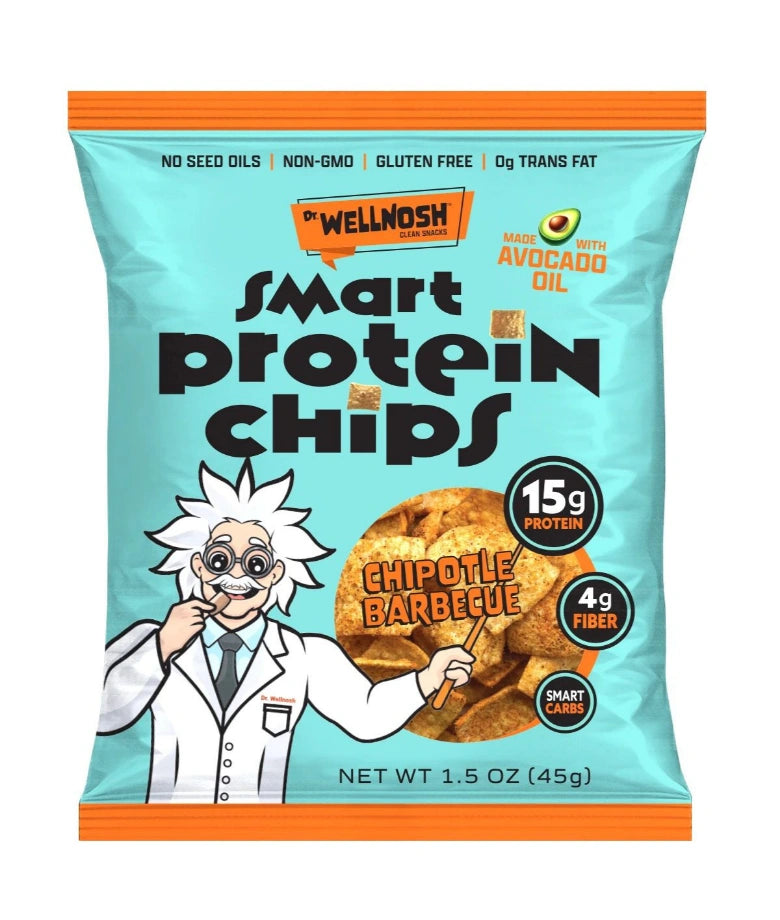
Wellnosh chips are built around 15 grams of fava bean protein per bag, cooked in avocado oil rather than seed oils. They’re non-GMO, gluten free, low carb, and carry no added sugar, which lines up with what a keto-conscious snacker is actually screening for on a label.
- 15g plant protein per bag helps balance a snack instead of leaving you with carbs alone
- Avocado oil instead of seed oils for the cooking fat
- Non-GMO and gluten free, with no added sugar or artificial additives
- Real, pronounceable ingredients you can check against the label-reading checklist above
That combination of higher protein, controlled fat, and no added sugar is exactly the profile that makes a packaged snack worth keeping in a keto rotation.
Does Eating Chips Affect Ketosis or Blood Sugar?
The impact depends entirely on carb load, not on whether the bag says “chips.” A cheese crisp with 1 gram of net carbs has essentially no effect on blood glucose or ketosis. A serving of regular tortilla chips at 17 to 18 grams net carbs can be enough to knock some people out of ketosis for a day, especially if it’s stacked on top of carbs from other meals.
The mechanism is straightforward. Ketosis depends on keeping carbohydrate intake low enough that your body keeps burning fat and producing ketones instead of running on glucose. A single high-carb snack won’t necessarily undo weeks of adaptation, but a pattern of “just one handful” every afternoon adds up fast, and that’s usually how people fall out of ketosis without realizing why.
Blood sugar responds the same way glucose always does: carbs that digest quickly (refined starches, added sugars) spike blood sugar faster than fiber-heavy or protein-heavy snacks. A chip made mostly of almond flour or protein isolate digests more slowly and produces a gentler blood sugar response than one made from potato starch or corn.
The decisive factor isn’t the marketing on the bag. It’s the carb load relative to your personal daily allowance, checked against the actual serving size you’re eating. Two chips labeled “keto” can have wildly different real-world effects depending on portion and ingredient quality, which is why label reading matters more than brand reputation.
What Do People Get Wrong About Chips and Keto?
The biggest myth is that “keto” on the front of a bag guarantees it fits your carb budget. Manufacturers can legally use that word loosely, and some products lean on sugar alcohols or fiber additives to make the net carb math look better than the eating experience actually is. Always flip to the back panel.
A second misconception: cassava or plantain chips are automatically low carb because they’re grain-free. Grain-free doesn’t mean low carb. Cassava is a starchy root, and cassava-based chips can carry nearly as many net carbs as a potato chip, just without the gluten.
A third myth worth killing: that any crunchy snack will knock you out of ketosis. That’s not how it works. A small serving of a genuinely low-carb chip, like a cheese crisp or a handful of pork rinds, fits comfortably inside most daily allowances and has essentially no metabolic effect.
Finally, some people assume all protein chips are interchangeable and automatically low carb because they’re marketed to fitness audiences. Protein chip carb counts vary by brand and formulation, sometimes running 3 to 5 grams net carbs per serving instead of near zero. Checking the actual label, every time, beats trusting the category name on the shelf.
A Practical Take on Chips and Keto Adherence
Chips work best as an adherence tool, not a daily habit. Reach for a higher-protein, lower-carb option when you need a quick fix, but build most of your intake around whole foods. The people who stay in ketosis longest treat crunchy snacks as the exception that keeps them from bingeing, not the meal itself.
— Dr. Wellnosh
Where to Find Keto-Friendly Wellnosh Chips
Wellnosh is built for exactly the scenario this article just walked through: a snack that satisfies the crunch without wrecking your carb budget for the day. Where a bag of pork rinds gives you crunch with almost no nutrition beyond fat, and a homemade almond-flour chip takes real prep time, Wellnosh gives you 15 grams of plant protein per bag cooked in avocado oil, with no added sugar and no seed oils, ready straight out of the bag.
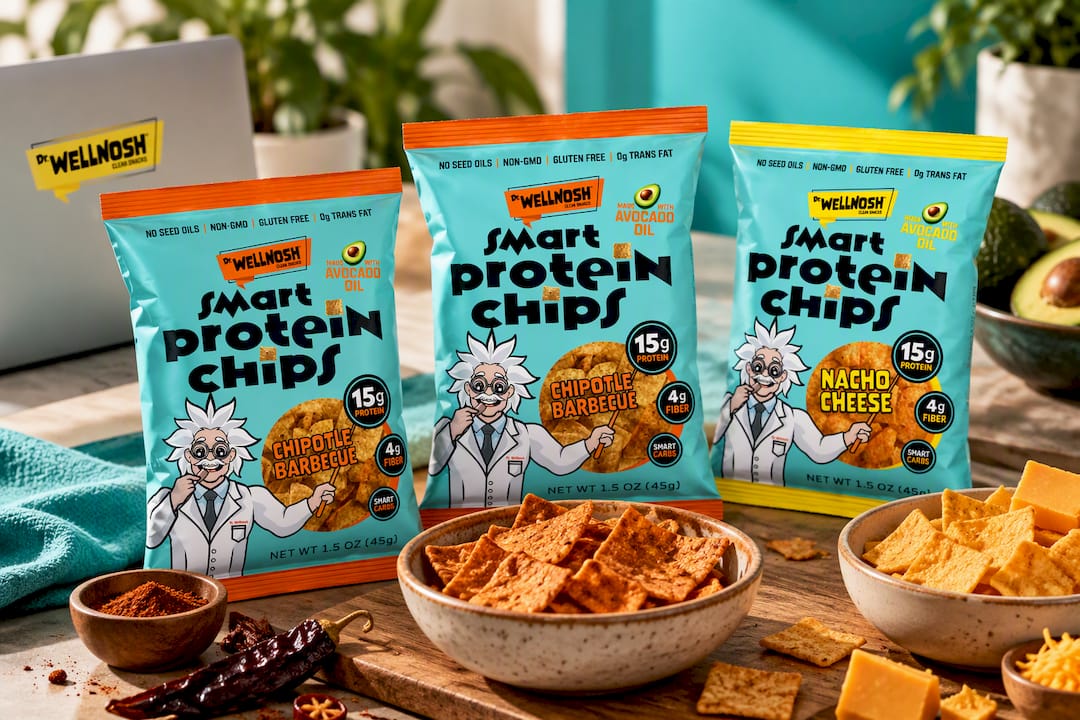
The full lineup lives on the protein chips collection page, including Celtic Salt, Nacho Cheese, and Cinnamon alongside the Chipotle Barbecue flavor. If you’re planning snacks for a shared office or a low-carb-friendly meeting spread, pairing chips like these with low-carb office lunch options keeps everyone’s carb count in check without singling anyone out. Prices vary; current pricing details and subscription options are available on the Wellnosh website. If Chipotle Barbecue or Nacho Cheese happen to be sold out when you check, the Chipotle Barbecue product page will show current availability and let you grab it the moment it’s back.
Sources
FAQ
What chips can I eat while on keto?
Pork rinds, cheese crisps, seaweed snacks, and almond or flax-based chips are your safest bets, along with select protein chips like Wellnosh’s fava bean based lineup. Always check the label, since carb counts vary widely even within “keto” categories.
Are McDonald’s fries keto?
No. Fries are made from potatoes and typically carry a very high amount of total carbs per medium serving, which is close to or beyond a full day’s keto carb allowance in one sitting. There’s no keto-friendly version available at a standard fast-food counter.
Can you eat popcorn on keto?
Popcorn is lower carb than most snack foods but still carries roughly 6 grams net carbs per cup, so a small portion can fit an occasional treat while a full bowl likely won’t. It’s a better occasional choice than chips, but not a daily staple on strict keto.
What junk food is keto-friendly?
Very little traditional junk food qualifies, but pork rinds, full-fat cheese crisps, and dark chocolate with high cocoa content and minimal sugar come closest. The common thread is high fat or protein content paired with minimal starch and added sugar.


