

· By Dr. Wellnosh
100–200 Cal, 5–10g Protein: 20 Protein Snacks for Kids
The simplest formula for a filling kids’ snack is 100 to 200 calories with 5 to 10 grams of protein. Reach for a hard-boiled egg, a cup of Greek yogurt, a cheese stick, a smear of nut or seed butter with fruit, roasted chickpeas, or edamame, and you’ve hit that mark almost every time. The rest of this guide breaks down more options, toddler-safe swaps, and how to pack them so they survive a backpack or a car seat.
TL;DR:
- Most healthy kid snacks should contain between 100 and 200 calories and offer 5 to 10 grams of protein, according to established research.
- Greek yogurt provides the highest protein content at around 15 grams per serving, making it an excellent choice for filling snacks.
- Packaged protein chips, such as Wellnosh’s plant-based options, contain about 15 grams of protein per bag and are suitable for busy days.
- Parent strategies for encouraging protein intake include pairing new foods with favorites and offering small, pressure-free portions repeatedly.
- Safe, non-refrigerated snack options for children under four include roasted chickpeas, nut butter with crackers, and soft foods like yogurt or mashed eggs.
Table of Contents
- Best Protein Snacks for Kids: 20 Easy Options
- How Much Protein and How Many Calories Should a Kid’s Snack Have?
- Snack Ideas for Every Situation
- Getting Picky Eaters to Actually Eat Protein
- A Note From Dr. Wellnosh on Balanced Snacking
- Why Consistency Beats Perfection
- A Cleaner Packaged Option for Busy Days
- Sources
- FAQ
Best Protein Snacks for Kids: 20 Easy Options
Snacks make up roughly 30% of a child’s daily calories in the United States, which is exactly why what fills that slot matters as much as what’s on the dinner plate. Here’s a working list, organized by what’s already in most kitchens.
Dairy and eggs
- Greek yogurt with berries. One serving delivers around 15 grams of protein, more than any other item on this list. Keep it refrigerated and stir in fruit right before serving so it doesn’t get watery.
- Cottage cheese and pineapple. A quarter cup provides about 6 grams of protein. Pre-portion it into small containers the night before for grab-and-go mornings.
- Cheese sticks. No prep, no fridge time needed if eaten within a couple of hours, and kids can peel the string themselves.
- Hard-boiled eggs. Roughly 6 grams of protein per egg, and they hold up in a lunchbox for several hours if packed with an ice pack.
- Mini egg muffins. Bake a batch on Sunday with eggs, cheese, and diced veggies. They keep in the fridge for about four days and reheat in 20 seconds.
Nut and seed butters
- Apple slices with peanut or sunflower butter. Pairs a fiber-rich fruit with a protein source, which is exactly the two-food-group combination that keeps kids satisfied longer.
- Nut butter on whole-grain crackers. Quick to assemble, no refrigeration required for a few hours.
- Toddler adaptation: skip whole nuts entirely for kids under 4, and thin the butter or spread it in a very light layer to lower choking risk.
Legumes and plant protein
- Edamame, warmed and lightly salted. A five-minute microwave job that toddlers can pop out of the pod (supervised) or you can shell ahead for younger eaters.
- Roasted chickpeas. Crunchy, portable, and shelf-stable for days in an airtight container.
- Hummus with cucumber or bell pepper strips. Another fiber-plus-protein pairing that travels well in a small container.
Portable meat options
- Turkey or chicken roll-ups. Roll a slice of turkey around a cheese stick or cucumber spear. Keep cold and eat within a few hours.
- Homemade jerky or plain deli turkey strips for older kids who can chew tougher textures.
Quick homemade options
- No-bake protein balls. Oats, nut butter, and a touch of honey, rolled and refrigerated. They last about a week in a sealed container.
- Microwave quesadillas. Cheese and shredded chicken folded into a tortilla, microwaved for 30 seconds. Best served warm, so this one’s for home or after school rather than a lunchbox.
- Smoothie packs. Pre-freeze yogurt, fruit, and a scoop of nut butter in bags so blending takes 90 seconds flat.
Packaged snacks can fill in on busy days, and plant-based options have gotten a lot better on the protein front. Wellnosh’s protein chips, covered in more detail further down, are one example of a packaged snack built around a similar target.
How Much Protein and How Many Calories Should a Kid’s Snack Have?
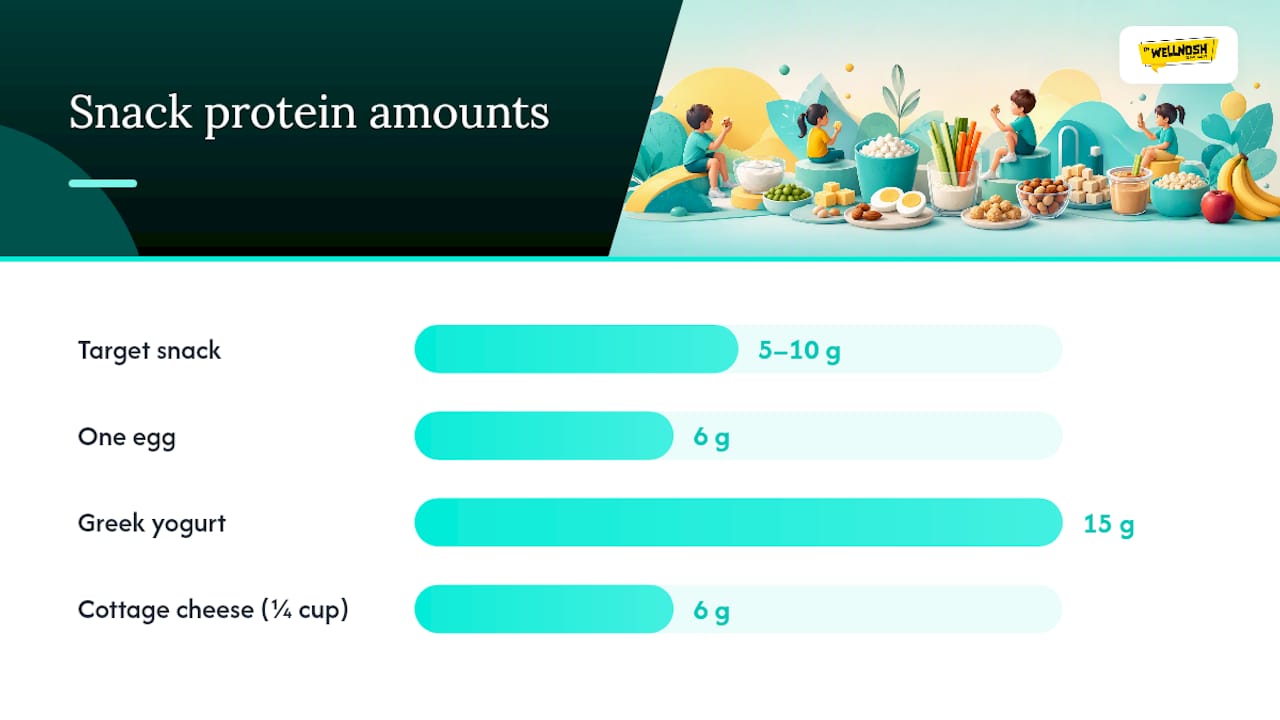
Aim for 100 to 200 calories and 5 to 10 grams of protein per snack. That range comes from Abbott’s nutrition research, and it’s built to curb hunger between meals without spoiling a kid’s appetite for dinner.
Here’s how familiar foods stack up against that target:
- One egg: about 6 grams of protein
- One serving of Greek yogurt: about 15 grams
- A quarter cup of cottage cheese: about 6 grams
When you’re scanning a label on a packaged snack, the Clemson Home & Garden Information Center recommends checking for at least 3 grams each of protein and fiber per serving, and keeping sodium around 160 milligrams or under. If you want exact numbers on a specific food, the USDA FoodData Central database is the most reliable place to look them up.
Snack Ideas for Every Situation
Different moments call for different snacks. Here’s how to match the pick to the moment:
- On-the-go and car rides: cheese sticks, hard-boiled eggs, or roll-ups packed with an ice pack in an insulated bag. Dairy and eggs need that cold barrier if they’ll sit longer than an hour.
- After-school refuel: mini egg muffins reheated for a few seconds, a protein smoothie, or a warm quesadilla. Kids come home hungry, and a quick reheat beats a from-scratch snack every time.
- Lunchbox-safe, non-refrigerated: roasted chickpeas, nut butter packets with crackers, and single-serve packaged protein snacks that don’t need an ice pack.
- Toddler-friendly swaps: mash or dice anything firm, skip whole nuts, thin out nut butters, and choose soft textures like yogurt or mashed egg over crunchy whole foods that carry choking risk.
Pro Tip: Pre-portion higher-protein staples like cottage cheese and hard-boiled eggs into small containers over the weekend. It turns a five-minute scramble into a ten-second grab on school mornings, which is exactly the kind of habit Healthychildren points to for building consistent snack routines.
Getting Picky Eaters to Actually Eat Protein
Pressure rarely works, and most parents already know it. What tends to work instead:
- Pair a new protein with something already loved, like turkey roll-ups next to their favorite fruit.
- Blend protein into foods they already accept: smoothies, pancake batter, or muffins hide yogurt or protein powder without changing the taste much.
- Offer small portions without pressure to finish. Repeated, low-stakes exposure works better than insisting on a clean plate.
- Let kids help assemble their own snack. Rolling their own turkey roll-up or mixing their own yogurt bowl builds buy-in.
- If a child consistently refuses protein-rich foods or shows signs of low energy, talk to a pediatrician or registered dietitian rather than guessing.
A Note From Dr. Wellnosh on Balanced Snacking
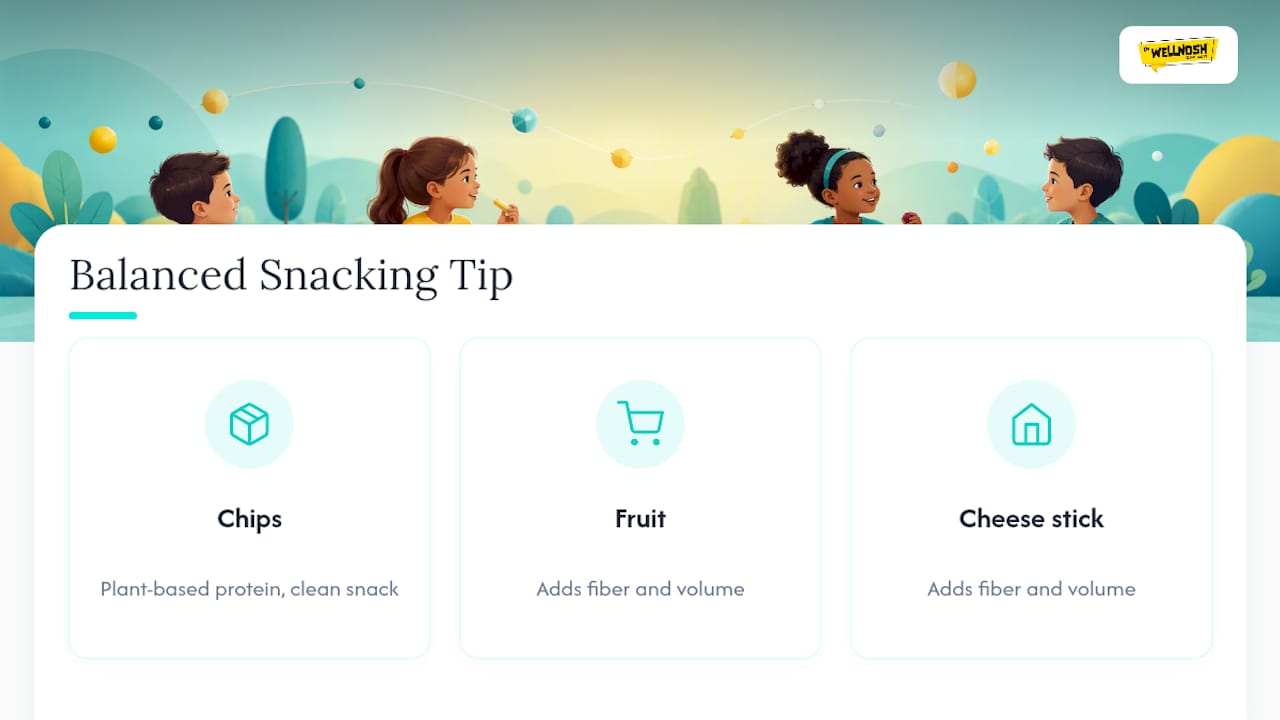
Wellnosh makes plant-based protein chips designed to be a clean, nutritious snack option. A small bag paired with a piece of fruit or a cheese stick adds fiber and volume, rounding out the snack the way whole-food combinations do. For more on introducing plant protein to kids, see how to introduce plant protein snacks to kids.
Why Consistency Beats Perfection
Keep a couple of protein staples stocked at all times, and pair them with fruit or vegetables by habit rather than by decision each time. Packaged snacks earn a spot in the rotation on the days a scratch-made option isn’t realistic, and that’s fine. Most families land somewhere between homemade and convenient, and that’s exactly where they should be.
— Dr. Wellnosh
A Cleaner Packaged Option for Busy Days
Wellnosh chips are a plant-based protein snack available in multiple flavors that can serve as a convenient packaged snack on busy days.
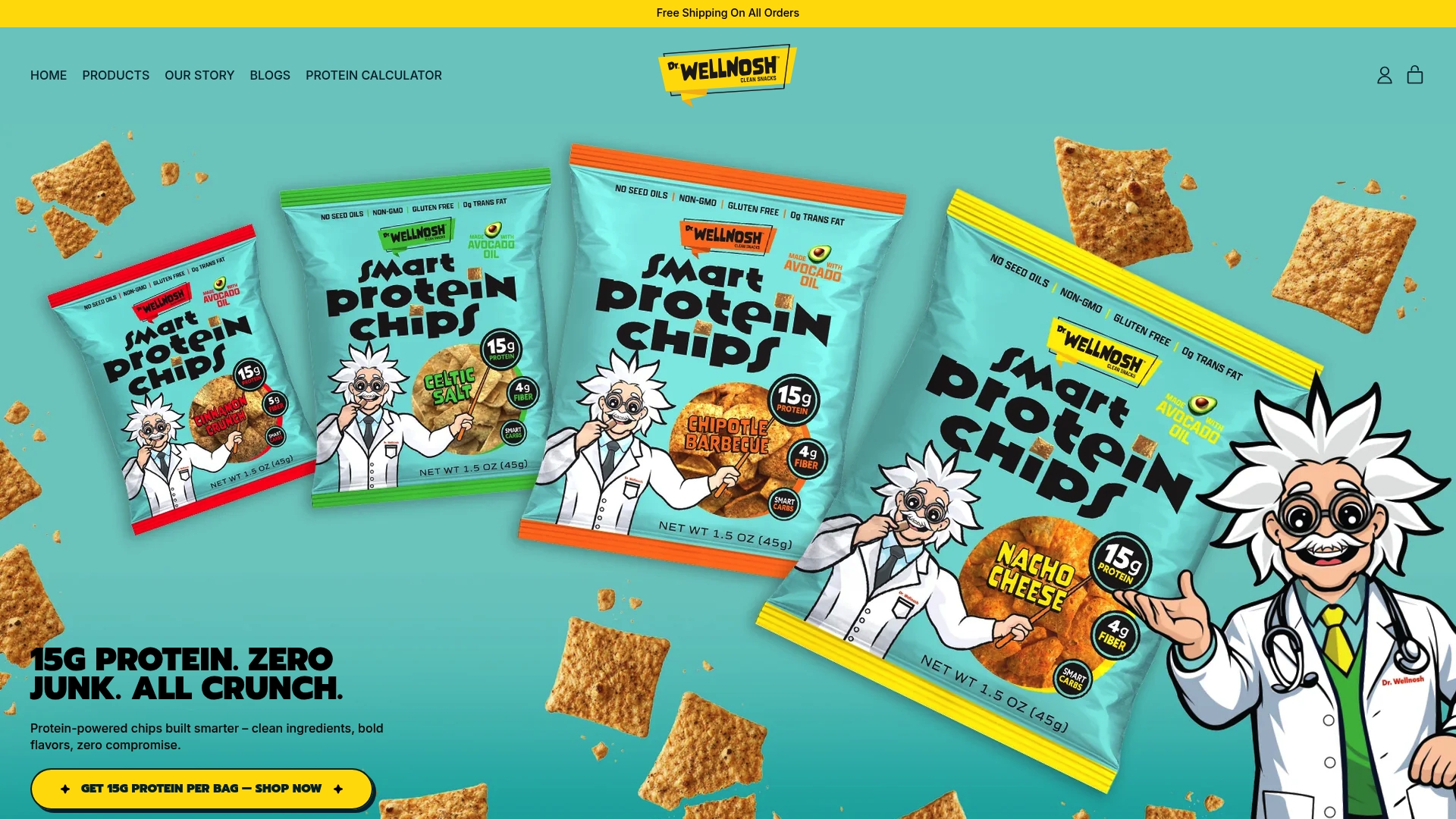
Toss a bag into a lunchbox alongside a piece of fruit, hand one over after practice, or pair one with a cheese stick for a quick, balanced combination. Flavors include Nacho Cheese, Celtic Salt, Chipotle Barbecue, and Cinnamon, or try them all with the Variety Pack. Browse the full protein chips collection to find the flavor your kids will actually finish.
Sources
- Why Kids Need Healthy Protein Snacks — Nutrition News (Abbott)
- 14 protein-rich snacks and meal ideas — CHOC Health
- Planning for snacks — Clemson HGIC
- Healthychildren
- FoodData Central — USDA
FAQ
What foods are high in protein for children?
Eggs, Greek yogurt, cottage cheese, cheese sticks, edamame, roasted chickpeas, and nut or seed butters are among the highest-protein snack foods for kids. A single serving of Greek yogurt provides about 15 grams of protein, more than most other snack-sized portions.
How do I sneak protein into my kid’s diet?
Blend Greek yogurt or protein powder into smoothies, mix it into pancake or muffin batter, or stir nut butter into oatmeal. These methods work well because the protein rides along inside a food your child already eats without complaint.
How do I get my picky kid to eat protein?
Pair new protein foods with familiar favorites, offer small portions without pressure, and let kids help prepare the snack themselves. Repeated, low-pressure exposure tends to work better than insisting a child finish a serving.
What are 10 high-protein snacks for kids?
Hard-boiled eggs, Greek yogurt, cottage cheese, cheese sticks, edamame, roasted chickpeas, hummus with vegetables, turkey roll-ups, mini egg muffins, and no-bake protein balls all fit the target of 100 to 200 calories with 5 to 10 grams of protein. Wellnosh’s protein chips, with 15 grams of plant protein per bag, are one packaged option that fits alongside these whole-food choices.
How much should a kid’s snack cost in calories and protein?
A good target is between 100 and 200 calories with 5 to 10 grams of protein, enough to curb hunger without spoiling the next meal. Checking the label for at least 3 grams of protein and fiber, with sodium near 160 milligrams or lower, helps you judge packaged options fast.


